As an Amazon Associate, we earn from qualifying purchases. Some links on this site are affiliate links at no extra cost to you. Our recommendations are based on thorough research and editorial judgment.

The 3 Best Bonsai Multi Zone Systems for Thriving Indoor Gardens

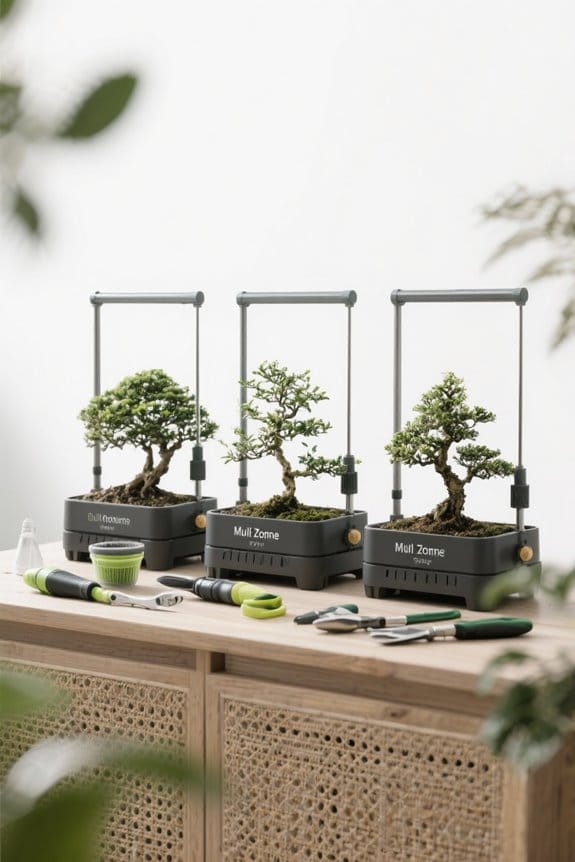
When creating a thriving indoor garden with bonsai, consider three essential multi-zone systems. First, use the Jacaranda Bonsai Starter Kit for easy growth from seeds. Next, the 5 Types Bonsai Tree Kit offers a variety of species with helpful tools. Finally, the Garden Republic Bonsai Tree Kit provides support from experts and allows you to grow three different mini trees. By exploring these options, you’ll guarantee your bonsai thrive beautifully throughout your home.
Key Takeaways
- Choose bonsai species that share compatible temperature, humidity, and light requirements for effective multi-zone gardening.
- Select a well-draining yet moisture-retaining soil mix, ideally containing akadama and pumice, to support diverse bonsai.
- Implement a tailored watering schedule, recognizing the unique hydration needs of each bonsai type to prevent over- or under-watering.
- Regularly monitor and adjust light exposure to ensure each bonsai receives appropriate levels for optimal growth, utilizing grow lights if necessary.
- Maintain a balanced maintenance routine, considering pest management and care frequency to promote a thriving, diverse indoor bonsai collection.
Bonsai Starter Kit – Growing Jacaranda Bonsai Tree from Seeds
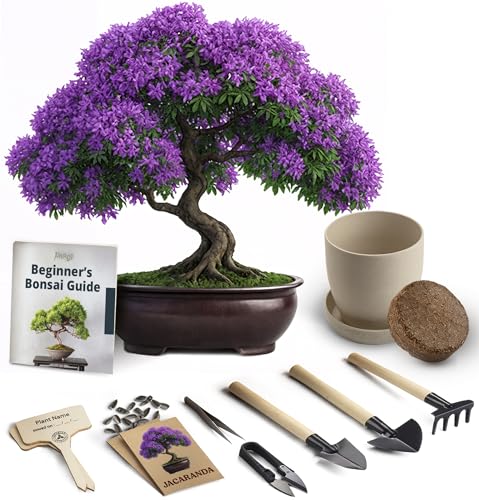
Avergo Bonsai Starter Kit – Growing Jacaranda Bonzai Tree | Complete Indoor Tree Kit for Growing...
- FREE EXTRA SEEDS!! Avergo’s bonsai starter kit comes with 2 additional seed packets just in case you’ll need more
- A COMPLETE BONSAI STARTER KIT – Avergo’s DIY bonsai tree kit contains everything you need to grow your own special mini trees
- BONSAI TREE STARTER KIT - With seeds of Avergo's most popular Japanese bonsai mini tree
If you’re looking to immerse yourself in the world of bonsai gardening, the Bonsai Starter Kit for growing a Jacaranda Bonsai tree from seeds is a fantastic choice. This complete kit includes essential tools and a planter, making it perfect for beginners and seasoned plant enthusiasts alike. With two extra seed packets, you boost your chances of success. Growing a Jacaranda Bonsai can be tricky, but these seeds have a higher germination rate. Plus, Avergo offers support to guarantee you’re not left alone if your plants don’t sprout. It’s an excellent gift for anyone interested in indoor gardening!
Best For: This Bonsai Starter Kit is best for both beginners and experienced plant enthusiasts looking to cultivate a Jacaranda Bonsai tree indoors.
Pros:
- Complete kit includes all essential tools and a planter for easy setup.
- Higher germination rate seeds and extra seed packets increase chances of success.
- Ideal gift option for various occasions, appealing to both kids and adults.
Cons:
- Sprouting bonsai trees can still be challenging, even with the higher germination rates.
- Requires more attention and care than typical houseplants.
- Limited to only one type of bonsai (Jacaranda), reducing variety for more advanced gardeners.
5 Types Bonsai Tree Kit – Bonsai Starter Tools Set for Indoor Growing
The Bonsai Starter Tools Set is perfect for aspiring gardeners looking to cultivate their own indoor bonsai trees. This kit includes five tree varieties, like the Japanese Black Pine and Cherry Blossom, giving you diverse options to grow. You’ll find five jute grow pots and soil discs that make planting a breeze. Each set comes with plant markers to keep track of your trees. Plus, the precision scissors are handy for shaping your bonsai as it grows. Follow the easy, step-by-step guide that guarantees you’ll enjoy every step of nurturing your beautiful bonsai, enhancing your home environment with nature’s beauty.
Best For: Aspiring gardeners and plant enthusiasts who want to cultivate their own indoor bonsai trees.
Pros:
- Comprehensive kit includes five different bonsai tree varieties, providing options for diverse growing experiences.
- User-friendly instructions ensure both beginners and experienced gardeners can successfully nurture their bonsai.
- The aesthetic appeal of bonsai trees adds beauty to any indoor space while promoting a peaceful atmosphere.
Cons:
- Some users may find it challenging to maintain consistent care for different tree varieties.
- Limited to indoor growing, which may not appeal to those who prefer outdoor gardening.
- The growth time for bonsai trees can be slow, requiring patience from the gardener.
Garden Republic Bonsai Tree Kit – Grow 3 Mini Bonsai Trees
Sale

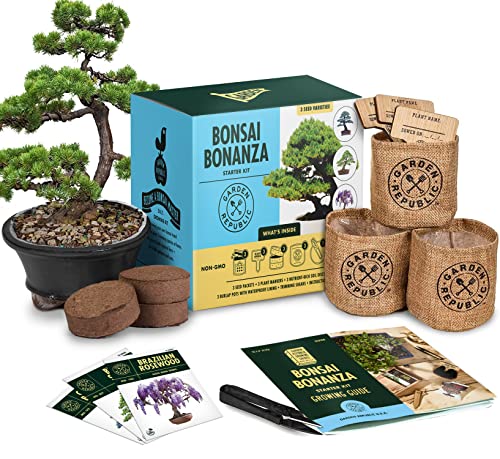
Garden Republic Bonsai Tree Kit - Mini Bonsai Seeds, 3 Types - for Indoor Plant Growing - Starter...
- Complete DIY Starter Bonsai Tree Kit – Our indoor bonsai tree kit comes with everything you need. Three types of bonsai seeds, jute planter bags, pruning shears...
- Grow Beautiful Bonsai Trees at Home: Grow real miniature bonsai trees with our three high quality Non-GMO seed varieties - Brazilian Rosewood, Colorado Blue Spruce...
- Unique & Memorable DIY Gift: For mom, dad, him or her, this is the perfect gift to give on birthdays, anniversaries, holidays, housewarming, our bonsai starter kit is the...
For those enthusiastic to explore the art of bonsai gardening, the Garden Republic Bonsai Tree Kit offers an excellent starting point. This DIY starter kit includes three types of seeds—Brazilian Rosewood, Colorado Blue Spruce, and Black Spruce—allowing you to grow beautiful mini bonsai trees at home. You’ll receive jute planter bags, pruning shears, nutrient-rich soil discs, and plant markers. The easy-to-follow guide guarantees you know exactly what to do. Plus, you gain access to in-house horticulturists and a supportive community, making your bonsai journey enjoyable and successful. It’s a perfect gift for yourself or someone special!
Best For: Garden enthusiasts or beginners looking to explore bonsai gardening and create beautiful indoor plants.
Pros:
- Includes all necessary tools: The kit comes with seeds, jute planter bags, pruning shears, and nutrient-rich soil, making it a comprehensive package.
- Supportive resources: Access to horticulturists, a community, and instructional videos ensures successful growth and provides guidance throughout the process.
- Unique gift idea: Ideal for various occasions, this kit offers a memorable and engaging experience for friends and family.
Cons:
- Time-consuming: Growing bonsai trees from seeds requires patience and time before achieving desired results.
- Not all seeds may germinate: As with any seed-growing process, there’s a chance of lower germination rates, which may lead to frustration.
- Requires future care: Once grown, bonsai trees need ongoing maintenance and care, which might be challenging for some individuals.
Factors to Consider When Choosing a Bonsai Multi Zone System
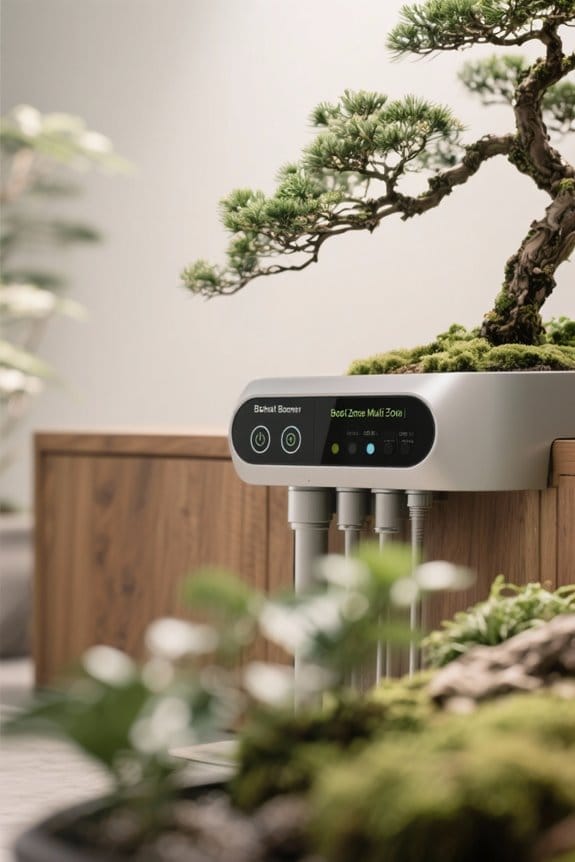
When choosing a Bonsai Multi Zone System, you’ll want to think about plant variety compatibility and your local climate. Consider soil type requirements and how well different species thrive in your area. Don’t forget to check their watering needs and light exposure levels to guarantee a healthy ecosystem for your bonsai.
Plant Variety Compatibility
Choosing the right plants for your bonsai multi-zone system can make all the difference in their overall health and growth. Start by ensuring the plants have compatible temperature, humidity, and light needs. For instance, Japanese Black Pine and Norfolk Island Pine may differ in watering and soil types, so choose wisely. Also, monitor their growth rates; some bonsai might outgrow their zones quickly, causing overcrowding. Be mindful of pest susceptibility, as certain species can attract pests that spread to others. Finally, consider the maintenance required for each type. Some bonsai need more frequent pruning and care than others. Balancing these factors will help create a thriving indoor garden you’ll enjoy for years.
Local Climate Considerations
Understanding your local climate is essential for creating a successful bonsai multi-zone system. Start by considering temperature, humidity, and seasonal changes, as they directly impact the bonsai trees you’ll choose. Research your local frost dates and growing seasons, since these factors will help determine which species will thrive outdoors or indoors. Additionally, recognize the water and sunlight needs of different bonsai species, as they vary based on climate. Decide if your area supports tropical, subtropical, or temperate bonsai trees, since each group has unique requirements. Moreover, some bonsai are more resilient to extreme weather. Choose species that can handle your local conditions, ensuring healthy and vibrant plants for your indoor garden.
Soil Type Requirements
Selecting the right soil for your bonsai multi-zone system is key to your trees’ health and growth. The soil should drain well while retaining moisture to support healthy roots. A good mix often includes akadama, pumice, and lava rock. This combination helps with aeration and prevents root rot. Aim for a soil pH of 5.5 to 7.0, as this range promotes nutrient availability. Incorporate some organic matter like compost or peat moss, but balance it with inorganic materials to maintain proper drainage. Regularly check soil moisture levels; each species has its own needs. By following these guidelines, you’ll create an ideal environment that keeps your bonsai thriving and beautiful.
Watering Needs Coordination
Coordinating the watering needs of your bonsai trees is essential for their health and growth. Each bonsai species has unique preferences; some like moist soil, while others thrive in drier conditions. Start by understanding the temperature and humidity requirements for each variety. This planning helps you know how frequently and how much water to provide.
Consider using drip irrigation or self-watering systems. These choices guarantee adequate moisture without the risk of overwatering. To fine-tune your schedule, monitor soil moisture levels with a meter. This tool is especially useful in multi-zone setups, where conditions vary. Finally, remember to adjust your watering routine with the seasons, offering more water during growth periods and less during dormancy for peak care.
Light Exposure Levels
When you set up a bonsai multi-zone system, one of the most essential factors is light exposure. Different bonsai species need varying amounts of light, from low to bright indirect sunlight. Make sure your trees receive 6 to 8 hours of indirect light daily for peak growth. Too little light can lead to leggy growth and weak stems, while too much direct sun may cause leaf burn. Monitor light exposure throughout the day, as intensity changes, affecting what your bonsai gets. During winter months or in areas with limited sunlight, consider using supplemental lighting, like grow lights. By understanding the specific light needs of each bonsai variety, you’ll set your indoor garden on the path to thriving success.
Growth Rate Differences
Understanding growth rate differences among bonsai species is vital for successfully choosing a multi-zone system. Some species, like the Japanese Black Pine, grow faster than slower varieties such as Junipers or certain deciduous types. Light, temperature, humidity, and soil conditions play significant roles in each bonsai’s growth. To support peak growth rates, tailor your environment to each tree’s needs. Remember that frequent pruning can slow above-ground growth while encouraging root development. Additionally, the type and frequency of fertilization must be balanced; too much fertilizer can stress your plant. Finally, be aware that seasonal changes may cause dormancy in winter, leading to slower growth. Understanding these factors will help you create a thriving indoor garden.
Pruning Techniques and Timing
Pruning your bonsai effectively is crucial for maintaining its health and shape, especially as you work within a multi-zone system. Aim to prune during the growing season, which is spring and summer. This timing encourages healing and promotes new growth. Always remove dead or damaged branches throughout the year; this keeps your tree healthy and visually appealing. Once your tree reaches the desired shape, perform fine pruning at least once a year. Focus on shortening branches and maintaining foliage density. Avoid heavy pruning in late fall and winter, as this stresses the tree during dormancy. Finally, always use sharp, sterilized tools to guarantee clean cuts, minimizing damage and reducing disease risks for your bonsai.
Fertilization Strategies Overview
Fertilization plays an essential role in keeping your bonsai healthy and vibrant, especially in a multi-zone system. You should use a balanced, slow-release fertilizer to provide your trees with the nutrients they need throughout the growing season. Organic options like fish emulsion or compost are great for enhancing soil health while nourishing the trees gently. Remember to adjust the frequency and amount of fertilizer based on your bonsai’s species, age, and the season. Actively growing trees require more nutrients than dormant ones. Don’t forget to incorporate micronutrients, including magnesium, iron, and calcium, for added vigor. Regularly test your soil’s pH and nutrient levels to fine-tune your fertilization strategy, ensuring balanced nutrition.
Frequently Asked Questions
How Long Does It Take for Bonsai Seeds to Sprout?
Bonsai seeds typically take two to four weeks to sprout, but it can vary based on the species. Start by soaking the seeds in water for 24 hours, then plant them in a well-draining soil mix. Keep the soil consistently moist and place the pots in a warm, bright location. You’ll want to monitor them daily for signs of growth. Patience is key, so don’t get discouraged if it takes a bit longer!
Can I Use Regular Soil for Bonsai Trees?
You can’t use regular soil for bonsai trees. Imagine a tiny tree perched in a pot, thriving in a special blend. Bonsai needs well-draining soil that supports its roots while retaining moisture. You should mix components like akadama, pumice, and lava rock for the best results. This combination encourages healthy growth by providing essential drainage and nutrients. So, skip the garden soil, and give your bonsai what it truly needs to flourish!
What Are the Best Light Conditions for Bonsai Indoors?
To care for your bonsai indoors, aim for bright, indirect light. Place your tree near a window that gets plenty of sunlight but avoid harsh, direct rays. A south-facing window is often ideal. If natural light is limited, consider using grow lights to provide the necessary illumination. Rotate your bonsai regularly to guarantee even growth. Keep an eye on leaves for signs of light stress, like yellowing or drooping, and adjust accordingly.
How Often Should I Water My Bonsai Tree?
You should water your bonsai tree about once every week, but it depends on the season and conditions. Check the soil moisture regularly; if the top inch feels dry, it’s time to water. Use room temperature water and make certain it drains well from the bottom. During hot months, you might need to water more often, whereas in winter, less is often needed. Keep an eye on it for any signs of stress.
Do Bonsai Trees Need to Be Pruned Regularly?
Yes, bonsai trees need regular pruning to thrive. Think of pruning like sculpting a masterpiece. It helps shape your tree and encourages vibrant growth. Aim to prune every few weeks during the growing season. Trim back new growth to maintain its size and improve airflow. If you see any dead or diseased branches, remove them promptly to promote health. This regular care keeps your bonsai tree looking beautiful and healthy, enhancing your indoor garden.


