As an Amazon Associate, we earn from qualifying purchases. Some links on this site are affiliate links at no extra cost to you. Our recommendations are based on thorough research and editorial judgment.

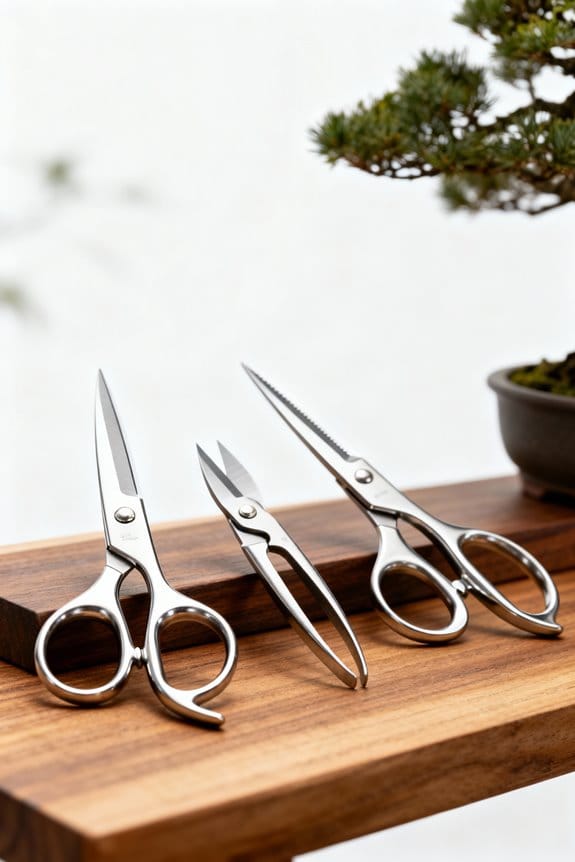
Difference Between Bonsai Scissors, Shears and Concave Cutters

Bonsai scissors, shears, and concave cutters each serve unique functions in bonsai care. Bonsai scissors are perfect for delicate trimming, offering control over fine details. Shears provide power for cutting thicker branches and promote healing with clean cuts. Concave cutters create smooth, concave cuts, essential for larger branches to prevent die-back. Understanding these tools helps minimize damage during maintenance. Exploring their specific uses can enhance your bonsai experience and improve your skills as a bonsai enthusiast.
Key Takeaways
- Bonsai Scissors are ideal for delicate trimming tasks, offering greater control for fine details with shorter blades.
- Shears are designed for cutting thicker branches and provide leverage for comfortable general maintenance and quicker healing.
- Concave Cutters create smooth, concave cuts that minimize damage to the tree’s vascular system, preventing die-back and promoting healthy growth.
- Blade size differentiates these tools: Bonsai scissors are smaller for precision, while shears and concave cutters are larger for heavier duties.
- Regular maintenance is crucial for all tools; clean after use, oil periodically, and inspect for wear to ensure optimal performance.
Understanding Bonsai Scissors
Bonsai scissors serve as essential tools for anyone involved in the art of bonsai cultivation. Designed for precision cutting, these scissors feature shorter blades that make them ideal for trimming delicate foliage. The lighter construction allows users to maneuver easily in tight spaces. An ergonomic design enhances comfort, granting better control and reducing hand fatigue during extended use. High-quality bonsai scissors are often made from refined steel, providing durability and long-lasting sharpness, which minimizes rust. Various styles exist, including Azalea type scissors, perfect for fine-tuning smaller branches and leaves. Selecting the right bonsai scissors can greatly improve the health and appearance of a bonsai tree, making them invaluable for enthusiasts and professionals alike. Regular pruning with high-quality bonsai scissors encourages healthy growth and helps maintain the shape of the tree.
The Role of Shears in Bonsai Care

While cultivating bonsai trees, shears play an important role in maintaining their health and appearance. These bonsai tools are designed to provide powerful cutting capabilities while guaranteeing clean cuts that promote faster healing. Azalea shears are excellent for delicate branches, allowing for fine-tuning without causing damage. In tighter spaces, twig shears excel with their slender design, making it easier to reach between foliage. Regular maintenance of shears is vital; keeping them clean, oiled, and properly stored prevents rust and assures peak performance. Selecting the right shears for the task at hand can greatly impact the overall well-being of the bonsai, making them indispensable in every bonsai enthusiast’s toolkit. For beginners, comprehensive bonsai kits often include ergonomic designs that enhance comfort and accessibility, ensuring a positive user experience.
Features of Concave Cutters
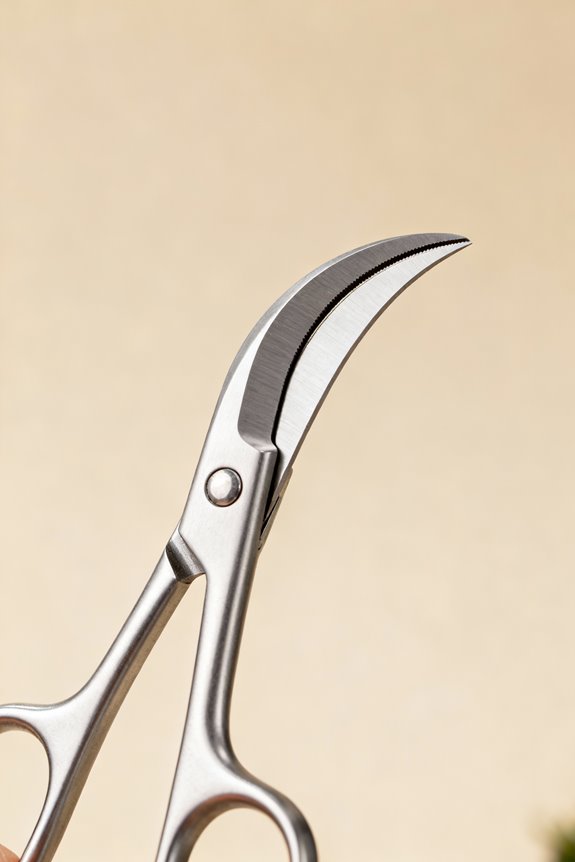
Concave cutters are an essential tool in the bonsai enthusiast’s toolkit. Designed specifically for making smooth, concave cuts, these quality tools effectively cut branches without leaving abrupt ends. This minimizes damage to the tree’s vascular system, promoting better healing. Unlike standard branch cutters, concave cutters make deeper cuts, helping to avoid stubs that can lead to die-back. Their sharp blades require careful handling, making them suitable for experienced users. Additionally, these tools come in various sizes, which allows them to accommodate thicker roots and branches. For anyone aiming to achieve good bonsai, mastering the use of concave cutters is vital. These tools are indispensable for advanced bonsai techniques that prioritize precision and care. Many bonsai tool sets, such as ZELAR and Voilamart, prioritize portability while maintaining quality, making them a convenient choice for both beginner and advanced practitioners.
Comparing Cutting Techniques
Selecting the right cutting tool is crucial for maintaining a healthy bonsai. Bonsai scissors are perfect for delicate tasks, such as trimming leaves and small branches. They help avoid damage to the tree. On the other hand, shears provide more leverage, making them ideal for cutting thicker branches with ease. Their ergonomic design guarantees comfortable handling during extended use. Concave cutters stand out when it comes to making clean, concave cuts, which promote faster healing on larger branches. Choosing the correct bonsai tool for each job is essential. Good quality scissors, shears, or concave cutters will guarantee minimal damage and enhance the overall aesthetics of the bonsai while supporting peak growth for a thriving tree. When selecting bonsai tools, consider the importance of blade material for successful pruning to ensure durability and effectiveness.
Importance of Tool Quality
Quality matters greatly when it comes to bonsai tools. High-quality tools, like concave cutters and shears, are essential for maintaining healthy trees. Made from refined steel, they stay sharp longer, guaranteeing precise cuts. Good tools minimize the risk of damaging branches, leading to faster healing and reducing infection chances. Investing in these professional-grade tools can save money long-term, as they require fewer replacements than used tools. Proper care, including regular cleaning and oiling, can extend the lifespan of bonsai tools and preserve their performance. Additionally, tools crafted from solid stainless steel resist rust and guarantee durability in various environments. In the world of bonsai, the right quality tools can considerably impact your tree’s health and growth. Bonsai concave cutters are known for providing seamless cuts, which help minimize branch scarring and promote optimal healing.
Selecting the Right Tool for the Task
When caring for bonsai trees, using the right tool for each specific task is crucial. Bonsai scissors are perfect for detailed work, allowing for precise cuts in tight spaces. Shears are more suited for thicker branches, offering increased leverage needed for more robust foliage. They come in various designs, such as butterfly and long handle shears, which enhance cutting power. For larger cuts, concave cutters are the best choice, as they leave a concave shape that promotes healing and prevents die-back. Selecting the correct tool for the task guarantees efficient care, minimizes damage, and leads to healthier plants. By understanding the distinct purposes of scissors, shears, and concave cutters, bonsai enthusiasts can enhance their gardening skills. Additionally, ergonomic designs in bonsai tools like tweezers or cutters reduce strain and improve user comfort, making them essential for prolonged and precise gardening tasks.
Maintenance and Care for Bonsai Tools
Caring for bonsai tools is as important as selecting the right ones for various tasks. Regular maintenance helps extend their life and efficiency. Clean tools after each use with isopropyl alcohol to prevent bacteria buildup and rust. Store them in a dry place, applying oil to the blades periodically to maintain sharpness and prevent corrosion. Inspect tools regularly for wear and damage; replace any compromised components to guarantee peak performance. When sharpening, focus only on the outside edges using wet stones. This technique preserves cutting efficiency and prolongs longevity. If rust develops, utilize specialized rust removal tools to restore quality. It is recommended to choose high-carbon steel blades for their durability and resistance to dulling, ensuring successful bonsai care and cultivation. Keeping tools in top shape is essential for successful bonsai care and cultivation.
Tool Recommendations for Beginners
Starting with the right tools is essential for successful bonsai care, especially for beginners. A good set of essential tools includes knob cutters, concave cutters, and pruning shears. These tools enable effective management of a bonsai tree’s health by ensuring precise cuts that promote better growth. Beginners should consider a small toolset of about eight pieces, as this suffices for most basic tasks. When selecting tools, options in smaller (8 1/4 inch) and larger (11 1/2 inch) sizes allow comfortable handling based on tree sizes. Investing in mid-range quality tools under $100 creates a reliable foundation for beginners, enhancing the bonsai experience while reducing the risk of damaging delicate trees during pruning and shaping. Ergonomic designs minimize hand fatigue during long sessions, which is crucial for maintaining precision and detail in bonsai care.
The Impact of Tool Size on Usability
Understanding the impact of tool size on usability is essential for anyone involved in bonsai care. Smaller scissors, around 8 1/4 inches, are excellent for beginners. They offer greater maneuverability and control when working on delicate branches. Conversely, larger cutting tools, like an 11 1/2 inch concave branch cutter, are necessary for thicker branches. However, these tools can be cumbersome and may reduce precision if users are not accustomed to their size. It’s vital to match tool size with the bonsai tree’s size for accurate cuts. Using the right tools not only promotes effective pruning but also minimizes the risk of damaging the tree, making the bonsai care experience more rewarding. Hands-on practice will help users discover their preferred tool sizes. Additionally, ergonomic handles on bonsai wire cutters can significantly enhance comfort during extended use, ensuring a more enjoyable pruning experience.
Advanced Techniques With Specialized Tools
While advanced techniques may seem intimidating, they reveal a world of possibilities for enhancing bonsai trees. Using specialized tools like grafting knives can help propagate trees while maintaining their character. Air layering, for example, requires precise bark removal, ideally achieved with Japanese saws. Jin pliers are essential for creating natural-looking deadwood by stripping bark effectively. For intricate detailing, a Dremel tool can create realistic textures on deadwood features. Additionally, bonsai wire cutters and branch jacks offer better leverage for bending thicker trunks during shaping. Finally, a concave cutter is perfect for making clean cuts, especially when cutting roots or managing branch placement. Mastering these tools unleashes creativity and enhances the beauty of any bonsai tree. Stainless steel bonsai trimming scissors are favored for their corrosion resistance, making them a valuable addition to any bonsai toolkit.
User Experiences and Community Insights
Many bonsai enthusiasts express significant insights regarding the use of specialized tools like concave cutters and shears. Users emphasize that concave cutters are ideal for larger branches, creating smooth scars that heal well. In contrast, pruning shears are preferred for general maintenance and delicate tasks. Experienced growers recommend different pruning shears for each cutting job, showcasing their versatility. Community discussions reveal varied preferences; some practitioners favor lightweight scissors for precise cuts, while others rely on strong shears for thicker branches. A shared appreciation for high-quality tools emerges, as many believe investing in professional-grade concave cutters and scissors improves both cut quality and healing time. Overall, thoughtful tool choices enhance the bonsai experience and promote healthy tree growth.
Frequently Asked Questions
What Is a Concave Cutter Used for in Bonsai?
“A cut above the rest,” the concave cutter serves critical benefits in bonsai. Employing proper cutting technique, it guarantees healthy healing by removing larger branches, aligning with a pruning philosophy emphasizing aesthetics and maintenance tailored to various bonsai plant types.
What Are the Different Types of Bonsai Scissors?
Various types of bonsai scissors include twig shears for delicate trimming, azalea shears for precise styling, and Satsuki shears for bud management. Each tool aids in bonsai maintenance, adapting to growth stages and seasonal care needs.
What Is the Rule of 3 in Bonsai?
The Rule of 3 in bonsai emphasizes aesthetics by grouping elements in threes, enhancing design principles. Proper bonsai pruning techniques and maintenance tips, alongside adequate tool care and soil composition, contribute to successful adherence to this principle.
What Are Bonsai Shears Used For?
Bonsai shears are essential for pruning techniques, ensuring ideal plant health through effective trimming styles. Their precise design aids in shaping methods, while regular tool maintenance enhances longevity and performance in bonsai care tasks.