As an Amazon Associate, we earn from qualifying purchases. Some links on this site are affiliate links at no extra cost to you. Our recommendations are based on thorough research and editorial judgment.

How to Use Raffia and Guy Wires for Heavy Bonsai Bends

To use raffia and guy wires for heavy bonsai bends, first soak the raffia in water to enhance flexibility. Wrap multiple layers around the branch to protect the cambium and support the bend. Attach guy wires at 45-degree angles to stable anchor points, ensuring they evenly distribute pressure. Monitor the branch’s health closely for signs of stress. When it’s time to remove the wires, cut them instead of unwinding. These practices will help achieve successful bends while maintaining tree health. Further techniques await discovery.
Key Takeaways
- Soak raffia in water to enhance flexibility before application, ensuring complete coverage for optimal protection of the cambium layer during bending.
- Wrap multiple layers of wet raffia around the branch to support its shape and moisture retention while preventing splits or breaks.
- Secure guy wires at 45-degree angles to stable anchor points, using multiple wires for larger branches to evenly distribute pressure during bending.
- Regularly monitor the branch for signs of stress or health issues, adjusting rafia or wire tension as necessary to promote recovery and stability.
- Document the outcomes of wiring and bending techniques to improve future practices and enhance your bonsai care strategies.
Understanding the Role of Raffia in Bonsai Bending
When nurturing bonsai trees, understanding the role of raffia is crucial for successful bending techniques. Raffia, soaked in water, helps protect the cambium layer during heavy bends. This protective measure greatly reduces the risk of splits or breaks. To effectively use raffia, wrap the target branch with multiple layers, ensuring thorough coverage as you apply force during the bending process. Avoid using single strands, as they may not provide adequate support or protection. Wet raffia contours better to the branch, enhancing its effectiveness. Regularly monitor the wrapped area, since the lifespan of raffia is about one week. This attention prevents compression and weakness under tension, ensuring a smooth bending process and maintaining the tree’s health. Using specialized bonsai tools can enhance your bonsai crafting experience by promoting healthier plants and achieving desired aesthetics.
Preparing Raffia for Effective Use

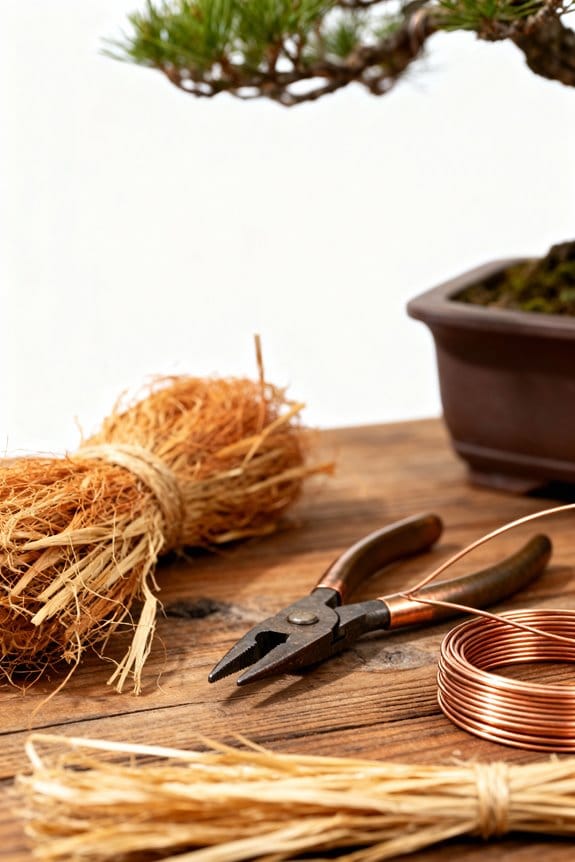
Preparing raffia for effective use is a key step in the bonsai bending process. First, soak the raffia in water for a few minutes. This increases flexibility and minimizes breakage. When you wrap branches, using a bundle of raffia is recommended. This option provides a solid and stable wrap, enhancing support while bending. Aim to cover the entire branch completely to protect it from wire marks and potential damage. Be attentive to avoid leaving any gaps, as complete coverage guarantees maximum protection of the cambium layer. Finally, monitor the condition of the raffia, as it typically lasts about a week before degrading. Durability and weather resistance are important factors to consider when selecting materials for bonsai techniques, as they ensure long-lasting support and protection. This awareness will help in planning the timing for wire removal more efficiently.
Techniques for Wrapping Raffia Around Branches

Wrapping raffia around branches requires a careful approach to guarantee maximum protection during bending. First, it’s advisable to use a bundle of raffia for a solid, stable wrap. Multiple layers should cover the target branch entirely, ensuring thorough protection against damage. Wetting the raffia before application helps it conform better to the branch, and it provides extra moisture to the cambium, promoting healthy growth. While wrapping, keep an eye out for any bulging under the raffia; this indicates the need for adjustment to avoid constriction. If significant wrapping around the wire is necessary, removing the raffia may be important to maintain the branch’s health. Following these techniques will contribute to successful bonsai bends without injury. Regular maintenance is crucial to prevent rust on carbon steel and prolong tool lifespan.
The Importance of Guy Wires in Heavy Bends
While crafting impressive bends in bonsai trees, the use of guy wires plays a critical role in managing heavy branches. These wires provide essential support for thick branches of deciduous trees, preventing potential splits or breaks during heavy bends. By attaching guy wires to strong anchoring points like roots or other branches, the stability of the tree is considerably enhanced. Additionally, it’s important to protect the branches with materials like rubber to prevent wire bite, which can harm the bark. This technique allows for controlled, gradual bending, reducing the risk of branch failure. Regularly monitor the branches to verify the guy wires do not harm the tree, preserving its health and aesthetics during the bending process. Using high-quality anodized aluminum wire can offer additional durability and rust resistance for long-term use in bonsai training.
How to Secure Guy Wires Properly
Securing guy wires properly is a vital step in guaranteeing the stability of bonsai branches during bending. Begin by attaching the guy wire to strong anchor points, such as deep roots, adjacent branches, or the pot. Make sure the angle of attachment is about 45 degrees to allow for gradual bending without excessive strain on the branch. To prevent damage from tension, use protective materials, like rubber or plastic tubing, at contact points. For larger branches or significant angle changes, consider using multiple guy wires to distribute pressure evenly. Finally, regularly check the tension on guy wires, adjusting them as needed to maintain security while accommodating branch growth. This careful attention helps avoid potential damage to your bonsai. Additionally, using ergonomic anti-slip handles on your bonsai tools can enhance comfort and control, ensuring precision when making necessary adjustments.
Monitoring Branch Health During the Bending Process
Monitoring branch health during the bending process is vital for any bonsai enthusiast. Regularly monitor branch health by checking for signs of stress, such as discoloration or wilting leaves, particularly after implementing heavy bends. Using raffia wrapped around the branch protects the cambium layer, enhancing the branch’s resiliency. After bending, observe for signs of splitting or breaking that may suggest the bend was too aggressive. Continuous assessment of the branch’s growth rate is important; healthy branches should still show growth as they adjust to their new position. If bulging or swelling occurs under the raffia, it signals potential pressure points, requiring immediate attention to prevent long-term damage and guarantee the branch’s continued health. Ensuring adequate sunlight and moisture is crucial as they significantly affect nutrient uptake and overall branch health.
Safe Techniques for Wire Removal
Ensuring the health of branches during bending is just the beginning; safe wire removal is equally important for maintaining bonsai integrity. To facilitate effective wire removal, cut the wire at each twist rather than unwinding it, as this helps avoid damage to the bark. Regularly monitor the wire‘s contact with the bark, and remove it promptly if it starts to bite in, preventing scarring. Employ a pair of wire cutters to clip away wires safely, minimizing any stress on the branch. Additionally, gently remove raffia after it has served its purpose to allow for healthy branch growth. During this process, remain cautious to minimize branch movement and avoid causing stress fractures, ensuring your bonsai remains healthy and intact. For best results, consider using ergonomic handles on your wire cutters to enhance comfort and precision during the removal process.
Tips for Future Wiring and Bending Success
While wiring and bending can greatly improve the shape and health of a bonsai, success often hinges on a few key techniques. First, always use raffia wrapped around branches before bending. This protects the cambium and reduces damage risk. When securing heavy branches, employ guy wires attached to stable points like roots or other branches while using rubber or plastic to prevent abrasions. It’s crucial to monitor health closely; wired branches may take 1-4 months to adjust, so watch for wire bite. For better results, opt for thicker wire with ample spacing between coils. Finally, avoid crossing wires to guarantee even pressure on branches. Document every attempt to refine techniques for future wiring and bending projects. Incorporate seasonal techniques into your wiring and bending practices to ensure the bonsai tree adapts well to environmental changes.
Frequently Asked Questions
How to Apply Raffia to Bonsai?
To apply raffia, one must utilize specific application techniques, ensuring full coverage for protection during bonsai bending methods. Benefits include cushioning against splits, while alternatives like soft fabric can also be effective for wrapping.
What Is the Rule of 3 in Bonsai?
The Rule of 3 in bonsai blossoms like a delicate flower, guiding bonsai pruning and wire techniques to create harmonious aesthetics. It shapes tree styles, enhancing visual balance and inviting appreciation into every aspect of bonsai care.
What Is the Best Wire for Bonsai Shaping?
The best wire for bonsai shaping includes anodized aluminum wire for flexibility and ease, while copper wire offers strength for conifers. Accurate sizing and gauge selection guarantee effective wire application techniques, promoting healthy branch shaping without damage.
How to Use Wire to Shape a Bonsai?
To shape a bonsai, one must utilize wire tension techniques, compare wire types, and apply seasonal wiring tips. Employ bonsai shaping tools cautiously, ensuring wire removal safety to prevent damage to the tree’s bark and structure.