As an Amazon Associate, we earn from qualifying purchases. Some links on this site are affiliate links at no extra cost to you. Our recommendations are based on thorough research and editorial judgment.


Essential Bonsai Tools Every Beginner Actually Needs

Every beginner in bonsai gardening needs a few essential tools. Shears and pliers help with shaping branches and maintaining plant health. Tools like sickle knives and root hooks assist in repotting and working with roots. Bonsai wire and wire cutters allow for effective branch shaping. For aesthetics, carving knives enhance deadwood features. A reliable watering system guarantees hydration. Finally, turntables make maintenance simple and efficient. Explore these tools to foster a thriving bonsai practice.
Key Takeaways
- Basic shears and fine-tipped scissors are essential for trimming leaves and branches to maintain bonsai health.
- A sickle knife and root hook are crucial for safely removing rootballs and managing roots during repotting.
- High-quality bonsai wire, along with wire pliers, is necessary for shaping branches without causing damage.
- Protective materials like wet raffia are important to prevent bark damage during wiring and bending.
- Carving knives and jin pliers enhance aesthetics when working on deadwood and refining details.
Shears and Pliers
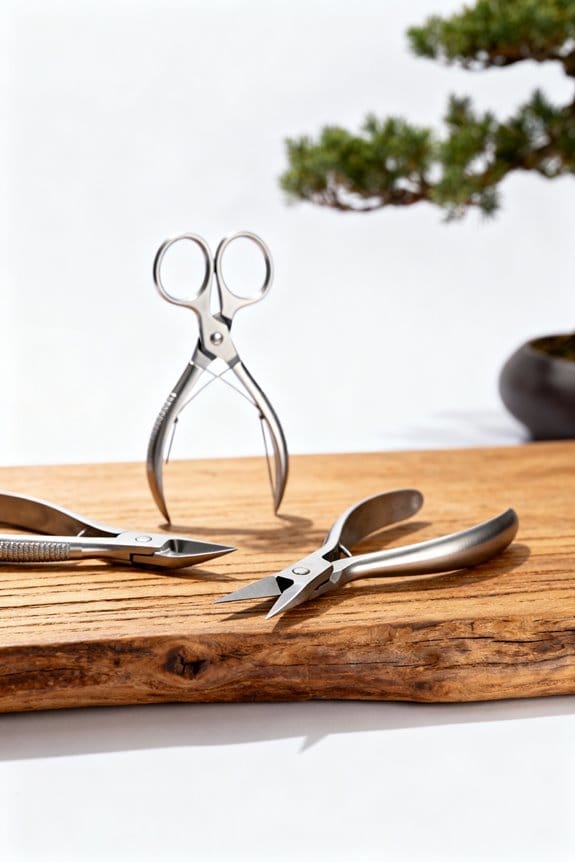
Shears and pliers are fundamental tools for anyone starting with bonsai care, as they play a key role in shaping and maintaining the health of these miniature trees. Various types of shears exist, including wide standard shears for thicker twigs and narrow ones to efficiently trim dense canopies. Concave cutters are another essential tool, designed for deep cuts that heal without leaving scars, critical for bonsai vitality. Wire pliers assist in tightly securing and removing wire used for shaping branches and trunks, providing better control due to their rounded tips. Fine-tipped scissors are necessary for delicate tasks, enabling careful trimming of leaves and small branches. Regular maintenance of these cutting tools guarantees optimal performance and prevents infections. It’s important to ensure that bonsai power banks, which are capable of charging multiple devices simultaneously, are kept in good condition to aid in the care of your bonsai tools and devices.
Bonsai Tools for Working on Roots and Repotting

Repotting and root care are essential steps in maintaining a healthy bonsai tree. To successfully repot, beginners should use sickle knives, which effectively remove rootballs from pots with minimal damage. Root hooks help comb through roots and remove old soil, creating an ideal environment. Sieve sets are important for sorting and grading soil types, such as Akadama and Kanuma, which support bonsai health. Additionally, plastic bowls can keep the work area tidy by collecting excess soil and debris during the process. Finally, chopsticks or bamboo sticks are invaluable for filling soil in the gaps around roots. These tools enhance soil-to-root contact and guarantee the bonsai thrives. Each tool serves a specific purpose, enhancing overall care and maintenance. When repotting, utilizing a rooting hormone can significantly enhance root development and increase the success rates of bonsai propagation.
Tools for Wiring and Bonsai Wire

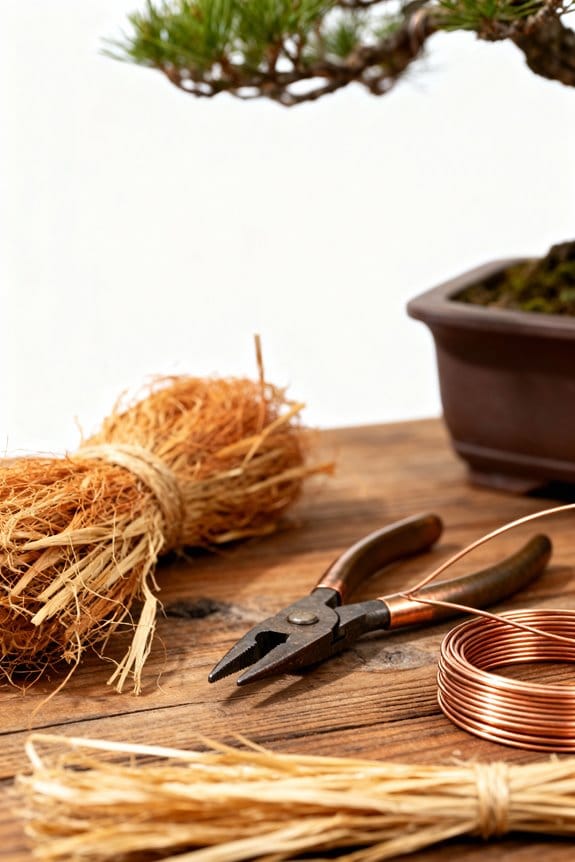
When caring for bonsai trees, wiring is an essential technique that allows enthusiasts to shape and train branches and trunks effectively. The use of high-quality Bonsai wire, typically aluminum, is imperative for beginners due to its lightweight nature and ease of manipulation. Various diameters of wire are available, allowing practitioners to select the right size to avoid damaging branches during bending. Additionally, specialized tools like Bonsai wire cutters are essential; these tools focus cutting power at the tip, ensuring minimal harm to the branches. For better results, applying protective materials such as wet raffia can prevent bark damage during the wiring process. Mastering these tools is fundamental for a successful bonsai journey, promoting healthy growth and aesthetic appeal. Furthermore, using copper wire in bonsai provides stronger holding power than aluminum, making it ideal for sturdy branch support and intricate designs.
Tools for Bending and Protective Material
A variety of tools are vital for bending bonsai branches effectively, enabling beginners to shape their trees with confidence. Aluminum wire is a top choice because it’s lightweight and flexible, making it easy for novice growers to manipulate. Using protective materials like wet raffia or rubber tape is important during heavy bending, as they prevent damage to the bark and limbs. Additionally, thin rubber tubes can be employed alongside wiring to protect areas where the wire meets the branches. Employing proper bending tools, such as wire pliers, allows for precise control during the shaping process. It’s important to regularly check the wiring and protective materials to guarantee they remain effective, avoiding issues like girdling or strangulation of the branches. Tools like the Shipenophy branch bender ensure reliable performance while training, offering an ergonomic handle for comfortable grip during use.
Tools and Carving Knives for Deadwood
Bending branches is only one aspect of bonsai artistry; creating striking deadwood features adds character and depth to trees. Tools essential for deadwood work include branch splitters for dividing dead branches and jin pliers for pulling fibers. Slim chisels also help in refining the aesthetics by lifting fibers effectively. Loop knives and carving hooks allow for detailed shaping, perfect for peeling bark and forming furrows. For a natural finish, gas torches can smooth out work traces. When using power tools like rotary tools, caution is critical; always wear protective gear. Moreover, regular maintenance, including disinfecting your tools, prevents spreading infections harmful to your bonsai. Each tool plays a crucial role in enhancing your tree’s allure. Additionally, blade sharpness and durability are critical factors when choosing bonsai deadwood tools to ensure effectiveness and longevity in your artistry.
Watering Tools and Systems
Proper watering is essential for the health of bonsai trees, as each species has unique moisture needs. Beginners should invest in reliable watering tools, like ball-showers and watering cans, which offer precision control over water distribution. For larger collections, using garden hoses with a sprinkler stick allows for efficient coverage during watering sessions. Automated watering systems can also be beneficial, ensuring consistent moisture levels while you’re away from home. Programmable timers for tailored maintenance in automatic watering systems can cater to the specific hydration needs of bonsai, providing peace of mind for plant enthusiasts. Additionally, practicing rainwater collection is an eco-friendly way to hydrate bonsai trees, providing them with natural, chemical-free water. Regularly checking moisture levels will help prevent root rot and support healthy growth. With these tools and techniques, beginners can keep their bonsai thriving throughout the seasons.
Turntables for Easy Maintenance
Maintaining bonsai trees requires access to all sides of the plant for effective care. Turntables are invaluable tools for bonsai care, allowing for efficient pruning, wiring, and overall maintenance. They help avoid the hassle of physically moving the plant, thereby reducing strain on the gardener’s hands and back. Many turntables offer adjustable height options, catering to various bonsai sizes. Simple rotary disc models are budget-friendly, while more advanced versions include features like locking mechanisms to secure the bonsai during work. In addition, most turntables have a slip-resistant surface, ensuring pots stay stable as adjustments are made. Investing in a quality turntable can greatly simplify maintenance, making the process comfortable and enjoyable for beginners. Additionally, using a turntable makes it easier to spot early signs of nutrient deficiency in bonsai trees, ensuring timely intervention and care.
Frequently Asked Questions
What Bonsai Tools Does a Beginner Need?
A beginner needs tools for bonsai pruning techniques, wire cutters for bonsai wiring methods, scissors for precision, and bamboo chopsticks for handling bonsai soil types. Knowledge of bonsai watering basics and pest management is also essential.
What Are the Essential Bonsai Tools?
Essential bonsai tools include precision scissors for pruning techniques, specialized wire cutters for shaping methods, and bamboo chopsticks for soil mixing essentials. Implementing effective pest control strategies and a seasonal care guide is also vital for success.
What Is the Rule of 3 in Bonsai?
The Rule of 3 in bonsai promotes pleasing plant patterns, showcasing bonsai pruning techniques, bonsai wire applications, bonsai soil types, bonsai styling methods, and bonsai watering strategies. Triadic arrangements foster beauty, balance, and natural aesthetics.
What Equipment Is Required for Bonsai?
Bonsai cultivation requires specific equipment: tools for pruning techniques, appropriate pots for drainage, methods for proper watering, soil composition essentials for nutrients, and guidelines for seasonal care to maintain tree health and aesthetics effectively.