As an Amazon Associate, we earn from qualifying purchases. Some links on this site are affiliate links at no extra cost to you. Our recommendations are based on thorough research and editorial judgment.

How to Build a Simple Bonsai Tool Maintenance Routine

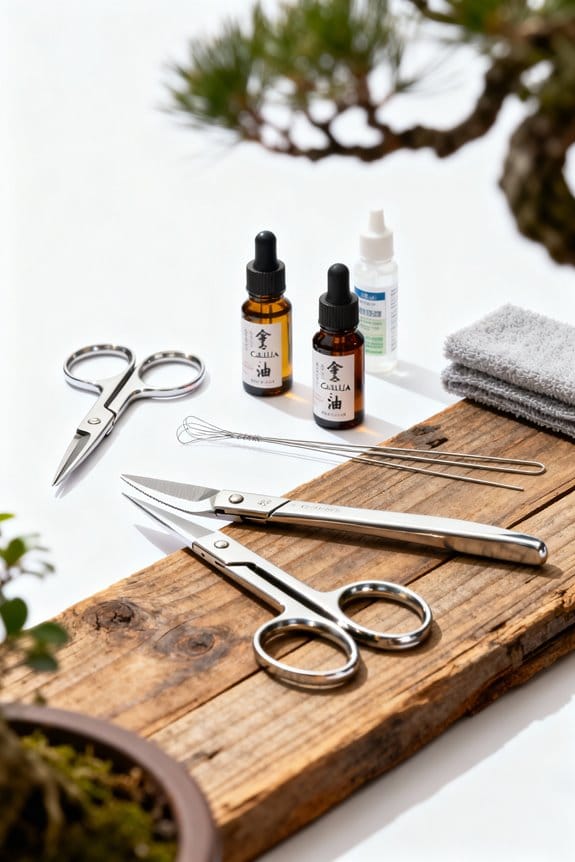
To create a simple bonsai tool maintenance routine, start by cleaning tools with warm soapy water after each use. Wipe down surfaces to remove sap and debris. Sanitize tools using alcohol wipes or isopropyl alcohol to eliminate bacteria. Regularly inspect tools for rust or damage. Sharpen blades monthly at a 20-30 degree angle, and apply camellia oil for protection. Keep a maintenance log to track your care routine. Following these steps lays a solid foundation for effective bonsai care.
Key Takeaways
- Clean tools with warm soapy water and a soft cloth after each use, then dry thoroughly to prevent rust.
- Inspect tools weekly for wear, rust, or damage, and repair as needed to maintain functionality.
- Sharpen blades monthly at a consistent angle of 20-30 degrees to ensure effective cutting.
- Apply camellia oil after cleaning to protect against corrosion and keep blades sharp.
- Maintain a log to track inspections and repairs, helping establish a consistent maintenance routine.
Understanding the Importance of Maintenance
While many might overlook the upkeep of their bonsai tools, understanding the importance of maintenance is fundamental for success. Proper care guarantees tools remain effective, promoting precision and care in cutting techniques. A consistent maintenance routine not only enhances the tools’ functionality but also prevents deterioration and rust. Regular cleaning is essential, as it helps extend the lifespan of tools and blocks the spread of diseases to fragile bonsai trees. Maintaining sharp edges is critical; well-sharpened tools prevent branch damage and support rapid healing, essential for bonsai aesthetics. Additionally, ergonomic designs in bonsai tools offer comfort and reduce user fatigue, making maintenance easier for users. Ultimately, committing to these practices elevates an artist’s skill and reflects dedication to the art of bonsai care, nurturing a deeper connection between the artist, their tools, and the trees they cultivate.
Cleaning Tools After Each Use

Cleaning tools immediately after each use is an essential step in maintaining their effectiveness and longevity. Regular maintenance includes cleaning your tools with a soft cloth or sponge and warm soapy water. This method helps remove sap and dirt, especially from metal parts and hard-to-reach crevices. After rinsing, it is important to dry tools completely with a towel to prevent rust. To enhance protection, apply a small amount of Camellia oil to the blades. This oil creates a barrier against corrosion, guaranteeing smooth operation for bonsai tools care. Finally, always store tools in a dry place to prolong their lifespan and guarantee they remain effective for precise cuts when shaping bonsai trees. It is also advisable to sharpen blades regularly to maintain efficiency and ensure that bonsai tools are in optimal condition.
Recommended Products

Package Include: ・1 Yasugi Steel Satsuki Scissors ・1 of Concave Cutter ・1 of Knob Cutter ・1 of Jin Pliers ・1 of Bonsai Wire Cutter ・1 of Root Cutter ・1 of Bonsai Tool Roll Case - Cutters: S55C Carbon steel, Black Coated. Scissors: YCS3 Alloy Tool Steel ※YCS is a trademark of Hitachi Metals, Ltd.

JAPANESE BONSAI TOOL SET WITH BAG: Made in Japan authentic professional bonsai tool set. These tools can be used for various kinds of bonsai work such as pruning, cutting, daily trimming, wire bending and cutting, jin making, moss and soil cleaning, and repotting work. ALL items are produced and finished by a blacksmith and craftsman in Nigata Tsubame Sanjo, a city of Japanese leading cutlery town.

【Specification】【Scissors】 Size: L 7.08 x W 3.74 x H 0.67 in (180mm x 95mm x 17mm) | Length of Blades: 2.04inches(52mm) | Weight: 5.5oz (156g) | Material: S58C black carbon steel | Made in Japan (Niigata prefecture) 【Concave Branch Cutter】Size: L 7.87 x W 1.96 x H 0.78 in (200 x 50 x 20 mm) | Length of Blades: 0.98 in (25 mm) | Weight: 6.7 oz (190 g) | Material: S55C Carbon steel | Black Coated | Made in Japan (Niigata prefecture)
Removing Sap and Debris Effectively

Maintaining bonsai tools involves effectively removing sap and debris that can accumulate during their use. To begin removing sap, soak the tools in warm soapy water, which helps loosen stubborn residues. Next, scrub them with a soft-bristled brush, ensuring all crevices are thoroughly cleaned. For tougher sap, products like brake cleaner can effectively clean tools without damaging metal surfaces. After cleaning, rinse and dry the tools completely to prevent rust from forming, as any remaining moisture can cause deterioration over time. Establishing a regular cleaning routine will help maintain the appearance and functionality of bonsai tools, while also preventing the spread of diseases between your trees. High-quality construction reduces the need for frequent replacement, ensuring that your bonsai tools last longer and perform effectively. Keeping tools clean is essential for a healthy bonsai gardening experience.
Tool Sanitization Techniques
Sanitizing bonsai tools is an essential step in keeping them in top condition and protecting the health of the trees. Effective tool sanitization techniques include using alcohol wipes or sprays to eliminate harmful bacteria and fungi. To thoroughly disinfect, users can wipe all tool surfaces with a cloth soaked in isopropyl alcohol, ensuring complete coverage. For stronger disinfection, flame sterilization can be employed, but caution is necessary to prevent damage to delicate tools. Additionally, using brake cleaner or tailored cleaning solutions helps remove sticky sap. Regular sharpening is essential for maintaining high-carbon steel blades’ performance. After cleaning and sanitizing, always follow up with proper lubrication. By incorporating these methods into a regular maintenance routine, bonsai enthusiasts can prevent the spread of diseases and support their trees’ longevity.
Sharpening Techniques for Bonsai Tools
To achieve ideal performance from bonsai tools, mastering sharpening techniques is essential. Maintaining a consistent sharpening angle of 20-30 degrees on metal surfaces is vital for restoring a sharp edge. Using oilstones or ceramic stones, owners should apply light pressure while sharpening to guarantee even edges. After sharpening, incorporating honing and honing steel helps realign blades, keeping them razor-sharp for precise cuts. It’s also wise to clean tools after each use, preventing buildup that can affect performance. Different grit sizes on sharpening materials allow for tailored approaches according to each tool’s condition. Effective sharpening not only enhances cutting efficiency but also minimizes branch damage, promoting quicker healing for bonsai trees and guaranteeing clean cuts during pruning. Investing in high-quality alloys not only enhances cutting performance but also ensures longevity and durability of the bonsai tools.
Lubricating Moving Parts and Hinges
After sharpening bonsai tools, the next important step is to assure that all moving parts and hinges operate smoothly. To accomplish this, regularly lubricate these parts with a light machine oil, such as 3-in-1 oil. A small amount of oil applied to pivot points assures smooth operation and helps prevent rust. It’s wise to wipe off any excess oil to avoid attracting dirt and debris. Ideally, this lubrication should occur once a week to maintain tool functionality and prolong their lifespan. During tool maintenance, inspect hinges for signs of rust or stiffness. Address any issues early to prevent further deterioration. Proper lubrication practices not only enhance performance but also demonstrate the caregiver’s dedication to bonsai tool care. Ergonomic handles reduce hand fatigue and are a key feature to consider when selecting bonsai tools for comfortable use.
Preventing Rust and Corrosion Damage
Maintaining the integrity of bonsai tools is essential for ensuring their longevity and effectiveness. To prevent rust and corrosion, proper bonsai tools care is critical. After each use, tools should be thoroughly cleaned and dried, as moisture and debris can accelerate rust formation. Applying Camellia oil provides a protective layer on stainless steel surfaces, effectively inhibiting rust. Additionally, tools should be stored in a clean environment, using silica gel packs to absorb excess moisture. Regular inspections for early signs of damage can help address issues promptly. Finally, applying a rust-inhibiting coating every 2-3 months, following thorough cleaning, further enhances protection against corrosion and extends the life of the tools considerably. Many high carbon steel tools offer exceptional sharpness and durability, making them ideal for serious bonsai gardeners seeking quality tools.
Scheduling Regular Tool Maintenance
Establishing a regular maintenance routine for bonsai tools goes hand in hand with preventing rust and corrosion damage. To guarantee peak performance, clean bonsai tools after each use to remove dirt and debris that can accumulate sap. Implement a maintenance schedule that includes weekly inspections for wear, allowing for timely care. Monthly sharpening and lubrication sessions are vital, as they maintain cutting efficiency and help prevent rust. Additionally, plan quarterly deep cleaning sessions to thoroughly sanitize tools and address any rust issues. Finally, an annual inventory will help assess the toolbox, identifying replacements needed to extend the lifespan of tools. By following this structured approach, enthusiasts can effectively enhance their bonsai tool care routine. Moreover, focusing on ergonomic designs during tool selection can significantly reduce hand fatigue and improve the overall pruning experience.
Tool Inspection and Damage Repair
Inspecting bonsai tools regularly is essential for their maintenance and longevity. A weekly tool inspection allows gardeners to spot signs of wear, rust, or other damage. During these checks, look for loose screws, bent blades, or fissures in handles. Such issues can affect tool performance and safety. When cutting edges become dull, utilize a fine-grit sharpening stone or honing guide for damage repair. If tools are severely rusted or damaged, it is better to replace them, as using compromised tools may introduce pathogens to the bonsai. Regular cleaning extends the lifespan of cutting tools by preventing rust and buildup. Keeping a maintenance log to track inspections and repairs is beneficial for establishing a routine. This proactive approach helps in prolonging the lifespan of valuable bonsai tools.
Mastering the Maintenance Routine
To cultivate a successful bonsai tool maintenance routine, gardeners must be proactive in their approach. Daily, they should gently wipe their bonsai tools with a soft cloth. This promotes hygiene and helps prevent sap or debris buildup. Weekly inspections are essential for checking wear, ensuring tools are sharp to maintain performance. Monthly, gardeners should sharpen blades at a consistent angle of 20-30 degrees to achieve clean cuts. After each cleaning, applying camellia or light machine oil helps prevent rust; excess oil should be wiped off to avoid attracting dirt. Finally, conducting a thorough seasonal maintenance check, including deep cleaning and rust-inhibiting coatings every 2-3 months, is critical for extending the tools’ lifespan and ensuring long-term tool longevity. Beginners might find it useful to refer to Bonsai (101 Essential Tips) for additional guidance on maintaining their tools and bonsai trees.
Essential Cleaning Supplies for Bonsai Tools
Maintaining bonsai tools requires the right cleaning supplies to secure they stay in prime condition. Essential items include warm soapy water to loosen stubborn dirt and sap. A high-quality, soft-bristled brush helps clean hard-to-reach crevices effectively. To prevent disease, alcohol wipes or isopropyl alcohol spray are key for sanitizing the tools between uses. For tough stains, Kaneshin CreanMate works wonders in removing rust and sap. After cleaning, using a lint-free cloth secures you apply oils smoothly, aiding in rust prevention. Additionally, a dedicated container or spray bottle filled with solutions like vinegar can assist in efficiently removing sap. Together, these cleaning supplies will keep your bonsai tools functional and ready for use.
Recommended Products
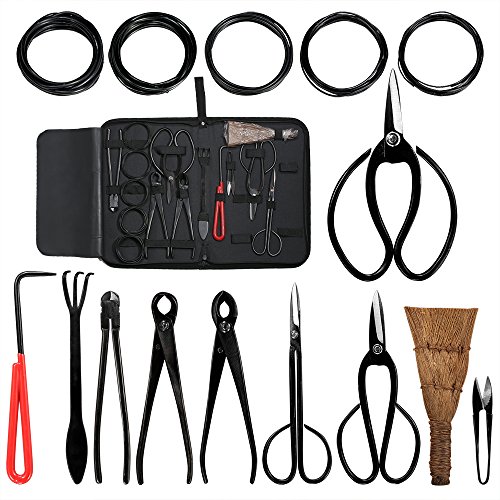
Including Leaf Trimmer, Scissors, Jin pliers, Root Hook, Knob Cutter, Aluminium Wires and Wire cutter, etc. All well packed in a Nylon zipped case.

All-Inclusive Essentials: Covers every necessary tool for bonsai pruning, shaping, wiring, and maintenance, no extra purchases needed.

CONTENTS Comes with 30 Brush Tools
Frequently Asked Questions
How to Maintain Bonsai Tools?
Bonsai tools are like a gardener’s lifeline; maintaining them involves tool cleaning techniques, blade sharpening methods, and rust prevention tips. Regular oil application, thoughtful storage solutions, and a diligent maintenance schedule enhance their longevity and performance.
What Is the Rule of 3 in Bonsai Trees?
The Rule of 3 in bonsai emphasizes trunk strength, branch design, and foliage groups, enhancing visual stability. It informs pruning techniques, wiring basics, seasonal care, and considerations like soil types, water requirements, and container selection.
What Is the Golden Rule of Bonsai?
The golden rule of bonsai emphasizes prioritizing the tree’s well-being through careful bonsai pruning, watering, soil maintenance, pest management, fertilizing, styling, wiring, and repotting, ensuring every action promotes the tree’s health and vigor.
What Tools for Beginner Bonsai?
Beginner bonsai enthusiasts should acquire essential bonsai tools such as pruning shears, concave cutters, and wire cutters, while also considering bonsai wire types, watering techniques, and selecting the best pots and soil for effective seasonal care.