As an Amazon Associate, we earn from qualifying purchases. Some links on this site are affiliate links at no extra cost to you. Our recommendations are based on thorough research and editorial judgment.

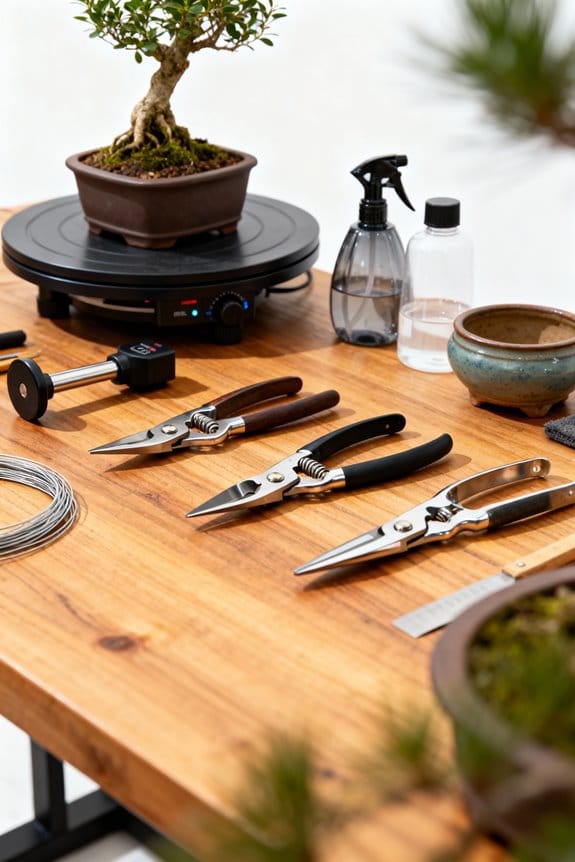
How to Set Up a Simple Bonsai Workbench at Home

To set up a simple bonsai workbench at home, start with 44 sturdy wall stones and four 4-foot pieces of pressure-treated lumber. Choose a location that receives natural light, shields against harsh weather, and is near a water source. Prepare your stones and lumber by cutting them for height and arranging the stones in a staggered fashion. Assemble the bench with pre-drilled holes to guarantee stability and tight joints. This guide will share further tips to enhance your bonsai experience.
Key Takeaways
- Select a location with ample natural light and protection from harsh weather for optimal bonsai growth.
- Use 44 wall stones for a stable and aesthetically pleasing workbench structure.
- Cut pressure-treated landscape lumber into 4-foot sections for durability and easy assembly.
- Assemble the workbench with staggered stones and properly pre-drilled bolts for strength.
- Tailor watering and humidity needs according to the specific climate and species of your bonsai trees.
Materials Needed for Your Bonsai Workbench
Creating a bonsai workbench at home requires a selection of essential materials that will support the structure and guarantee its longevity. To make this bench, start with 44 wall stones for stability, ideally chosen for their aesthetic appeal. You’ll also need four pieces of pressure-treated landscape lumber, which can often be found at stores like Home Depot or Lowe’s as convenient pre-cut 4-foot sections. Arranging the stones in a staggered fashion enhances visual appeal and secures proper support for the entire bonsai bench structure. While reclaimed stones are preferred, alternatives such as bricks, slabs, or cinder blocks can be used to construct a simple frame. Selecting quality materials sets the stage for a durable and attractive workbench.
Recommended Products

Powerful 15 AMP motor delivers 2,300 RPM for enough power to cut through pressure treated lumber
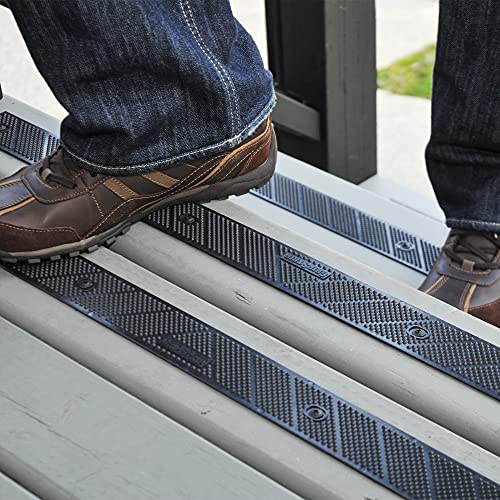
THE SAFER CHOICE: Our anti-slip treads add safety to any surface over 1800 cleats designed for traction even in the most slippery conditions. Don't rely on flimsy adhesive tapes that start pealing up after a few weeks, get real professional treads from GripStrips! Can be installed in virtually any weather conditions, you don't need a dry day.

Pack of 4: Get your flip flops and sunglasses or blanket and cozy sweater and prepare to relax on a grand scale in this set of 2 poly resin adirondack chairs; Put them poolside, on the patio or around the fire pit while you make memories
Choosing the Right Location

When selecting a location for a bonsai workbench, it is essential to contemplate natural light, as most bonsai trees thrive with several hours of sunlight each day. Make sure to prioritize areas that offer adequate exposure. Additionally, the site should protect the trees from harsh weather conditions, as outdoor benches must be positioned away from high winds and potential storms. For indoor setups, choose a room with consistent humidity, possibly utilizing humidifiers for tropical species. It’s also wise to select a location that allows easy access to water sources to facilitate regular watering. If possible, position the workbench near a window or in a sunroom to balance light exposure with your home’s aesthetics. Consider the material quality of your workbench, as durable materials will ensure longevity and better performance, similar to the considerations for bonsai incense burners.
Preparing Your Stones and Lumber

Preparing the stones and lumber for a bonsai workbench is essential to ensuring its functionality and stability. Begin with stone selection techniques, gathering 44 wall stones that can adjust to your preferred height. Consider using reclaimed stones for an attractive look, while balancing them against a solid structure to avoid toppling. Arrange the stones in a staggered formation for visual appeal, making sure back shelf stones adequately support the front shelf. For lumber, obtain four pieces of landscape lumber, ideally pressure-treated and cut into 4-foot sections for easy handling. This choice complements an adjustable bench design, allowing for modifications over time. Also, keep in mind shaded placements to protect bonsai from harsh sunlight, especially in warmer climates like South Florida. Incorporating humidity trays into your setup can effectively manage moisture levels, which is essential for maintaining the health of your bonsai plants.
Recommended Products

✅ FITS STANDARD 4x6 POSTS (3.5” x 5.5”) Designed for a precise fit on nominal 4x6 wood posts which actually measure 3.5" x 5.5". Compatible with pressure-treated pine, cedar, redwood, and more.

Ideal creosote substitute - provides a black look for landscape timbers, railroad ties, farm fencing and more

UNMATCHED STRENGTH: Made from a thick 3-gauge steel, these landscaping nails are built tough and won't bend during installation! Ensuring that your landscaping timbers, edging, and other projects like garden beds stay securely in place for years to come.
Assembly Process for a Sturdy Bench
Starting the assembly of a bonsai workbench requires careful attention to the parts involved. First, cut treated pine into 65mm square and 65mm x 48mm pieces, guaranteeing all joints are at 90 degrees for accurate assembly. The assembly sequence steps begin with the top frame, followed by attaching the legs. It’s crucial to pre-drill 8mm holes to prevent splintering as you construct the second and third shelves. When drilling bolt holes with a 22mm bit, follow the specific order to prevent misalignment issues. Avoid fully tightening bolts at first; this allows for adjustments while aligning joints accurately. Akadama soil, known for its excellent drainage and aeration, can be an ideal addition to your bonsai setup, ensuring healthy root systems and growth. Finally, attach the hardwood decking and tighten all bolts securely to provide a sturdy finish for the workbench.
Recommended Products

Upgrade Your Bonsai Skills with Professional Bonsai Tool Sets. All-Inclusive Essentials: Covers every necessary tool for bonsai pruning, shaping, wiring, and maintenance, no extra purchases needed.
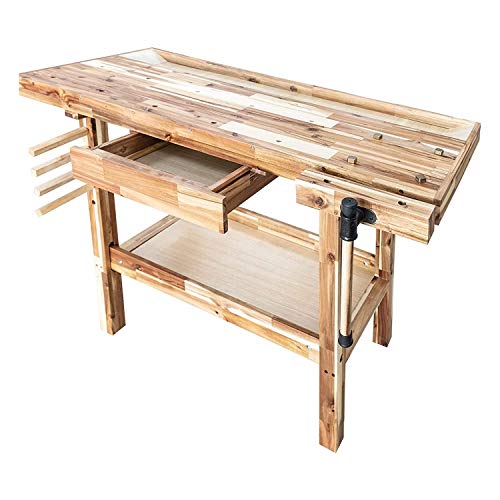
HARDWOOD BENCH: Solid Acacia hardwood workbench, suitable for home, garage, and industrial use

All-Inclusive Essentials: Covers every necessary tool for bonsai pruning, shaping, wiring, and maintenance, no extra purchases needed.
Enhancing Stability and Visual Appeal
Enhancing stability and visual appeal are fundamental aspects of a well-constructed bonsai workbench. To achieve this, selecting materials wisely is essential. Using reclaimed stones or pressure-treated lumber for the base provides durability and robust structural support. For design aesthetics, stagger the arrangement of the wall stones. This not only creates a visually interesting pattern but also reinforces the shelf structure. Incorporate varying heights in the stones to add depth; guarantee the back shelf stones are securely placed to support front stones. Maintaining a safe height for the bench is crucial, as it prevents tipping while enhancing overall appearance. Finally, consider positioning the workbench in a shaded area to help protect the bonsai from excessive sunlight exposure. Evaluate material quality and design when choosing components for your bonsai workbench, ensuring they contribute to both functionality and longevity.
Recommended Products

Comfortable Rollback Design: The rollback design offers the most comfortable style with a smooth gliding range, providing optimal relaxation

Comfortable Rollback Design: The rollback design offers the most comfortable style with a smooth gliding range, providing optimal relaxation

Premium Construction: Made from #1 kiln-dried pressure treated pine; ensures durability and long-lasting use for outdoor furniture
Climate Considerations for Your Bonsai
Understanding climate considerations is essential for the successful care of bonsai trees. Each tree species has specific temperature and humidity preferences, which greatly influence their health. In regions like South Florida, where daytime temperatures may soar to 88-90°F, bonsai require protection from intense sunlight. This can involve providing shade cloth, which aids in temperature management while still allowing sunlight to penetrate. Additionally, minimizing wind exposure is vital to prevent storm damage. Recognizing local climate impacts, like seasonal changes, will enhance humidity control and inform appropriate watering schedules. Implementing drip irrigation systems can further aid in maintaining consistent hydration by delivering water directly to the roots, ensuring optimal growth and reducing wastage. Ultimately, by tailoring care to their environment, bonsai enthusiasts can foster healthier trees that thrive year-round.
Recommended Products

PROTECTS FROM SUN & PESTS: Sheilds delicate seedlings and early growth plants from UV rays, wind, and pests to encourage strong rooth and leaf development in herbs, flowers, and vegetables.

Complete 1/8 Wire Rope Kit: Comes with everything you need, includes a 100ft vinyl coated stainless steel cable, 1 wire rope crimping tool, 1 wire cutter, 20 M3 wire rope thimbles, 50 M3 aluminum crimping loop, giving DIY users the key parts to cut, loop, crimp and secure cable runs with fewer extra purchases
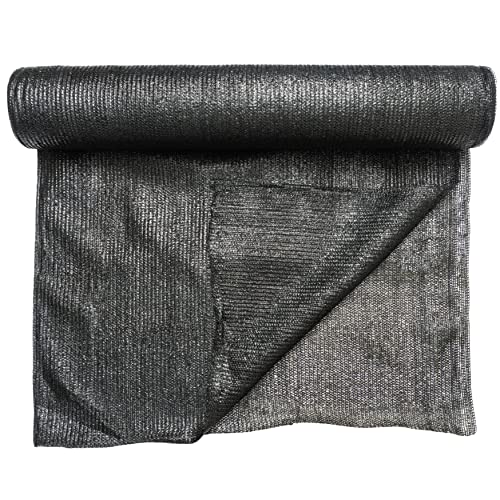
PREMIUM MATERIAL: Crafted from high-density polyethylene (HDPE), this tarp offers exceptional durability, ensuring it withstands harsh conditions and long-term use
Future Projects and Enhancements
Creativity plays an essential role in enhancing any bonsai workbench, paving the way for future projects that improve both functionality and aesthetics. One useful addition is shade cloth installation, which protects plants from excessive sunlight, particularly in hot climates like South Florida. Enthusiasts can further enhance their workbench by using reclaimed stones and pressure-treated lumber, providing both strength and visual appeal. Building features like a pergola can create additional shade while also fostering an inviting workspace. Engaging in bonsai community collaboration can inspire innovative ideas for further improvements. Finally, remember to document updates and enhancements, showcasing your bonsai display’s progress, and ensuring ideal growth and care for your treasured plants.
Frequently Asked Questions
What Is the Golden Rule of Bonsai?
The golden rule of bonsai emphasizes balancing aesthetics and tree health. Proper soil types, effective pruning techniques, and consistent watering schedules are essential for thriving bonsai, ensuring that artistic designs enhance natural growth patterns without compromising robustness.
What Wood to Use for a Bonsai Bench?
For a bonsai bench, treated pine and hardwood decking are ideal wood types. Durability factors like pressure-treated lumber enhance longevity, while complementing bench materials, such as reclaimed stones, can provide a visually appealing yet functional structure.
What Is the Easiest Bonsai for a Beginner?
Studies show that over 60% of new bonsai enthusiasts prefer the Ficus for its resilience. Easy choices like Juniper and Chinese Elm also stand out, offering beginner tips for cultivating popular species with minimal challenges.
Should I Mist My Bonsai Every Day?
Misting frequency should be adjusted based on humidity levels and environmental conditions. Proper plant care involves misting daily for tropical species but ensuring the soil dries slightly, preventing over-misting which can cause root rot.