As an Amazon Associate, we earn from qualifying purchases. Some links on this site are affiliate links at no extra cost to you. Our recommendations are based on thorough research and editorial judgment.


How to Choose Protective Gear for Bonsai Carving and Cutting

Choosing protective gear for bonsai carving is essential for safety and comfort. Start with cut-resistant gloves made of materials like Kevlar for flexibility and protection. Incorporate safety goggles that meet ANSI standards for eye protection against debris. Confirm gear fits well to maintain dexterity and use breathable materials to enhance comfort. An organized workspace minimizes accidents, while ergonomic designs support extended use. With the right precautions, you can successfully enjoy the art of bonsai carving. More information awaits.
Key Takeaways
- Select cut-resistant gloves made from materials like Kevlar or high-performance polyethylene for protection while maintaining tactile sensitivity.
- Choose safety goggles meeting ANSI Z87.1 standards, ensuring they offer impact resistance and fog-free visibility during detailed bonsai projects.
- Look for a well-fitted, lightweight and breathable apron or protective clothing to shield against cuts and splinters without compromising comfort.
- Consider ergonomic handles and cushioned mats to enhance comfort and support during prolonged carving sessions.
- Regularly inspect and maintain your gear, replacing any worn equipment to ensure your safety while working with sharp tools.
Importance of Protective Gear in Bonsai Carving
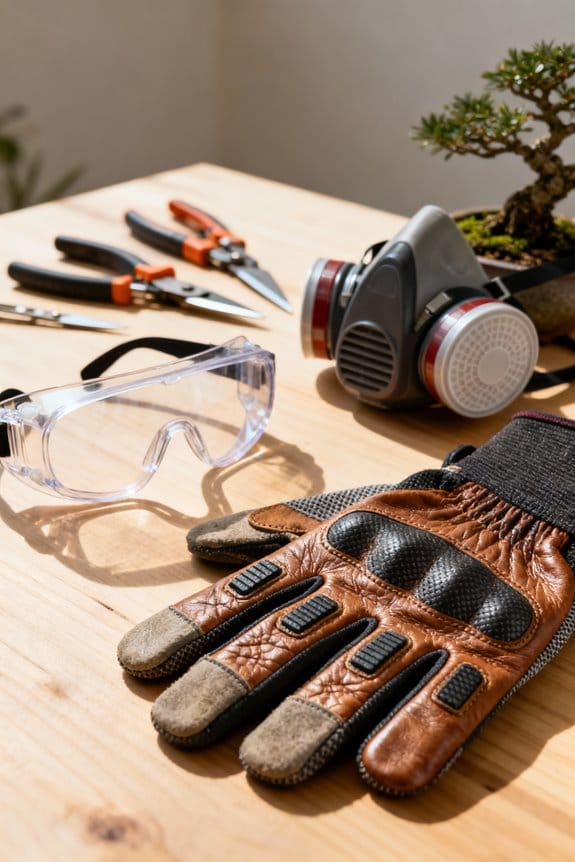
When engaging in bonsai carving, understanding the importance of protective gear is essential for safety and success. Using sharp tools can lead to unexpected accidents, resulting in cuts or injuries. Carving gloves, especially cut-resistant types, are crucial for protection while offering necessary tactile sensitivity. This allows the carver to maintain precise control during detailed tasks. Safety glasses are another critical piece of protective gear that helps guard against eye injuries from flying debris and wood shavings. Additionally, establishing a well-organized and well-lit workspace reduces distractions and further enhances safety. Regular maintenance is crucial to prevent rust on tools, ensuring their longevity and performance. Ultimately, wearing appropriate protective gear minimizes risks, allowing enthusiasts to focus on the creative aspects of bonsai carving without compromising their well-being.
Types of Cut-Resistant Gloves
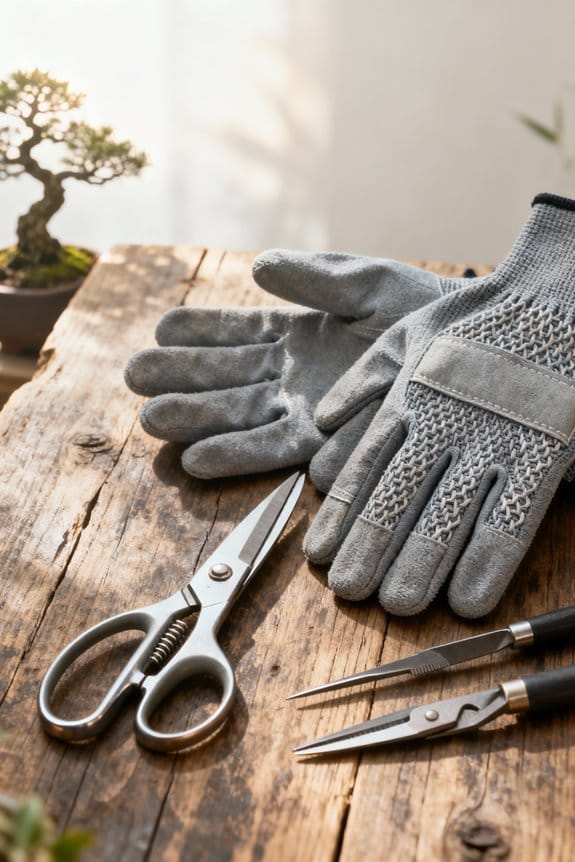
A variety of cut-resistant gloves are available, each designed to suit specific needs in bonsai carving. These gloves are rated based on the ANSI/ISEA 105 standard, indicating their level of cut and puncture resistance. Materials like Kevlar, steel mesh, and high-performance polyethylene offer different balances of safety and flexibility. A good fit is essential, as ill-fitting gloves can lead to accidents when handling sharp tools. Additionally, some gloves feature grip-enhancing coatings or waterproof layers, providing better control in various conditions. Regularly inspect gloves for signs of wear and tear, as any damage compromises their effectiveness. Prioritizing effective hand protection will keep safety precautions in mind while enjoying bonsai carving tasks. When selecting bonsai netting supports, consider the breathable mesh pads that prevent root rot and support healthy growth.
Maintaining Dexterity With Protective Gear
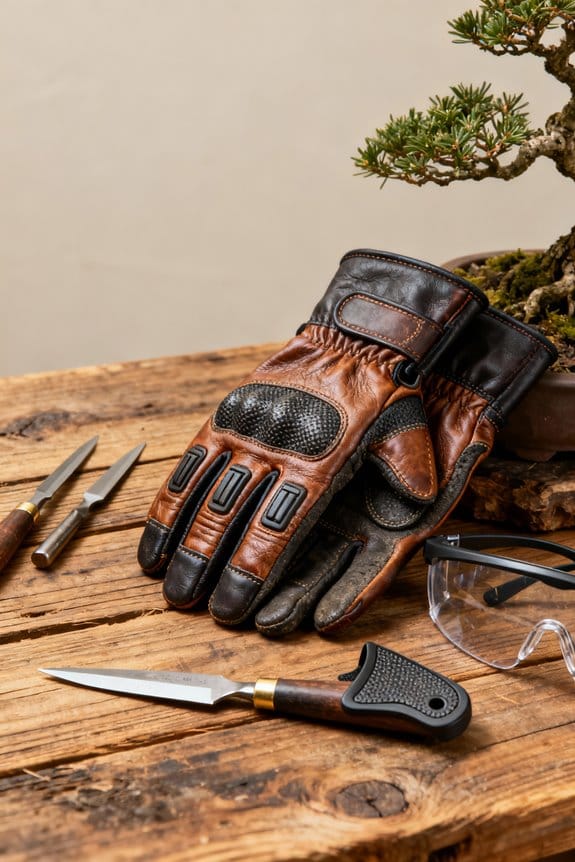
Maintaining dexterity while using protective gear in bonsai carving is vital for achieving precise results. When selecting cut-resistant gloves, prioritize durability without sacrificing tactile sensitivity for effective precision handling. Materials like Kevlar or leather provide both protection and flexibility, enabling detailed movements. Additionally, make certain the protective gear allows for airflow, avoiding discomfort during long sessions, especially in warm conditions. Lightweight options are essential to reduce hand fatigue, thereby enhancing overall carving control. Consider thumb guards that stabilize the thumb without hindering dexterity, as they assist in guiding tools accurately. By choosing appropriate protective gear, carvers can enjoy safety while retaining the skills needed for intricate bonsai work. Regular maintenance, including cleaning and sharpening, is crucial for the optimal use of bonsai carving tools, ensuring they remain effective and safe to handle.
The Role of Thumb Guards in Safety
Protective thumb guards play an essential role in the safety of bonsai carving. These pieces of protective equipment fit snugly around the thumb, providing vital cushioning and support. This design helps prevent injuries from slips when using sharp carving tools. High-quality thumb guards are often made of durable, cut-resistant materials, ensuring reliable protection without sacrificing necessary dexterity for precise work. By incorporating thumb guards, carvers can create a safer work environment and focus on their techniques. This allows for longer, more enjoyable carving sessions, reducing the fear of injuries. So, when assembling your carving toolkit, remember the importance of thumb guards in enhancing overall safety and encouraging a productive, stress-free experience. Cultivating a green thumb through bonsai not only brings satisfaction but also fosters creativity and mindfulness, enhancing the overall bonsai experience.
Choosing Breathable Materials for Comfort
Selecting the right materials for protective gear markedly enhances comfort during bonsai carving sessions. Choosing breathable materials like cotton or moisture-wicking synthetics will keep the body cool and dry. Look for gloves with ventilation features or mesh panels to improve airflow, which prevents excessive sweating and keeps hands comfortable. Lightweight protective gear is essential; it allows easy movement without compromising dexterity. Fabrics treated with antimicrobial properties are highly beneficial, as they help minimize odors and maintain cleanliness during long sessions. Finally, ascertain the protective gear fits snugly but not too tightly. A proper fit promotes comfort and mobility while effectively providing the protection needed in bonsai carving. Additionally, it’s important to use appropriate eye protection to prevent debris injuries during these sessions.
Essential Safety Goggles for Eye Protection
When it comes to bonsai carving, eye protection is vital, as flying debris and splinters can pose serious risks. Safety goggles are a must-have for anyone involved in this art. First, choose goggles that meet ANSI Z87.1 standards to guarantee adequate impact resistance during woodworking tasks. Look for features like anti-fog coatings to maintain clear visibility while working. An adjustable fit is also important; this guarantees no gaps allow debris to enter, granting maximum eye protection. Additionally, consider goggles with side shields for added coverage against lateral projectiles. These features together will safeguard your eyes, keeping you safe and focused on your intricate bonsai projects while enjoying the creative process. In addition to protective gear, consider leveraging expert articles available in bonsai care apps to enhance your overall bonsai maintenance skills and knowledge.
Organizing Your Workspace to Minimize Accidents
Creating a well-organized workspace is essential for minimizing accidents during bonsai carving. Start by ensuring the area is well-lit, as this enhances visibility and helps avoid mishaps while cutting. Next, systematically organize tools by type and how often they are used. This reduces search time and distractions, promoting safety. Designate a specific space for bonsai work to keep materials and tools contained, which prevents clutter that can lead to injuries. Consider using non-slip mats to maintain stability on potentially slippery surfaces. Finally, always keep a first aid kit accessible within your workspace. This preparedness allows for quick responses to minor injuries, ensuring a safer and more efficient carving experience. Additionally, incorporating tools with ergonomic designs can significantly reduce hand strain, enhancing comfort and safety during prolonged bonsai sessions.
Additional Protective Gear for Advanced Techniques
After organizing a workspace to enhance safety, attention turns to the protective gear needed for advanced bonsai carving techniques. Using leather gloves with cut-resistant properties is vital to prevent accidental cuts during detailed carving. A high-quality thumb guard made from durable materials guarantees your thumb remains protected and stable. For eye protection, a full-face shield or safety goggles are essential. These items guard against wood debris and chips arising from intricate cutting tasks. Additionally, wearing protective clothing like long sleeves and aprons shields the skin from sharp tools and splinters. Finally, consider investing in knee pads or a cushioned mat for comfort when working at lower heights, allowing you to focus on your craft without discomfort. The ergonomic handle designs of bonsai tools are crucial for ensuring comfort and reducing hand fatigue during extended use.
Tips for Testing and Selecting Gear
How can one guarantee that their chosen protective gear truly meets the demanding needs of bonsai carving? Begin by testing gloves made from cut-resistant materials, which should maintain tactile sensitivity for precision. Evaluate the fit and flexibility to verify a full range of motion without sacrificing safety or comfort. Look for gloves with reinforced seams and thumb protection, as these areas are vulnerable during cutting tasks. Durability is key, so check for tear-resistant fabrics that assure longevity in a woodworking environment. Additionally, assess the breathability of the material; this helps prevent sweating and discomfort during extended sessions. By focusing on these factors, one can select protective gear that enhances safety and effectiveness while working on bonsai projects. For those who are serious about bonsai gardening, consider opting for high carbon steel tools to ensure precision and durability in your work.
Best Practices for Caring for Protective Equipment
One essential practice for ensuring the safety and longevity of protective equipment used in bonsai carving is regular maintenance. Individuals should regularly inspect their protective gear, such as gloves and safety glasses, for signs of wear or damage. Cleaning this equipment with the appropriate cleaners after each use minimizes contaminants and extends the lifespan. It is vital to store protective gear in a dry, cool place, away from direct sunlight, to prevent material degradation. Furthermore, replace any gear showing significant wear, as compromised equipment increases the risk of injury. Additionally, ergonomic designs of protective gear can improve comfort and reduce fatigue during extended use. Finally, always follow manufacturer’s guidelines for specific care instructions, ensuring that protective gear remains effective and reliable for future bonsai carving projects.
Frequently Asked Questions
What Is the Rule of 3 in Bonsai?
The Rule of 3 in bonsai emphasizes balanced design through three main branches, enhancing aesthetic appeal. This principle intersects with bonsai techniques, influencing pruning methods, wiring basics, pot selection, and promoting harmonious growth patterns across tree species.
What Bonsai Tools Does a Beginner Need?
Like a painter with a palette, beginners need bonsai scissors for pruning, wire cutters for shaping, and tweezers for maintenance. Selecting the right tools paves the way for effective care and thriving bonsai trees.
What Are the Essential Bonsai Tools?
Essential bonsai tools include bonsai scissors, branch cutters, and concave cutters. Advanced bonsai equipment, carving tool options, cutting safety practices, and proper tool maintenance complement these supplies, while effective tool storage solutions enhance longevity and accessibility.
What Is the Best Brand of Bonsai Tools?
In the garden of bonsai tool brands, Masakuni and Okatsune bloom as the best, offering premium bonsai shears and ergonomic tools. Yoshi and Taimu provide excellent value, ensuring beginners can cultivate their craft effectively.