As an Amazon Associate, we earn from qualifying purchases. Some links on this site are affiliate links at no extra cost to you. Our recommendations are based on thorough research and editorial judgment.


Benefits of Using Colander Pots and Air Pruning Pots for Bonsai

Using colander pots and air pruning pots for bonsai greatly enhances root health. These containers encourage air pruning when roots reach the edges, which prevents root binding and promotes dense, fibrous root systems. With excellent drainage and aeration, they reduce risks of root rot and disease. The open design allows for easy monitoring and careful management of roots. As practitioners share their experiences, one can uncover innovative techniques and strategies for ideal bonsai growth.
Key Takeaways
- Colander pots facilitate air pruning, resulting in healthier, denser root systems that enhance tree vigor and adaptability in bonsai cultivation.
- Excellent drainage and air circulation in colander pots prevent root binding and disease, promoting overall plant health.
- The open design of colander pots allows for easier monitoring and management of roots, simplifying root pruning techniques.
- Compared to ground planting, colander pots encourage refined root structures and effective nebari development through air pruning.
- Using recyclable Air-Pots aligns with sustainable practices, reducing environmental impact while supporting long-term health of bonsai trees.
Understanding Air-Pruning and Its Benefits
What makes air-pruning such an important technique for bonsai enthusiasts? Air pruning occurs when roots reach a container’s edge, making contact with the air and stimulating a natural pruning process. This leads to the development of a healthier, denser root system. In bonsai cultivation, a well-structured root system fosters better tree vigor and adaptability. Lateral roots grow more finely, reducing issues like spiraling that often arise with traditional pots. Using air-pruning containers, such as colanders, promotes improved aeration and drainage, allowing for faster root growth. As a result, bonsai trees can exhibit superior trunk thickening and nebari development. This technique ultimately enhances overall health and growth rates, making air pruning a key strategy for dedicated bonsai enthusiasts. Additionally, high-quality Akadama soil offers excellent drainage and aeration, further supporting the robust growth of bonsai trees when used alongside air-pruning methods.
Advantages of Using Colander Pots
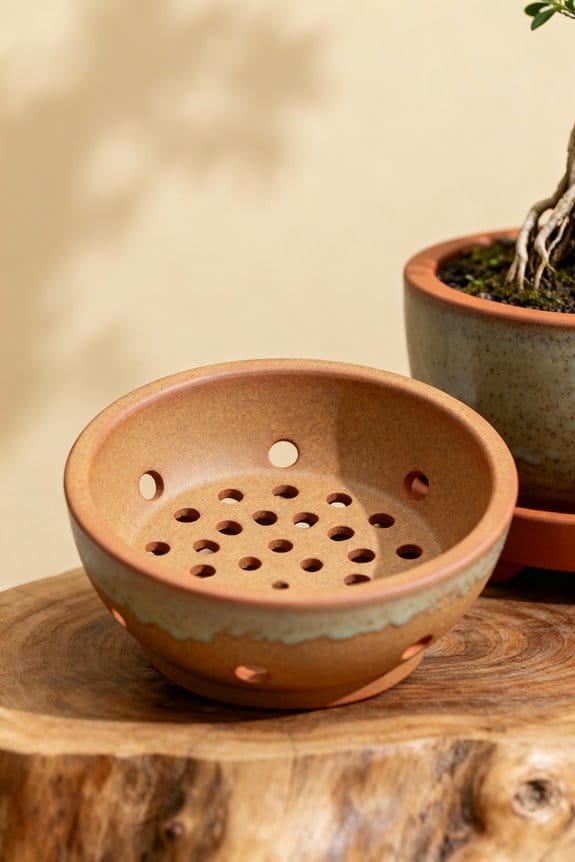
Colander pots provide several advantages for bonsai cultivation, especially when it comes to promoting healthy root systems. Their design allows for excellent soil drainage and air circulation, preventing root binding and enhancing root health. Colanders encourage air pruning, which helps create a denser, more fibrous root system, essential for small trees such as shohin Japanese Black Pine. Moreover, these pots facilitate rapid root growth by keeping soil aerated and avoiding excess moisture, making them ideal for young seedlings and cuttings. A smaller root ball resulting from colander use simplifies repotting while boosting overall tree vigor. In addition, the open design mitigates risks associated with root pests by promoting air flow and reducing moisture buildup, thereby enhancing plant health. Bonsai enthusiasts can further improve nutrient absorption and oxygen levels in soil by pairing colander pots with a quality bonsai sieve set.
Growth Comparison: Colander Pots vs. Ground Planting

When comparing the growth of bonsai trees in colander pots versus those planted directly in the ground, it becomes clear that each method has its own advantages and disadvantages. Trees grown in the ground often experience faster growth and develop thicker trunks. This is due to the larger root mass and greater access to nutrients found in the soil. Conversely, colander pots facilitate effective root pruning and promote a healthy nebari by encouraging aeration. While these trees may not grow as quickly, their root systems can be refined. Additionally, colander pots enhance drainage and aeration importance, which is crucial for preventing root rot and supporting overall plant health. Ultimately, ground planting allows for accelerated growth rates, while colander pots provide better control over roots. Understanding these differences can help bonsai enthusiasts choose the best method for their preferences.
Root Management and Pruning Techniques
Effective root management is essential for the health and growth of bonsai trees. Colander pots promote air pruning, encouraging roots to branch out when they reach the air at the container edges. This creates a denser root system, which is crucial for stability and nourishment. The open sides also improve drainage and reduce root binding, making it easier to maintain the root ball during growth phases. Regular root work can be simplified with nested colanders, enabling focused pruning near the trunk to enhance the tree’s taper. Additionally, roots in colanders do not spiral, allowing for more controlled root management and reducing the need for severe trimming. This results in healthier root structures and overall better quality in colander-grown bonsai. Observing bonsai for yellowing leaves is crucial to identifying and addressing nutrient deficiencies early on.
Soil Considerations for Optimal Growth
What factors should be considered when selecting soil for bonsai trees? The soil composition is essential for promoting healthy growth. To achieve this, a recommended mix includes 30% Akadama, 40% Pumice, and 30% Scoria. This blend creates a coarse, oxygen-rich environment, which is critical for developing robust roots. Additionally, colander pots enhance air circulation, allowing roots that reach the edges to be air-pruned. This air exposure encourages the roots to branch out and form fine root structures, essential for overall bonsai health. Enhancing soil quality can also improve mycorrhiza presence, further supporting root health. Consequently, thoughtful soil selection, combined with the advantages of colander pots, fosters ideal growth for bonsai enthusiasts. A well-draining soil with components like pumice and lava rock prevents waterlogging, reducing the risk of root rot and promoting sustainable growth.
Environmental Impact of Container Choices
Choosing the right container for bonsai not only affects the health of the trees but also impacts the environment. Plastic containers, such as colanders and Air-Pots, can generate significant plastic waste if not recycled properly. This reality highlights the need for sustainable practices among bonsai enthusiasts. Air-Pots, crafted from recyclable HDPE, offer a more eco-friendly solution as they are reusable and support quality growth without adding to plastic pollution. By selecting containers that minimize the frequency of repotting, gardeners can reduce resource usage and lower their environmental footprint. To further enhance environmental sustainability, opting for nutrient-rich mixes can promote bonsai growth and health while reducing the need for frequent repotting. Therefore, choosing the right bonsai container is essential not just for plant health but also for promoting sustainable gardening practices that positively affect the planet.
Alternative Containers and Their Effectiveness
Exploring alternative containers can greatly impact the cultivation of bonsai trees. Colander pots promote excellent soil drainage and air circulation, which enhances root growth. Their open design prevents root binding, especially beneficial for trees like Japanese Black Pine. Additionally, colander pots retain a higher root mass after repotting, which contributes to better overall root quality and nebari development. On the other hand, air pruning pots utilize perforated sidewalls to eliminate root spiraling, fostering lateral root development for healthier plants. Both types of containers reduce the need for frequent root pruning during repotting. By choosing colander pots or air pruning pots, bonsai enthusiasts can support long-term plant health, ensuring robust growth and easier management of fine root systems. Incorporating quality bonsai soil with excellent drainage and aeration in these containers further optimizes root health for thriving bonsai trees.
Exploring the Superoots Air-Pot Features
Colander pots and air pruning pots play significant roles in promoting healthy bonsai growth, but Superoots Air-Pots stand out due to their innovative design features. Made from recyclable HDPE, they have perforated sidewalls that enhance air circulation. This air pruning process encourages roots to grow efficiently, preventing root spiraling and fostering a robust root system. The unique circular shape further optimizes rooting with inward and outward pointed cones, which leads to a better root structure than traditional pots. Superoots Air-Pots not only reduce growing time and transplant needs but also minimize overwatering risks. Consequently, these pots support healthier plants that are more likely to thrive, producing an abundance of fruit and flowers for avid bonsai enthusiasts. For optimal moisture retention capacity, integrating moisture control crystals with these pots can further enhance plant health and reduce watering frequency.
Community Feedback on Container Usage
Community feedback on container usage reveals valuable insights for bonsai enthusiasts. Many practitioners note that colanders effectively manage root growth, especially for species like the Japanese Black Pine. Users emphasize the importance of frequent watering, as soil can dry quickly in these pots. Some gardeners report enhanced growth by combining colanders with other rooting methods or nesting them in larger bonsai pots. Observations suggest that trees grown in colanders show healthier root structures and increased beneficial mycorrhiza compared to those in traditional terra cotta pots. However, the community also acknowledges that colanders can be fragile. Stability can be an issue, particularly in varying environmental conditions, so careful placement is essential for success. Additionally, built-in drainage systems are crucial in preventing soil loss and ensuring healthy root growth, as highlighted by the benefits of bonsai mesh grow pots.
Experimentation and Adaptation in Growing Methods
When gardening enthusiasts venture into bonsai cultivation, they often find themselves experimenting with various growing methods to discover what works best. Using colanders and air-pruning pots provides significant advantages. For instance, the double colander technique focuses growth near the trunk, improving taper development. Air-pruning pots encourage lateral root growth by trimming roots at the edges, resulting in healthier, non-spiraling systems. Experimentation with different methods, such as air layering combined with these unique containers, can enhance overall tree health. Slow-release fertilizers typically necessitate application every six months, which minimizes disruption to plant growth during experimentation. As bonsai practitioners share their experiences, community insights foster creativity and adaptation in growing techniques. By blending traditional practices with innovative tools, beginners can cultivate stronger, more beautiful bonsai while refining their skills and understanding of root health.
Successful Techniques From Bonsai Practitioners
Numerous bonsai practitioners have developed successful techniques that highlight the benefits of innovative potting methods. Many enthusiasts find that using colander pots encourages air pruning, which promotes denser root growth. When roots reach the pot’s air exposure, they stop growing and stimulate lateral growth, creating a healthier root system. This technique often leads to better nebari development, as confined roots cultivate a more uniform structure near the trunk. Air-pruning pots, like Superoots Air-Pots, eliminate root spiraling and facilitate straight growth, enhancing bonsai aesthetics. Although colanders require more frequent watering, most practitioners agree that the advantages of improved aeration and overall root health justify this extra effort. Consequently, these techniques prove beneficial for specific bonsai species and their requirements.
Frequently Asked Questions
Are Air Pruning Pots Worth It?
Air pruning pots are indeed worth it, as they promote air circulation benefits, improve root health, and offer various pot material options. Their unique design fosters ideal root development, enhancing overall plant performance in bonsai cultivation.
What Is the Rule of 3 in Bonsai?
The Rule of 3 in bonsai emphasizes grouping elements in threes, enhancing visual harmony. These bonsai potting techniques support ideal root development strategies and influence soil composition choices, promoting a more dynamic and balanced aesthetic.
What Are the Disadvantages of Air Pruning?
Disadvantages explained include higher watering frequency due to rapid drying, higher initial costs, potential root development issues from dense edges, and aesthetic concerns, potentially deterring bonsai enthusiasts attracted to air pruning efficiency and ideal growth conditions.
What Is the Rule for Bonsai Pots?
In the landscape of bonsai cultivation, the rule for bonsai pots emphasizes balanced dimensions, ensuring ideal drainage techniques and selecting appropriate material choices. This harmony cultivates roots that thrive beneath the surface, fostering a miniature masterpiece.