As an Amazon Associate, we earn from qualifying purchases. Some links on this site are affiliate links at no extra cost to you. Our recommendations are based on thorough research and editorial judgment.


How to Select Decorative Stones and Moss for Bonsai Displays

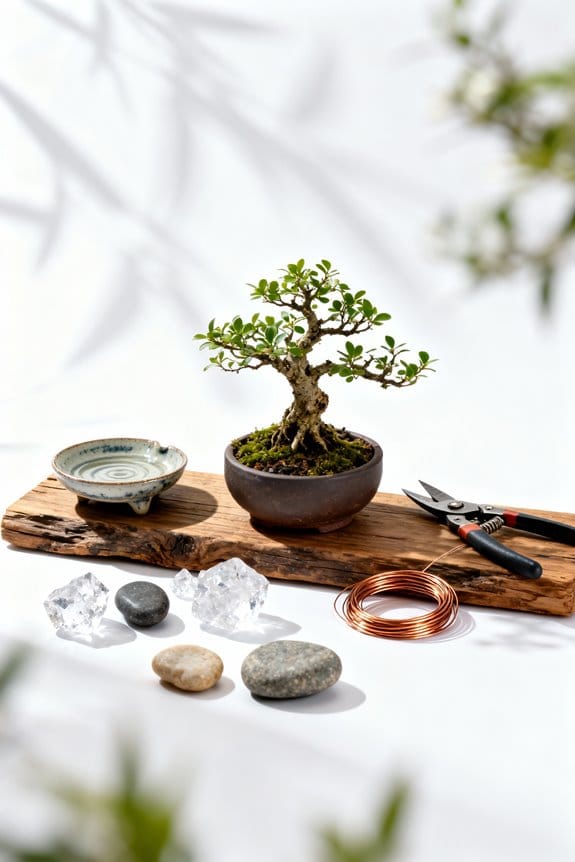
Selecting decorative stones and moss for bonsai displays enhances their visual appeal. Choose stones with diverse textures and colors that complement the bonsai. Pair larger stones to anchor the display with smaller stones for filling gaps. For moss, consider resilient options like Silver Moss that match the bonsai’s growth cycle. Layer different moss types for a natural look. Adjust stone and moss arrangements with the seasons to reflect nature’s beauty. There’s much more to explore about creating perfect displays.
Key Takeaways
- Choose stones with varied textures, colors, and shapes to complement the bonsai’s aesthetics.
- Pair vibrant green moss with stones, ensuring harmonious color and texture combinations.
- Anchor displays with larger stones and fill gaps with smaller stones and moss for balance.
- Select moss varieties that align with the seasonal characteristics of the bonsai’s growth cycle.
- Adjust stone and moss arrangements seasonally to reflect nature’s changes and enhance visual appeal.
Understanding the Role of Decorative Stones in Bonsai Displays

How do decorative stones enhance the beauty of bonsai displays? Decorative stones serve as crucial elements that elevate the visual appeal of bonsai arrangements. Their diverse textures and colors complement the trees, creating a more engaging presentation. For instance, using smooth river stones can mimic a gentle riverbed, while rugged granites evoke mountainous terrains. This variety helps to craft specific themes and atmospheres. When selecting decorative stones, it’s important to take into account their size and weight. Stones that are well-proportioned will harmonize with the bonsai, ensuring the tree remains the focal point. Collecting stones from natural settings adds a personal touch, bringing unique character to each display. Fundamentally, decorative stones enrich bonsai art by enhancing its overall aesthetic coherence. Additionally, natural decorative pebbles improve drainage and provide a pet-safe environment for bonsai plants, adding functionality to the aesthetic appeal.
Choosing the Right Moss for Your Bonsai

The choice of moss can greatly enhance the overall presentation of a bonsai display, much like decorative stones. When selecting moss, Silver Moss (Bryum argenteum) is a fantastic option due to its resilience and adaptability. It is important to choose moss that complements the bonsai’s seasonal characteristics—frost-bitten moss for spring and vibrant greens for summer can create visual harmony. Moss differs in care from bonsai and typically requires consistent moisture and well-draining soil. To enhance the aesthetic, moss adds a tranquil, natural look and a sense of maturity to the display. Finally, avoid disruptive patchwork patterns in your arrangement; instead, layer different types of moss carefully to achieve a more organic appearance that fits the bonsai’s specific needs. Soft bristles are essential for gently maintaining the moss surfaces without causing damage, ensuring your display remains visually appealing while supporting plant health.
Combining Stones and Moss for Visual Harmony

Creating a stunning bonsai display requires careful consideration of both decorative stones and moss. Combining these elements effectively enhances the arrangement’s visual appeal. When selecting stones, consider their colors and textures, pairing them with vibrant green moss. Mixing moss with varying textures alongside smooth or coarse stones can add depth. Larger stones should anchor the display, while smaller stones and moss fill in gaps, respecting proportion and scale. Seasonal changes may influence your moss choice; allow the colors and textures to reflect the season. Finally, maintain adequate spacing between stones and moss. This prevents overcrowding, ensuring that each element stands out and contributes to a cohesive theme. Balance and harmony are key to a mesmerizing bonsai display. To maintain the health of your display, ensure proper drainage for the moss to avoid mold and support thriving conditions.
Preparing and Arranging Stones and Moss
Preparing decorative stones and moss enhances the overall aesthetic of a bonsai display. When selecting decorative stones, aim for a variety of textures, colors, and shapes to create visual interest. Position these stones in a naturalistic way, ensuring they complement the bonsai tree’s scale while balancing empty and filled spaces. For moss, choose varieties that harmonize with both the bonsai and surrounding stones. Mixing textures can elevate the display; use softer mosses for gentle areas and coarser options for contrast. Consider layering different moss types, like Creeping Thyme for ground cover and upright-growing mosses as vertical accents. Always maintain consistent watering practices, ensuring the moss remains hydrated without soaking the bonsai soil, fostering a healthy and vibrant display. Incorporating quality moss sourced from wetlands can enhance the display’s vibrancy and support soil health, ensuring a thriving environment for your bonsai.
Seasonal Adjustments for Stones and Moss in Bonsai Displays
As seasons change, so too should the decorative elements of bonsai displays to reflect the beauty of nature. Seasonal adjustments for stones and moss in bonsai displays enhance the sense of natural beauty. In spring and summer, choose damp, rich shades of moss and smooth, rounded stones to evoke freshness. When autumn arrives, switch to earthy tones and rough-edged stones to capture the season’s rugged charm. Adjust moss arrangements by introducing lighter greens in spring and deeper tones in winter. Accent stones, like pebbles resembling frozen lakes in winter or vibrant hues for summer blooms, tell a seasonal story. Remember, watering practices should also change; moisten more during warmer months and less when it cools down for ideal growth. When selecting moss, consider moisture retention capability as an essential factor to support bonsai health and vitality.
Frequently Asked Questions
What Is the Rule of 3 in Bonsai?
In bonsai, the Rule of 3 symbolizes aesthetic balance, utilizing odd-numbered groupings to evoke spontaneity. Three carefully arranged elements—stones, plants, or moss—enhance visual harmony, guiding the viewer’s gaze through the dynamic composition.
How to Choose a Rock for Bonsai?
When choosing a rock for bonsai, one should prioritize stone selection based on texture, color, and size. The chosen stones should enhance the display’s aesthetic while ensuring a harmonious balance with the bonsai tree itself.
What Type of Moss Is Best for Bonsai?
The best moss variety for bonsai is unquestionably Silver Moss, renowned for its extraordinary resilience and adaptability. This enchanting moss transforms displays, creating an alluring charm and enhancing the overall aesthetic magnificence of each bonsai arrangement.
What Is the Best Stone for a Bonsai Tree?
The best stone for a bonsai tree often features natural stone textures, such as granite or slate, which harmonize with the tree’s aesthetic. The selection should balance scale and complement the bonsai’s unique characteristics.