As an Amazon Associate, we earn from qualifying purchases. Some links on this site are affiliate links at no extra cost to you. Our recommendations are based on thorough research and editorial judgment.


Using Figurines and Stones to Tell a Story in Bonsai Displays

Using figurines and stones in bonsai displays adds depth and storytelling to the art. Figurines can represent themes, like fishermen symbolizing life’s journey. Choosing stones carefully enhances the display’s emotional impact, with different types evoking strength or tranquility. It’s vital to harmonize the sizes and styles of both figurines and stones with the bonsai itself. Proper placement engages viewers and creates a visual narrative. Exploring these elements can reveal even more ways to enhance your bonsai arrangement.
Key Takeaways
- Integrate figurines that reflect cultural elements or stories to deepen the emotional connection with your bonsai display.
- Use stones to symbolize stability and permanence, enhancing the visual narrative of the arrangement.
- Opt for one or two carefully chosen figurines to maintain balance and focus on the bonsai as the centerpiece.
- Create layers with varied heights in figurines and stones to guide viewers through an imaginative scene.
- Select natural elements that mimic the bonsai’s environment, fostering a harmonious and cohesive storytelling experience.
Recommended Products

Hand-crafted by highly skilled artisans using all metal construction

Made of high quality iron and resin blend material, strong and durable.

Flexible Display Options:Instantly transform your display case by removing shelves to fit collectibles of different sizes. Create open spaces for large pieces or multi-tiered displays for your entire collection - all without tools
The Importance of Storytelling in Bonsai Displays
Storytelling plays an essential role in bonsai displays, as it transforms simple arrangements into enthralling experiences. By integrating thematic figurines and seasonal motifs, storytellers create visual narratives that resonate with viewers. Each added element, from trees to decorative accents, contributes to a cohesive approach that conveys a unified message or theme. For instance, using Tenkei can enhance the storytelling aspect by integrating nature’s cycles and cultural references. The creative arrangement of items allows for personal expression, making every display unique to the artist’s vision. Viewers are invited to connect emotionally with the changing aspects of nature. By incorporating Akadama’s porous structure into bonsai soil, the display benefits from improved drainage and aeration, which supports the health and growth of the trees, further enriching the storytelling experience. Ultimately, strong storytelling within bonsai displays fosters a deeper understanding and appreciation for this distinctive art form.
Choosing the Right Figurines for Your Bonsai
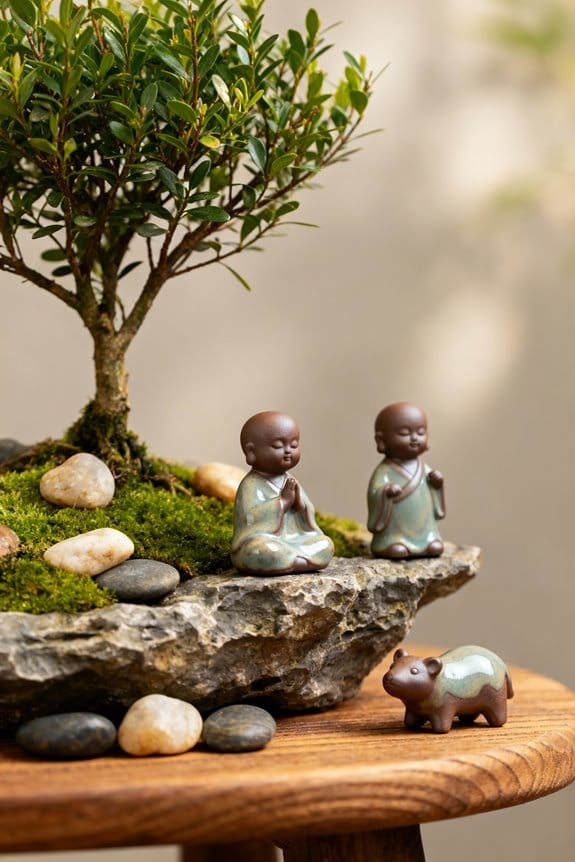
Choosing the right figurines for a bonsai display requires thoughtful consideration of various factors. First, select figurines that complement the bonsai rather than compete for attention. This guarantees a harmonious visual balance. Consider the size of the bonsai; for small trees under 10 inches, choose figurines 1-2 inches tall, and for medium bonsai, opt for 2-4 inch tall options. Large bonsai over 18 inches can accommodate 4-6 inch figurines. Next, match the style of the figurines with the mood of the bonsai to enhance the story being told. Finally, limit the display to one or two figurines to prevent clutter, maintaining focus on the bonsai while adding visual interest to the arrangement. Miniature Orchid displays in bonsai arrangements are enhanced by incorporating elements that mimic natural environments, such as moss and stones, to create a cohesive and visually appealing scene.
Recommended Products

OFFICIAL BOTANICAL BONSAI UNICORNO SERIES: Step into a world of tranquility with the tokidoki Botanical Bonsai Unicorno️ collection. Each mystery vinyl figure is inspired by the beauty of miniature gardens, featuring nature-themed designs with delicate blossoms and leafy details. These Unicornos are styled like charming bonsai trees, blending iconic art with a peaceful botanical aesthetic.


Material: Made of high quality brass material, durable. Well made and refined.
Symbology of Stones in Bonsai Art

In bonsai art, stones serve as essential components that enrich the overall display. They symbolize permanence and stability, highlighting the enduring nature of landscapes and the passage of time. Different types of stones, like slate and granite, can represent strength, while softer limestone evokes gentleness and tranquility. The practice of suiseki focuses on selecting naturally shaped stones that capture the beauty and essence of various terrains. Arranging these stones alongside trees creates a harmonious balance, inviting viewers to reflect on the intricate relationship between nature and art. Each stone tells a story, enhancing the visual narrative of the bonsai display and encouraging contemplation of the world’s natural beauty. Netting options, such as flower pot hole mesh pads, play a crucial role in bonsai cultivation by ensuring proper drainage and soil retention, thereby promoting both the health and aesthetic appeal of the display.
Harmonizing Figurines and Stones in Your Display
Creating an engaging bonsai display involves harmonizing figurines and stones to enhance the visual narrative. Size is essential; small figurines, around 1-2 inches, work well with trees under 10 inches, while larger pieces, 4-6 inches, suit trees over 18 inches. Positioning figurines off-center keeps the focus on the bonsai. Introducing stones, like pebbles or small rocks, creates a textured landscape that complements both the tree and the figurines. Incorporating cultural elements, such as an arched stone bridge or a clay house, adds depth and meaning to the narrative. Finally, careful selection of colors and styles guarantees that all components harmonize with the bonsai’s foliage, ultimately enhancing the overall visual appeal of the display. For those looking to experiment with bonsai shaping, using flexible and bendable aluminum bonsai wire offers a beginner-friendly option that is easy to manipulate.
Placement Strategies for Maximum Impact
Engaging placement strategies can turn an ordinary bonsai display into a fascinating visual experience. For smaller bonsai under 10 inches, use figurines that are 1–2 inches tall, positioned off-center to keep the tree as the focal point. When incorporating stones, select those proportional to the tree’s size to achieve harmony in the arrangement. Strategically place figurines and stones to guide the viewer’s eye, enhancing the storytelling aspect of the display. For ground cascade bonsai styles, position figurines on the lower side of the cascading branch to create depth. Finally, limit decorative elements; one or two well-placed figurines or stones can yield a strong visual effect without distracting from the bonsai itself. Consider using durable materials like ABS plastic or eco-friendly resin for figurines to ensure they withstand various conditions and maintain their vibrant appearance.
Recommended Products

Ghost tree elves: classic design, simple and generous appearance design

Made of high quality iron and resin blend material, strong and durable.

Endless Fun and DIY Creativity: the package comes with contains 800 mini figurines in bulk, including figures, marine animals, starfish, seashells, salamanders, seaweed, sharks, dolphins, and more, they will make your miniature garden even more engaging and entertaining
Seasonal Themes: Reflecting Nature Through Figures and Stones
As seasons change, the artistry of bonsai displays can reflect these transformations by using thoughtfully selected figures and stones. Each season offers unique themes, such as vibrant flowers symbolizing spring or delicate leaves representing autumn. Incorporating figurines of seasonal animals or mythical creatures enhances the aesthetic appeal and storytelling aspect of the display. Stones can represent natural features like mountains or rivers, adding depth to the seasonal narrative. It’s essential to choose harmonious color palettes that match each season, ensuring figurines and stones complement rather than distract from the bonsai. Proper placement also guides the viewer’s eye, creating a cohesive story that reflects nature’s beauty and the ever-changing landscape in bonsai art. Additionally, artificial bonsai trees can be used for those who want the aesthetic appeal without the maintenance of natural plants, allowing for easy incorporation into seasonal themes.
Common Mistakes to Avoid in Bonsai Styling
Bonsai art is not just about the trees; it involves careful attention to accompanying elements like figurines and stones. A common mistake is using oversized figurines that overshadow the bonsai, disrupting its prominence. Clutter from too many stones and figurines detracts from the intended narrative, creating confusion instead of harmony. Readers should aim for simplicity, selecting fewer but impactful decorative elements. Each piece should enhance the bonsai display rather than compete with it. Additionally, using figurines not designed for bonsai may clash with the aesthetic, undermining the entire arrangement. Incorporating symbolic elements like artificial bonsai trees can enhance the decor’s appeal without overshadowing the bonsai. Ultimately, remember that the bonsai should remain the centerpiece, as carefully placed stones and figurines should complement its natural beauty, creating a cohesive storytelling experience.
Recommended Products

【Feng Shui Dragon Turtle Statue】 The dragon turtle, with a dragon head and a turtle body, is said to be one of the nine sons of fairy dragon. In Feng Shui,the dragon turtle is more auspicious.It symbolizes power, majestic, strength and good luck!Turtle brings energy of stability, longevity, protection, and descendants' luck (many children)!!

【Amazing Beautiful Crystal Ball with Stand】: Natural red crystal spheres, perfect feng shui decoration, ideal for decorating your home or office. A stand is included to enhance the desktop display. Experience the magic and natural beauty of natural crystals at home.

Above 10 years old Nana junipre tree .100% Home-Grew.We used all glazed ceramic pot and comes with a great real bamboo stand for free.
Maintenance Tips for Ceramic Figurines and Stones
Maintaining the beauty of ceramic figurines and stones in a bonsai display is vital for a cohesive aesthetic. Regularly dust ceramic figurines with a soft brush to prevent dirt buildup and guarantee their visual appeal. For outdoor pieces, a gentle scrubbing with mild soap and water will maintain cleanliness without harming the surface. It is important to protect figurines from harsh weather conditions, especially during freeze-thaw cycles, by storing them indoors in extreme weather. Inspect periodically for signs of wear, and replace damaged pieces promptly to enhance your display. Additionally, secure taller ceramic figurines by pressing them firmly into the soil or using clear silicone for soil stability and humidity control, helping to prevent tipping over. Consider using a Bonsai Turntable Heavy Duty Rotating Stand to easily access and view your bonsai plants, allowing for optimal display and maintenance.
Recommended Products

The bonsai tools is used for removing bark and dead wood of bonsai to achieve the desired shape
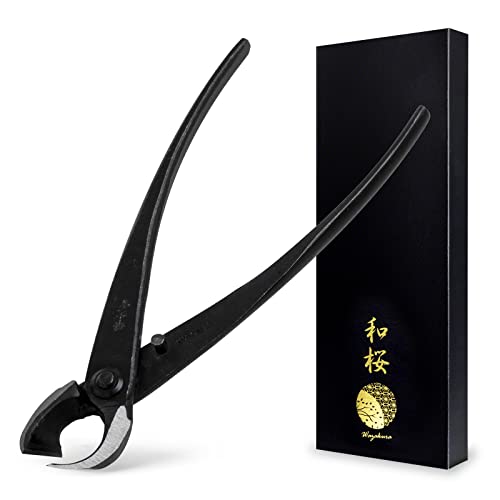
【Specification】Size: L 7.87 x W 1.96 x H 0.78 in (200 x 50 x 20 mm) | Length of Blades: 0.98 in (25 mm) | Weight: 6.7 oz (190 g) | Material: S55C Carbon steel | Black Coated | Suitable Cutting Capacity: 5/16" to 1/2" (8mm to 13mm) | Blade Shape: Concave
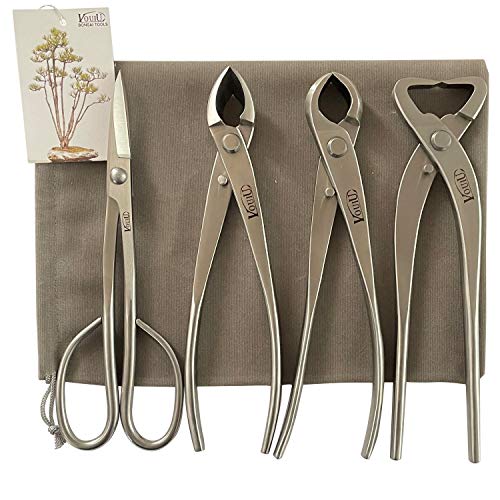
Product inclusion : 8inch Concave Cutter, 8inch Knob Cutter,8inch Trunk Splitter and 8inch Bonsai Scissors
Inspiring Examples of Storytelling in Bonsai Displays
Storytelling in bonsai displays captivates viewers by weaving narratives through carefully chosen elements. For instance, incorporating figurines like fishermen or animals can narrate life’s journey, reflecting cultural heritage. Seasonal additions, such as autumn pumpkins or winter snowmen, enrich the bonsai narrative by illustrating changing seasons. In addition, strategically placing stones like bridges or lanterns symbolizes exploration and tranquility, enhancing viewer interpretation. Elements like water buffalo or bronze insects can represent strength and balance within the ecosystem, deepening the story’s significance. By using a variety of figurines and stones of different heights, creators can add layers of visual interest, guiding viewers through the unique arrangement and experience crafted in each bonsai display. The realistic designs of miniature koi fish sets can further enhance these bonsai narratives by adding vibrant colors and life-like detail, making them an ideal addition for creating imaginative scenes.
Frequently Asked Questions
What Is the Art of Bonsai Called?
The art of bonsai transforms ordinary trees into breathtaking miniature landscapes, capturing Japanese aesthetics and Zen philosophy. Through traditional care, aesthetic pruning illustrates tree symbolism and fosters a profound nature connection and landscape harmony, reflecting artistic expression.
How to Attach Bonsai to Rock?
To securely attach bonsai to rock, one employs rock attachment techniques like root wrapping options and natural adhesives. Integrating moss layers enhances aesthetics while ensuring stability. Maintenance tips focus on monitoring moisture and root stability to promote growth.
What Bonsai Tree Sold for $2 Million?
In a breathtaking auction history, a $2 million bonsai, a rare Shimpaku juniper, epitomized bonsai artistry. This extraordinary specimen captivated famous collectors, showcasing the intricate cultivation techniques, investment value, and burgeoning bonsai market trends in exhibitions.
What Is Clinging to Rock Style Bonsai?
Clinging to rock style bonsai highlights rock aesthetics through creative design, emphasizing tree stability and natural textures. This approach fosters landscape integration, visual balance, and showcases unique growth patterns, reflecting artistic expression in miniature form.