As an Amazon Associate, we earn from qualifying purchases. Some links on this site are affiliate links at no extra cost to you. Our recommendations are based on thorough research and editorial judgment.

Understanding Different Bonsai Pot Shapes and Their Visual Impact

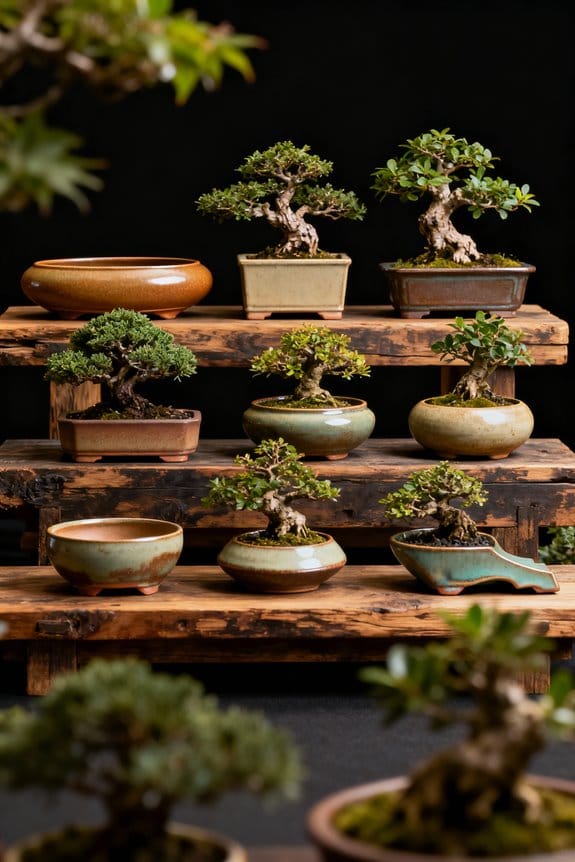
Bonsai pot shapes greatly alter the visual impact of the trees they hold. Angular pots are perfect for strong, masculine styles, while rounded pots enhance the elegance of feminine trees. Earth-toned pots create a lovely backdrop for evergreens, and cool colors highlight seasonal changes in deciduous species. White or crackled glazed pots beautifully frame flowering bonsai. Choosing the right pot shape not only showcases the tree’s character but also adds depth and harmony to the overall display. More insights await further exploration.
Key Takeaways
- Angular pots enhance masculine bonsai styles, emphasizing strength and boldness in visual presentation.
- Rounded pots complement feminine tree styles, enhancing their grace and elegance.
- Earth-toned pots provide a natural backdrop, harmonizing beautifully with evergreen species.
- Cool-colored pots highlight seasonal changes in deciduous trees, showcasing vibrant foliage transformations.
- White or crackled glaze pots elegantly frame flowering bonsai, drawing attention to blossoms.
Why Pot Selection Matters in Bonsai Aesthetics
Why does pot selection play such a pivotal role in bonsai aesthetics? The pot acts as a visual frame that highlights the beauty of bonsai trees. Selecting the right pot is essential, as it complements the tree’s character and enhances its presentation. For instance, a minimalist pot can bring out the elegance of a finely pruned tree, while a rugged pot may suit a more naturalistic style. The interaction between the pot and tree creates a dialogue, showcasing contrasts that add depth. Proper pot selection also reflects the species, age, and style of the bonsai tree. Ultimately, the correct pot enhances the tree’s aesthetic qualities, ensuring it remains the focal point without distraction or competition. Bonsai ornaments, such as quartz crystal trees, can further elevate the visual impact by introducing elements of symbolism and positive energy.
Matching Pot Shapes With Bonsai Tree Styles

Selecting the right pot shape is essential for enhancing the overall appearance of a bonsai tree. Bonsai enthusiasts should consider the style of their tree when choosing a pot. For masculine styles, angular pots work best as they emphasize strength and boldness. In contrast, feminine trees look stunning in rounded pots that highlight their grace. Traditional earth-toned pots provide an excellent backdrop for evergreen species, allowing their lush greenery to shine. Conversely, deciduous trees benefit from cool-colored pots, which accentuate their vibrant seasonal changes. For flowering varieties, white or crackled glaze pots add elegance and frame the blossoms beautifully. Understanding these basics can help bonsai enthusiasts create aesthetically pleasing combinations, making their trees truly stand out. The importance of pot material in plant health and aesthetics cannot be understated, as it influences not only the visual appeal but also the overall wellbeing of the bonsai tree.
5 Noteworthy Bonsai Pot Brands With Distinctive Artistic Styles

When considering distinctive artistic styles in bonsai pots, several brands stand out for their unique approaches. Yamaaki Kiln from Japan is known for its minimalist glazes and shallow rectangular pots that enhance bonsai aesthetics. Meanwhile, Ron Lang Bonsai Containers in the USA offers bold, architectural designs crafted from unglazed stoneware, attracting modern bonsai enthusiasts. Walsall Studio Ceramics in the UK features a rich blend of classical and contemporary styles for various bonsai tree looks. Additionally, German potter Horst Heinzlreiter creates hand-built, asymmetrical pots that emphasize organic forms, perfect for naturalistic displays. Finally, Marius Gaidys from Lithuania contributes vivid glazes and organic shapes, presenting a colorful touch that truly complements bonsai art. Each brand brings something special to the bonsai community. When selecting the appropriate nutrient deficiency kits for your bonsai trees, it’s crucial to consider the specific needs and growth stages of your plants to ensure their health and vitality.
Balancing Texture, Glaze, and Visual Weight
Bonsai pot design greatly impacts the overall presentation of a bonsai tree, tying together elements of texture, glaze, and visual weight. The pot’s texture should complement the tree’s bark or foliage, enriching its aesthetic. For example, a matte finish suits rustic trees, while shiny glazes add elegance to striking bonsai. Symmetrical pots create a formal look, whereas organic shapes allow more creative expression. Visual weight is essential; the pot must support and enhance the tree without stealing the spotlight. A balanced combination of texture, glaze, and visual weight is vital for accentuating the bonsai’s character. When selecting a pot, consider how these elements work together to create a cohesive and visually appealing presentation that highlights the tree’s beauty. It’s crucial to choose pots with adequate drainage systems to ensure healthy root growth and prevent water logging.
Harmony Between Tree and Pot
Choosing the right pot shape is essential in establishing harmony between a bonsai tree and its container. Angular pots often complement robust, masculine trees, while rounded pots enhance the grace of more delicate, feminine styles. It’s important to harmonize the pot’s dimensions with the tree’s growth habits. For taller trees, heavier pots can provide stability, while lighter pots suit smaller trees. Additionally, using contrasting shapes can highlight the unique features of trees; for instance, a rugged tree may look stunning in a smooth, minimalist pot. Always consider the tree’s species and seasonal display, as the right pot shape can dramatically enhance the overall aesthetic, creating a visually appealing balance that pleases the eye. Selecting pots with robust drainage features can further support plant health by preventing waterlogging and promoting a healthy root system.
The Interplay of Color in Bonsai Pot Selection
Color plays a pivotal role in the selection of bonsai pots, impacting the overall visual appeal of the arrangement. Earth tones enhance traditional displays, harmonizing particularly well with evergreen species. Cool colors, such as soft blues and greens, effectively showcase deciduous tree types during their vibrant seasonal changes. For autumn foliage, warm-toned pots emphasize the fiery colors, drawing attention to the bonsai’s transformations. Additionally, white or crackled glaze pots provide an elegant touch that allows flowering bonsai to stand out brightly. Finally, using contrasting colors between the tree and its pot creates an engaging visual dialogue. This thoughtful selection can truly enhance the aesthetic quality and emotional impact of each bonsai arrangement. Selecting bonsai trees requires evaluating climate adaptability and specific care requirements, ensuring the chosen pot complements the tree’s environment and maintenance needs.
Frequently Asked Questions
What Is the Rule of 3 in Bonsai?
The Rule of 3 in bonsai emphasizes creating visual balance through the arrangement of elements in groups of three, enhancing bonsai aesthetics by fostering harmony and interest among trees, pots, and surrounding design features.
What Is the Best Shape for a Bonsai Pot?
In the domain of bonsai, the best shape for a pot often hinges on pot aesthetics, where angular pots accentuate strength and rounded pots embody femininity, effectively marrying the tree’s style with visual harmony and balance.
What Is the Rule for Bonsai Pots?
The rule for bonsai pots emphasizes that the pot’s width should be two-thirds the height of the tree, enhancing pot aesthetics while ensuring balance and proportion, which contributes greatly to the overall visual harmony.
What Are the Different Bonsai Styles?
Various bonsai styles, such as Formal Upright, Informal Upright, Slanting, Cascade, and Windswept, capture unique bonsai aesthetics. Each form tells its own story, reflecting the intricate relationship between nature and artistic expression, inviting admiration.