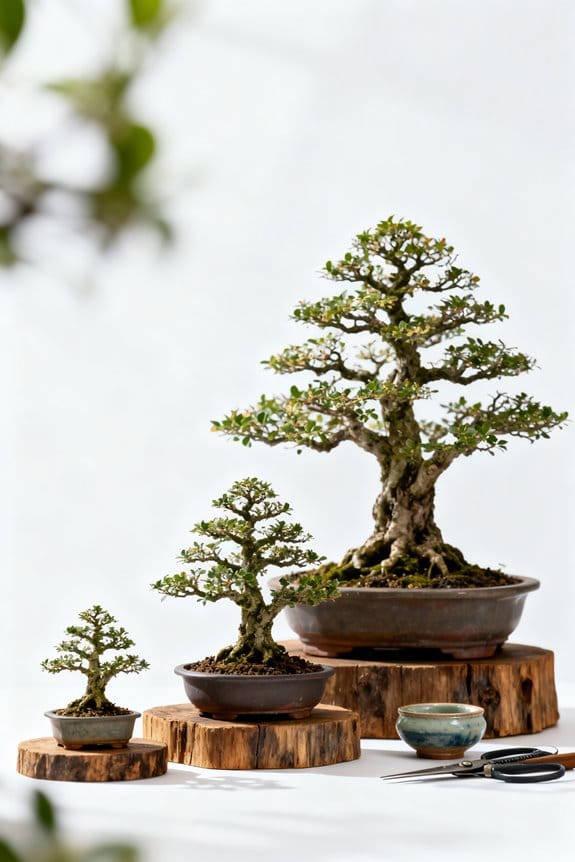
As an Amazon Associate, we earn from qualifying purchases. Some links on this site are affiliate links at no extra cost to you. Our recommendations are based on thorough research and editorial judgment.


Simple Bonsai Project for Kids Using Easy Species

Bonsai gardening is a fantastic project for kids, as it teaches responsibility and patience. To start, choose easy species like Ficus or Junipers, which are hardy and require minimal care. Use essential tools like pruning shears and a moisture meter to maintain the plants. Begin with pre-potted trees to make it simpler. Kids can also personalize their bonsai with unique pots and decorations. This engaging activity not only plants seeds of creativity but also fosters a deeper appreciation for nature. More insights await on nurturing these little trees.
Key Takeaways
- Select easy-to-care-for species like Ficus or Jade, ideal for kids to learn about bonsai gardening.
- Use pre-potted plants to simplify the growing process and reduce initial difficulty for children.
- Provide children with safe tools like pruning shears designed for small hands to encourage responsibility in care.
- Incorporate creative elements, such as choosing colorful pots, to make the project more appealing for kids.
- Teach them regular watering and monitoring soil moisture, fostering patience and a connection to nature.
Benefits of Bonsai Gardening for Kids
Bonsai gardening offers numerous benefits for children, making it an excellent project for young minds. One of the key advantages is the development of patience. Raising a bonsai tree is not a quick endeavor; it teaches children that growth takes time and effort. Additionally, bonsai gardening fosters responsibility, as kids must provide proper water, light, and soil for their plants. Engaging with bonsai also enhances creativity, allowing children to express themselves through designing and shaping their miniature trees. Furthermore, this activity deepens their connection to nature and promotes sustainability awareness. Finally, witnessing the transformation of their bonsai can boost a child’s self-esteem and confidence, making the benefits of bonsai gardening both enriching and rewarding. Including a comprehensive tool kit can further enhance the experience by providing all the essential tools needed for proper bonsai care, making it easier for children to engage with the activity fully.
Choosing the Right Species for Beginners
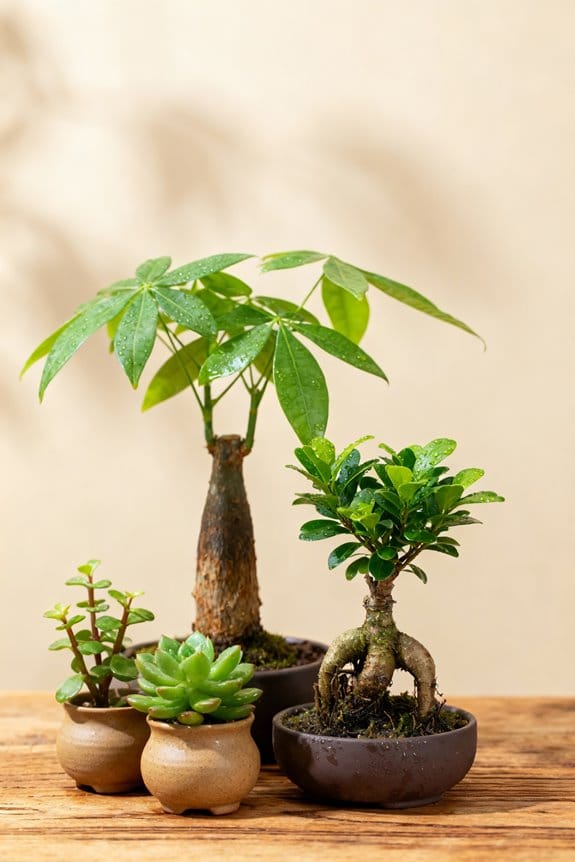
When choosing a species for a bonsai project, what factors should beginners consider to guarantee a successful experience? Beginners are encouraged to select hardy species that make for easy care and management. The Ficus tree stands out as a resilient option, thriving indoors with minimal maintenance. Junipers are also popular due to their fast growth and adaptability in outdoor environments, perfect for young learners. Pine species, such as White Pine, offer a classic bonsai appearance while teaching essential skills like pruning and wiring. Additionally, selecting types of trees native to one’s climate can greatly enhance success rates. Beginners should approach this journey with patience, appreciating that growing bonsai trees is a rewarding process that promotes both creativity and responsibility. When considering bonsai options, it’s important to understand the care requirements for live bonsai, such as sunlight and watering needs, to ensure healthy and thriving plants.
Essential Tools for Bonsai Care
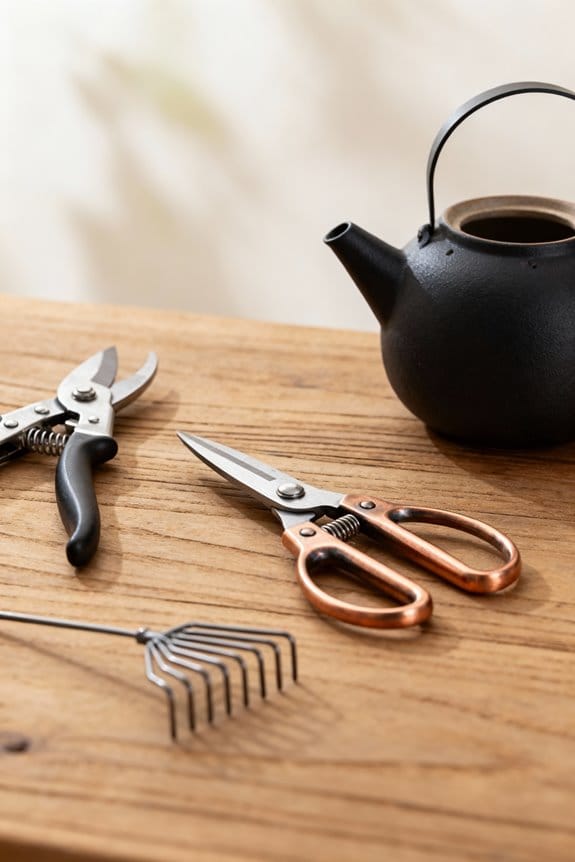
To successfully cultivate bonsai trees, having the right tools is just as important as selecting the appropriate species. Pruning shears are essential, as they are specifically designed to make clean cuts, minimizing damage to the plant. A root rake is invaluable for gently untangling roots during repotting, which promotes proper growth and aeration. Bonsai wire plays a key role in shaping and training branches; it comes in various gauges to suit different tree types. Monitoring soil moisture is vital, and a moisture meter can help guarantee the tree receives the right amount of water. Additionally, specialized bonsai pots, equipped with drainage holes, prevent root rot while enhancing the overall aesthetic of the bonsai. It’s also crucial to consider ergonomic designs when selecting bonsai tools, as they enhance comfort and precision during prolonged use.
Step-by-Step Guide to Starting Your Bonsai
Starting a bonsai project can be a rewarding experience for budding gardeners. To create a beautiful bonsai tree, begin with easy-to-grow species like Ficus, Jade, or Chinese Elm. Choose a small, well-draining pot to prevent waterlogging, which is vital for maintaining the tree’s health. It’s often best to start with a pre-potted tree or seedling, as this method simplifies the process. When transplanting, prune the roots gently to promote healthy growth. The art of bonsai requires regular watering, so check the soil moisture consistently. This mimics natural conditions and guarantees that the tree receives adequate hydration. Engaging in bonsai gardening promotes patience and creativity, serves as a therapeutic activity, and enhances home aesthetics with living plants. With dedication and care, a bonsai project can become a meaningful hobby for children and adults alike.
Creative Ways to Personalize Your Bonsai
Personalization can turn a simple bonsai into a cherished piece of art. One way to enhance your miniature trees is by selecting unique pots that reflect your personal style. Colorful ceramics or rustic wooden containers can add aesthetic appeal. Decorating the bonsai pot with symbols representing your personality or interests makes the tree more meaningful. Additionally, adding small ornaments, like miniature animals or fairy houses, creates a whimsical storytelling element. Don’t forget about pruning techniques; these not only shape the tree but also inspire creativity as you envision its growth. Finally, incorporating colored rocks or pebbles around the base can create visual contrast, adding an extra layer of personalization to your bonsai arrangement. Consider incorporating Bonsai Miniature Stone Lanterns to enhance your bonsai’s aesthetics, providing a touch of traditional elegance and Asian decor flair to your arrangement.
Encouraging Responsibility and Patience Through Gardening
Gardening with bonsai can be a valuable way for children to cultivate responsibility and patience. As they learn to care for living plants, such as junipers or dwarf pines, kids develop a sense of responsibility through tasks like regular watering and pruning. Bonsai cultivation requires patience, as children must wait for their trees to grow and thrive instead of seeking instant results. This long-term commitment teaches kids dedication and the importance of consistent care. Tracking their bonsai’s progress fosters mindfulness, allowing children to observe growth cycles closely. This hands-on experience reinforces the rewards of patience and responsibility. Ultimately, nurturing bonsai trees not only boosts gardening skills but also instills life lessons that children can carry into the future. Engaging with bonsai gardening offers unique beauty, artistic potential, and significant environmental benefits.
Frequently Asked Questions
What Is the Easiest Bonsai for a Beginner?
The easiest bonsai for a beginner includes species like Ficus and Juniper, as they minimize beginner mistakes. Proper plant selection guarantees successful bonsai maintenance, providing an enjoyable introduction to the art of cultivating bonsai trees.
What Is the Rule of 3 in Bonsai?
Like a harmonious melody, the Rule of 3 in bonsai emphasizes aesthetic balance by grouping elements in sets of three. This principle enhances design, guiding pruning techniques and creating visually enchanting arrangements for observers.
What Is the Easiest Plant to Make a Bonsai Tree?
The easiest plant to create a bonsai tree is the Ficus retusa. Beginner-friendly species like this require essential tools for shaping, while avoiding common mistakes guarantees a successful and enjoyable bonsai experience for novices.
How to Make Bonsai for Beginners?
Bonsai trees, which have been cultivated for over a thousand years, require learning bonsai trimming techniques, selecting appropriate containers, and practicing patience. Beginners should focus on maintaining shape and health for their miniature trees.