As an Amazon Associate, we earn from qualifying purchases. Some links on this site are affiliate links at no extra cost to you. Our recommendations are based on thorough research and editorial judgment.

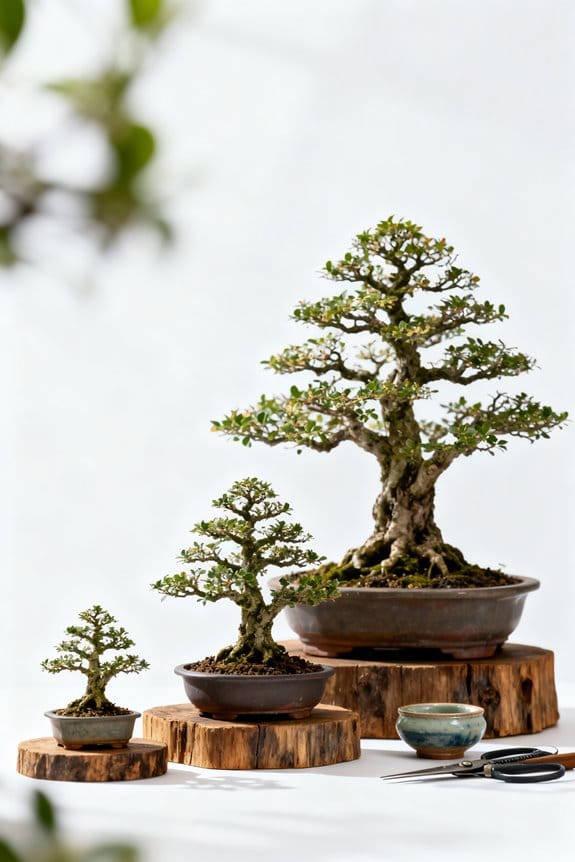
Understanding Bonsai Sizes From Mame to Imperial

Understanding bonsai sizes helps enthusiasts appreciate their care and aesthetic choices. Beginning with Keshitsubo at 1 to 3 inches, each size offers unique charm and complexity. For instance, Mame ranges from 2 to 6 inches and requires meticulous care. Larger varieties, like Dai or Omono, stand at 30 to 48 inches, creating striking garden statements. Each size influences visual impact and emotional connection. Exploring these factors can enhance your bonsai experience, leading to fascinating insights in the journey ahead.
Key Takeaways
- Bonsai sizes range from small (Mame at 2-6 inches) to large (Imperial at 60-80 inches), each requiring specific care and maintenance.
- Mame bonsai are visually appealing, often grouped, and need meticulous attention due to their vulnerability to pests and stress.
- Dai or Omono bonsai, measuring 30-48 inches, create a bold landscape statement and require careful soil management for health.
- Hachi-uye bonsai (40-60 inches) exhibit robust trunks but need frequent maintenance and often require multiple people for handling.
- The selection of bonsai size influences aesthetic vision and emotional connection, with smaller varieties offering intimacy and larger ones evoking admiration.
Keshitsubo (1 to 3 Inches, Fingertip)

Keshitsubo bonsai, measuring only 1 to 3 inches tall, represent the smallest category of bonsai trees. These tiny trees demand special care and meticulous attention, making their cultivation a rewarding challenge. Artists often use Keshitsubo bonsai to create intricate landscapes, showcasing their skill and creativity. This miniature size allows for unique artistic interpretations of nature. To care for Keshitsubo bonsai, one must guarantee they receive adequate sunlight and moisture. Regular pruning is essential to maintain their shape and health. Enthusiasts appreciate how these small trees can evoke a realistic appearance despite their size. Engaging with Keshitsubo bonsai encourages patience and artistry, enriching the bonsai experience for both creators and viewers alike. These diminutive bonsai often require stronger holding power for branch support, making the choice of wire crucial for their development.
Shito (2 to 4 Inches, Thumb)

Shito bonsai, ranging from 2 to 4 inches in height, represent a delicate and enchanting category of miniature trees. Due to their small bonsai tree size, these thumb-sized treasures require careful attention and meticulous care. They are particularly susceptible to stress and pests, so maintaining the right environment is essential. Shito bonsai are usually grown in shallow pots or trays, which necessitates frequent watering and precise pruning to preserve their fragile form. Common species used include maples and junipers, celebrated for their intricate details and beauty. This bonsai size showcases the artist’s skill, turning each tree into a stunning representation of creativity and dedication, reminiscent of the larger mame bonsai but on a much smaller scale. Specialized bonsai care tools enhance the health and aesthetics of Shito bonsai, ensuring they remain in optimal condition.
Mame (2 to 6 Inches, One-hand)

Mame bonsai, measuring between 2 to 6 inches tall, are a charming category of miniature trees that can be comfortably held in one hand. These delicate trees require meticulous care due to their small size, making them vulnerable to stress and pests. Common species for mame bonsai include junipers and azaleas, known for their intricate beauty. When displaying mame bonsai, enthusiasts often arrange them in groups of three or five for balanced visual appeal. Caring for mame trees demands patience and creativity, offering a delightful challenge for plant lovers. To succeed, beginners should focus on precise watering, adequate sunlight, and regular pest checks. Regular applications of organic neem oils enhance effectiveness against pests and are crucial for maintaining the health of these delicate bonsai. With practice, growing mame bonsai can become a rewarding hobby.
Shohin (5 to 8 Inches, One-hand)
Moving from the charming world of mame bonsai, the shohin category stands as a refined choice for enthusiasts seeking slightly larger miniatures. Ranging in height from 5 to 8 inches (13 to 20 cm), shohin bonsai can easily be held in one hand. They can be created from a variety of species, such as maples, azaleas, and pines, each showcasing intricate detail. Maintaining their health requires frequent watering, fertilizing, pruning, and repotting. This size classification emphasizes artistry, capturing nature’s essence in a portable form. Shohin bonsai are popular for their balance of manageability and visual impact, making them excellent for indoor and outdoor display. Their charm lies in their ability to create a powerful aesthetic in a small package. A bonsai tree kit can be an ideal starting point for beginners, providing essential tools and instructions for cultivating these miniature masterpieces.
Kumono (6 to 10 Inches, One-hand)
Kumono bonsai, also known as kifu, represent a fascinating size category for bonsai enthusiasts. Typically ranging from 6 to 10 inches in height, these trees can be comfortably held in one hand. Their size requires great attention and skill from the artist. Kumono bonsai often exhibit delicate structures and may be styled in various ways, including the formal upright style. This compact size emphasizes the artist’s ability to capture nature’s essence in a small form. To enhance their beauty, many bonsai enthusiasts display kumono bonsai in groups. By doing this, the intricate details and variations of each tree are highlighted, creating a more impactful visual experience that captivates viewers and showcases the artistry involved in bonsai cultivation. Additionally, using pot feet can further enhance the display by promoting proper drainage and elevating the trees to prevent rot, ultimately contributing to healthier bonsai growth.
Katade-mochi (10 to 18 Inches, Two-hand)
When exploring the world of bonsai, Katade-mochi trees stand out for their charming size and manageable dimensions. Ranging from 10 to 18 inches, these Chuhin bonsai are versatile for indoor or outdoor settings. The classifications of bonsai include this category due to its balance between aesthetic appeal and ease of care. Enthusiasts appreciate Katade-mochi for their beautiful trunk character and intricate leaf details, which can be styled in forms like formal upright or cascading. To maintain its health, proper care is essential. Regular watering, fertilizing, and precise pruning will help keep a Katade-mochi bonsai thriving. Engaging with bonsai gardening offers unique beauty, artistic potential, and significant environmental benefits. Beginners can confidently embrace this size, enjoying the artistic freedom it offers while ensuring their tree’s well-being.
Chiu or Chumono (16 to 36 Inches, Two-hand)
The Chiu or Chumono bonsai category encompasses trees that stand between 16 to 36 inches tall, perfectly designed for two-handed handling. This classification offers a great balance between detail and presence, allowing enthusiasts to showcase intricate trunk and branch structures beautifully. Popular styles include formal upright and cascade, giving artists creative versatility. The Chiu bonsai thrives well in various indoor and outdoor settings, depending on the species and care needs. Because of their manageable size, these bonsai often exhibit a significant amount of character, making them favorites in exhibitions. Enthusiasts, regardless of the number of men involved in styling, can enjoy these medium-sized trees that inspire creativity and engagement in the bonsai art form. When displaying your Chiu bonsai, consider solid wood options for your display shelves to ensure durability and aesthetic appeal.
Dai or Omono (30 to 48 Inches, Four-hand)
Bonsai enthusiasts seeking to elevate their practice often look to the Dai or Omono category, which features trees ranging from 30 to 48 inches tall. These larger bonsai, often called four-handed trees, are perfect for outdoor gardens due to their impressive size and intricate forms. However, Dai or Omono trees require diligent care to thrive. Caregivers must regularly water, fertilize, and prune these specimens to maintain their health and beauty. Additionally, careful placement is essential, as environmental conditions profoundly impact their growth. These trees allow collectors to display striking natural forms, showcasing the artistry of bonsai. Overall, Dai or Omono bonsai offer a grand presence, perfect for enthusiasts wanting to make a bold statement in their landscape. When selecting soil, it’s important to ensure the soil composition directly affects root development to support the overall health and vitality of these larger bonsai specimens.
Hachi-uye (40 to 60 Inches, Six-hand)
Hachi-uye bonsai, often referred to as six-handed trees, stands tall between 40 to 60 inches, offering a striking presence in any garden. These impressive trees create a bold visual impact, embodying the essence of nature with their robust trunks and intricate branches. However, they require frequent watering and diligent care, making maintenance more demanding than smaller classifications. It’s crucial to prune regularly and monitor for pests to guarantee their health. Due to their size, managing Hachi-uye bonsai often needs the coordination of multiple people for tasks like movement. This larger scale allows for greater artistic expression, showcasing the beauty and character that captivates bonsai enthusiasts, from beginners to seasoned collectors alike. For showcasing these magnificent trees, consider using a Rectangular Grey Rosewood Stand, which adds an elegant touch to home decor.
Imperial (60 to 80 Inches, Eight-hand)
Majestic in stature, imperial bonsai stands between 60 to 80 inches tall, categorizing it as the largest form of bonsai. This impressive size showcases its grandeur, making it a striking centerpiece in any garden. Due to their size, managing an imperial bonsai often requires multiple people, which can complicate transport and display. Artists dedicate years to cultivate these magnificent trees, emphasizing the importance of skill and patience. Their dramatic presence captures the essence of maturity in bonsai artistry. When placed outdoors, the grandeur of an imperial bonsai is best appreciated in a spacious setting, where visitors can marvel at its impressive scale and beauty. Proper care and attention enable these trees to thrive, showcasing the artistry involved. Live bonsai trees offer a dynamic, ever-changing decor experience, symbolizing tranquility and encouraging mindfulness through their care and nurturing.
Factors Influencing Bonsai Size Selection
When selecting a bonsai size, several factors come into play that can remarkably influence a gardener’s choice. Size availability is essential, as larger trees require more space, while smaller varieties fit into compact areas. Additionally, species selection considerably impacts size; for instance, maples can become both Mame and Shohin bonsai, while pines are typically better suited for larger classifications. The aesthetic vision also matters, as smaller bonsai emphasize creativity and delicacy, while larger trees provide traditional depictions of nature. Finally, emotional connections vary by size—tiny Keshitsubo can evoke intimacy, while larger Hachi-use bonsai command admiration outdoors. Each of these factors helps a gardener select the ideal bonsai size for their environment and artistic intent.
Frequently Asked Questions
Recommended Products

NATURAL RED CLAY FROM IBARAKI, JAPAN - Sourced exclusively from a limited region in Ibaraki Prefecture, this Akadama is made from pure natural red clay with no binders, fillers, or additives. Its mineral composition supports long‑term soil structure for bonsai and specialty plants

Elegant Aesthetic: Featuring a beautiful green ice crackle glaze finish and 3D relief pattern, this bonsai pots combines practicality with style, suitable for table, desk, windowsill, shelves, living room, bedroom, bathroom, porch, study, office, patio, balcony, zen garden, any indoor or outdoor space
What Size Is a Mame Bonsai Tree?
A Mame bonsai tree, standing gracefully between 2 to 6 inches tall, embodies the delicate art of miniature gardening. Its unique characteristics demand meticulous caring techniques, rewarding enthusiasts with enchanting displays that celebrate nature’s elegance in small form.
What Is the Rule of 3 in Bonsai?
The Rule of 3 in bonsai design emphasizes displaying three trees to enhance tree aesthetics. This arrangement creates balance, encourages visual interest, and showcases the artist’s skills in harmonizing contrasting yet complementary elements.
What Is the Size of the Imperial Bonsai Tree?
The Imperial bonsai tree, ironically named for its grandeur, stands between 60 to 80 inches tall. This large bonsai classification embodies artistry, demanding skilled care and attention, enhancing outdoor spaces with striking, majestic presence.
What Are the Rules for Bonsai Proportions?
Proportion guidelines for bonsai emphasize balanced relationships among height, trunk thickness, and leaf size. Adhering to these rules enhances bonsai aesthetics, with ideal dimensions supporting a natural appearance that reflects age and species characteristics effectively.


