As an Amazon Associate, we earn from qualifying purchases. Some links on this site are affiliate links at no extra cost to you. Our recommendations are based on thorough research and editorial judgment.

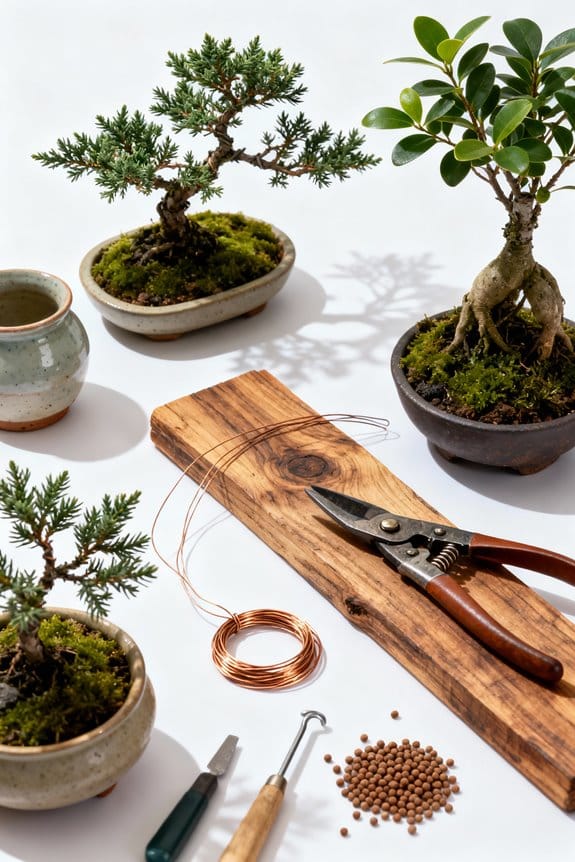
Bonsai Project Ideas for People With Very Limited Space

Bonsai enthusiasts with limited space can successfully cultivate beautiful displays by choosing compact bonsai styles like micro bonsai and informal upright designs. It’s important to select pots that are 2-4 inches deep and 6-10 inches wide for balance. Utilizing vertical space is key; consider wall-mounted holders or tiered stands. Hanging arrangements and decorating corners can add charm without cluttering. Proper lighting, like soft LED and spotlights, will enhance the overall appeal. There’s even more to discover about creative setups!
Key Takeaways
- Choose micro bonsai styles like Dwarf Japanese Maple or Ficus to fit minimalist aesthetics in limited spaces.
- Utilize wall-mounted bonsai holders and tiered stands to maximize vertical space while showcasing multiple plants.
- Enhance corners with asymmetrical bonsai species and small decorative pots to utilize underused areas effectively.
- Incorporate hanging arrangements with macramé hangers to create a dynamic display without occupying floor space.
- Use soft LED lights to improve ambiance and promote plant health in compact bonsai setups.
Choosing the Right Bonsai Style

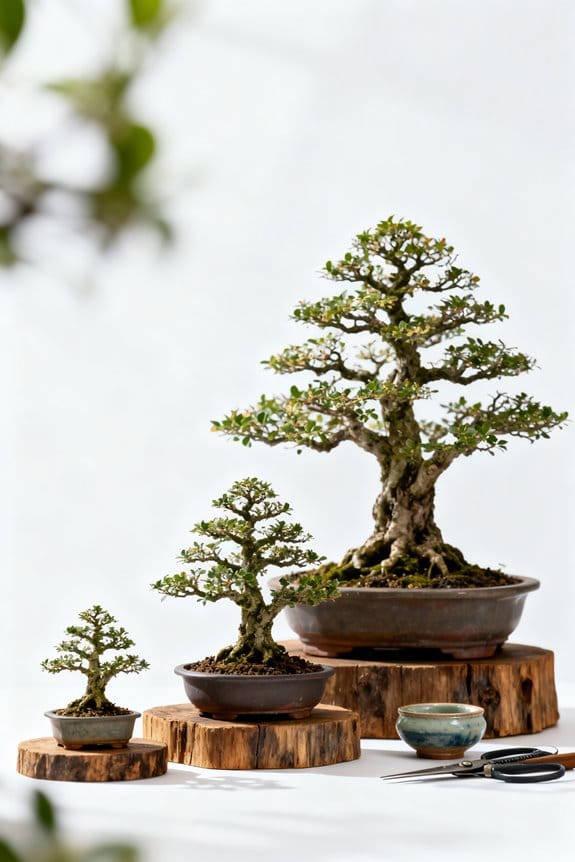
When choosing the right bonsai style, beginners should consider the limitations of their space, as some styles lend themselves better to compact environments. For a minimalist aesthetic, micro bonsai styles are ideal. Beginners should opt for species like the Dwarf Japanese Maple or Ficus, which have small leaves and delicate branches. These trees naturally fit into informal upright or cascade styles, allowing for beautiful displays even in confined areas. Selecting pots that are 2-4 inches deep and 6-10 inches wide can help maintain balance. Additionally, using species like Japanese Black Pine is advantageous for easy shaping and maintenance. This careful approach guarantees a thriving bonsai experience without overwhelming limited spaces, creating serene, harmonious arrangements. To ensure your bonsai trees thrive, incorporating tools like digital moisture meters can help maintain optimal moisture levels for plant health.
Compact Pot Selection Essentials
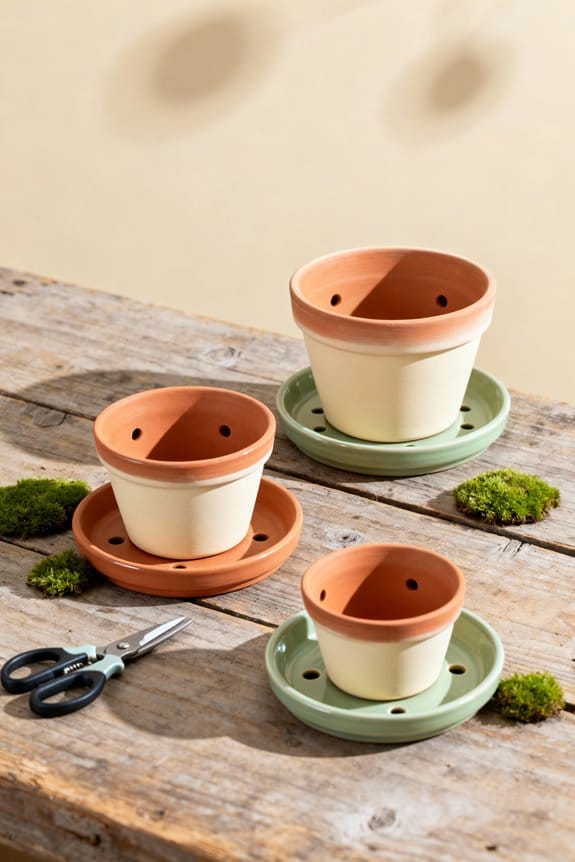
Selecting the right pot is essential for creating a thriving bonsai display in limited spaces. For ideal aesthetics, aim for pot dimensions with a depth of 2-4 inches and a width of 6-10 inches. Choose materials like ceramic, stone, or wood, favoring neutral tones that harmonize with your bonsai’s foliage. The drainage importance cannot be overlooked; pots should have adequate holes to prevent overwatering and root rot, key to your bonsai’s health. A pot’s design should enhance the natural shape of the bonsai, whether it showcases a single species or a mixed display. Finally, consider the weight of the pot. This maintains stability, preventing toppled displays and potential damage, creating a beautiful, durable bonsai presentation. For those considering durable plastic pots, ensure they have multiple drainage holes to support air circulation and root health.
Space-Saving Stand Options
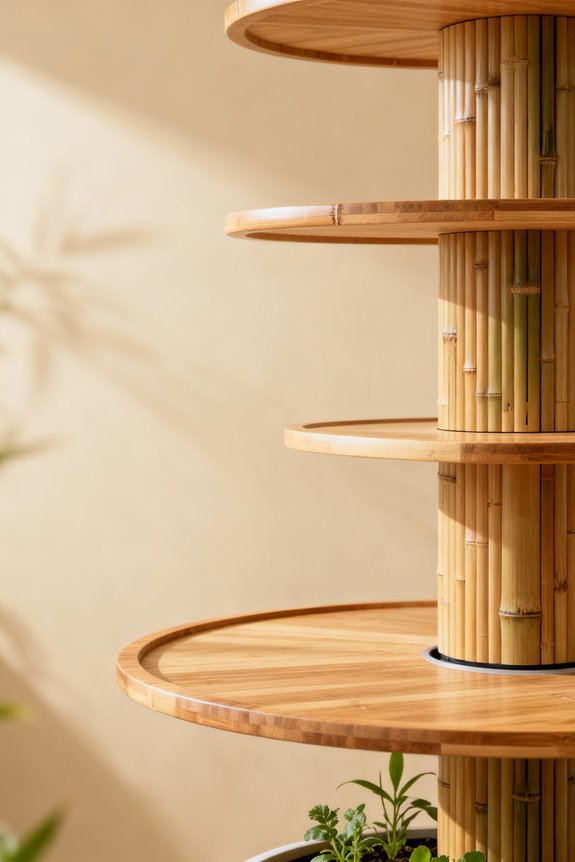
Creating an organized and visually appealing bonsai display in limited spaces can be achieved with clever stand options. Wall-mounted options are ideal for maximizing vertical space, allowing multiple bonsai to flourish without occupying precious floor area. These holders come in various styles, easily fitting into various décor themes. Tiered stands, on the other hand, efficiently showcase several bonsai in a compact layout, promoting an attractive arrangement while minimizing footprint. When choosing a stand, consider materials like wood, metal, or ceramic to complement both the bonsai and the surrounding decor. Additionally, adjustable shelving units offer the versatility to customize heights and spacing, accommodating different bonsai sizes and styles while ensuring a beautiful and organized display. For a stylish and durable option, the Laiensia Bamboo Plant Stand offers a 6-tier structure that provides ample space for multiple bonsai while maintaining a compact footprint.
Maximizing Vertical Display Space
Maximizing vertical display space is often essential for bonsai enthusiasts working within limited areas. Utilizing wall-mounted bonsai holders allows for multiple trees to be showcased without consuming valuable floor space. By employing tiered display stands, different bonsai species and sizes can be arranged creatively, enhancing visual interest. Incorporating hanging gardens with macramé hangers offers a unique way to suspend bonsai, adding airiness to small rooms. Innovative shelves and ledges can create multi-level displays that make the most of vertical areas, drawing attention. Additionally, grouping hanging bonsai at varying heights creates a dynamic viewing experience. Comprehensive bonsai tool sets provide a range of tools at lower prices, making it easier for beginners to maintain their bonsai displays. These vertical garden techniques and wall planter innovations guarantee that even the smallest spaces can be transformed into vibrant bonsai showcases.
Utilizing Corners and Nooks
Corners and nooks often serve as underutilized opportunities for bonsai displays in limited spaces. Homeowners can transform these areas by selecting asymmetrical species like Ficus or Juniper, which enhance corner aesthetics without overcrowding. Using small decorative pots can further complement the bonsai’s shape and the surrounding decor. To maximize the space, individuals should consider layered arrangements with shelves or tiered platforms. This approach efficiently utilizes vertical space, showcasing the bonsai effectively. Adding soft LED lighting highlights the bonsai, creating cozy ambiance through nook enhancements. Regular maintenance and strategic pruning of bonsai plants will help keep them within size limits while ensuring they remain visually striking in their confined settings, making the most of every corner and nook. For optimal plant health, it’s crucial to choose pots with robust drainage features to prevent root rot and maintain appropriate moisture levels.
Balcony and Patio Display Ideas
When designing a bonsai display on a balcony or patio, it is essential to contemplate the unique characteristics of these outdoor spaces. Tiered planters are an excellent option for balcony landscaping, maximizing vertical space while allowing multiple bonsai arrangements without taking up too much floor area. For an additional decorative touch, consider using macramé hangers to create hanging bonsai gardens. Opt for compact bonsai species like Juniper or Pine, which can thrive in outdoor conditions. Choose pots that enhance the patio aesthetics but guarantee they provide proper drainage. Finally, integrating LED grow lights can supplement natural sunlight in shaded areas, promoting the health and visibility of the bonsai collection, making them a delightful feature in any small outdoor space. Additionally, using high-quality materials in bonsai tools, such as natural fibers, can help maintain plant health and prevent damage during maintenance.
Small Scale Bonsai Trees
Creating a beautiful bonsai collection in limited spaces can be most rewarding, especially with small scale bonsai trees. Dwarf species like the Dwarf Japanese Maple and Serissa are excellent choices due to their compact nature and minimal pruning requirements. These trees thrive in small pots, ideally 2-4 inches deep and 6-10 inches wide, making them perfect for confined areas. Such bonsai generally feature small leaves and delicate branches, enhancing their appeal. To maximize vertical space, consider using wall-mounted holders and tiered display stands. Regular care is essential, with adequate watering and humidity maintained between 40-60%. Employ pruning techniques to shape the trees as they grow, allowing for a harmonious and visually pleasing collection in any small area. Bonsai trees represent balance, beauty, and life in miniature form, adding a symbolic and aesthetic value to your small-scale collection.
Creative Shelf and Ledge Displays
A variety of creative shelf and ledge displays can transform bonsai arrangements in limited spaces. Utilizing floating shelves allows gardeners to create multi-level displays that maximize vertical space while adding visual interest. Tiered ledges elevate bonsai trees at different heights, ensuring each tree receives sufficient light. To enhance the organic feel of the display, incorporate asymmetrical arrangements on the shelves. Decorative pot choices should complement both the shelves and the overall decor, contributing to the aesthetic appeal. Additionally, integrating soft LED lights along the shelves can illuminate the bonsai at night, highlighting unique features while providing essential light for growth. Together, these shelf arrangement techniques offer an engaging way to showcase healthy bonsai trees in confined areas. Regular use of bonsai fungus sprays ensures that the trees remain free from pests and diseases, further enhancing their vitality and appearance.
Hanging Bonsai Display Solutions
Hanging bonsai displays offer an exciting opportunity to showcase these miniature trees in small spaces. Using hanging planters and creative macramé, enthusiasts can create visually appealing arrangements. When choosing bonsai for hanging, lightweight species like Ficus or Serissa are ideal, as they are easier to suspend and maintain. Varying the heights of your displays adds depth and interest, transforming your vertical space. Incorporating LED grow lights in these setups can enhance growth, especially in low-light conditions. However, it’s important to regularly inspect these hanging arrangements for pests and guarantee adequate watering, as accessibility can be more challenging than traditional placements. With careful planning and creativity, one can successfully incorporate bonsai into limited areas. Consider utilizing anodized aluminum wire for its flexibility and durability, making it easier to shape and support your hanging bonsai arrangements.
Illuminating Your Bonsai Display
Properly illuminating a bonsai display is essential for both aesthetic appeal and plant health. Soft LED lights create a cozy ambiance and provide critical light in low-light conditions. Light placement is significant; adjustable LED grow lights can deliver a targeted spectrum for various indoor species. Spotlights enhance specific bonsai features, promoting growth and visual impact. For added flair, uplighting introduces drama and depth to your arrangement, creating compelling focal points in limited spaces. Experiment with different angles and heights for your lighting. Additionally, consider the color temperature to mimic natural sunlight, boosting the display’s vibrancy. By blending these techniques, one can design an engaging and health-conscious bonsai display that stands out beautifully. Leak-proof features in bonsai mister bottles can prevent spills and ensure that your display remains tidy and well-maintained.
Frequently Asked Questions
What Is the Rule of 3 in Bonsai?
The Rule of 3 in bonsai emphasizes aesthetic harmony through groupings of three. This principle enhances bonsai techniques and care by promoting varied heights, textures, and species, creating an engaging visual experience and guiding viewer attention effectively.
What Are Good Landscape Ideas for Small Spaces?
In a tiny kingdom, vertical gardens reached for the clouds while container gardens celebrated the ground below, merging beauty and utility. Together, they transformed small landscapes into lush havens, breathing life into every nook and cranny.
What Is the Easiest Plant to Bonsai?
The easiest plant to bonsai is often considered the Ficus retusa, praised for its forgiving nature. Other perfect plants for beginners include Chinese Elm, Serissa, Dwarf Japanese Maple, and Satsuki Azalea, all thriving with basic care.
What Does Gifting a Bonsai Symbolize?
Gifting a bonsai holds significant meanings, symbolizing peace, harmony, and growth. This act reflects a bond between giver and recipient, embodying shared values of patience, nurturing, and mindfulness, reinforcing the gift’s profound significance.