As an Amazon Associate, we earn from qualifying purchases. Some links on this site are affiliate links at no extra cost to you. Our recommendations are based on thorough research and editorial judgment.


How to Start a Bonsai Hobby From Zero Experience

Starting a bonsai hobby involves several key steps. First, choose a tree species that suits your climate, like a Japanese maple or elm. Gather essential tools such as concave cutters and bonsai scissors. Build a training box for ideal root growth, ensuring good drainage. Water the bonsai properly and repot every two years to refresh the soil. Pruning and shaping your tree is crucial for its health. As you progress, you’ll discover more tips and techniques to enhance your skills.
Key Takeaways
- Choose a suitable tree species for your climate, starting with easy-to-care-for plants like Japanese maples or elms.
- Familiarize yourself with essential bonsai tools such as pruning shears and concave cutters for effective maintenance.
- Build a proper training box with drainage holes and support structures to promote healthy root growth.
- Join local bonsai clubs or online forums for guidance, tips, and community support.
- Regularly practice watering, pruning, and repotting techniques while monitoring your tree’s health for signs of stress.
Getting Started With Bonsai
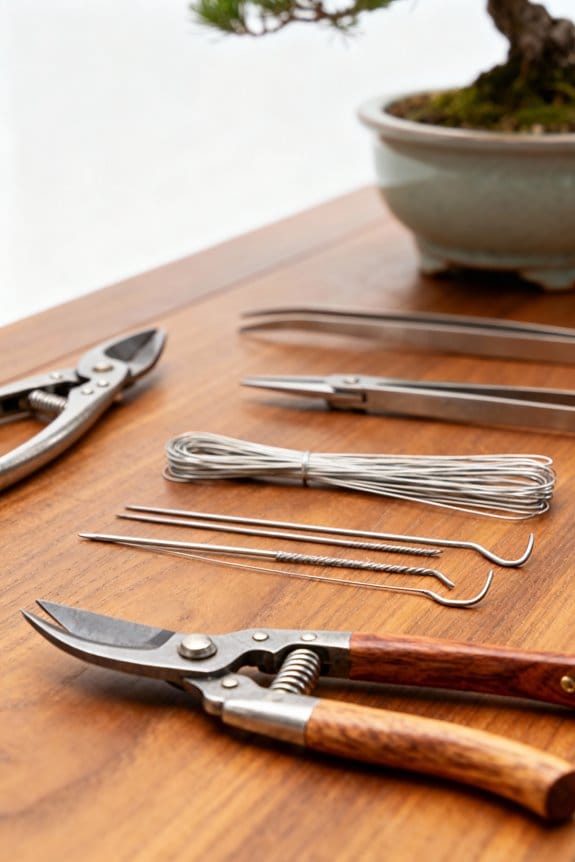
Starting a bonsai hobby can be an exciting journey into the art of miniature tree cultivation. To begin, choose a tree species that flourishes in your local climate, such as Japanese maples or elms. This selection guarantees successful growth year-round. Also, familiarize yourself with essential bonsai tools, like concave cutters, small scissors, and root shears, as they are crucial for proper bonsai care. When it comes to bonsai soil, avoid standard potting mixes; instead, use a blend that provides excellent drainage and aeration. Finally, consider starting with a pre-bonsai or nursery stock tree. This option gives a more mature plant to train, making growing bonsai less frustrating while you develop your skills. Engaging with local bonsai clubs can further enhance your experience. Visiting the National Bonsai & Penjing Museum in Washington D.C. can deepen your appreciation for bonsai’s cultural significance and provide inspiration through its extensive global collections.
Choosing the Right Tree

Selecting the right tree for bonsai cultivation can seem overwhelming at first. Beginners should consider popular bonsai trees like Japanese maples, trident maples, pines, and elms, as these species thrive in various climates and USDA zones. For the best tree, choose a mature specimen rather than starting from seeds. This guarantees a more engaging experience during the lengthy growth process. Bonsai starters might find pre-bonsai trees at nurseries beneficial, providing better trunk structure while fitting within their skill level. Additionally, examining the tree’s root system is vital; a robust root structure supports the bonsai’s health. Finally, if you’re adventurous, wild collected trees can offer unique characteristics but require legal and safe collection practices. Beginners might also consider starting with Live Dwarf Juniper Bonsai Trees due to their versatility in indoor and outdoor environments and their symbolic significance.
Recommended Products

Above 10 years old Nana junipre tree .100% Home-Grew.We used all glazed ceramic pot and comes with a great real bamboo stand for free.

Juniper Procumbens Nana - 60 Live Plants - Drought Tolerant Evergreen Groundcover - Great for Bonsai
A dense mound of ground-hugging branches that radiate from the center. New growth is bright green turning to bluish green as it matures. Winter color has a purple tint. Wonderful evergreen for a group planting on a rocky slope, or trained into an upright staked specimen.

8 years old.
Essential Tools and Materials

Beginners in the bonsai hobby will find that having the right tools and materials is crucial for success. Crucial tools include branch cutters, scissors, and concave cutters, which aid in effective root pruning and shaping. Additionally, a quality bonsai pot around 9 x 11 x 5.5 inches provides adequate space for roots and necessary drainage holes. Utilizing bonsai soil, made of inorganic aggregates, promotes proper aeration and moisture retention. For potting, pea gravel offers excellent drainage and complements bonsai soil. Incorporating aluminum mesh helps with drainage layers, while copper wire secures branches. Together, these tools and materials create a strong foundation for growing a healthy bonsai, encouraging growth and artistry in this enchanting hobby. Moreover, bonsai scissors and pruning shears are fundamental for maintaining the tree’s health and facilitating its growth.
Recommended Products

EASY EFFICIENT CUTTING: Ideal for pruning and trimming flowers, stems, and light branches up to 5/8 in. thick. High Carbon Steel Blade with nonstick protective coating maximizes cutting effectiveness to cut cleanly every time without crushing plant material. Great gardening shears that you’ll be proud to own or gift!

Precision Plant Care for Professionals and Enthusiasts: These gardening shears are perfect for trimming herbs & flowers; Their compact, fine-tipped, rust-resistant high-carbon steel blades offer precise cutting in tight spaces, making them ideal for daily use in gardens, pots, and on delicate stems; Available in a convenient 12-pack - ideal for florists, landscapers, and nurseries who require multiple shears for continuous, high-volume trimming

CONTENTS Comes with 30 Shears
Constructing Your Training Box
A well-constructed training box serves as an essential tool in the bonsai cultivation process. To create one, begin by selecting materials like poplar and pine wood, along with screws, a drill, and a saw. Build the training box to dimensions of 9 inches by 11 inches by 5.5 inches for effective root shaping. While constructing, drill six drainage holes and cover them with gutter screening to promote good drainage and prevent soil loss. Secure the plant within the box using a U-shaped wire structure that enhances root health during the growing season. Utilize cleats for added stability, and consider leaving corner drainage holes uncovered for ideal drainage effectiveness. Akadama soil, known for its excellent drainage and aeration, can be used in the training box to support healthy bonsai growth. This box will greatly assist in nurturing your bonsai.
Recommended Products

Package Include: ・1 of Concave Cutter ・1 of Knob Cutter ・1 of Jin Pliers ・1 of Bonsai Wire Cutter ・1 of Root Cutter ・1 of Trunk Splitter ・1 of Bonsai Tool Roll Case - All Made in Japan Cutters: S55C Carbon steel, Black Coated

Package Include: ・1 of Concave Cutter ・1 of Knob Cutter ・1 of Jin Pliers ・1 of Bonsai Wire Cutter ・1 of Root Cutter ・1 of Bonsai Tool Roll Case - All Made in Japan Cutters: S55C Carbon steel, Black Coated

Upgrade Your Bonsai Skills with Professional Bonsai Tool Sets. All-Inclusive Essentials: Covers every necessary tool for bonsai pruning, shaping, wiring, and maintenance, no extra purchases needed.
Potting Techniques and Soil Considerations
When potting a bonsai, using the right soil and techniques plays an essential role in plant health. A proper pot should be the appropriate size with multiple drainage holes for ideal moisture management. Utilizing specialized bonsai soil enhances drainage and aeration, preventing the plant from becoming root bound. During potting, tease out the roots and prune them to encourage healthy growth, ensuring a balanced structure. Avoid using gravel at the bottom, as this weakens drainage. Instead, create a well-draining soil mixture. Remember to check your bonsai, as it should be repotted every two years or so, depending on growth. Consistent watering and nutrient management will support the bonsai’s development and overall health. Maintaining a stable pH level between 5.5 and 7.0 is crucial for effective nutrient uptake, preventing deficiencies and ensuring long-term care.
Recommended Products

FEEDS UP TO 6 MONTHS: Miracle-Gro Potting Mix is a gardening soil for outdoor containers that feeds all types of potted plants, including flowers, vegetables, shrubs, annuals, and perennials for up to 6 months

Horticultural Grade Vermiculite: Premium organic fine vermiculite, ideal for potting soil for orchids, indoor plants, and succulents. Enhances water retention and nutrient availability for robust growth.

100% Organic and Peat-Free: Our potting mix is 100% organic and peat-free—made from upcycled plant matter and wood fines from across the
Pruning and Shaping Your Tree
Pruning and shaping are critical elements in cultivating a healthy bonsai tree. Pruning regularly helps maintain the tree’s health and aesthetic appeal. Spring is the best time to prune, as it promotes ideal growth. Using concave cutters allows for clean cuts on thick branches, reducing die-back and ensuring quicker healing. When shaping branches, wire them with aluminum or copper to guide their direction. Regularly assess growth and prune back to two buds above the desired branch to encourage fullness while leaving a small length to prevent damage. During repotting, be cautious when teasing out roots, as trimming roots helps balance growth with health, preventing issues like root rot, essential for maintaining a healthy bonsai. Trunk splitters help reshape branches and trunks efficiently, promoting healthier growth and ensuring clean cuts that aid in the desired bonsai aesthetics.
Recommended Products

Package Include: ・1 Yasugi Steel Satsuki Scissors ・1 of Concave Cutter ・1 of Knob Cutter ・1 of Jin Pliers ・1 of Bonsai Wire Cutter ・1 of Root Cutter ・1 of Bonsai Tool Roll Case - Cutters: S55C Carbon steel, Black Coated. Scissors: YCS3 Alloy Tool Steel ※YCS is a trademark of Hitachi Metals, Ltd.

CONTENTS Comes with 30 Knob Cutters

CONTENTS 30x each of the following: Root Rake, Shear, Root Pick, Moss brush, Stiff Bamboo Root Rake
Long-Term Care and Maintenance
Long-term care and maintenance are vital for the vigor and longevity of a bonsai tree. Proper watering is imperative; trees need thorough watering but should dry out between sessions to prevent root rot. A common mistake is neglecting to repot every two years, which refreshes the soil and prevents the tree from becoming pot-bound. Fertilizing regularly, preferably with bonsai-specific fertilizers, should begin after a month of root pruning to guarantee the tree receives adequate water and nutrients. Pruning branches and roots in spring encourages healthy growth and maintains the desired shape. Additionally, it is important to monitor the tree for signs of stress or disease, such as leaf drop or discoloration, to address any issues promptly. Choosing balanced N-P-K ratios like 3-1-2 or 18-6-8 is crucial for ensuring optimal bonsai growth and health.
Tracking Your Progress and Learning Resources
How can one effectively track the progress of a bonsai tree while enhancing their knowledge of this intricate art? Documenting the journey through regular photographs serves as a visual record of growth. Observing milestones, such as leaf health or blooming periods, can highlight changes. Joining Bonsai Clubs provides opportunities to share progress with others, receive constructive feedback, and learn valuable techniques. When acquiring a new pot for the bonsai, keep in mind how much space the roots need. Reading recommended resources like Bonsai4me and attending workshops can deepen understanding. Also, cutting branches at the right time encourages lush growth. Understanding seasonal timing for pruning can significantly impact the health and shape of your bonsai, as it promotes healthy growth patterns throughout the year. Continual learning coupled with community support forms a good pair for cultivating a successful bonsai hobby.
Frequently Asked Questions
What Is the Rule of 3 in Bonsai?
The Rule of 3 in bonsai emphasizes aesthetic balance, suggesting practitioners use triangular arrangements in styles, watering practices, pot selection, soil composition, and pruning techniques, enhancing visual interest by creating harmonious structures that captivate viewers.
How to Get Started With Bonsai?
To get started with bonsai, one needs essential tools like cutters and scissors, quality bonsai supplies, and knowledge of techniques. Avoid common beginner mistakes by nurturing plants thoughtfully and engaging with community resources for guidance.
Is Bonsai a Difficult Hobby?
Bonsai is not inherently difficult, yet it demands commitment. Common mistakes arise from inadequate bonsai care, improper growing conditions, or lack of essential tools. Understanding these aspects can alleviate challenges, making the journey more rewarding for enthusiasts.
What Is the Easiest Bonsai for a Beginner?
The Ficus is ideal for indoor bonsai types, while the Juniper is a popular outdoor bonsai option. Beginners should familiarize themselves with Ficus bonsai care, Juniper bonsai basics, and essential beginner bonsai tools for success.