As an Amazon Associate, we earn from qualifying purchases. Some links on this site are affiliate links at no extra cost to you. Our recommendations are based on thorough research and editorial judgment.

How to Train a Nursery Juniper Into a Bonsai Step by Step

To train a nursery juniper into a bonsai, start by selecting a healthy San Jose Juniper with a strong trunk. Prune thick branches, removing 30% to 40% of foliage for new growth. Wire branches at a 45-degree angle and gently bend them to shape your tree. Repot into a shallow terra cotta pot using a soil mix of sand and hummus, ensuring proper drainage. After care and adjustments, your bonsai will thrive; more detailed steps can yield even better results.
Key Takeaways
- Select a San Jose Juniper with a strong root system and appealing trunk, ideally from a local nursery.
- Prune thick branches to promote new growth, removing about 30% to 40% of foliage for better shaping.
- Use wire to gently shape branches, wrapping at a 45-degree angle and monitoring for health to prevent bark damage.
- Repot using a mixture of 50% sand and 50% hummus, ensuring good drainage and aeration for optimal growth.
- Regularly water the juniper post-repotting and protect it from harsh weather while it adapts to its new environment.
The Materials Needed
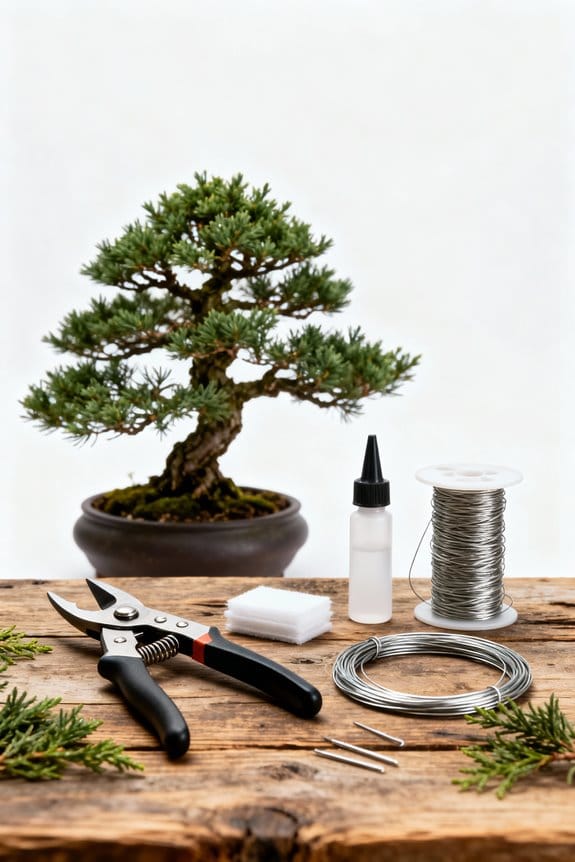
To successfully train a juniper bonsai, a few essential materials are needed. A shallow terra cotta bonsai pot is highly recommended, but a basic pot is budget-friendly for beginners. Mesh is necessary to cover drainage holes, ensuring soil remains intact during watering. To secure this mesh, shoe goo is essential, offering stability for the juniper tree. For shaping the tree, wire cutters and affordable shears are ideal tools. Copper wire is popular for wiring branches, although inexpensive electrical wiring can be used as a practical alternative. Multiple mesh sizes are crucial for optimizing drainage and promoting bonsai health. These materials create a solid foundation for effective bonsai training, allowing enthusiasts to shape their juniper trees according to their creative vision without breaking the bank.
Recommended Products


Above 10 years old Nana junipre tree .100% Home-Grew.We used all glazed ceramic pot and comes with a great real bamboo stand for free.

Juniper Procumbens Nana - 40 Live Plants - Drought Tolerant Evergreen Groundcover - Great for Bonsai
A dense mound of ground-hugging branches that radiate from the center. New growth is bright green turning to bluish green as it matures.
Selecting the Tree
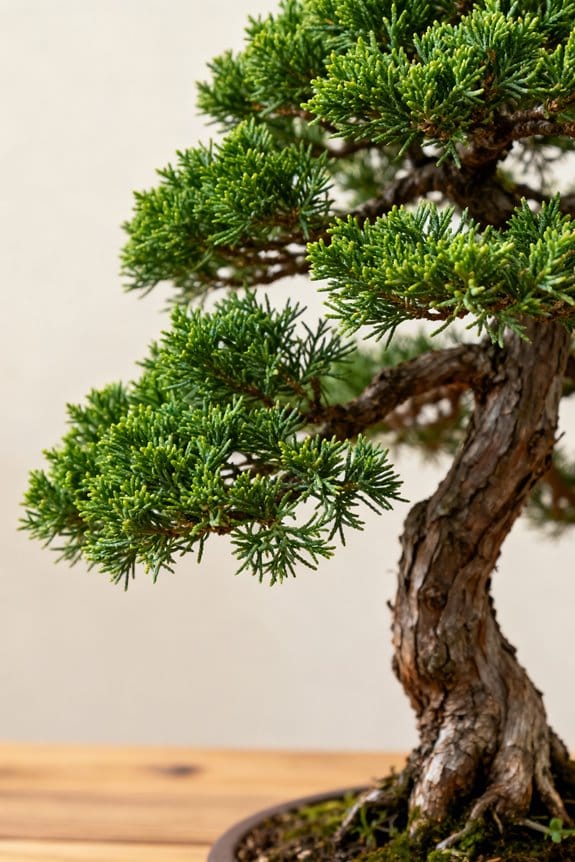
Choosing the right juniper is essential for successful bonsai training. Start by selecting a species like the San Jose Juniper, often found in local nurseries. Look for a tree with a robust root system and an appealing trunk, featuring multiple branches suitable for shaping. This guarantees you have the best bonsai for your project. A nursery juniper typically costs around $29 CAD, making it a budget-friendly option compared to pricier pre-styled bonsai trees. Don’t forget to choose a shallow pot made of materials like terra cotta, which aids in moisture retention and root health—expect to spend about $10 for such a pot. Finally, consider the age of the tree, as older ones usually offer better-defined trunks and larger foliage. For optimal growth, ensure consistent watering and maintain proper soil nutrients to keep your bonsai healthy and resilient.
Recommended Products

Green Mound Juniper Bonsai: A bonsai favorite, featuring a flowing trunk with curved and winding branches bursting with lush greenery.

Japanese Juniper Bonsai Tree is approximately 10 years old, planted in 10 inch ceramic container, color and style vary

An extremely versatile conifer that can easily be used as a low border, groundcover, or container plant. Stiff, irregular branches with attractive, scaled, sage green foliage make this an excellent choice for training as a bonsai or other topiary form. Evergreen.
Pruning Techniques
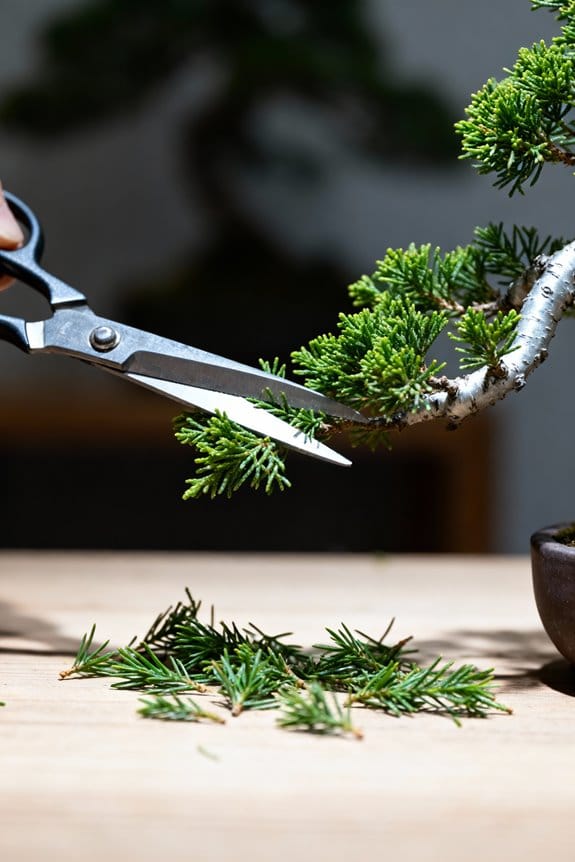
With the right juniper selected, the next step involves mastering pruning techniques to shape the bonsai effectively. Start by removing thick branches to promote new growth. Ideally, trim away 30% to 40% of the foliage during the initial pruning without harming the tree’s health. This approach fosters a balanced structure. Utilize pinching to trim smaller growths, as it keeps the tree healthy and visually appealing. When pruning, guarantee cuts are clean; peeling the bark from pruned areas adds an aged appearance and enhances the overall design. Regularly assess the tree’s shape, making incremental adjustments. Visualizing the desired silhouette while pruning leads to more effective shaping, allowing the nursery juniper to flourish as a beautiful bonsai. Using specialized bonsai pruning shears ensures precision and prevents damage, contributing to the overall health and aesthetics of the tree.
Recommended Products

CONTENTS Comes with 30 Branch Bender Tools

Powerful 2.2" Cutting Capacity: Featuring a large 2.2-inch cutting diameter, SEESII electric pruning shears can easily handle thick branches on trees, shrubs, and garden plants that standard pruners struggle with. Ideal for yard maintenance, orchard pruning, and landscaping tasks, delivering clean, powerful cuts that make trimming faster and more efficient

【Specification】【Scissors】 Size: L 7.08 x W 3.74 x H 0.67 in (180mm x 95mm x 17mm) | Length of Blades: 2.04inches(52mm) | Weight: 5.5oz (156g) | Material: S58C black carbon steel | Made in Japan (Niigata prefecture) 【Concave Branch Cutter】Size: L 7.87 x W 1.96 x H 0.78 in (200 x 50 x 20 mm) | Length of Blades: 0.98 in (25 mm) | Weight: 6.7 oz (190 g) | Material: S55C Carbon steel | Black Coated | Made in Japan (Niigata prefecture)
Wiring and Shaping
Wiring serves as an essential technique for shaping a juniper bonsai effectively. To begin, select pairs of branches with similar thickness, starting with the main branches and moving to the thinner ones. Clean the branches by removing any downward-growing or dangling growth to enhance wiring effectiveness. When applying wire, wrap it gently around each branch at a 45-degree angle, ensuring it does not cut into the bark. Gradually shape the bonsai tree over time by bending branches carefully, maintaining their health and structure. It’s important to monitor the branches regularly, adjusting or removing the wire if necessary. With patience and attention, the wiring process will lead to a beautifully shaped bonsai that reflects careful craftsmanship. Using high-quality anodized aluminum wire offers durability and rust resistance, ensuring the longevity and health of the bonsai tree.
Recommended Products

Aluminum wire, anodized coating
Aluminum wire, anodized coating
Aluminum wire, anodized coating
Repotting and Care
Repotting a juniper bonsai is an essential process that considerably impacts its overall health and growth. When repotting nursery stock, it’s important to first cover drainage holes with mesh to prevent soil loss while promoting adequate drainage. Use a soil mixture of 50% sand and 50% hummus, as this blend supports both aeration and moisture retention, critical for juniper health. Before placing the tree in its new pot, trim away any old, dark-colored roots to stimulate fresh growth. After repotting, water the juniper thoroughly. This is crucial for recovery. Finally, protect the newly potted juniper from harsh weather conditions, ensuring that it has a stable environment to adapt and thrive in its new home. Additionally, using a mix that includes pumice ensures drainage and avoids soil compaction, promoting a healthier root system for your bonsai.
Recommended Products

【100% Natural Stones 】Our 3lb stones are mixed of red lava rock, black lava rock, maifanitum, and green mineral stones that provide essential mineral trace minerals for your plants to grow.

Green Mound Juniper Bonsai: A bonsai favorite, featuring a flowing trunk with curved and winding branches bursting with lush greenery.

Tailored for Drought-Tolerant Bonsai Trees Perfectly designed for junipers, pines, and cedars, this mix ensures superior drainage and aeration to protect roots from overwatering and compaction.
Frequently Asked Questions
How Long Does It Take to Train a Juniper Into a Bonsai?
Training a juniper into a bonsai resembles nurturing a delicate dance; it typically requires two to five years, employing various bonsai techniques to achieve balance, form, and grace throughout the duration of its transformation.
Can I Use Any Type of Pot for Bonsai?
One can use various pot materials for bonsai, including ceramic or plastic. However, it’s essential to guarantee proper drainage requirements are met, allowing for adequate water flow and preventing root rot in the plant.
What Pests Should I Watch Out for on Junipers?
Aphid infestations and spider mites pose significant threats to junipers. Recognizing signs early, such as distorted growth from aphids or webbing from spider mites, enables effective management and guarantees the health of these delicate plants.
How Often Should I Water My Juniper Bonsai?
A juniper bonsai requires careful attention to watering frequency, typically every 1-2 weeks. Factors like climate and soil moisture retention play essential roles in determining when to water and ensuring ideal health for the plant.
Can I Grow Junipers Indoors as Bonsai?
Junipers thrive outdoors but struggle indoors. Indoor care for juniper species requires high humidity, bright light, and careful temperature control. For success, consider alternative species better suited for indoor environments rather than relying on junipers.