As an Amazon Associate, we earn from qualifying purchases. Some links on this site are affiliate links at no extra cost to you. Our recommendations are based on thorough research and editorial judgment.

How to Transport Bonsai Safely to Workshops and Shows

Transporting bonsai safely to workshops and shows involves careful preparation. Start by evaluating the tree’s health, pruning 20-30% of excess leaves or branches to minimize stress. Water thoroughly the day before and wrap the root ball in moist burlap. Use a sturdy box, securing the pot with soft wire or packing materials to prevent movement. Choose temperature-controlled transport to avoid extreme conditions. With these steps, the bonsai will remain healthy during transit, and more tips await.
Key Takeaways
- Thoroughly water the bonsai a day prior to transport and wrap the root ball in moist burlap for humidity retention.
- Use sturdy, double-wall corrugated boxes and secure the bonsai pot with soft wire to prevent shifting during transport.
- Label boxes clearly as “FRAGILE,” “THIS SIDE UP,” and “LIVE PLANT” to ensure proper handling.
- Choose temperature-controlled transport methods and prioritize direct routes to minimize stress on the bonsai.
- Keep documentation like proof of origin accessible and engage with local bonsai clubs for shared transport best practices.
Assessing Bonsai Health Before Transport
Before transporting a bonsai, it is crucial to assess its overall health to secure a successful journey. Healthy bonsai trees are more resilient during travel, making early checks imperative. Examine the plant for any signs of disease, pests, or stress. If the leaves and branches are excessive, consider pruning them lightly to alleviate potential stress. Confirm that the soil remains moist but not overly saturated, as this prevents root rot. Inspect the root system for any signs of damage or constriction, which might require root pruning before the trip. Remember to use essential tools like pruning shears and watering systems to ensure your bonsai is in optimal condition for the journey. Finally, remember that bonsai species have varying needs, so adjust your handling techniques based on the specific species’ growth stage. Proper preparation will lead to a safe transport.
Pruning Techniques to Minimize Stress

After evaluating the overall health of the bonsai, pruning techniques become important to minimize stress during transport. First, focus on removing 20-30% of the leaves or branches. This reduces the bonsai tree’s surface area, helping to decrease water loss. Use sharp, sterile pruning tools to avoid damaging the tissue and prevent infections. It’s also beneficial to selectively prune weak or damaged branches, as this strengthens the tree’s structure and aids recovery after transport. Conduct the pruning a day prior to the journey, allowing the bonsai tree to adjust to its new form while still being hydrated. By following these pruning techniques, one can guarantee a smoother transport experience for the bonsai, reducing overall stress effectively. Remember to consider using ergonomic designs with comfortable grips to minimize hand fatigue during the pruning process.
Watering and Moisture Retention Strategies

Transporting a bonsai tree requires careful attention to watering and moisture retention strategies to guarantee its health during the journey. A day before transport, the bonsai should be thoroughly watered, ensuring the soil is soaked until bubbling stops to enhance moisture retention. Wrapping the root ball in moist burlap or plastic can also help maintain humidity around the roots. During the trip, using a hand pump sprayer to mist the leaves, branches, and soil will combat drying out. To minimize spillage and keep moisture levels steady, it’s essential to secure the soil during packing. Finally, monitoring the vehicle’s temperature is important, as extreme heat can lead to rapid moisture loss; insulating packaging can help regulate conditions. High germination rates indicate quality seeds included in bonsai kits, which is crucial for long-term plant success.
Packing Materials and Techniques
Choosing the right packing materials and techniques is essential for ensuring the safe transport of a bonsai tree. Begin with a sturdy double-wall corrugated box, which should be at least 2-3 inches larger than the pot. This space allows for adequate cushioning. Secure the bonsai pot inside with soft wire or zip ties to prevent shifting. Use packing materials like crumpled paper or packing peanuts to fill any gaps for extra protection. Wrap the root ball in moist burlap and cover the soil with plastic wrap to maintain moisture. Label the box clearly with “FRAGILE,” “THIS SIDE UP,” and “LIVE PLANT.” A hand pump sprayer can also help re-moisturize the bonsai if transport takes longer than expected. Consider using an Automatic Watering System to keep your bonsai consistently hydrated, especially if the transport might extend over a longer period.
Recommended Products

DIMENSIONS: Inside dimensions measure 20-inches (length) x 12-inches (width) x 12-inches (height) Carton capacity is approximately 1 667 cubic feet APPLICATIONS: Aviditi...
Choosing the Right Transport Method
Selecting the right transport method is important for protecting delicate bonsai trees during their journey. Using a temperature-controlled vehicle helps shield these plants from extreme weather. Prioritizing direct routes minimizes transit time, reducing stress on the bonsai. To support the roots, securely wrap bonsai pots in dampened newspaper or plastic, preventing soil spillage. Sturdy boxes with cushioning materials stabilize the bonsai, ensuring minimal movement. It is essential to label boxes as “FRAGILE” and “LIVE PLANT” for careful handling. Proper air circulation is also significant; slightly open windows or utilize fans to keep the environment comfortable, especially in warmer conditions. By following these methods, growers can effectively safeguard their bonsai on the way to workshops and shows. Additionally, selecting bonsai varieties like the Chinese Elm bonsai from From You Flowers, which has moderate watering needs, can simplify care during transit.
Maintaining Optimal Transport Conditions
To guarantee bonsai trees thrive during transport, maintaining ideal conditions is essential. Utilizing a temperature-controlled vehicle helps prevent extremes above 90°F or below freezing. Protect the bonsai from temperature fluctuations by applying a leaf shine product before the journey. During transit, make sure that moisture levels remain high, especially on extended trips, by using a hand pump sprayer for quick access to water. Proper airflow is important too; use a fan to circulate air and avoid heat buildup during stops. Finally, wrap the root ball in moist burlap and cover bonsai pots with dampened newspaper to retain moisture and secure stability. Implementing these steps promotes the health of bonsai during transport, keeping them in prime condition for arrival. Additionally, using premium bonsai soil mixes ensures optimal drainage and aeration, preventing waterlogging during transport.
Seasonal Considerations for Travel
When transporting bonsai, considering the season can greatly influence their health and well-being. Traveling during milder weather, like spring or fall, increases their chances of success. Extreme temperatures, whether too hot or too cold, can harm delicate plants. Monitor local climate forecasts before transport, as severe weather can negatively impact bonsai health. Using insulation and appropriate packaging helps protect them from temperature fluctuations. Additionally, acclimating bonsai gradually to new environments is essential, especially when shifting between indoor and outdoor conditions. Different bonsai species also have varying resilience to seasonal changes; some may need more care. Regular maintenance and care of bonsai tools can also contribute to the overall health and presentation of your bonsai during travel. Following these seasonal considerations for travel can make a significant difference in ensuring good luck, even if the process takes longer than expected.
Local Regulations and Compliance
Transporting bonsai requires a keen understanding of local regulations and compliance requirements. Before moving any bonsai, individuals should research local regulations related to the transportation of live plants. Some states restrict the transport of specific species, so it is vital to know what is permitted. If transporting across state lines, adherence to permits or phytosanitary certificates may be necessary. Consulting local agricultural departments can provide insights into specific guidelines in your area. Additionally, being aware of seasonal restrictions, such as dormant periods for certain species, is important. Keeping documentation, like proof of plant origin and required permits, handy during transport will help avoid complications with regulatory authorities. Proper preparation guarantees a smooth experience at workshops and shows. It’s essential to ensure that the soil composition quality is maintained during transport to support the health of the bonsai.
Community Insights and Best Practices
Sharing insights from the bonsai community can greatly enhance the experience of transporting these delicate trees. Engaging with local bonsai clubs allows enthusiasts to exchange successful transport methods based on real experiences. Many recommend using custom-made travel boxes, which provide stability and air circulation, keeping the trees secure during transit. It is essential to water the bonsai thoroughly the day before transport and use damp materials for cushioning, which keeps the roots moist. Monitoring weather conditions is vital, as extreme temperatures may require adjustments in timing or additional protective measures. Finally, wrapping pots in plastic prevents soil spillage, while soft materials can cushion fragile branches, helping to avoid breakage during the journey. For optimal bonsai health, consider using mycorrhizae sparingly to avoid overwhelming ecosystems and ensure balanced soil nutrient levels.
Post-Transport Care and Recovery
Upon arrival at the new location, it is important to assess the condition of the bonsai immediately. Start by checking the soil moisture; if it feels dry, rehydrate gently. Proper post-transport care helps alleviate stress, especially for larger trees after overnight shipping. Place the bonsai in a shaded area for a few days, then gradually reintroduce it to sunlight. Monitor for signs of shock, such as wilting or discoloration, and look out for pests and diseases. Avoid repotting right after transport; let the bonsai stabilize first. Additionally, research local conditions to adjust your care routine. You may need to change watering and fertilization methods based on differences from your original environment. Use plastic wrap carefully to protect fragile branches during travel. Consider using durable materials like resin in your bonsai accessories to ensure longevity and resistance to environmental changes.
Recommended Products

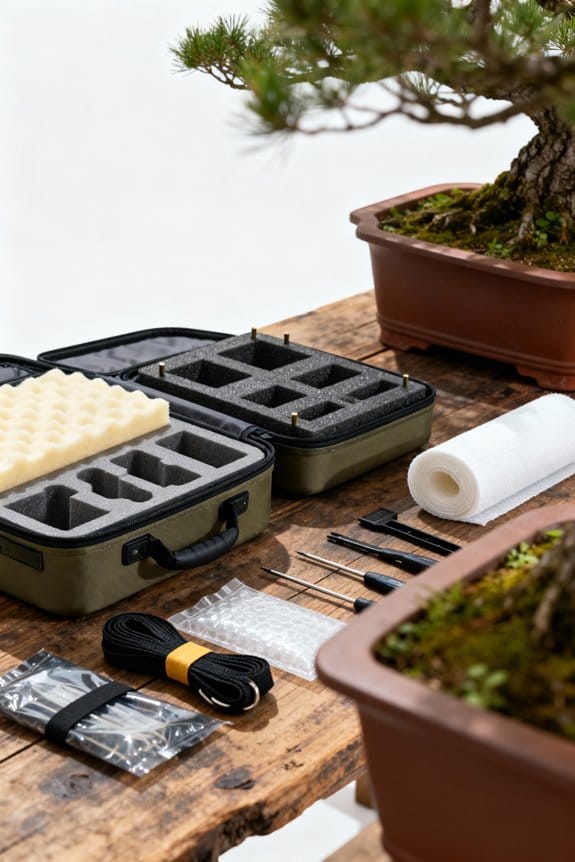
Upgrade Your Bonsai Skills with Professional Bonsai Tool Sets. All-Inclusive Essentials: Covers every necessary tool for bonsai pruning, shaping, wiring, and maintenance, no extra purchases needed.

Consisting of Multiple Tools: this bonsai tool kit with a roll bag includes 6 tools, including 1 knob cutter, 1 trunk splitter, 1 concave cutter, 1 wire cutter, 1 jin pliers and 1 bonsai scissors; This wide array of tools caters to your every need, making your bonsai crafting effortless and fun

Complete 6-Piece Bonsai Tool Set for All Skill Levels: This professional bonsai kit includes the essential tools hobbyists and serious growers need—Concave Cutter, Knob Cutter, Pruning Shears, Trunk Splitter, Root Rake, and Precision Tweezers—designed for pruning, styling, wiring, and repotting. Perfect for shaping pines, junipers, maples, azaleas, and more.
Tips for Shipping Bonsai Long Distances
Shipping bonsai over long distances requires careful preparation to guarantee the tree remains healthy. First, use a sturdy double-wall corrugated box, ideally 2-3 inches larger than the pot, to provide cushioning. Secure the bonsai in its pot with soft wire through drainage holes, adding packing peanuts to prevent movement. Water the bonsai thoroughly a day prior to shipping and consider wrapping the roots with moist burlap for extra protection. Aim to ship within 2-3 days to minimize stress; although healthy bonsai can endure up to 7 days, longer transit can be challenging. Finally, always insure shipments over $100 and photograph the bonsai before shipping to document its condition, aiding claims in case of damage.
Recommended Products

Twice the protection of a standard carton

Twice the protection of a standard carton

Twice the protection of a standard carton
Frequently Asked Questions
What Is the Rule of 3 on a Bonsai Tree?
The Rule of 3 in bonsai is like a carefully composed symphony, fostering harmony. This principle enhances bonsai care by applying asymmetry through triangular arrangements, enriching depth and inviting engagement from observers across different perspectives.
How to Transport a Bonsai Tree?
For effective bonsai transport, prune excess foliage, secure the pot with dampened newspaper, and utilize a temperature-controlled vehicle. Monitor moisture levels during the journey, and allow the tree to acclimate at the destination.
What Is the Golden Rule of Bonsai?
The golden rule of bonsai emphasizes prioritizing the tree’s health and well-being. Bonsai etiquette entails careful handling, minimizing stress, and respecting the tree’s needs, recognizing that nurturing the bonsai is as essential as showcasing it.
How Long Can a Bonsai Go Without Water?
A bonsai can typically survive without water for about 5 to 7 days, influenced by species, environmental factors, and soil type. Monitoring moisture level is essential for proper bonsai hydration to guarantee ideal health.