As an Amazon Associate, we earn from qualifying purchases. Some links on this site are affiliate links at no extra cost to you. Our recommendations are based on thorough research and editorial judgment.

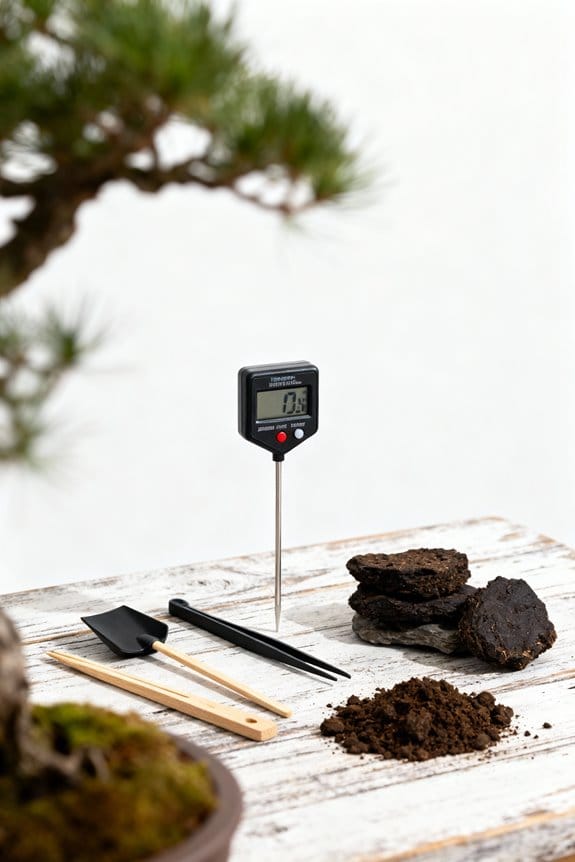
How to Test Bonsai Soil Moisture Accurately by Hand

Testing bonsai soil moisture by hand is essential for plant health. A simple method involves the finger test: insert your finger into the soil. If the soil feels dry at the first knuckle, it’s time to water. Another effective method is the chopstick test; insert a chopstick into the soil and check its color after 10 minutes. A darkened chopstick shows adequate moisture. Knowing these techniques helps maintain proper watering. Discover more about developing a consistent watering routine next.
Key Takeaways
- Use the finger test by inserting your finger into the soil; if dry at the first knuckle, it’s time to water.
- Try the chopstick method by probing the soil with a wooden chopstick; a darkened chopstick indicates adequate moisture levels.
- Observe the color of akadama soil; a change in color can signal hydration needs.
- Monitor the pot’s weight before and after watering; a lighter pot indicates a need for moisture.
- Check the top dressing for dryness; a dry surface often suggests it’s time to water your bonsai.
Understanding the Importance of Soil Moisture for Bonsai Health
Understanding the soil moisture levels is vital for bonsai health, as both overwatering and underwatering can lead to significant problems. Maintaining the right moisture level prevents root stress and decay, essential for a thriving bonsai. A balanced hydration status fosters strong root development and vibrant foliage. Factors influencing soil moisture include the soil type, pot size, species of bonsai, and environmental conditions like temperature and humidity. For instance, a heavier soil mix retains water better but may cause root rot if overwatered. Conversely, lighter mixes may dry out quickly. As a result, bonsai care requires regular checking of soil moisture to guarantee trees receive appropriate watering. This practice promotes excellent growth and enhances both longevity and aesthetic appeal. It is beneficial to use soil moisture meters as they provide accurate readings that minimize the risk of overwatering or underwatering.
Traditional Methods for Testing Soil Moisture
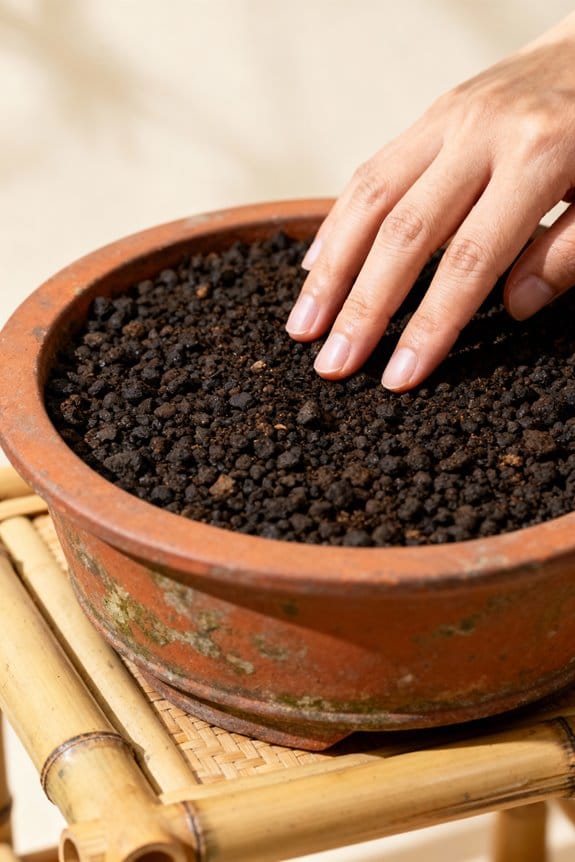
Maintaining ideal soil moisture for bonsai trees is an essential part of their care. Traditional methods for gauging moisture include the finger test, where one inserts a finger in the soil up to the first knuckle. If it feels dry at that depth, it’s time to water. Another effective technique involves using a wooden chopstick as a moisture probe; inserting the chopstick into the soil and waiting 10 minutes can reveal moisture levels through darkening. Observing the color of akadama offers visual cues for adequate hydration. Additionally, checking the weight of the bonsai pot before and after watering can indicate moisture levels, while monitoring the top dressing can signal when watering is necessary. Proper drainage prevents waterlogging and root rot, which are common issues with overwatering in bonsai care.
The Benefits of the Finger Test Method
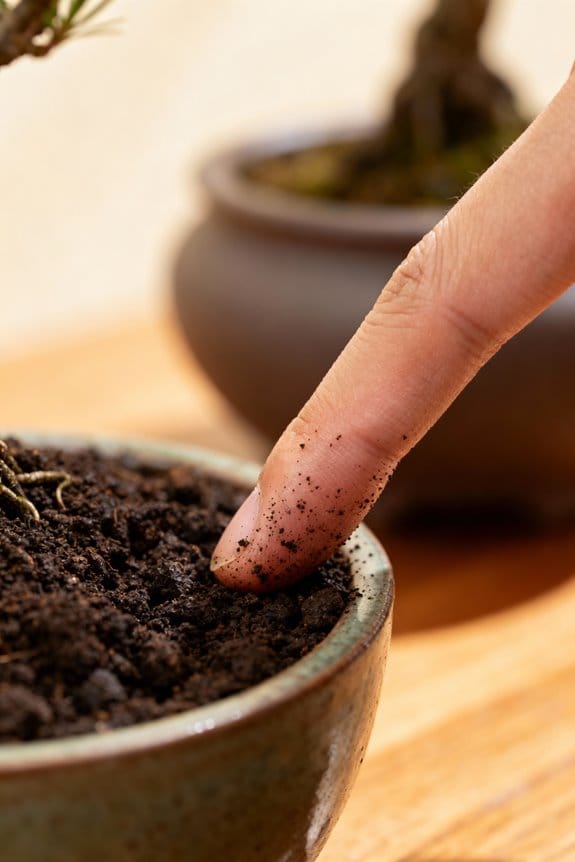
One major benefit of the finger test method is its simplicity and effectiveness in checking bonsai soil moisture. By inserting a finger about one inch into the soil, enthusiasts can quickly gauge moisture levels near the roots. This technique requires no specialized tools, making it accessible for all bonsai caretakers. It’s particularly useful for determining the moisture retention variations in different soil types, allowing for tailored watering strategies. When the top layer appears dry, this method signals a potential need for watering. Practicing proper watering frequency helps develop an intuition for the unique moisture needs of individual bonsai trees, promoting healthier plant care. Overall, it’s an engaging and straightforward approach to monitoring soil moisture effectively.
Using the Chopstick Method for Accurate Assessment
For many bonsai enthusiasts, the chopstick method serves as an exceptionally effective tool for evaluating soil moisture. To use this method, insert a plain wooden chopstick 1-2 inches into the bonsai soil. Leave it there for about 10 minutes to allow the chopstick to absorb moisture from the surrounding substrate. When you remove it, examine the chopstick for watermarks. A darkened chopstick indicates the moisture of bonsai soil is adequate, while a dry chopstick suggests the need for water. This tactile approach provides a straightforward way to gauge the soils without electronics. Regularly using the chopstick method helps deepen your understanding of your bonsai’s watering needs based on its unique soil texture and conditions. Soil moisture meters offer additional insights into soil health, helping bonsai enthusiasts make informed watering decisions.
Signs of Overwatering and Underwatering in Bonsai
Understanding the signs of overwatering and underwatering in bonsai is essential for healthy plant care. An overwatered bonsai often displays symptoms such as soft, mushy leaves and yellowing foliage. This condition arises from excessive soil moisture, where stagnant water can lead to root rot. Conversely, an underwatered bonsai may exhibit drooping, wrinkled leaves and dry soil that cracks. Both conditions can result in leaf drop; overwatered plants shed leaves to alleviate stress, while underwatered ones drop leaves to conserve moisture. Additionally, fungal growth or a foul smell in the soil signals overwatering. Regular monitoring of soil moisture levels and observing the plant’s condition will assist in maintaining the appropriate amount of water for a thriving bonsai. Selecting the correct bonsai pebble trays can aid in maintaining optimal humidity levels and prevent water overflow, supporting overall plant health.
Developing a Consistent Watering Routine Based on Soil Moisture
Establishing a consistent watering routine grounded in soil moisture is essential for bonsai health and vigor. To determine the time to water, check the bonsai soil at least once a week and adjust based on seasonal changes. Use techniques like the finger test, chopstick method, or moisture meters to assess moisture levels accurately. Pay attention to the soil’s top layer; when it appears dry, it’s a good sign that it’s time to water. Always check deeper layers to guarantee roots receive adequate moisture. Since watering requirements can vary by tree species and environmental conditions, keeping a record of watering dates and soil moisture observations will help refine this routine over time. Regular monitoring with digital moisture meters aids in achieving ideal moisture balance and simplifies the process of caring for bonsai trees. Individualize the approach for best results.
Frequently Asked Questions
How to Check Soil Moisture by Hand?
Like a seasoned gardener feeling the pulse of the earth, one checks soil moisture by using the finger test. Observing soil texture, weight, and pot drainage reveals moisture retention levels, guiding necessary watering decisions.
How to Know if Soil Is Dry Enough for Watering Bonsai?
To determine if bonsai soil is dry enough for watering, observe dryness indicators, consider watering frequencies, assess root health, and analyze soil composition, ensuring ideal moisture levels for healthy growth and maintaining the plant’s wellbeing.
What Is the Rule of 3 in Bonsai?
The Rule of 3 in bonsai emphasizes timely watering when soil moisture reaches level three. This technique highlights soil drainage importance and supports root health, promoting ideal humidity control methods for thriving bonsai trees.
What Level Should a Moisture Meter Be on a Bonsai Tree?
A moisture meter should ideally read 3 or below for bonsai trees, indicating the need for watering. This level guarantees moisture meter accuracy, positively influencing soil moisture impact on bonsai health indicators and overall growth.


