As an Amazon Associate, we earn from qualifying purchases. Some links on this site are affiliate links at no extra cost to you. Our recommendations are based on thorough research and editorial judgment.


How to Transition a Bonsai From Organic to Inorganic Soil

To change a bonsai from organic to inorganic soil, start by evaluating the tree’s health and water needs. Remove the bonsai from its pot, gently loosening the old soil around the roots. Gradually mix new inorganic soil with some organic soil to preserve beneficial microbes. Monitor moisture levels closely after the change, as inorganic soil dries faster. Additionally, be cautious of root shock and nutrient deficiencies. For more tips on successful bonsai care, keep exploring!
Key Takeaways
- Assess your bonsai species and water needs to choose the best timing for soil transition, ideally in early spring or autumn.
- Gradually mix organic soil with inorganic soil to help your bonsai adjust while preserving beneficial mycorrhizae fungi.
- Inspect the root system during repotting to ensure healthy, white, and firm roots; avoid disturbing them excessively.
- Increase watering frequency after transitioning, as inorganic soil tends to dry out more quickly compared to organic options.
- Regularly monitor moisture levels and consider nutrient supplementation, as inorganic soils typically lack essential nutrients for bonsai health.
Importance of Soil Transition for Bonsai Health
Although many might overlook it, the choice of soil plays an essential role in the health of a bonsai tree. Shifting from organic to inorganic soil can greatly improve a bonsai’s vitality. Inorganic soils, such as Akadama, offer superior drainage and aeration, which are essential for healthy roots. Organic soils may compact over time, leading to poor drainage and root diseases. By using inorganic mixes, bonsai enthusiasts can better manage nutrients while maintaining structure for the best air and moisture balance. However, different species respond differently to soil changes. For instance, coniferous bonsai benefit from retaining some old soil to preserve important mycorrhizal fungi. Additionally, incorporating aeration stones in soil can further enhance root growth by improving drainage and preventing waterlogging. This adjustment period should be closely monitored to guarantee the bonsai adapts well to its new environment.
Assessing the Health of Your Bonsai

How can a bonsai enthusiast effectively assess the health of their tree? Regularly monitoring leaf color and growth patterns is essential. Yellowing leaves or stunted growth may signal nutrient deficiencies. Checking the root system during repotting is vital, as healthy roots should be white and firm. In contrast, brown or mushy roots may indicate rot from inadequate drainage in organic soil. Evaluating moisture retention also plays a role; soil that dries too quickly or remains soggy can disrupt balance. Overall vigor is indicated by consistent growth during the season, showcasing good root health. Finally, look for signs of pests or diseases, which can be worsened by excess moisture, underscoring the need for careful shift to inorganic soil for improved management. Additionally, consider conducting regular soil tests to gain insight into nutrient availability, which can help address any deficiencies promptly and aid in quicker bonsai recovery.
Preparing for Soil Transition
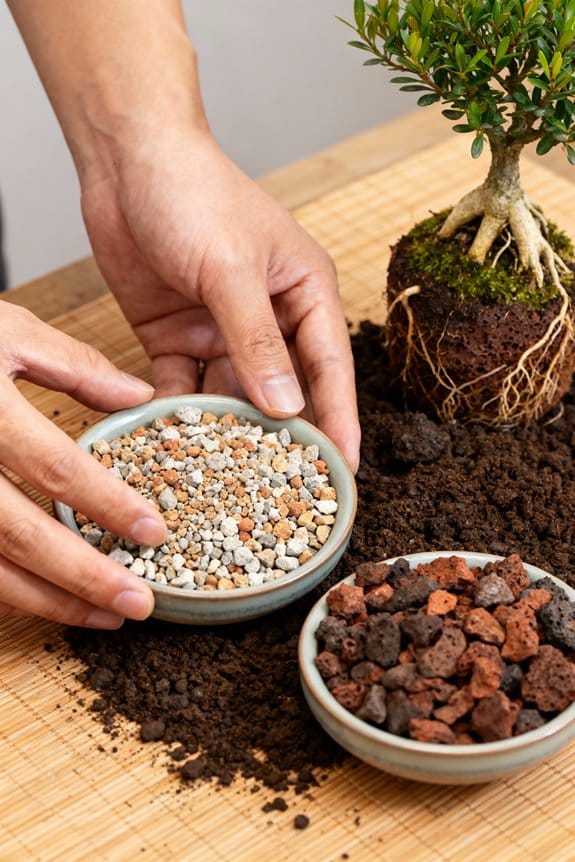
Preparing to shift a bonsai from organic to inorganic soil requires careful planning and timing. First, assess the specific species of bonsai and its water needs to choose the right moment for the changeover, ideally during active growth in early spring or early autumn. During repotting, gradually mix organic and inorganic soil to allow for smoother adjustment to increased aeration and drainage. Different species have unique mix requirements, so ensure you are using the right mix for your bonsai type to support its growth. Retain some old organic soil to keep beneficial mycorrhizae fungi, which support root growth. After the changeover, monitor the bonsai closely for any signs of stress, like changes in leaf color. Additionally, increase watering frequency as inorganic soil demands regular moisture to guarantee healthy root growth and overall robustness.
Removal of the Bonsai From Its Current Pot
Gently removing the bonsai from its current pot is an essential step in the soil change process. To begin the removal, tilt the pot slightly and carefully slide the bonsai out to minimize damage to its roots. Using a soft tool, such as a root hook or chopstick, helps loosen the soil around the edges, aiding in extraction. It is critical to avoid excessive force, as this could harm delicate root hairs necessary for the plant’s health. During this process, inspect the roots and trim any dead or overly long ones to promote healthier growth in the new inorganic soil. A well-maintained soil structure is crucial in supporting root development and ensuring the longevity of bonsai plants. Preparing a suitable new pot and fresh soil mix beforehand guarantees a smoother changeover, reducing stress on the tree.
Loosening Organic Soil Around the Roots
Loosening the organic soil around the bonsai roots is essential for a successful change to new soil. Begin this transition process by gently wetting the organic soil with a spray bottle or watering can. This moisture softens the soil, making it easier to work with. Carefully use your fingers or a root rake to start loosening organic soil, while being mindful of delicate root hairs that should remain intact. As you proceed with removing organic material, aim to retain some mycorrhizal fungi and beneficial microbes on the roots, as they contribute to a healthier change. Once most organic soil is removed, the new inorganic mix can be introduced, ensuring a good fit around the exposed roots in the pot. Using ergonomic designs in your bonsai tools can reduce hand fatigue and improve comfort while loosening the soil, especially during extended sessions.
Introducing Inorganic Soil Gradually
Introducing inorganic soil gradually is an important step in ensuring the health of a bonsai tree during a change. To start, mix a small portion of inorganic soil with existing organic soil. This helps minimize shock to the roots. It’s also essential to monitor moisture retention closely, as inorganic soils drain more quickly, leading to the need for frequent watering. Maintaining some organic soil helps preserve beneficial mycorrhizae fungi, which are critical during the shift. Optimal pH levels for Akadama soils range from 5.5 to 6.5, which aligns perfectly with bonsai needs. It’s best to perform this process in early spring or autumn, when conditions are ideal for root growth. In subsequent repottings, gradually increase the proportion of inorganic soil to enhance drainage and aeration, ultimately promoting the bonsai’s overall health.
Ensuring Proper Drainage and Aeration
Ensuring proper drainage and aeration is crucial to the health of a bonsai tree, especially during a soil change. Shifting to inorganic soil, such as Akadama, greatly improves drainage thanks to its larger particle sizes. This prevents compaction, which is common with organic materials. Additionally, inorganic mixes enhance aeration, allowing oxygen to reach the roots effectively. Balancing moisture retention is key; using components like pumice helps keep soil moisture without becoming waterlogged. During this bonsai shift, mixing the inorganic components in appropriate ratios facilitates proper drainage. Gradually incorporating inorganic soil while removing old organic material also maintains beneficial air pockets, promoting ideal root health and ensuring your bonsai thrives in its new environment. It’s important to note that high-quality peat moss can also improve nutrient absorption, contributing to strong root growth when transitioning to a new soil composition.
Choosing the Right Container for Repotting
Choosing the right container for repotting a bonsai is essential to support healthy growth and development. A bonsai pot should have good drainage and aeration, which promotes root growth. Select container materials like ceramic, plastic, or unglazed clay that maintain moisture levels while allowing airflow. The container width is important; it should accommodate slight root expansion, encouraging a healthy nebari. Avoid deep pots since bonsai prefer a shallow structure that promotes lateral growth rather than deep rooting. This choice can enhance the tree’s stability and overall aesthetics. Don’t forget to contemplate the visual appeal of the container; an attractive pot complements the bonsai while fulfilling its growth requirements during repotting. Additionally, eco-friendly materials are available for sustainable cultivation, providing an environmentally conscious option for bonsai growers.
Monitoring Moisture Levels Post-Transition
Monitoring moisture levels after shifting a bonsai to an inorganic soil mix is essential for its health. This new soil typically has enhanced drainage, often necessitating increased watering frequency. Bonsai owners may need to water daily or every other day, especially during hot weather when evaporation occurs quickly. A simple way to check moisture levels is by inserting a finger into the soil to about an inch; if it feels dry, watering is required. Observing the bonsai’s overall health, including leaf color and growth rate, will help indicate moisture management. Additionally, using a moisture meter provides precise readings, ensuring ideal watering habits during the adjustment period with the new soil mix. For accurate monitoring, consider using a Water Sensor Moisture Monitor that utilizes ceramic sensors, as they are aesthetically pleasing and offer reliable readings.
Factors Influencing Soil Choice
Selecting the right soil for bonsai involves various factors that can greatly influence plant health and growth. The type of tree plays a significant role in soil choice; for instance, deciduous species often adapt better to inorganic soils than coniferous ones. Local climate conditions, like humidity and temperature, affect the moisture retention and drainage capabilities of soil mixes, requiring appropriate adjustments. Understanding the tree’s watering needs is essential, as some species demand more frequent watering with inorganic mixes. Additionally, the nutrient content and water retention properties vary between organic and inorganic soils, impacting growth rates. During the change process, gradual adjustments should be made to monitor root health and minimize stress, ensuring long-term success for the bonsai. A systematic approach to bonsai care, as seen in various bonsai care calendars, can aid in planning and tracking the transition process effectively.
Potential Risks of Transitioning Soils
Changing soils for bonsai trees carries several potential risks that growers must actively consider. Shifting from organic soil mixes to inorganic materials can disturb the root system, leading to shock that inhibits growth. A significant concern is losing beneficial mycorrhizae fungi, which help with nutrient uptake. Inorganic soils have different moisture retention capabilities; sudden shifts can result in overwatering or drought stress while the tree adjusts. Additionally, this process may expose the tree to pests and diseases that the organic soil’s microbiome previously suppressed. To mitigate these risks, it is essential to retain some organic soil during repotting. This helps maintain beneficial bacteria and fungi, providing support during the shift to inorganic soil types.
Long-term Care for Bonsai in Inorganic Soil
Successfully caring for bonsai trees in inorganic soil requires diligence and a keen awareness of the tree’s needs. Long-term care involves consistent watering to combat faster drying, especially in hot weather. Regular monitoring of moisture levels is essential to prevent stress. Nutrient supplementation is important since inorganic soils lack necessary nutrients; integrating a balanced fertilizer helps promote robust growth. Balancing substrate materials, like pumice and Akadama, improves aeration and drainage, enhancing root development. Observing changes in root growth and health is critical after shifting to inorganic soil. Seasonal adjustments, such as a reduced watering frequency in winter and tailored fertilization schedules in spring and summer, are important for sustaining bonsai health in these unique environments.
Frequently Asked Questions
What Type of Soil Is Best for Bonsai Trees?
Bonsai soil should be a graceful dance of inorganic materials and organic amendments, ensuring excellent drainage, balanced nutrients, and proper pH levels. This harmonious blend promotes root aeration while maintaining essential water retention and texture variation.
How Often Should I Change the Soil in a Bonsai?
Soil replacement frequency for bonsai depends on species and health indicators, typically yearly for vigorous types. Seasonal changes, moisture retention needs, and nutrient cycling balance, alongside root system development, influence repotting timing and soil texture importance.
Is Miracle-Gro Ok for Bonsai?
Miracle-Gro offers rapid bonsai growth, yet its synthetic nature risks nutrient imbalances and soil drainage issues. Bonsai care benefits from custom blends that enhance nutrient retention, hence practitioners favor organic options for a balanced fertilization schedule.
What Soil to Use When Repotting Bonsai?
When repotting bonsai, ideal soil types include a blend of inorganic components for soil drainage, organic elements for water retention, considering pH levels and nutrient retention differences to enhance root health and moisture control.


