As an Amazon Associate, we earn from qualifying purchases. Some links on this site are affiliate links at no extra cost to you. Our recommendations are based on thorough research and editorial judgment.

How to Create an Informal Upright Bonsai Style at Home

To create an informal upright bonsai style at home, start by selecting hardy tree species like junipers or maples. Choose a sapling with a slightly curved trunk for interest. Use proper pots with good drainage, and practice regular pruning to shape branches and encourage growth. Employ soft wiring techniques to manipulate branch placements without harming the bark. Finally, maintain proper watering and nutrition to support health and vigor. Further insights can enhance your bonsai journey.
Key Takeaways
- Select hardy tree species like elms or junipers with slightly curved trunks for aesthetic appeal and proper branch alignment.
- Regularly prune branches to maintain asymmetry and promote desirable growth while enhancing the tree’s natural shape.
- Use soft aluminum or copper wire for shaping branches, ensuring it is applied loosely to prevent damage to the bark.
- Maintain optimal nutrition and health by tailoring fertilizer to the bonsai’s growth stage and regularly monitoring for crossing branches.
- Display the bonsai in a way that highlights its natural form, considering lighting and surroundings for aesthetic harmony.
Choosing the Right Tree Species
When choosing the right tree species for an informal upright bonsai style, what characteristics should one look for? Selecting a species with unique branch lines and trunk twists is vital, as these features create a visually dynamic appearance. Popular choices include elms, maples, and zelkovas. Look for species known for flexibility and resilience to pruning, like the bald cypress or cork elm, which can regenerate after minor injuries. The virginiana juniper is ideal because it maintains an apex over the root ball, enhancing the overall visual flow. Additionally, consider trees that naturally express interesting forms, such as the grafted kishu. Remember, selecting a tree with a suitable growth rate is essential, as species like cork elm may require patience during shaping. Bonsai elms are ideal for both enthusiasts and beginners due to their adaptability to varying conditions and visually appealing characteristics.
Preparing Your Bonsai Sapling
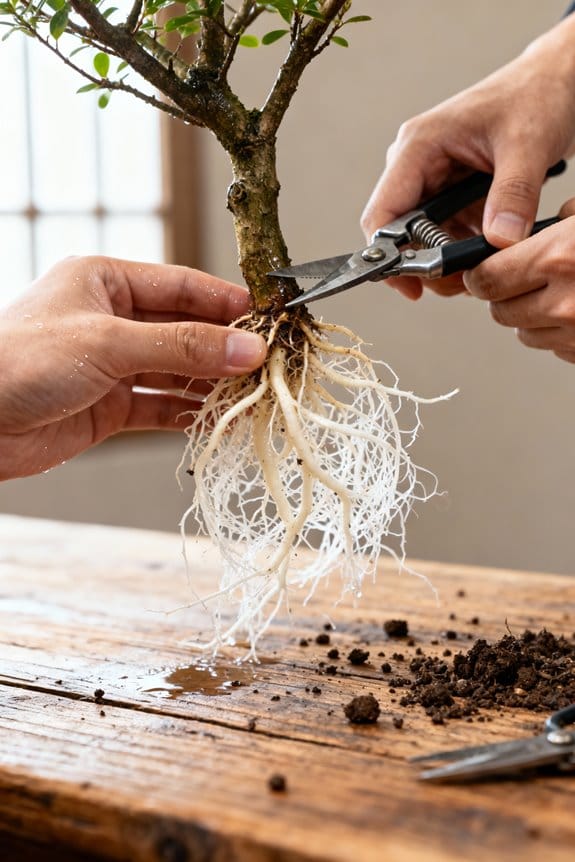
Preparing a bonsai sapling requires careful consideration to guarantee it thrives in the informal upright style. First, select a hardy tree species, like elms, maples, or junipers, suitable for this aesthetic. Look for a sapling with a slightly curved trunk, which can create interesting branch lines. Make sure the apex of the sapling aligns with the trunk’s base to achieve the desired shape. Use a pot that allows for growth and provides proper drainage to promote a healthy root system. Regular pruning is essential to encourage branching and denser foliage, helping the tree maintain its whimsical appearance. Proper watering techniques are crucial for ensuring the health and vitality of your bonsai, as they can make a significant difference in the success of your cultivation. With these steps, your bonsai sapling can flourish and develop into a stunning informal upright masterpiece.
Pruning for a Natural Twist

Pruning plays a key role in shaping the natural twist of an informal upright bonsai. This process encourages an irregular trunk line, resulting in a dynamic design. When pruning, focus on branch placement to enhance the trunk’s natural curve. Selectively trim branches and foliage, promoting growth in desired directions. During the early stages, guarantee the apex aligns with the trunk’s bend for visual harmony. Regularly remove unwanted vertical growth or competing branches to maintain an asymmetrical appearance, which is essential in the informal upright style. As the bonsai matures, establishing a desired form through pruning prepares it for future wiring techniques that will further define its character. It is important to use specialized bonsai care tools for precise trimming, as they enhance the health and aesthetics of your bonsai, contributing to a better gardening experience.
Wiring Techniques for Branch Shaping
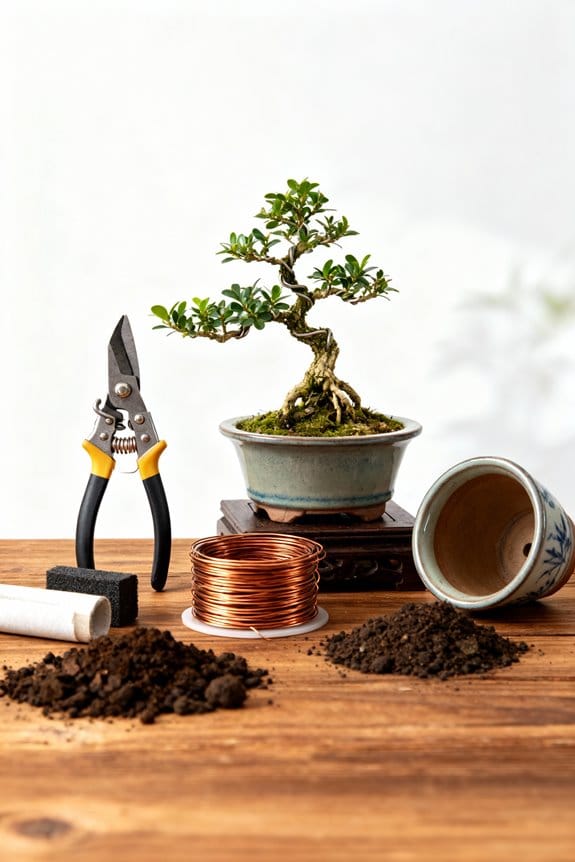
Wiring offers a transformative method for shaping branches in an informal upright bonsai style. To begin, select soft aluminum or copper wire, which allows for flexible manipulation without damaging the bark. Apply the wire at a 45-degree angle around each branch, guaranteeing not to wrap it too tightly, as that can cause scarring and inhibit growth. For significant bends, use a combination of multiple side branches and the main trunk to evenly distribute pressure. Start wiring from the base of the tree, progressing upward to create curves that add visual interest. Finally, monitor the wired branches regularly, adjusting their positions as needed to prevent the wire from digging into the bark and guarantee an aesthetically pleasing outcome. To maintain your bonsai’s health, consider using slow-release fertilizers to provide consistent nutrition, which reduces the application frequency and supports optimal development.
Maintaining Growth and Character
Maintaining growth and character in an informal upright bonsai requires consistent attention and care. Regular pruning is necessary; it enhances branching patterns that support the tree’s natural flow. Readers should observe their bonsai closely, removing crossing branches to guarantee healthy growth and even light distribution. Wiring plays an important role as well, helping shape branches while maintaining the unique informal characteristics of the tree. Careful placement results in interesting branch lines that contribute to visual appeal. Additionally, the right fertilization is essential. Tailoring the fertilizer to the bonsai’s growth stage provides crucial nutrients, promoting overall health and vigor while supporting an attractive structure. By following these practices, one can achieve a thriving informal upright bonsai.
Watering and Nutritional Needs
Watering and nutrition are essential for the health and development of an informal upright bonsai. A consistent watering schedule is imperative; the soil should remain moist but not waterlogged, which aids in healthy root development. Adjust the frequency based on environmental factors, such as temperature and humidity. For instance, warmer and drier conditions may require more frequent watering. Nutritional needs of bonsai include a balanced fertilizer, applied during the growing season to supply crucial macro and micronutrients. Organic fertilizers with a balanced N-P-K ratio are ideal for ensuring bonsai receive essential nutrients without risk of root burn. Soil composition greatly affects watering efficiency; a mix of inorganic and organic materials helps maintain drainage while keeping necessary moisture. Regularly inspect the leaves for signs of nutrient deficiency, such as yellowing, to tailor your bonsai care practices effectively.
Seasonal Care and Adjustments
Seasonally adjusting care practices is essential for the health of an informal upright bonsai. As seasonal temperature changes occur, it is important to monitor the bonsai’s water needs closely. This adjustment prevents overwatering or underwatering, which can harm the tree. During the spring and summer months, it is also important to fertilize your bonsai with a balanced fertilizer to support healthy growth. Regular pruning helps maintain the informal upright shape and encourages natural twists in the trunk. Additionally, repositioning your bonsai for even sunlight exposure is significant, especially when summer days are long. In colder months, protecting the tree from frost by moving it indoors or to a sheltered area keeps it healthy through winter. Using slow-release fertilizers can ensure consistent nutrient delivery, minimizing the need for frequent applications and reducing the risk of nutrient runoff.
Displaying Your Informal Upright Bonsai
After guaranteeing the health of an informal upright bonsai through careful seasonal adjustments, attention now turns to its presentation. When displaying your informal upright bonsai, position the apex slightly off-center. This technique adds visual interest and mimics natural growth patterns. Choose a pot that complements your tree’s height and style; a shallow, wide container enhances balance. Integrating unique branch lines is essential—allow branches to grow outward dynamically for added character. Positioning the bonsai at eye level maximizes viewer appreciation of its intricate details. Consistent pruning and wiring of the branches will maintain its informal style. This effort guarantees a harmonious and aesthetically pleasing composition that reflects the tree’s natural form, creating a stunning display in any home. To enhance your bonsai preparation process, consider using ergonomic designs in your tool set for increased comfort and control during pruning.
Frequently Asked Questions
What Are the Rules for Informal Upright Bonsai?
In the world of bonsai, creating an informal upright style requires delicate design techniques, strategic pruning methods, thoughtful pot selection, and careful wire training, crafting a living masterpiece that dances with nature’s whims and quirks.
What Is the Rule of 3 in Bonsai?
The Rule of 3 in bonsai is a design principle emphasizing harmonious composition through branch placement, pot selection, and varied tree species, creating balance and visual appeal while showcasing natural irregularity and dynamic flow in arrangements.
What Is the Informal Upright Style Bonsai Tree?
The informal upright style bonsai tree captivates with its twisting trunk and lively branches. Utilizing selective tree species, artisans employ pruning methods and informal upright techniques to showcase each tree’s unique characteristics, resulting in a natural, serene beauty.
How to Make Formal Upright Bonsai?
To create a formal upright bonsai, select suitable tree species, employ precise pruning techniques, guarantee ideal soil selection, and follow consistent watering guidelines to maintain health and promote symmetrical growth for a stately appearance.