As an Amazon Associate, we earn from qualifying purchases. Some links on this site are affiliate links at no extra cost to you. Our recommendations are based on thorough research and editorial judgment.

How to Create a Simple Bonsai Care Schedule You Can Follow

To create a simple bonsai care schedule, first identify your tree species since each has unique needs. Next, align tasks with seasonal changes. In early spring, focus on repotting and fertilizing. Throughout summer, prioritize watering to combat heat. Autumn requires low-nitrogen fertilization for root health, while winter is for pruning and moisture checks. Regularly monitor your tree’s health and adjust care as needed. There are many effective ways to improve your schedule for thriving bonsai trees.
Key Takeaways
- Identify your bonsai species to tailor watering, pruning, and fertilization needs effectively.
- Establish a monthly care plan aligned with seasonal cues for optimal growth and maintenance.
- Document care activities, adjusting methods based on your tree’s health and specific species requirements.
- Utilize community resources like local bonsai clubs and online forums for support and expert insights.
- Regularly monitor your bonsai’s condition, adjusting care routines based on signs of stress or growth changes.
Identifying Your Bonsai Species
Identifying a bonsai species is an essential first step in crafting a successful care schedule. Each bonsai species, like the Japanese black pine, has unique requirements for watering, pruning, and fertilization. Observing characteristics such as leaf shape, bark texture, and growth habits helps in establishing the right identity. Utilizing common sense is key; for instance, if a tree has needle-like leaves, it might be a pine or juniper. Resources like bonsai books or online databases can provide valuable information specific to your species. Consider joining local bonsai clubs or forums; this can be the best time to learn directly from experienced growers. With the right identification, you’ll be well on your way to effective bonsai care. Additionally, consistent soil moisture is important for maintaining the health of your bonsai, as it prevents both overwatering and underwatering.
Establishing a Monthly Care Plan
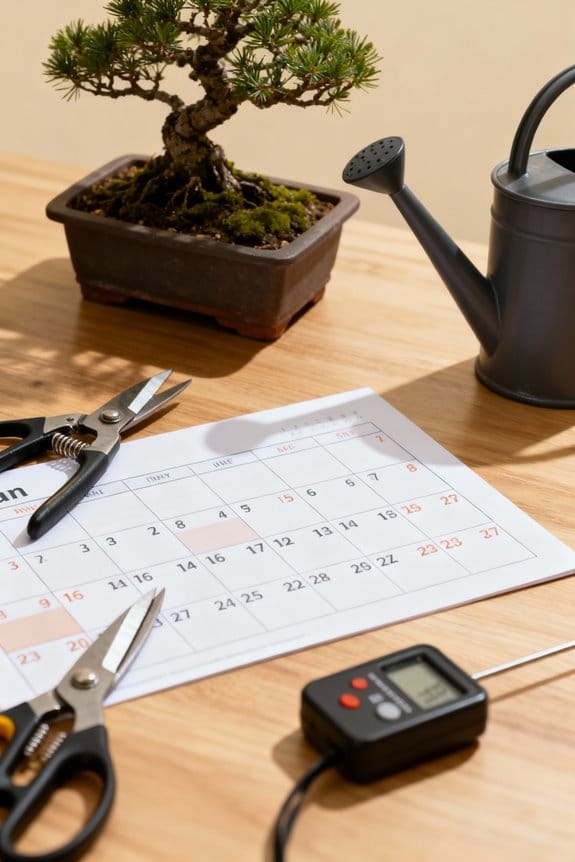
Creating a monthly care plan for bonsai trees can enhance their health and promote ideal growth. A good starting point is aligning tasks with seasonal cues. In early spring, focus on repotting and fertilizing to prepare the tree for growth as temperatures rise. During the summer, prioritize watering to keep moisture levels high, especially when temperatures exceed 32-35°C (90-95°F). Autumn should emphasize low nitrogen fertilization, helping to strengthen roots for winter dormancy, beginning in early September. Regular documentation of care activities and growth patterns allows for adjustments based on each species’ specific needs. Incorporating bonsai mortar mixes that ensure proper drainage and aeration can further support your bonsai’s health throughout the year. Ultimately, a thoughtful monthly care plan will guarantee a thriving bonsai throughout its growth cycles and seasonal changes.
Seasonal Maintenance Phases
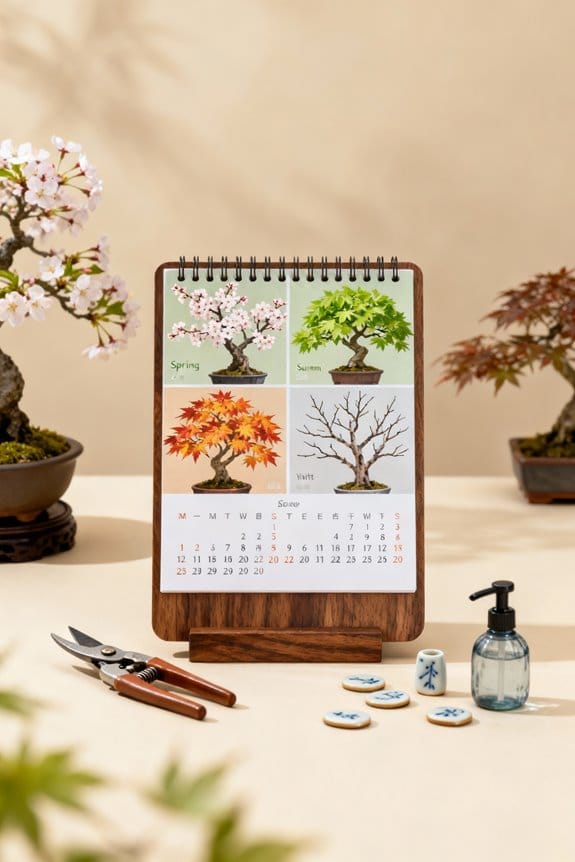
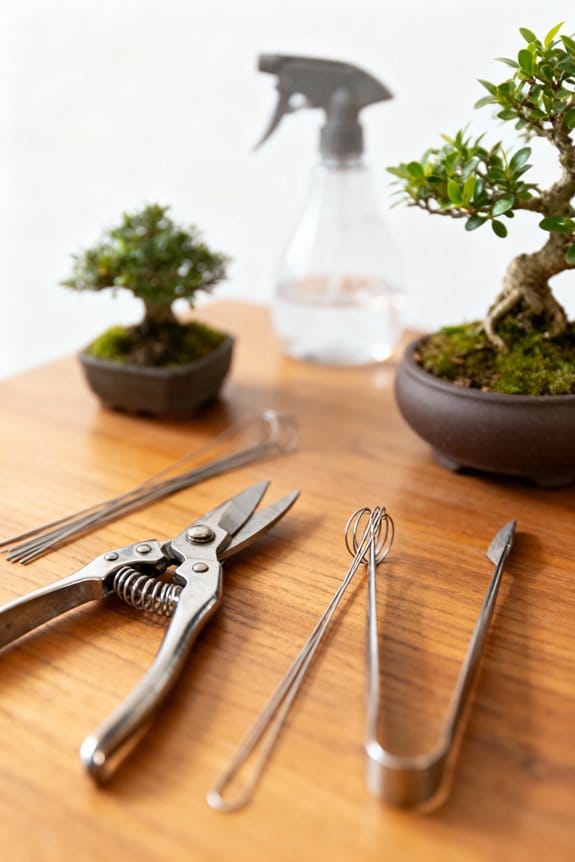
As seasons change, understanding the seasonal maintenance phases of bonsai care becomes crucial for enhancing the tree’s health. In winter, trees enter dormancy, requiring minimal activity while one can focus on pruning, repotting, and checking moisture levels. Early spring marks a great time to inspect for budding branches and intervene with vigorous plants to promote growth. As spring progresses into early summer, major growth phases arrive. During this time, pinching new growth, taking cuttings, and pruning for shape become essential tasks. In autumn, the focus shifts to fertilization, helping trees stabilize before winter. Using low nitrogen fertilizers rich in phosphorus and potassium supports root development, ensuring the bonsai is ready for dormancy. Incorporating tools like ergonomic designs in bonsai tweezers can enhance precision during these seasonal care tasks, allowing for greater control and reduced strain.
Adjusting Care Based on Tree Health
Adjustments in bonsai care are essential for maintaining a healthy tree. Bonsai enthusiasts should monitor their tree’s health closely, keeping track of any signs of stress, such as wilting leaves. If the bonsai appears dehydrated, increase the watering frequency, especially during summer dormancy. When adjusting care based on tree health, consider repotting if the roots are compact and unhealthy. Weak trees often require repotting sooner in spring to support recovery. Additionally, adapt the fertilization routine based on the tree’s vigor; weaker plants may need diluted fertilizer. In spring, if growth is vigorous, more frequent pruning might be necessary. However, postpone interventions if the tree shows any signs of weakness, as care must always be sensitive to its needs. Incorporating a balanced N-P-K ratio in your fertilization routine can ensure optimal growth and development for your bonsai.
Utilizing Community Resources
While tending to bonsai trees, engaging with community resources can greatly enhance a grower’s knowledge and skills. Joining local bonsai clubs offers access to tailored resources and community expertise that deepen understanding of tree care. These clubs often share calendars for seasonal tasks, helping members align their practices with recommended techniques. Participating in online forums allows enthusiasts to document experiences and gain valuable insights from others. They can explore instructional content from experienced bonsai artists, such as videos by Bjorn Bjorholm, which showcase effective seasonal techniques. Incorporating feedback from fellow enthusiasts fosters adaptation of care schedules based on collective community knowledge and local climate conditions. Bonsai (101 Essential Tips) is an excellent resource that emphasizes consistent care and aesthetic pruning techniques, which can be particularly beneficial for newcomers striving to elevate their bonsai care journey. Using these resources can elevate one’s bonsai care journey remarkably.
Developing Intuition and Experience
Developing intuition in bonsai care is essential for nurturing healthy trees. As bonsai enthusiasts would love to discover, observing seasonal changes is key. For instance, small buds appearing in early spring signal the best time for pruning and fertilizing. By regularly monitoring their trees, caregivers can learn about the types of work needed, such as watering or repotting. Engaging with community resources also enhances knowledge of specific species, leading to better care. Keeping detailed records of interventions helps track progress and refine techniques. As experience grows, understanding unique growth cycles becomes easier, allowing for effective, timely interventions that promote overall tree health. Regularly monitoring for pests can also be crucial in maintaining the health and vitality of bonsai trees. This process transforms bonsai care from mere tasks into a more intuitive, rewarding pursuit.
Frequently Asked Questions
What Is the Rule of 3 on a Bonsai Tree?
The Rule of 3 in bonsai highlights maintaining three main branches for balance. It influences water frequency, pruning techniques, and pot selection, ensuring ideal growth by promoting light distribution and airflow, resulting in a visually appealing tree.
How to Care for Bonsai Trees for Beginners?
Caring for bonsai trees for beginners involves understanding water requirements, selecting appropriate soil, and implementing pest control measures. Regular monitoring and adjustments will guarantee ideal growth and health, supporting the art of bonsai cultivation effectively.
What Is the Golden Rule of Bonsai?
The golden rule of bonsai emphasizes attentive observation and responsive care. Mastering bonsai maintenance tips, practicing precise pruning techniques, and implementing insightful watering practices guarantees each tree thrives based on its unique needs and seasonal changes.
How to Train a Bonsai Tree for Beginners?
To train a bonsai tree for beginners, one must employ bending techniques and wiring basics while regularly practicing appropriate pruning methods. This guarantees proper shape development, while maintaining the health and aesthetics of the tree.


