As an Amazon Associate, we earn from qualifying purchases. Some links on this site are affiliate links at no extra cost to you. Our recommendations are based on thorough research and editorial judgment.

How to Reduce Soil Compaction and Improve Oxygen to Bonsai Roots

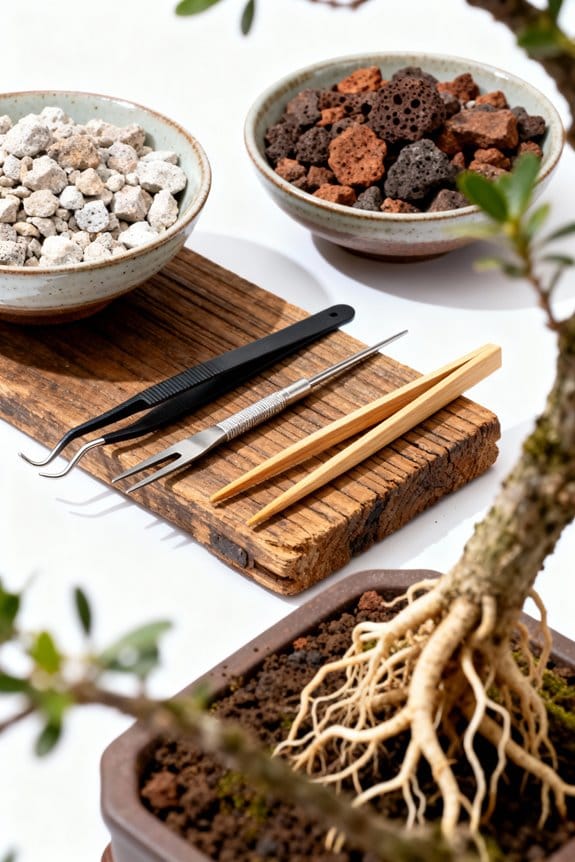
To reduce soil compaction and improve oxygen for bonsai roots, regularly aerate the soil. This can be done by poking holes in the soil and using root hooks or chopsticks. Choose a suitable soil mix with 40-60% akadama, 20-40% pumice, and 10-20% organic matter. Additionally, gently bare-rooting the rootball enhances drainage. Repotting every 2-3 years keeps the soil fresh and loose. These steps will greatly enhance the health of your bonsai. Learn how to effectively monitor soil conditions next.
Key Takeaways
- Regularly repot bonsai trees every 2-3 years to refresh soil and enhance aeration.
- Use soil mixes that include inorganic materials like pumice and akadama for improved drainage and oxygen availability.
- Aerate compaction by poking holes in the soil with tools like chopsticks or root hooks to promote airflow.
- Monitor soil moisture and aeration regularly with soil probes to ensure optimal conditions for root health.
- Implement drainage techniques, such as topping rootballs with well-draining soil, to prevent waterlogging and enhance air circulation.
Understanding Soil Compaction and Its Effects on Bonsai Roots
Soil compaction is a crucial issue that many bonsai enthusiasts must address to guarantee their trees thrive. When soil becomes compacted, it restricts the flow of air, water, and nutrients to bonsai roots. This limitation can hinder growth and even make the plants more susceptible to disease. A compacted environment leads to oxygen deficiency, which is essential for bonsai roots to function properly. Compromised oxygen supply can promote root rot and weaken overall plant health, particularly in species with shallow root systems. A well-structured soil, featuring various particle sizes, supports ideal aeration and nutrient uptake. Techniques such as regular repotting and aeration can effectively combat soil compaction, ultimately fostering healthier and more resilient bonsai trees. Utilizing horticultural perlite in your soil mix can enhance drainage efficiency and improve oxygen flow, supporting the robust growth and health of bonsai roots.
Importance of Aeration for Bonsai Health

Aeration plays an essential role in the overall health of bonsai trees. When soil is compacted, it restricts oxygen availability to root systems, which impairs nutrient uptake and growth. Well-structured soil allows for better oxygen diffusion, enhancing root respiration. This promotes optimal growth conditions for bonsai. Implementing efficient aeration techniques, such as regular repotting or using aeration tools, can greatly boost oxygen flow to the roots. These practices help prevent problems like root rot. Additionally, maintaining high porosity in the soil mix is critical, as it encourages air and water circulation. By monitoring oxygen levels in the soil, gardeners can guarantee robust plant vitality and enhance disease resistance for their bonsai trees. Porous structures are essential for drainage and aeration efficiency in bonsai soil, ensuring that roots receive adequate oxygen and nutrients.
Recommended Products

Horticultural Grade Vermiculite: Premium organic fine vermiculite, ideal for potting soil for orchids, indoor plants, and succulents. Enhances water retention and nutrient availability for robust growth.

🌱 Gardenera's Organic Growing Premium Potting Soil Mix is a carefully crafted blend of 100% natural ingredients for optimal plant growth and vitality.
![GARDENERA Premium Bonsai Soil All Purpose Fast Draining Mix - 20 Quart - Pumice, Lava, Calcined Clay and Pine Bark Potting Pre Mixed Bonsai Plant Soil Mixture [4 Bags of 5QT]](https://m.media-amazon.com/images/I/515G4We0ZoL._SL500_.jpg)
🌳 Created By Bonsai Experts: All-Purpose bonsai soil blend providing optimum growth for your bonsai trees.
Techniques for Improving Soil Drainage
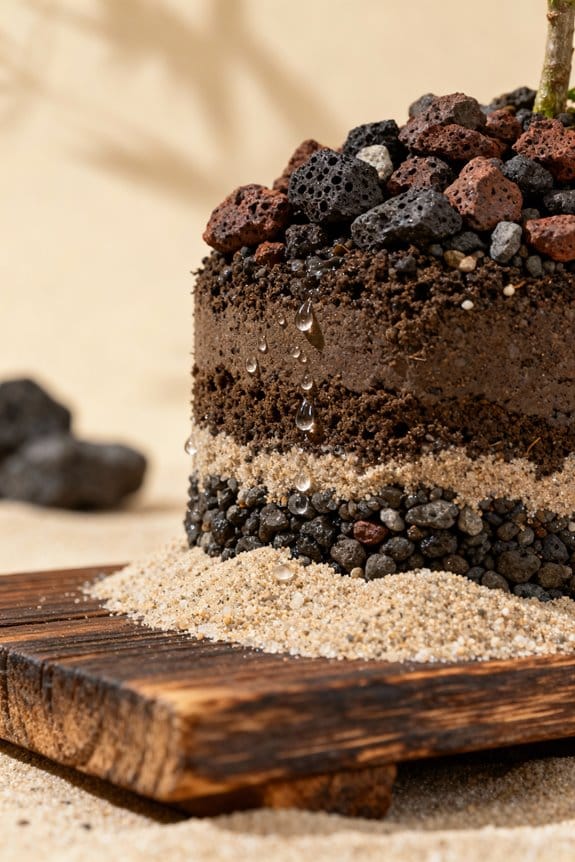
Improving drainage in bonsai soil is essential for promoting healthy root growth. One effective technique is bare-rooting sections of the rootball, which enhances water movement and oxygen access for roots. Additionally, using tools like root hooks or chopsticks to create holes in the rootball can boost drainage while allowing for better water absorption in compacted soil. Another helpful method is to top the rootball with fresh, well-draining soil, enhancing drainage and moisture retention without full repotting. Regularly poking holes in the soil during maintenance can also alleviate compacted areas. Finally, incorporating inorganic materials such as pumice and akadama into the soil mix maintains aeration and proper drainage, creating a healthier environment for bonsai roots. Proper drainage prevents waterlogging and root rot, making it crucial to use components like pumice and lava rock that create air pockets for optimal root health.
Recommended Products

Weight Capacity: 20 lbs
🌳 Created By Bonsai Experts: All-Purpose bonsai soil blend providing optimum growth for your bonsai trees.

Colorful & Natural: Mix Horticultural Lava Rocks blend six natural stones for colorful gardening. Sized at 3/8" (6-9mm), they darken when used in water. Reusable, non-staining and non-fading, maintaining enduring beauty at home.
Optimal Soil Mix for Enhanced Oxygen Availability
Creating a suitable soil mix is essential for providing bonsai roots with the oxygen they need to thrive. An ideal bonsai soil mix should consist of 40-60% akadama, 20-40% pumice, and 10-20% organic matter. This combination guarantees adequate drainage and promotes air circulation, enhancing the health of the roots. The pumice acts like a sponge, facilitating rapid drainage to prevent soil compaction. Additionally, incorporating inorganic materials like volcanic lava gravel increases soil porosity, creating an oxygen-rich environment for the roots. Regularly sifting the soil is important; it removes dust and small particles that can trap air. This balanced mix, combined with proper watering, supports healthy root development and improves oxygen availability for bonsai plants. Furthermore, using premium soil mixes can ensure excellent drainage and aeration, which are crucial for preventing root rot and maintaining healthy growth.
Recommended Products

Pumice stones are porous, light volcanic eruption rocks, water absorption rate 55%

【100% Pure Stones】Our 45-pound red lava rocks are non-toxic, color-fast, and naturally rich in essential trace minerals, promoting healthy plant growth.

Superior Drainage & Aeration for Healthy Roots: This lava rock horticultural grit improves airflow and water drainage, helping prevent overwatering and root rot. Perfect for succulents, cacti, orchids, and other moisture-sensitive plants.
Monitoring and Maintaining Soil Conditions
Regular monitoring of soil conditions is essential for maintaining the health of bonsai roots. Gardeners should regularly check for signs of compacted soil, like poor drainage and limited root growth. Using soil probes and oxygen meters can effectively measure oxygen levels, ensuring roots have enough air for respiration. Additionally, conducting waterlogging tests can assess moisture retention, helping to prevent oxygen deprivation. It’s important to monitor soil structure and maintain loose and well-draining conditions to support healthy root growth. Engaging in routine maintenance, such as repotting every 2-3 years, rejuvenates the soil and improves aeration, which prevents long-term compaction issues and promotes overall bonsai health. Utilizing effective ventilation systems in germination setups can further enhance the success rate of seedling growth by facilitating proper airflow and reducing mold issues. Each of these practices contributes considerably to vibrant bonsai roots.
Practical Tips for Regular Bonsai Care
While nurturing bonsai involves various challenges, implementing practical care tips can lead to thriving trees. To guarantee excellent drainage, regularly repot bonsai every 2-3 years. This helps refresh soil ingredients and reduces compaction. During repotting, consider creating aeration holes in the rootball with tools like chopsticks to promote water absorption and oxygen flow. It is essential to monitor soil moisture levels, as roots require balanced moisture; avoid overwatering to prevent waterlogged conditions. Using soil mixes with larger particles, such as pumice or lava rock, supports better aeration. Additionally, topping up the soil with fresh components can boost drainage without the need for full repotting, preserving the health of your bonsai between major repotting intervals. Choosing organic soil mixes encourages sustainable gardening, providing long-term nutrients and supporting overall soil health.
Frequently Asked Questions
How to Fix Severely Compacted Soil?
To mend severely compacted soil, he employed soil amendments like organic matter, enabling root health and enhancing drainage solutions. With careful aeration and strategic loosening, the once-locked earth breathed anew, inviting life back into its depths.
What Is the Rule of 3 in Bonsai?
The Rule of 3 in bonsai dictates using three particle sizes for soil mixes, aiding moisture balance, supporting effective root pruning techniques, and enhancing overall health through ideal bonsai tree selection for root development.
Should Bonsai Soil Be Compacted?
Bonsai soil should not be compacted. Proper bonsai soil composition maximizes the benefits of aeration and maintains ideal moisture levels, promoting healthy root growth and ensuring essential nutrients effectively reach the tree’s roots.
How to Aerate Tree Roots?
To aerate tree roots, one can incorporate soil amendments, employ effective watering techniques, and utilize tools like root hooks. This approach fosters root health by allowing better air and water penetration into compacted soil.


