As an Amazon Associate, we earn from qualifying purchases. Some links on this site are affiliate links at no extra cost to you. Our recommendations are based on thorough research and editorial judgment.


Beginner Care Guide for Ficus Bonsai Indoors

Caring for a Ficus Bonsai indoors is both simple and rewarding. Start by placing it near a south-facing window to guarantee bright, indirect sunlight. Water when the topsoil feels dry but avoid overwatering to prevent root rot. Keep humidity levels between 60-70% by misting daily or using a humidity tray. Prune regularly to promote bushier growth. Repot every 2-3 years in spring to refresh the soil. Keep exploring to discover more essential tips for your Ficus Bonsai success.
Key Takeaways
- Place your Ficus Bonsai near a south-facing window for optimal bright, indirect sunlight exposure.
- Water when the topsoil feels slightly dry, avoiding sogginess to prevent root rot.
- Maintain indoor temperatures between 65°F to 85°F (18°C to 29°C) for healthy growth.
- Fertilize every two weeks during spring to early fall with a balanced, slow-release fertilizer.
- Regularly prune to shape the plant and promote bushier growth, cutting back to two leaves after six to eight.
Understanding Ficus Bonsai: An Overview
Ficus Bonsai offers an enchanting blend of beauty and simplicity, making it an ideal choice for those interested in cultivating bonsai trees. Among the most popular varieties is Ficus Microcarpa, known for its lush leaves and adaptability as an indoor bonsai tree. These trees thrive in bright, indirect sunlight and require well-draining soil to prevent water-related issues. Understanding their watering needs is fundamental; the soil should remain slightly moist but never soggy. Adequate humidity is essential for their health, encouraging consistent growth. Additionally, regular pruning helps enhance liveliness and promotes bushier growth. Overall, Ficus Bonsai trees resonate well with bonsai enthusiasts due to their manageable care requirements and aesthetic appeal, making them perfect for both beginners and experienced cultivators. Incorporating regular maintenance of tools, such as sharpening bonsai concave cutters, can significantly improve the precision and health of your Ficus Bonsai.
Choosing the Right Location for Your Ficus
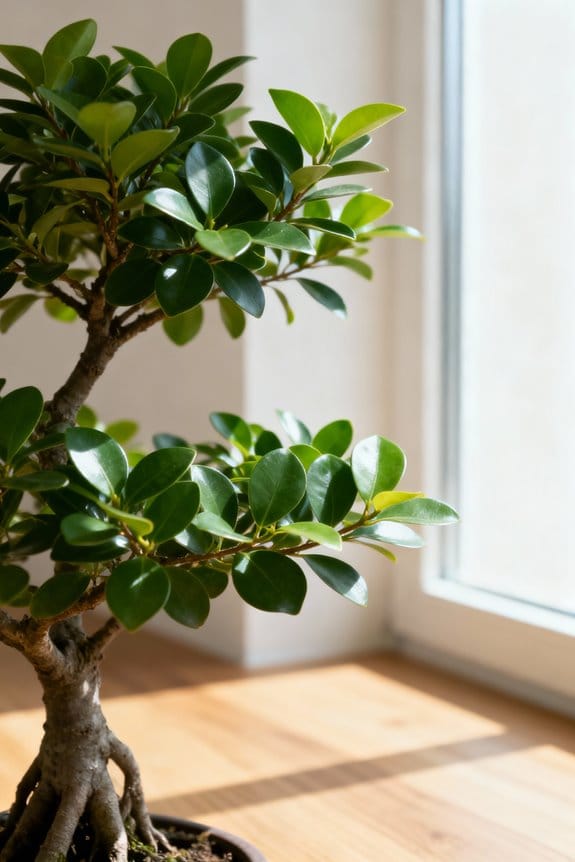
Selecting the right location for a Ficus bonsai is crucial for its health and growth. Placing the bonsai near a south-facing window allows for ample indirect sunlight, essential for successful Ficus bonsai care. Avoid dark corners or shelves, as insufficient light can hinder compact growth. In summer, outdoor placement is beneficial but make certain temperatures remain above 60°F (15°C) to protect against frost. Ideal indoor temperatures should be maintained between 65°F to 85°F (18°C to 29°C). To support high humidity, consider using a humidity tray or routinely misting the leaves. Using well-draining bonsai soil enhances overall health and stability, guaranteeing your Ficus thrives in its chosen environment. Attention to these details fosters a vibrant, flourishing bonsai.
Essential Watering Practices for Ficus Bonsai

Proper watering practices are essential for maintaining a healthy Ficus bonsai. It is vital to water the plant when the top layer of soil feels slightly dry, making certain the soil stays evenly moist. Overwatering can lead to root rot, so avoid letting the soil become soggy. Daily misting helps increase humidity, important for the Ficus’s health. In warmer months, more frequent watering may be necessary, while cooler seasons require a reduction in frequency. Always use room temperature soft water and make certain excess water drains away from the roots. Watch for signs of underwatering, such as wilting leaves, or overwatering, which causes yellowing leaves. Monitoring soil moisture is key to achieving a proper watering balance for your Ficus bonsai. Regular watering is essential for the health and growth of your bonsai tree, as emphasized in the care tips for various bonsai varieties.
Monitoring Soil Moisture: Tips and Techniques
Understanding soil moisture is essential for the health of a bonsai tree. Regularly monitoring soil moisture protects your Ficus from extreme conditions. A simple method involves inserting a finger or stick about an inch into the soil; if it feels dry, it’s time for watering. For more accuracy, consider using a moisture meter to gauge soil moisture levels across the pot. The goal is to keep the soil evenly moist, avoiding both dry and soggy conditions. When watering your Ficus, do so thoroughly until excess drains out the bottom. In warmer months, increase watering frequency, while reducing it in cooler months to prevent overwatering, which can harm the roots. Keeping the soil fully hydrated is a crucial aspect of bonsai care. Additionally, proper drainage is vital to prevent waterlogging and root rot, which can be achieved using soil mixes with components like pumice and lava rock for adequate aeration.
Importance of Sunlight and Temperature Conditions
Moisture isn’t the only aspect that influences the health of a Ficus bonsai; sunlight and temperature also play a significant role. Ficus bonsai thrive best with full sunlight, so positioning them in a south-facing window is ideal. This allows direct sunlight to reach their leaves, promoting healthy growth. The ideal temperature range for a Ficus bonsai is between 65°F to 85°F (18°C to 29°C) since consistent warmth supports their importance. While they can tolerate low light, prolonged exposure may hinder their health. Additionally, temperatures below 40°F (4°C) are harmful, making it essential to avoid cold drafts. Maintaining a warm environment with adequate sunlight helps reduce the risk of pests and fungal diseases. For optimal growth, consistent moisture levels should be maintained, ensuring the soil is evenly moist without becoming waterlogged.
Feeding Your Ficus Bonsai: Fertilizing Guidelines
Feeding a Ficus bonsai is essential for promoting healthy growth and vibrant foliage. During the active growing season, from spring to early fall, it is important to fertilize your Ficus bonsai every two weeks with a balanced, slow-release fertilizer. This guarantees that the tree receives adequate nutrients. In winter, reduce fertilizer application to every four weeks if the tree still shows signs of growth. Keep an eye out for signs of nutrient deficiency, such as yellowing leaves, which may indicate the need for adjustments in fertilization. When fertilizing, use room temperature water to dilute liquid fertilizers or incorporate organic pellets into the bonsai soil mix, and be cautious of over-fertilization to prevent root burn. For best results, choose a fertilizer with a balanced N-P-K ratio like 3-1-2 or 18-6-8, which is optimal for bonsai growth.
Pruning Techniques for Healthy Growth
Pruning a Ficus bonsai is crucial for shaping its growth and promoting a fuller appearance. Regular pruning helps maintain the shape and size of your tree by cutting back new lighter green shoots. It is best to prune back to two leaves after six to eight leaves have grown on a branch. This encourages bushier growth and denser foliage, especially in large-leaf varieties. Additionally, pinch or cut the stipules at branch tips for a more compact structure. Remember that milky sap may leak from cuts, so always use sharp, clean bonsai shears to minimize damage. Consistent pruning, along with wiring, helps shape your Ficus bonsai and guarantees healthy growth throughout its life. Applying liquid bonsai fertilizer can further enhance growth by providing essential nutrients, ensuring your Ficus remains vibrant and healthy.
Wiring and Shaping Your Ficus Bonsai
Wiring and shaping a Ficus bonsai is a fundamental aspect of bonsai cultivation that allows enthusiasts to create beautiful, artistic forms. When wiring, use soft, flexible wire to protect the bark and wrap it at a 45-degree angle around the branches. Younger branches are preferable since they are pliable, while older ones can break. Regularly check the wire’s placement to prevent it from cutting into the bark, which can be harmful. For shaping, focus on achieving a balanced design that highlights the tree’s aesthetic appeal. Combining regular pruning with high-quality blades encourages new growth, enhancing density and fullness. This thoughtful approach guarantees your Ficus bonsai maintains its desired shape while thriving in its indoor environment.
Repotting Your Ficus: When and How
Repotting a Ficus bonsai is essential for its health and growth, especially when it becomes root-bound or the soil depletes of nutrients. It is recommended to repot your Ficus every 2-3 years in spring to refresh the soil and accommodate root growth. Choose a well-draining bonsai soil mix to promote healthy root development and prevent root rot. When removing the Ficus from its old pot, make sure the new pot has adequate drainage holes. Gently prune damaged roots and any that are overly long to encourage new growth. After repotting, adjust your watering practices and monitor for stress as your tree settles into its new environment. This careful attention will set the stage for future success. It’s beneficial to use a slightly acidic pH soil mix to ensure that nutrients remain available for optimal bonsai growth.
Managing Humidity Levels for Optimal Growth
Maintaining proper humidity levels is critical for the health and growth of a Ficus bonsai. This tree thrives in environments with humidity above 40%, ideally between 60-70%. Daily misting helps support aerial roots and overall health, especially in indoor environments. To enhance humidity levels, consider placing a humidity tray filled with water and pebbles beneath the pot. This setup creates a moist microenvironment beneficial for growth conditions. If humidity regularly remains low, using a humidifier can greatly improve conditions, particularly during winter when indoor air tends to dry out. Poor humidity can lead to leaf drop and slower growth, making consistent monitoring and adjustment crucial for the success of your Ficus bonsai. Effective drainage systems are essential for preventing root rot, which can also impact the overall health of your bonsai.
Common Issues and Solutions for Ficus Bonsai
While caring for a Ficus bonsai can be a rewarding experience, various common issues may arise that require attention. Yellowing leaves often signal overwatering, so it is crucial to guarantee the soil drains well and to water only when the top layer feels slightly dry. Leaf drop typically results from sudden temperature changes or inadequate humidity; maintaining consistent indoor temperatures above 60°F (15°C) and misting daily can help. Regular checks for pests like mealybugs and spider mites are important, as they can harm the Ficus tree. To prevent root rot, repot the bonsai in well-draining soil, allowing proper airflow. Finally, handling the tree with gloves during maintenance is advisable to avoid contact with its mildly toxic sap.
Connecting With the Bonsai Community for Support
Engaging with the bonsai community can greatly enrich one’s journey in caring for Ficus bonsai. Through online forums and local clubs, beginners can gain valuable insights and care tips specific to Ficus trees. Participating in workshops allows hands-on learning from experienced bonsai enthusiasts. Social media platforms often contain groups where members share photos, troubleshoot issues, and discuss growing conditions that favor Ficus as a popular choice for bonsai. Actively discussing care challenges on these community platforms frequently results in personalized recommendations. Connecting with knowledgeable members guarantees you stay updated on trends, best practices, and even customer service tips for your Ficus bonsai. This collaborative environment nurtures growth and fosters a shared passion for bonsai cultivation.
Frequently Asked Questions
How Do You Take Care of a Ficus Bonsai for Beginners?
Caring for a Ficus bonsai involves understanding its sunlight requirements and humidity levels. A robust fertilization schedule, effective pruning techniques, appropriate potting mix, and diligent pest control enhance growth and shape through careful shaping methods.
What Is the Rule of 3 in Bonsai?
The Rule of 3 in bonsai styling promotes triangular arrangements in branches and leaves, influencing trimming techniques and soil composition. It enhances aesthetics while guiding light requirements, fertilizer types, pest control, and container selection.
How Often Should I Water a Ficus Bonsai Indoors?
Ficus bonsai should be watered when soil moisture is slightly dry, typically every few days in summer and less often in winter. Proper pot drainage and indoor humidity are essential for healthy root growth and leaf care.
Are Ficus Bonsai Good for Beginners?
Ficus bonsai are excellent for beginners due to their diverse varieties. They adapt well to different soil types, thrive in various lighting conditions, and support novice gardeners in learning pruning techniques, pest management, and fertilization schedules.


