As an Amazon Associate, we earn from qualifying purchases. Some links on this site are affiliate links at no extra cost to you. Our recommendations are based on thorough research and editorial judgment.

How to Check Bonsai Roots Without Damaging the Tree

To check bonsai roots without harming the tree, gently remove the top layer of soil using a chopstick or root rake. Look for signs of healthy roots, such as pale color and firm texture. Inspect drainage holes for any roots protruding, and tease them out carefully. Use clean tools to prevent disease. Maintain regular checks to address early signs of issues like yellowing leaves or drooping foliage. Discovering more techniques will help guarantee thriving bonsai roots.
Key Takeaways
- Use a root rake for gentle inspection, minimizing soil disruption while checking root health.
- Carefully remove the top layer of soil with a chopstick or root rake to expose roots.
- Inspect drainage holes for roots without lifting the bonsai unless necessary; grasp the trunk gently if you must.
- Employ an old fork to tease apart roots instead of pulling, which prevents damage during evaluations.
- Regularly monitor for signs of root problems, such as circling roots or poor leaf color, to address issues early.
Importance of Monitoring Bonsai Roots

Monitoring bonsai roots is essential for the overall health of the tree. Regular checks help guarantee root health, preventing issues like root rot. Signs of trouble include circling roots or foul odors, indicating that action is needed to avoid stress or potential death. During repotting, inspecting roots allows for root pruning, which helps remove damaged roots while preserving healthy roots essential for nutrient absorption. Understanding root growth patterns supports healthy growth and stability. Bonsai should typically undergo deep root evaluations every one to three years, depending on the species and growth rate. By consistently monitoring bonsai, caretakers can foster healthy roots and enhance blooming potential, ultimately nurturing a vibrant and flourishing tree. Using humidity and drainage trays can help maintain an optimal environment for root health.
Tools for Checking Roots Safely
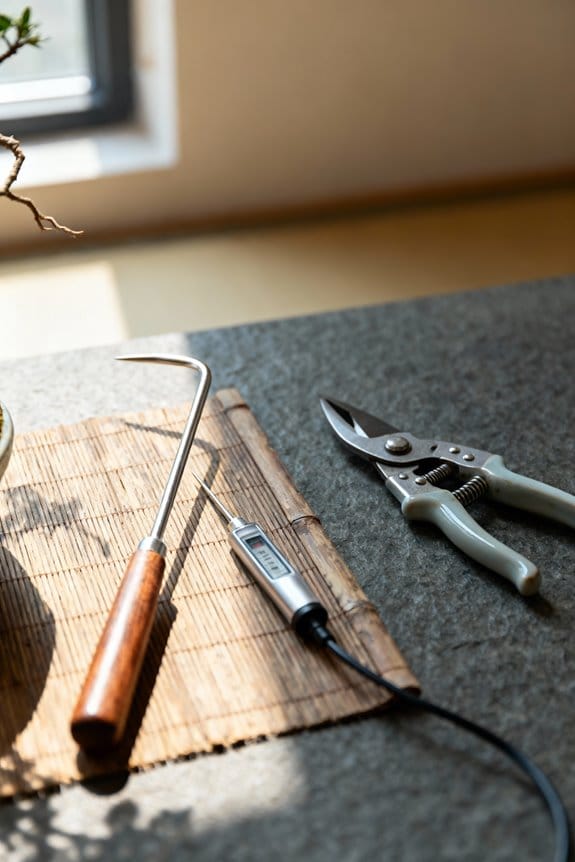
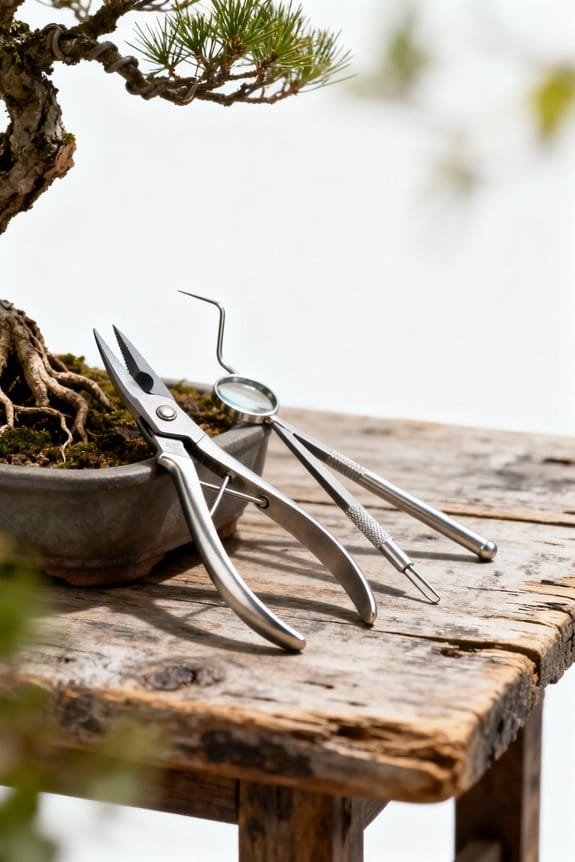
Having the right tools is essential for safely checking bonsai roots. A root rake is ideal for root inspection, allowing gentle uncovering with minimal disruption to the tree. Alternatively, an old fork can be used for teasing apart roots without causing harm. A chopstick is also effective for untangling roots while evaluating root health. Before using any tools, verify they are clean and sterilized to prevent transmitting diseases that could affect the bonsai’s health. Regularly inspecting roots during repotting can uncover signs of overgrowth or stress, guaranteeing proper soil conditions for a healthy tree. With the right tools, you can conduct thorough root checks while protecting your bonsai from unnecessary injury. For precise pruning, consider using bonsai concave cutters, as they promote healthy growth through clean and seamless cuts.
Techniques for Exposing Root Systems
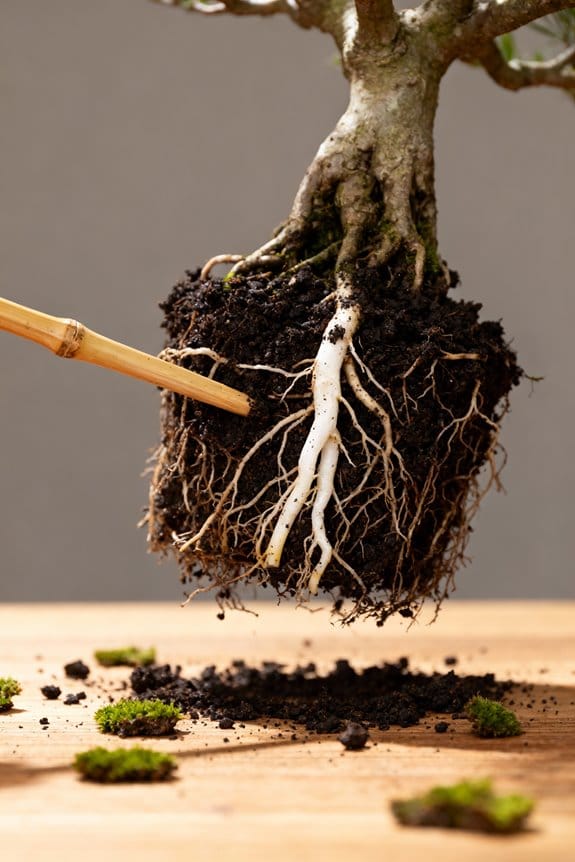
Exposing root systems requires a careful approach to avoid damaging the tree. To begin, carefully remove the top layer of soil from the pot using a chopstick or root rake, ensuring the surface roots remain safe. Next, inspect the drainage holes for any roots protruding from them; if you find roots, gently tease them out with your fingers. A soft brush can help clear any remaining soil around the roots without causing harm. Only lift the bonsai tree from its pot if absolutely necessary, grasping the trunk gently to prevent stress. Regularly monitor the roots by checking for signs of circling or compacted roots. These techniques aid in maintaining healthy roots while minimizing disturbance. Using a digital moisture meter can also help ensure the soil moisture levels are optimal before exposing the roots.
Indicators of Healthy Roots
Recognizing indicators of healthy roots is an important skill for any bonsai enthusiast. Healthy roots typically show a firm, pale color, reflecting good tissue and moisture balance. A well-developed root system will be evenly distributed within the pot, avoiding excessive circling, which indicates proper growth. This strong root system efficiently absorbs nutrients from the soil, leading to vibrant leaf color and robust growth. Additionally, healthy roots should feel solid and not exhibit brown or mushy textures, as these signs may indicate root rot. Look out for fine feeder roots emerging from the primary roots; this is a positive indicator of nutrient uptake capability and healthy growth, ensuring the bonsai flourishes in its environment. Regular application of bonsai liquid growth boosters can further enhance root health, promoting a robust and vibrant bonsai tree.
Common Signs of Root Problems
Understanding common signs of root problems can considerably impact the health of a bonsai. Yellowing leaves often indicate poor root health, stemming from damaged roots that struggle to absorb necessary nutrients. Drooping or wilting foliage may suggest broken roots, hindering water uptake. Additionally, stunted growth can signal that your bonsai might be root-bound or affected by root rot. If roots appear brown and mushy, accompanied by a foul odor, root rot is likely caused by overwatering. Moreover, when roots are visibly circling around the pot or drainage holes, this indicates root-binding and requires immediate repotting and possible root pruning to restore proper root health. Identifying these issues early can help prevent further damage. For accurate assessment of problems, using ergonomic design features in bonsai tools can facilitate handling, making it easier to check roots without causing harm.
Best Practices for Root Care Throughout the Year
As bonsai enthusiasts endeavor to maintain healthy trees, practicing adequate root care throughout the year is essential. Regularly checking root health is important, which can be done by gently removing the top layer of soil to inspect for compaction. In spring, inspecting roots and repotting, if necessary, refreshes the soil mix. This is especially true if roots grow out of drainage holes or if signs of stunted growth appear. A seasonal watering schedule helps avoid overwatering and root rot, ensuring good soil remains critical. During active growth in spring and summer, fertilize generously while minimizing during autumn and winter. Observing leaf discoloration or drooping may indicate poor root health, prompting careful inspection and timely interventions. Consistent soil moisture is crucial for bonsai health; avoid overwatering, which can lead to root rot and affect overall tree vitality.
Frequently Asked Questions
What Is the Rule of 3 on a Bonsai Tree?
The Rule of 3 in bonsai emphasizes aesthetic balance, promoting root health and ideal growth patterns. It influences root pruning strategies, soil composition, and water absorption, ensuring the tree’s development aligns with its artistic design.
How to Tell if Bonsai Roots Are Dead?
To determine if bonsai roots are dead, inspect the roots for discoloration, mushiness, or foul odors, indicating rot. Healthy root systems promote bonsai growth; addressing drainage issues and regular root pruning enhance overall root health.
Can Bonsai Roots Be Exposed?
Bonsai roots can be exposed during seasonal root care, allowing for root system analysis. Proper bonsai root maintenance involves careful root pruning, promoting healthy root indicators, and enhancing root growth through mindful management of bonsai soil.
How to Know if Tree Roots Are Damaged?
To determine if tree roots are damaged, one should assess root health through inspection for discoloration, moisture levels, and signs of root rot. Monitor root systems for proper growth and potential root diseases during root pruning.


