As an Amazon Associate, we earn from qualifying purchases. Some links on this site are affiliate links at no extra cost to you. Our recommendations are based on thorough research and editorial judgment.

How to Choose Branches to Keep or Remove on a Young Bonsai

To choose branches on a young bonsai, start by evaluating branch thickness and foliage density. Retain thicker branches with abundant leaves, as they help support overall health. Remove weak or dead branches first to encourage vigor. Look for balance in the tree’s structure; cut any branches disrupting visual harmony. Aim to maintain a triangular silhouette for better aesthetics. This approach fosters robust growth while creating a pleasing design for your bonsai, allowing for many exciting possibilities ahead.
Key Takeaways
- Assess branch thickness; keep thicker branches that contribute to better taper and character while removing thinner, less robust ones.
- Prioritize the removal of dead or damaged branches to enhance overall tree health and encourage new growth.
- Evaluate foliage density; retain branches with abundant foliage for a healthy canopy and better recovery post-pruning.
- Check for balance in branch distribution; remove branches that disrupt visual harmony or create inverse taper.
- Visualize the desired tree shape to guide your decisions on branch removal for aesthetic and structural integrity.
Understanding Tree Growth Patterns
Understanding tree growth patterns is essential for bonsai care. Trees often exhibit apical dominance, meaning growth occurs mainly at the top and outer edges. This can hinder the development of inner and lower branches. Regular pruning helps counter this effect by redistributing energy, allowing for better inner growth and improved foliage density. Timing is important; outdoor bonsai can be pruned from early spring to late fall, while indoor trees thrive with year-round care. When pruning, assess branch thickness and foliage density, as thicker branches typically support a better structure. Ensuring sufficient foliage remains is critical for recovery, promoting both health and beauty in your bonsai. Incorporating a Bonsai Care Workbook can provide structured guidance for planning and tracking your bonsai’s care, ensuring you stay on top of essential tasks and support the tree’s thriving potential.
Evaluating Branch Characteristics
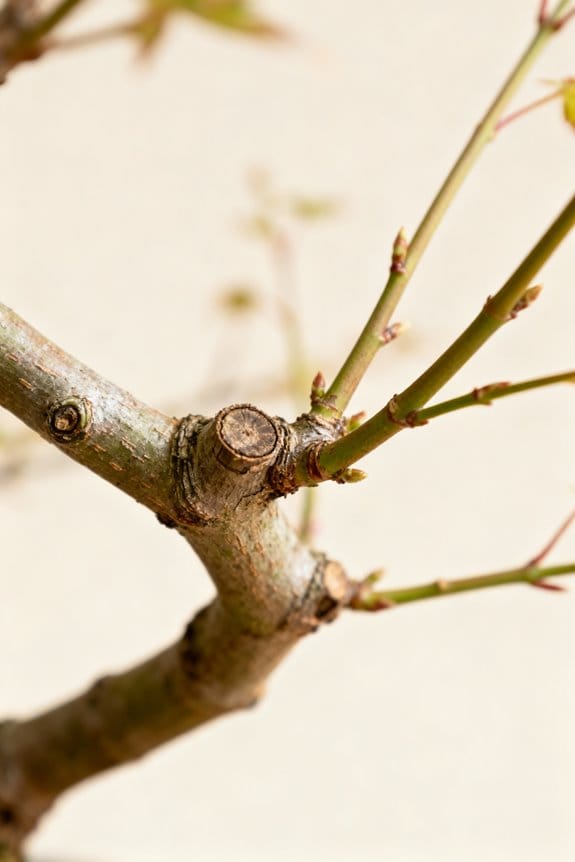
Evaluating branch characteristics is essential for developing a healthy and aesthetically pleasing bonsai tree. First, evaluate branch thickness; thicker branches contribute better taper and character compared to thinner ones. Next, observe foliage distribution; branches with abundant foliage are generally healthier and support the tree’s overall vigor. It’s also important to analyze the branching structure; branches that form an inverse taper may need removal or reinforcement, like jin-ing. Additionally, assess flexibility; thinner branches lacking foliage might be prime candidates for removal. Finally, check for dead or damaged branches; removing these first encourages healthier growth. By focusing on these attributes, beginners can make informed decisions about which branches to keep or remove for an improved bonsai design. Incorporating ergonomic designs in your bonsai tool selection can enhance comfort and control during the pruning process.
Assessing Overall Tree Balance
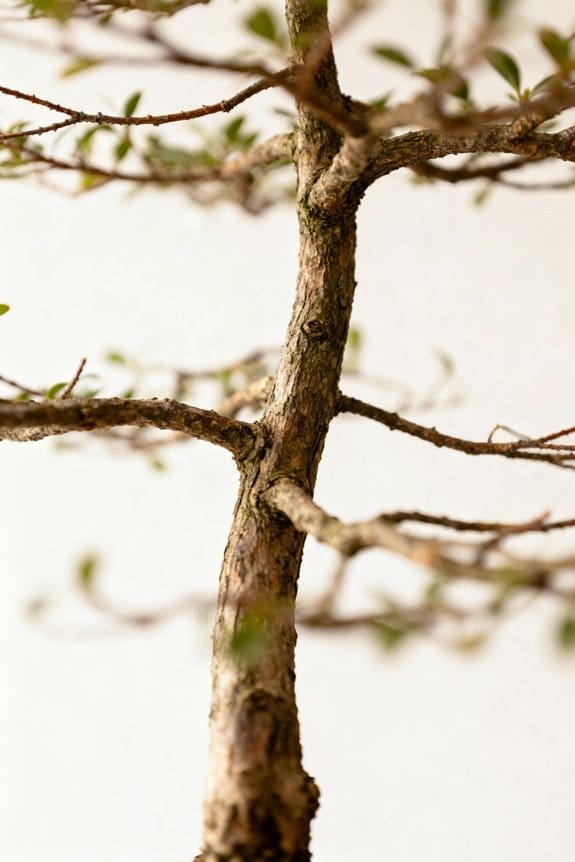
Evaluating overall tree balance is essential for achieving a harmonious bonsai design. Begin by examining overall tree balance among branches, considering their thickness and distribution. Thicker branches should stay to enhance taper and character, while thinner ones should be removed if they disrupt the silhouette. Look for Y-shaped branching structures; these may affect the tree’s visual weight and balance. Pay close attention to foliage density. A mix of thicker branches with rich foliage and thinner ones fosters healthy growth and energy distribution. Visualize the tree’s potential shape after removing excessive branches, ensuring that each retained branch contributes positively to balance and design. This approach helps create a visually appealing and stable bonsai that flourishes beautifully. Regular maintenance, including cleaning and oiling, extends the lifespan of bonsai tools and ensures precise cuts that promote healthy tree development.
The Importance of Triangular Silhouettes
A strong triangular silhouette is a hallmark of effective bonsai design. This shape not only creates balance but also enhances the tree’s visual appeal. To achieve this, pruning larger branches becomes essential for establishing the best design. The apex of the tree should always be higher than the outer edges, guiding energy distribution and promoting healthy growth. This triangular silhouette emphasizes symmetry and proportion, key principles in bonsai artistry that contribute to overall harmony. As bonsai growers work to maintain and refine this shape, they should consistently evaluate branch placement. Illustrated guides can be valuable tools for understanding bonsai techniques and processes. By focusing on these elements, one can guarantee their young bonsai develops into a well-structured, aesthetically pleasing specimen that replicates the beauty of nature.
Deciding on Removal of Weak Growth
When evaluating a young bonsai, it is vital to focus on the health and vigor of each branch. To guarantee proper growth, one should evaluate the health and vigor by examining thickness and foliage. It is wise to remove weak or thin branches, as they can siphon nutrients and sunlight from stronger ones. Prioritize removing branches that are inversely tapered or have sparse foliage, as these detract from the visual balance and health of the tree. Additionally, careful assessment of branch placement and growth angles is critical. Retaining branches contributing to the overall structure while eliminating those hindering it enhances both the form and taper, allowing the bonsai to thrive and develop beautifully. Regular monitoring of plant health is essential for adjusting fertilization schedules based on environmental conditions.
Techniques for Effective Pruning
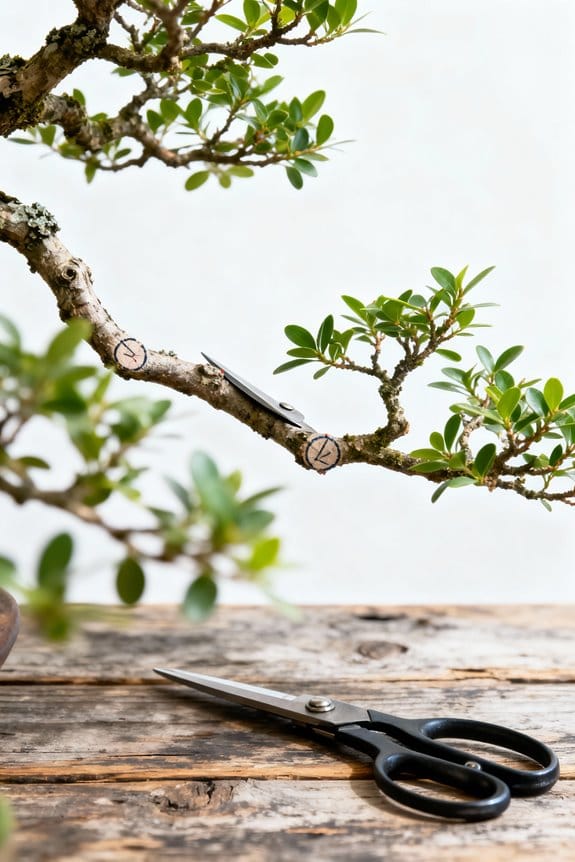
Pruning is an essential technique for nurturing a young bonsai, allowing the tree to develop a balanced shape and healthy growth. The first step in effective pruning is to evaluate branch structure and health, considering thickness and foliage density. It is important to prune dead or weak branches first; this enhances light penetration and supports remaining active branches. A helpful practice is to visualize the tree’s shape using diagrams, which can aid in identifying disruptive branches. Maintenance pruning is to maintain the outer growth, ideally performed two to four times yearly. Additionally, consider using jin techniques on less favorable branches for aesthetic appeal, while ensuring a balanced amount of foliage to refine the shape and promote overall health. Selecting bonsai trees such as Ficus, Juniper, and Chinese Elm can complement moss, enhancing aesthetic appeal while ensuring moisture for both plants promotes a healthy environment.
Timing Your Pruning Efforts
How can timing enhance the health and appearance of a bonsai? Properly timing your pruning efforts plays a significant role in a bonsai’s development. For outdoor bonsai, maintenance pruning should take place from early spring to late fall, while indoor bonsai can be pruned year-round due to their controlled environments. Aim for two to four sessions a year for even growth and denser foliage. Structural pruning is best performed in early spring or late autumn, aligning with the tree’s growth cycle. Before deciding which branches to keep, always remove dead branches first, supporting the tree’s health. Additionally, allowing sufficient foliage before pruning helps the tree handle the stress and encourages a more robust recovery after cuts. It’s important to understand seasonal timing for effective pruning, ensuring the bonsai remains healthy and aesthetically pleasing.
Encouraging Stronger Branch Development
Encouraging stronger branch development involves thoughtful decisions about which branches to keep and prune. Gardeners should regularly evaluate young branches for signs of vigor, as healthier branches support better overall tree energy. Prioritizing thicker branches often provides better taper and character, making them advantageous for structural support. To encourage growth closer to the trunk, it is essential to remove weaker or excessively thin branches that cannot thrive. This strategic pruning redistributes energy and nutrients to the remaining branches, enhancing new growth. Additionally, ensuring adequate foliage before pruning maintains the tree’s health, as a strong canopy is necessary for recovery. By focusing on the most promising branches, one can encourage future growth and a flourishing bonsai. Proper drainage and aeration are also crucial for maintaining the health of young bonsais, as they prevent root rot and ensure that the tree’s roots receive enough oxygen.
Visualizing Changes Before Pruning
Visualizing changes before pruning can greatly enhance a bonsai’s aesthetic appeal and overall health. Before making any cuts, it’s beneficial to sketch the tree or use a digital method to identify branches disrupting balance. A triangular outline often enhances visual symmetry. When evaluating the thickness and taper, thicker branches typically add to a mature-looking bonsai. While determining which branches to keep, observe back budding on secondary branches; their growth potential is essential for future shape and foliage density. Start by removing dead or unhealthy branches, as this step is important for maintaining the tree’s health. With careful visualization and planning, pruning can lead to a healthier, more beautiful bonsai. Using high-quality Akadama soil can provide excellent drainage and aeration, which are crucial for maintaining the health of a bonsai tree’s root system.
Frequently Asked Questions
What Is the Rule of 3 in Bonsai?
The rule of 3 in bonsai emphasizes the application of three focal branches to enhance branch aesthetics. This design principle promotes balanced spacing and triangular formation, leading to a harmonious and visually engaging miniature tree.
How to Trim a Young Bonsai Tree?
To trim a young bonsai, utilize ideal pruning tools essentials, apply best trimming techniques, and follow seasonal trimming tips. Implement bonsai shaping methods by ensuring balanced growth and maintaining health through regular assessment and targeted cuts.
Should I Trim Lower Branches on a Young Tree?
Trimming lower branches on a young tree is akin to sculpting a masterpiece from marble; it enhances trunk development, influences tree shape, and maintains leaf growth balance, highlighting the importance of each lower branch’s role in overall health.
How Old Should a Bonsai Tree Be Before Pruning?
Bonsai trees should be at least two to three years old before beginning pruning techniques. Proper tree care includes understanding seasonal considerations, ensuring the tree’s health and vigor to support adequate bonsai growth prior to pruning.