As an Amazon Associate, we earn from qualifying purchases. Some links on this site are affiliate links at no extra cost to you. Our recommendations are based on thorough research and editorial judgment.


How to Choose Your First Bonsai Tree at a Nursery

Choosing your first bonsai tree at a nursery involves several important steps. First, look for trees that capture your interest with unique shapes and textures. Inspect the leaves for vibrant color and overall health. Evaluate the trunk thickness and check the nebari for sturdiness. Research species to match your skill level and environmental conditions. Also, consider the nursery’s reputation for healthy trees. Engaging with the community can further enhance your bonsai journey and skills. There’s much more to explore on this topic.
Key Takeaways
- Look for a nursery with positive reviews to ensure healthy bonsai trees and knowledgeable staff for guidance.
- Inspect the trees for vibrant leaves, strong branches, and balanced trunk thickness for optimal aesthetics and health.
- Research the specific species’ care requirements to match your skill level and environmental conditions.
- Create a budget considering initial purchase cost and ongoing expenses for soil, pots, and tools for your bonsai journey.
- Engage in community events or workshops at the nursery to enhance your knowledge and connect with other bonsai enthusiasts.
The “Love at First Sight” Test
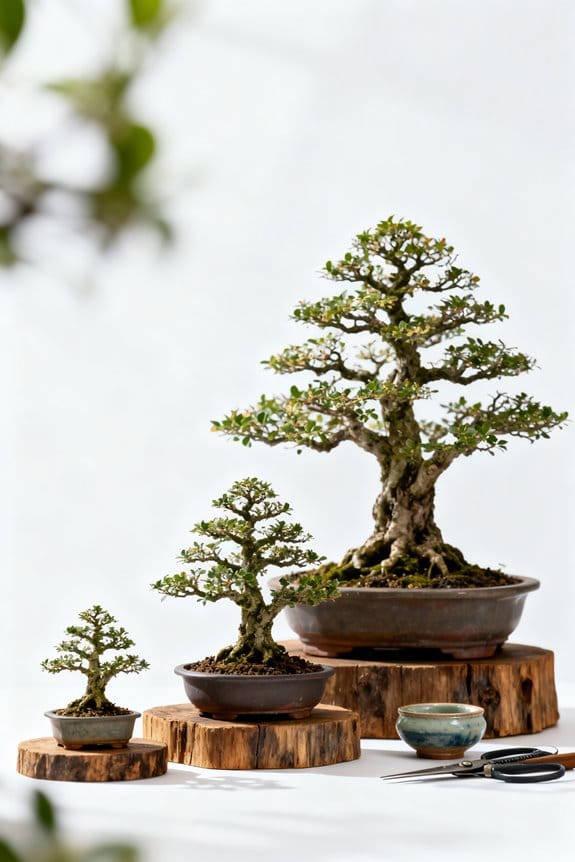
How does one know when they have found the perfect bonsai tree? When selecting your first bonsai, the “Love at First Sight” test is essential. This emotional connection greatly influences your dedication to care and growth. Look for a tree that immediately captures your interest; its trunk shape, leaf texture, and overall appeal should resonate with you. These attributes enhance your bond, making maintenance more enjoyable. A tree that evokes excitement helps sustain your passion throughout your bonsai journey. Focus on how the tree makes you feel, allowing initial attraction to guide your choice. By prioritizing aesthetic appreciation alongside practical considerations, selecting your first bonsai tree becomes more meaningful and fulfilling, sparking joy with each interaction. Beginners should consider species that are low maintenance, such as the Brussels Bonsai Live Green Mound Juniper, to ensure a smooth start in bonsai cultivation.
Evaluating Tree Health and Structure

After selecting a bonsai tree that sparks joy and interest, the next step involves evaluating its health and structure. Begin by inspecting the leaves for vibrant color and a healthy appearance, which signals a tree free from diseases and pests. Check the soil moisture; it should neither be overly dry nor waterlogged to protect the roots. Next, assess the trunk’s thickness relative to the tree’s height, ensuring a balanced and aesthetically pleasing shape. Examine the branches for signs of robustness, ensuring they are strong and undamaged. Finally, take a look at the nebari, or visible roots, for an appealing design. Each of these factors contributes to a healthy and beautiful bonsai tree. Regular fertilization boosts growth and health, ensuring your bonsai remains vibrant and lush.
Understanding Trunk and Nebari Assessment

Understanding the trunk and nebari of a bonsai tree is essential for ensuring its overall health and aesthetic appeal. Start by inspecting the nebari, the root structure, to confirm it is strong and visually appealing, as this stability is crucial for the tree. Next, evaluate the trunk for inverse taper; a trunk that thickens consistently from base to top enhances visual balance. Observe the trunk thickness in relation to the tree’s height, ensuring it appears well-proportioned to enhance both aesthetics and perceived age. Additionally, check for signs of previous grafts, as poorly grafted areas may lead to future issues. Finally, dig slightly into the soil to examine the trunk and nebari for vulnerabilities or damage affecting the tree’s health. Consider using a bonsai mortar mix with good drainage and aeration to promote the root health and stability of your bonsai.
Researching and Preparing for Your Purchase
Selecting a bonsai tree requires careful research and preparation to guarantee a rewarding experience. Beginners should start by researching the specific bonsai species they are interested in, focusing on care requirements and growth patterns. Understanding potential size and environmental needs will help assure the choice fits one’s skill level. It’s also important to familiarize oneself with common pests and diseases that may affect these species. Investigating soil and watering needs is vital to maintaining tree health after purchase. Soil with excellent drainage prevents water accumulation and root rot, which is essential for the longevity of your bonsai. Creating a checklist of desirable traits, like vibrant leaf color and a healthy trunk, helps evaluate each bonsai. Utilizing a smartphone for quick access to resources while at the nursery can guide informed decision-making for beginner bonsai enthusiasts.
Selecting the Right Species for Your Environment
Choosing the right species for a bonsai tree can greatly enhance the overall experience for beginners. For indoor bonsai, options like Ficus and Jade are excellent choices. They thrive in stable conditions and require less maintenance. If considering an outdoor bonsai, species like Junipers or Japanese maples are suitable. These trees can endure seasonal changes and frost, making them resilient. It’s important to place tropical trees, like Ficus, in bright, indirect light to prevent stress. For those choosing Juniper Bonsai Trees, consistent soil moisture and direct sunlight are crucial for their healthy growth. Beginners should familiarize themselves with each species’ care requirements, including watering and soil needs. Researching growth patterns and maximum sizes will help match a tree to your available space, ensuring satisfaction as it ages and grows in your environment.
Exploring Personal Connections With Trees
How can a simple bonsai tree become a significant part of someone’s life? For bonsai enthusiasts, developing a personal connection often starts with exploring various species. Observing different trees at a nursery allows individuals to identify the ones that resonate with them emotionally. Unique trunk shapes and vibrant foliage can draw attention and create a bond. Spending time with multiple trees helps refine personal preferences, guiding the final choice. Emotional responses during this selection process indicate which trees might thrive under a caretaker’s watch. Understanding the aesthetics of specific trees enhances attachment, fostering a commitment to their health. Each bonsai carries a story, enriching life and connecting individuals with global artistry. Ultimately, a bonsai’s journey becomes not just about cultivation, but about developing a meaningful relationship with nature.
Choosing Reputable Nurseries and Sellers
A reputable nursery serves as a cornerstone for anyone starting on their bonsai journey. To find the right one, look for nurseries with positive reviews and recommendations. This guarantees you purchase healthy and quality bonsai trees. Knowledgeable staff can guide you on species selection and care requirements. Additionally, check that the nursery offers a diverse selection of tree species, including beginner-friendly options. Local garden centers and specialized bonsai shops often provide excellent choices. Before making a final decision, it is wise to research online retailers for quality and availability. Engaging with nurseries that host workshops can also enrich your experience, fostering a sense of community in your bonsai endeavor. Look for nurseries that offer organized storage options to keep bonsai tools protected, which is essential for maintaining the quality and longevity of your equipment.
Importance of Community Support and Resources
Community support is essential for anyone starting on the bonsai journey. Joining a bonsai club or community can provide beginners with valuable insights from experienced practitioners. These knowledgeable members can help guide new owners in selecting trees and understanding their specific care requirements. Reputable nurseries often offer ongoing support, addressing any challenges that arise along the way. Local bonsai clubs frequently organize workshops and events, allowing individuals to gain hands-on experience and build relationships with fellow enthusiasts. Engaging with this community fosters a sense of belonging and encourages learning essential care techniques. By utilizing these resources, newcomers can enhance their bonsai experience, making it more enjoyable and rewarding for everyone involved.
Budgeting for Your Bonsai Journey
When individuals commence their bonsai journey, budgeting plays an essential role in ensuring a fulfilling experience. Entry-level bonsai trees start at around $50, but more mature trees can cost hundreds or even thousands. Establishing a budget helps clarify what can be realistically purchased based on quality and species. Beyond the initial tree purchase, consider extra expenses for specialized soil, pots, fertilizers, and tools, which may add $50 to $100 to the budget. Researching prices at various nurseries and garden centers can uncover cost-effective options. Additionally, budgeting for ongoing care, such as workshops and community events, is advisable as these opportunities can greatly enrich the overall bonsai experience. Thoughtful budgeting lays the foundation for a successful journey. When selecting tools, such as bonsai needle pliers, material quality and durability should be a priority to ensure long-lasting use and precision in bonsai care.
Frequently Asked Questions
What Is the Best Tree for a Beginner Bonsai Tree?
The Ficus retusa stands as the gentle giant for novice bonsai enthusiasts, embodying beginner species with low care requirements. Its lush green leaves evoke tranquility, making it an ideal companion for those launching on their bonsai journey.
What Is the Rule of 3 in Bonsai Trees?
The Rule of 3 in bonsai trees emphasizes grouping elements in threes, enhancing bonsai aesthetics and creating dynamic visual appeal. This technique promotes natural variation, essential for beginners crafting balanced and proportionate bonsai designs.
How to Choose Your First Bonsai?
Choosing a first bonsai can seem intimidating, yet it’s simply about tree types and care tips. The ideal starting point involves evaluating health, aesthetics, and personal preferences, ensuring an enjoyable journey into bonsai cultivation.
What Is the Golden Rule of Bonsai?
The golden rule of bonsai emphasizes choosing a tree that evokes personal resonance, enhancing dedication to its care. This connection enriches both bonsai aesthetics and long-term commitment, fostering a harmonious relationship with the living art form.