As an Amazon Associate, we earn from qualifying purchases. Some links on this site are affiliate links at no extra cost to you. Our recommendations are based on thorough research and editorial judgment.


How to Deal With Nutrient Deficiency Symptoms in Bonsai

To deal with nutrient deficiency symptoms in bonsai, first identify the specific deficiency by observing leaf changes. For nitrogen deficiency, look for yellowing lower leaves. Phosphorus issues show darker leaves with a purplish tint, while potassium can cause browning leaf edges. Use soil testing kits for accurate nutrient levels. Choose balanced fertilizers tailored to the specific deficiency. Regular monitoring guarantees healthy growth. Adopting these practices can greatly enhance bonsai health and aesthetics, leading to more robust trees.
Key Takeaways
- Conduct regular visual inspections to identify specific symptoms such as yellowing leaves or stunted growth for accurate diagnosis.
- Use soil testing kits to measure nutrient levels and pH, ensuring optimal nutrient availability for bonsai trees.
- Select appropriate fertilizers based on identified deficiencies, like nitrogen-rich for nitrogen deficiency or potassium-rich for potassium deficiency.
- Monitor growth patterns throughout the seasons to adjust fertilization and address nutrient needs promptly.
- Implement balanced care practices, including consistent watering and incorporating organic matter to enhance soil health and nutrient absorption.
Common Nutrient Deficiencies in Bonsai Trees
When caring for bonsai trees, recognizing common nutrient deficiencies is essential for their health and vigor. Nitrogen deficiency often presents itself through yellowing of older leaves and stunted growth, indicating poor overall health. Similarly, phosphorus deficiency can lead to darker leaves with reddish or purplish tints, which may inhibit root development and delay flowering. Potassium deficiencies manifest as brown spots and scorched edges on leaves, contributing to weak branches. Nutrient imbalances may also arise from micronutrient deficiencies. For instance, iron can cause yellowing or white patches, while zinc leads to distorted leaves, and boron may provoke black spots. Timely recognition of these deficiencies is critical, as it helps prevent further damage and promotes a return to ideal bonsai health. Regular testing of bonsai soil nutrients is recommended to ensure optimal plant health and mitigate the risks of nutrient-related problems.
Symptoms of Nitrogen Deficiency

Symptoms of nitrogen deficiency can be quite noticeable in bonsai trees. Affected plants often exhibit yellowing of older leaves, particularly those at the bottom. As nitrogen is redirected to new growth, this yellowing can spread if not addressed promptly. Bonsai trees may also show stunted overall growth, leading to reduced leaf size and density, hampering bonsai health. The foliage may appear pale green, becoming yellow over time without sufficient correction. Nitrogen is imperative for chlorophyll production, which affects photosynthesis and overall vitality. To remedy nitrogen deficiency, swift action is essential. Applying nitrogen-rich fertilizers and organic soil amendments helps restore nutrient balance, boosting both health and vigor in bonsai trees showing these symptoms. Incorporating liquid fertilizers with a balanced 3-1-2 ratio can also effectively address nitrogen deficiencies and promote healthy growth in bonsai trees.
Symptoms of Phosphorus Deficiency
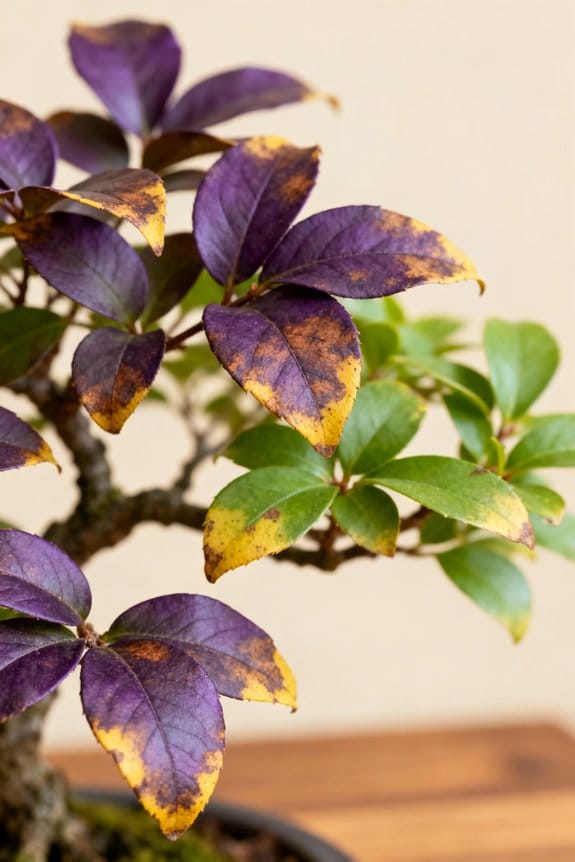
Phosphorus deficiency in bonsai trees often presents with distinct visual cues that can be easily recognized. One of the most notable symptoms includes darker leaves, which may take on a reddish or purplish tint. Affected trees show signs of weak root development, ultimately delaying flowering and fruiting. These symptoms may begin on the older leaves, leading to poor overall growth and health if left unaddressed. Bonsai trees thrive in slightly acidic soil with a pH range of 5.5 to 6.5, which supports nutrient absorption. To guarantee the well-being of bonsai trees, regular visual inspections and soil tests are essential for early detection of phosphorus deficiency. If identified, apply a balanced fertilizer with higher phosphorus content during the growing season. By paying close attention to these symptoms, caretakers can effectively support their bonsai trees’ nutritional needs.
Symptoms of Potassium Deficiency
Potassium plays an essential role in the overall health of bonsai trees, and its deficiency can lead to several visible issues. One prominent symptom of potassium deficiency is the appearance of brown spotting on the leaf margins, which may eventually result in leaf scorch. Additionally, the leaves may turn yellow between the veins, while the veins themselves remain green. This signaling indicates a nutrient deficiency that hampers proper photosynthesis. Bonsai trees affected by potassium deficiency often become weaker, making them more prone to pests and diseases. Furthermore, delayed flowering and fruiting can affect the tree’s growth cycle and overall beauty. To combat this deficiency, use potassium-rich fertilizers noted for a higher middle number in the N-P-K ratio. Slow-release formulations provide consistency in nutrient delivery, reducing the chances of nutrient deficiency and promoting sustained plant health over time.
Diagnosing Nutrient Deficiencies
Diagnosing nutrient deficiencies in bonsai trees is essential for maintaining their health and liveliness. Regular visual inspections help detect unusual changes. Look for color alterations, leaf spots, or wilting, as these often indicate nutrient deficiencies. It’s also crucial to check for stunted or delayed growth, signaling nutrient imbalances in the soil. Monitoring specific symptoms can guide diagnosis; for instance, yellowing older leaves might suggest nitrogen deficiency, while purplish tints point to phosphorus deficiency. Additionally, using a soil testing kit can accurately measure nutrient levels and pH. A well-chosen bonsai soil mix, such as one with superior drainage and aeration, can help prevent nutrient deficiencies by optimizing root health. By combining visual inspections and soil testing results, gardeners can develop an effective plan for correcting nutrient deficiencies, ensuring their bonsai thrives with vitality.
Visual Inspection Techniques
Conducting regular visual inspections of bonsai trees is an important practice for any caregiver. These inspections help identify tell-tale signs of nutrient deficiencies in bonsai. Caregivers should focus on unusual color changes in the leaves, such as yellowing or browning, which may indicate specific nutrient needs. Inspecting the tree for stunted growth patterns is also crucial, as this can signal deficiencies impacting health. Additionally, checking leaf surfaces for spots, lesions, or wilted appearances can reveal issues like potassium or phosphorus shortages. Systematic examinations of foliage and overall structure allow for early detection of problems. Documenting observations over time will help caregivers understand recurring deficiencies, enabling them to tailor care strategies for maximum growth. Regular soil testing provides insight into nutrient availability and helps promptly address deficiencies for quicker recovery.
Soil Testing for Nutrient Levels
Soil testing serves as a fundamental step in maintaining the health of bonsai trees. This process accurately measures nutrient levels, revealing vital information about potential nutrient deficiencies. A typical soil testing kit measures pH, nitrogen, phosphorus, and potassium levels. Conducting tests in spring or fall aligns with the bonsai’s growth and dormancy cycles, creating an effective approach to nutrient management. By analyzing soil test results, caretakers can choose specific fertilizers that address deficiencies without risking over-fertilization. Regular soil testing, ideally every one to two years, helps maintain an ideal nutrient balance. This proactive measure supports healthy growth and guarantees that bonsai trees thrive, demonstrating that diligence pays off in the long run. Comprehensive nutrient assessments are crucial for improving plant health and reducing fertilizer waste.
Solutions for Correcting Nutrient Deficiencies
To effectively address nutrient deficiencies in bonsai trees, it is essential to understand the specific needs of each tree type. For nitrogen deficiency, incorporating organic matter-rich soil amendments can improve nutrient uptake and prevent early leaf drop. To correct phosphorus deficiency, applying a balanced fertilizer with higher phosphorus content promotes effective root development and flowering. For potassium deficiency, selecting fertilizers with adequate potassium is vital, as it helps maintain strong branches and reduces disease susceptibility. Regular soil testing allows for accurate diagnosis of nutrient deficiencies, ensuring a tailored fertilization regimen. During the active growing season, applying fertilizers every 1-2 weeks supports recovery, while reducing frequency during dormancy helps the bonsai conserve energy. Choosing between organic and synthetic options for bonsai nutrition can impact soil health and environmental safety.
Fertilizer Selection for Bonsai
Choosing the right fertilizer for bonsai trees is crucial in promoting their health and vigor. The fertilizer selection should focus on balanced multi-nutrient options, providing necessary nutrients like nitrogen, phosphorus, and potassium. Granular fertilizers are great for slow nutrient release, while liquid fertilizers are suitable for quick absorption. During the active growing season, applying fertilizers every 1-2 weeks helps address any nutrient deficiencies effectively. It’s beneficial to test soil pH regularly to guarantee ideal nutrient availability, ideally keeping it between 6.0 and 7.0. Additionally, incorporating organic fertilizers, such as fish emulsion, complements chemical fertilizers like Miracle Gro, creating a sustainable and balanced nutrient supply for bonsai care. This thoughtful approach supports strong, resilient trees. Frequent applications of liquid fertilizers biweekly during the growing season are recommended to ensure bonsai receive consistent nutrient support.
Maintaining Nutrient Balance Year-Round
Maintaining a nutrient balance year-round is essential for bonsai health and growth. Regularly monitor bonsai growth patterns to spot early signs of nutrient deficiencies, like yellowing leaves or stunted growth. This awareness allows for timely care adjustments. In spring, increase fertilization to support vigorous growth, adapting these nutrients as seasons change, especially during Australia’s hot summer months. Implement routine soil testing to understand nutrient levels and pH, ensuring appropriate fertilization strategies. Utilizing bonsai starter kits can provide valuable resources tailored to specific tree needs. Finally, create an ideal environment by combining proper soil conditions, adequate light, and appropriate watering, all of which help mitigate potential nutrient deficiencies, enhancing overall bonsai care. Using organic fertilizers with balanced N-P-K ratios can further enhance soil health and support beneficial microorganisms essential for bonsai growth.
Preventing Excess Nutrient Damage
Preventing excess nutrient damage in bonsai trees is vital for their overall health and appearance. An overabundance of nutrients, particularly nitrogen and phosphorus, can cause yellowing or scorched leaves and weaken branches. To avoid these problems, apply fertilizers sparingly and avoid over-fertilizing, which can disrupt soil balance. Regular monitoring of your bonsai’s response to fertilizers is important. This allows you to adjust application rates as needed to prevent damage. Additionally, rotating fertilizer types can provide a broader range of essential micronutrients, reducing toxicity risks. Implementing regular soil testing will help you assess nutrient levels accurately. This guarantees your bonsai enjoys a healthy growing environment, supporting its vibrant growth and stunning aesthetics.
Cultivating Healthy Bonsai Trees
Cultivating healthy bonsai trees requires attentive care and informed practices. Regular monitoring for early signs of nutrient deficiencies, like yellowing leaves or stunted growth, is essential. Incorporate organic matter, such as compost or well-rotted manure, to improve soil health and enhance nutrient availability. Using balanced fertilizers tailored to specific deficiencies can also considerably benefit bonsai during the active growing season. Routine soil tests help assess nutrient levels and pH, allowing for informed adjustments in bonsai fertilization strategies. Additionally, maintaining consistent watering, appropriate light exposure, and adequate humidity supports a nurturing environment. By implementing these practices, bonsai enthusiasts can foster vibrant, healthy trees that thrive and flourish, showcasing their beauty throughout the seasons.
Frequently Asked Questions
How Do I Remedy Plant Nutrient Deficiencies?
A garden’s liveliness mirrors a painter’s palette, where nutrient balance and soil composition intertwine. Plant care involves evaluating deficiencies through observation, adjusting fertilizers, enriching the soil, and permitting nature’s rhythm to restore harmony.
How to Save a Sick Bonsai?
To save a sick bonsai, he conducted thorough bonsai care, identifying leaf discoloration and evaluating root health. He improved soil quality, adjusted watering, and applied balanced fertilizer to promote recovery and restore robustness.
What Is the Rule of 3 in Bonsai?
In an age of smartphones, the Rule of 3 in bonsai care emphasizes nutrient balance, soil quality, and meticulous watering. This triad effectively nurtures tree health and aesthetic appeal, ensuring vibrant, thriving bonsai.
How to Give Bonsai Nutrients?
To provide nutrients effectively, bonsai fertilization techniques should include both organic nutrient options and a choice between liquid vs. granular fertilizers, ensuring a balanced supply tailored to the bonsai’s specific growth needs and conditions.


