As an Amazon Associate, we earn from qualifying purchases. Some links on this site are affiliate links at no extra cost to you. Our recommendations are based on thorough research and editorial judgment.

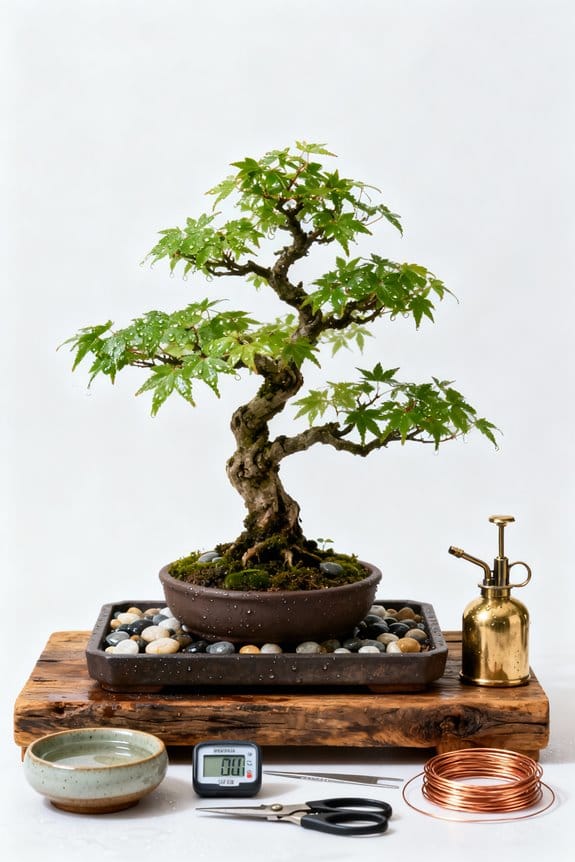
How to Manage Humidity for Indoor Bonsai Trees

To manage humidity for indoor bonsai trees, first understand their specific needs. Fukien Tea requires 50%-70% humidity, while Dwarf Jade enjoys 40%-50%. Use humidity trays under pots to increase moisture in the air. Regular misting helps prevent leaf drying but avoid overdoing it to prevent root rot. Room humidifiers are great for maintaining consistent levels, especially in dry environments. Check humidity regularly with a hygrometer for best results, and discover more ways to guarantee your bonsai thrives.
Key Takeaways
- Use humidity trays under bonsai pots to increase local humidity through evaporation, particularly in dry environments.
- Regularly mist foliage to maintain hydration and increase humidity, but avoid over-wetting to prevent root rot.
- Monitor humidity levels with a hygrometer to ensure optimal conditions: 50%-70% for Fukien Tea and 40%-50% for Dwarf Jade.
- Incorporate room humidifiers to stabilize humidity during dry seasons, supporting overall bonsai health and growth.
- Ensure good air circulation around bonsai to prevent fungal issues and maintain a balanced microclimate.
Understanding Humidity Needs for Indoor Bonsai
Understanding the humidity needs of indoor bonsai trees is important for their health and growth. For species like the Fukien Tea, maintaining humidity levels of 50% to 70% is essential. Regular monitoring guarantees ideal conditions for these trees. In contrast, the Dwarf Jade bonsai thrives in lower humidity, between 40% to 50%, making it more tolerant of dry indoor environments. To maintain humidity, bonsai caretakers can mist their trees, particularly during dry spells. However, caution is necessary to prevent over-saturation which could lead to root rot. Insufficient humidity can cause leaf drying and increase susceptibility to pests. Incorporating a consistent watering system can further aid in maintaining proper moisture levels for bonsai trees. Therefore, understanding and meeting the humidity needs is crucial for the longevity and vitality of indoor bonsai trees.
The Role of Humidity Trays in Bonsai Care
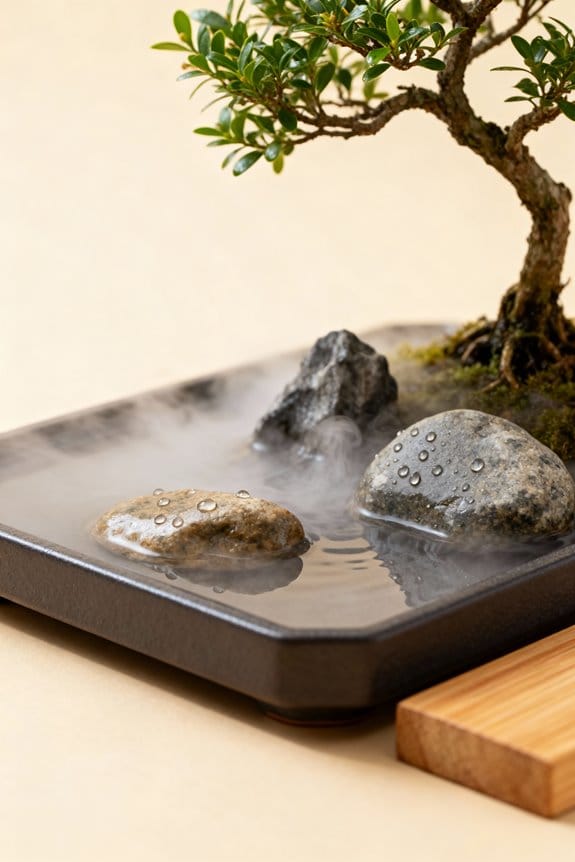
Humidity trays play a significant role in the care of indoor bonsai trees. These shallow containers are filled with water and placed underneath bonsai pots to create a microclimate that boosts humidity. By maintaining moisture around the root systems, humidity trays help enhance water absorption and reduce the risk of root desiccation. This is essential for bonsai care, especially in homes with low room humidity. Additionally, the high humidity levels promote lush foliage and healthy growth while helping to conserve energy by reducing transpiration rates. Using a humidity tray can also improve air quality around the bonsai, reducing dust and pollutants. For best results, choose trays that are larger than the bonsai pot to prevent overflow during evaporation. Moisture control crystals can further aid in maintaining optimal humidity levels by retaining water and gradually releasing it into the soil, thus supporting healthier bonsai growth.
Effective Techniques for Maintaining Humidity
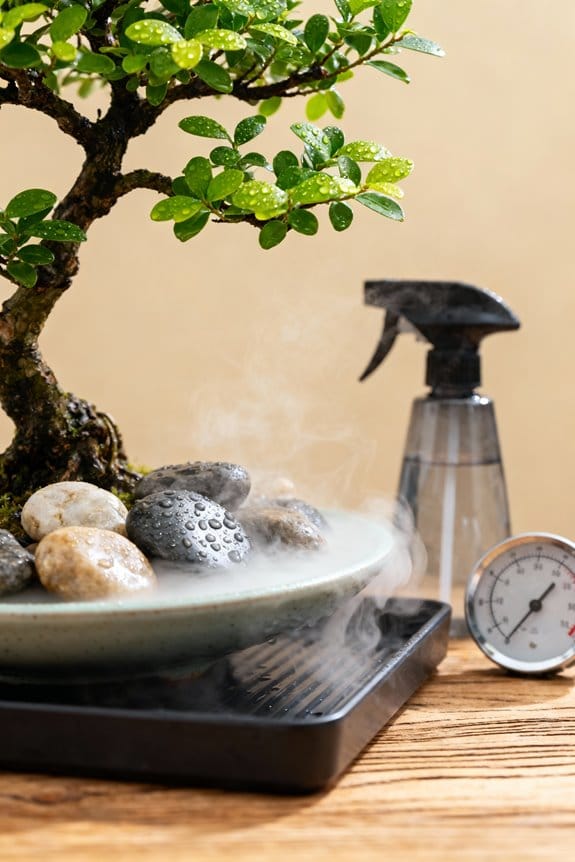
How can indoor gardeners effectively maintain humidity for their bonsai trees? Utilizing a humidity tray is one effective method; placing shallow trays filled with water beneath the bonsai trees can increase the humidity in their surroundings. Additionally, regularly misting the foliage with a gentle spray helps keep it hydrated while avoiding excess moisture that causes fungal issues. In dry indoor environments, incorporating a room humidifier is essential to maintain humidity levels between 40-70%. It’s also important to position bonsai trees where air circulates freely. Consistently monitoring humidity levels with a hygrometer guarantees that adjustments can be made, especially during periods of low humidity. Selecting beginner-friendly seeds like Crape Myrtle and Blue Jacaranda can also aid in starting a successful bonsai care journey, as these species are known for their adaptability to indoor conditions. Combining these techniques will create a healthier environment for the bonsai trees to thrive.
Creating a Microclimate for Optimal Growth
Creating a suitable microclimate is essential for the thriving health of indoor bonsai trees. A humidity tray placed under the bonsai pot creates an ideal environment by increasing humidity levels through evaporation. Maintaining humidity levels between 40% to 70% allows bonsai to thrive without excessive stress. It is vital to water every bonsai appropriately while monitoring room temperature, as drastic changes can impact growth. Regular misting can further enhance moisture around the trees; however, avoid overly damp conditions to prevent root rot. Additionally, strategic placement of humidity trays aids in ensuring good air circulation, preventing fungal issues. This balanced approach supports healthy foliage and maximizes the potential of indoor bonsai trees in a carefully curated microclimate.
Monitoring and Adjusting Humidity Levels
Monitoring humidity levels is essential for the well-being of indoor bonsai trees. Regularly check humidity using a hygrometer, aiming for 40% to 70% based on the species. For instance, Fukien Tea thrives in 50%-70% humidity, while Dwarf Jade prefers 40%-50%. To maintain these levels, placing a humidity tray filled with water beneath small pots can help create a microclimate and prevent root desiccation. During dry periods, such as winter, consider using a room humidifier to stabilize the environment. Regular misting can also be beneficial but should be done with caution to avoid fungal issues. Consistent monitoring and timely adjustments will guarantee your bonsai retains the moisture necessary for healthy growth. For enhanced results, consider using durable materials like BPA-free plastic for humidity domes, which are effective in maintaining the desired moisture balance.
Frequently Asked Questions
What Is the Best Humidity for Indoor Bonsai Trees?
What if humidity levels dictate a bonsai’s fate? The ideal indoor climate varies: 40%-70%. For best bonsai care, ensuring moisture retention and appropriate watering frequency is essential for maintaining plant health amidst varying environmental factors.
What Is the Rule of 3 in Bonsai Trees?
The Rule of 3 in bonsai tree care involves arranging elements in groups of three to achieve balance. This principle complements humidity levels, temperature control, and light requirements, enhancing visual appeal and fostering ideal indoor climate conditions.
Do Bonsai Humidity Trays Work?
Humidity trays demonstrate effectiveness in boosting moisture absorption for bonsai care, aiding indoor climate control. Monitoring humidity levels and adjusting watering frequency enhance evapotranspiration impact, proving these trays pivotal among bonsai care products for ideal growth.
How to Keep a Bonsai Tree Alive Indoors?
Keeping a bonsai tree alive indoors is akin to nurturing a miniature forest. Master bonsai watering techniques, maintain ideal indoor light requirements, understand soil types essentials, and adhere to fertilizing frequency tips and diligent pest control strategies.


