As an Amazon Associate, we earn from qualifying purchases. Some links on this site are affiliate links at no extra cost to you. Our recommendations are based on thorough research and editorial judgment.

How to Move Bonsai Between Indoor and Outdoor Safely

To move a bonsai safely between indoor and outdoor environments, first assess its health for any signs of stress, like wilting leaves. Prune excessive branches to ease acclimatization before transport. Water the bonsai thoroughly the day before. Use a temperature-controlled vehicle, shielding it from direct sunlight. After arriving, place the bonsai in a shaded area for a few days, gradually increasing its light exposure. Proper techniques can minimize stress and promote healthy growth in its new surroundings. More tips await you.
Key Takeaways
- Monitor temperature closely, keeping the bonsai between 60°F and 80°F during the move to prevent stress.
- Water the bonsai thoroughly a day before the transition to ensure it is well-hydrated.
- Gradually acclimatize the bonsai by initially placing it in a shaded outdoor area for a few days.
- Protect the bonsai from direct sunlight during the move by using cloth or breathable coverings.
- Avoid immediate re-potting after the move to reduce stress and allow for easier adaptation.
Assessing Bonsai Health for Transition
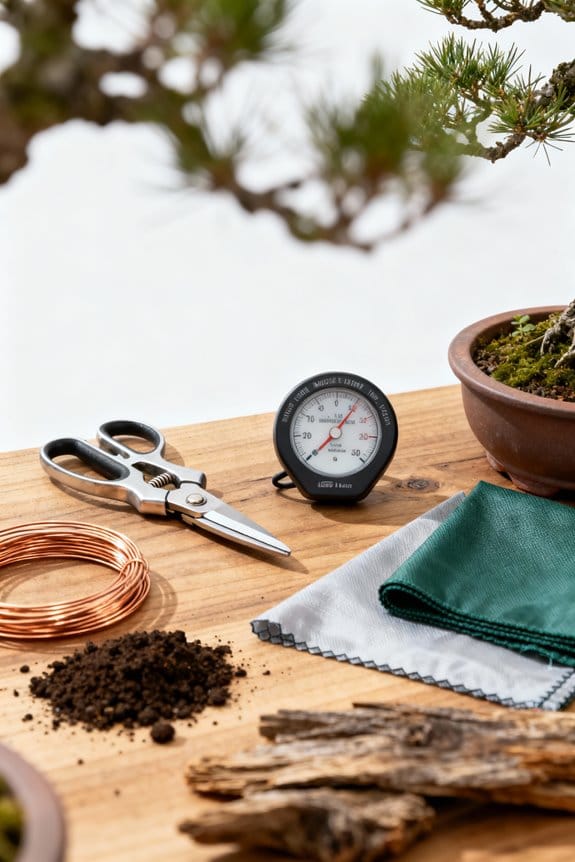
Before shifting a bonsai to a new environment, it is crucial to evaluate its health thoroughly. Begin by checking for signs of stress, such as leaf discoloration, wilting, or pest infestations. This step, known as evaluating bonsai health, helps guarantee a smoother shift. If necessary, prune any excessive leaves or branches to minimize stress and make acclimatization easier. It’s essential to confirm the bonsai is well-hydrated by watering it a day before the move, soaking the soil until it bubbles. Additionally, monitor temperature conditions closely during the shift, avoiding extreme heat or cold. For optimal moisture management, consider using a bonsai moisture sensor set to prevent over and underwatering, and ensure ideal moisture levels during the transition. These precautions can greatly reduce transplant shock and promote a healthier journey for the bonsai into its new home.
Preparing for Transport
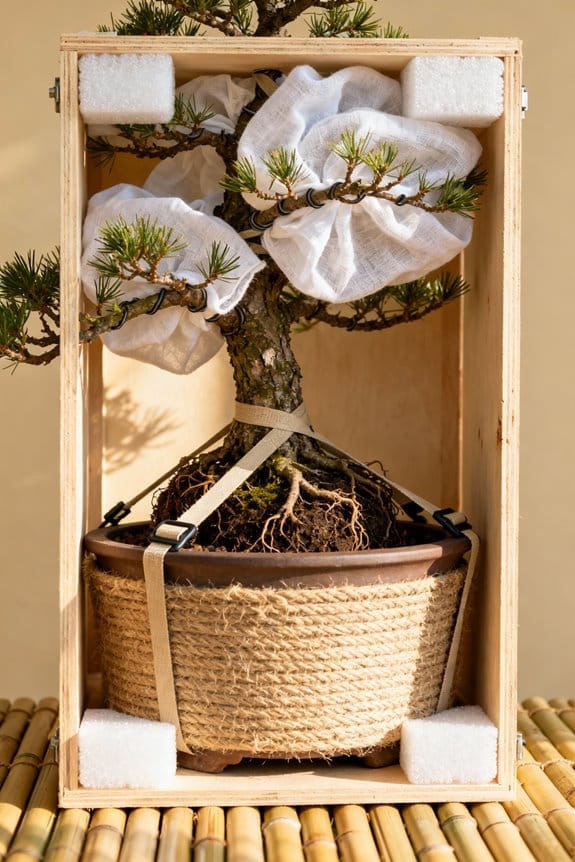
Preparing a bonsai for transport begins with careful organization and thoughtful execution. First, assess the bonsai’s health, looking for signs of stress—especially in a Chinese Elm. If needed, prune excess leaves or branches to reduce stress and ease movement. A day before moving the bonsai outside, thoroughly water it, ensuring the soil is soaked and misting the leaves for moisture retention. Next, secure the bonsai pot with dampened newspaper to prevent movement during transport. For added protection, consider wrapping the roots in moist burlap. Always use a temperature-controlled vehicle to shield the bonsai from extreme fluctuations. Minimizing travel time is essential, as it will help reduce stress on the plant and support its shift back to its grow light environment. It is advisable to use durable nylon straps to ensure the safe and stress-free relocation of the bonsai.
Selecting the Right Transport Method
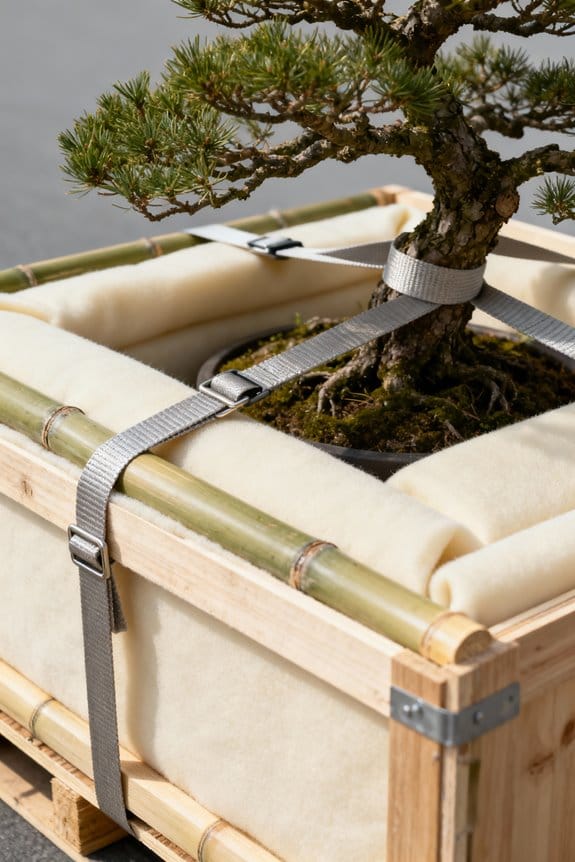
How can one guarantee the safe transport of a bonsai? Selecting the right transport method is essential. First, opt for a temperature-controlled vehicle to shield the bonsai from extremes, ideally keeping it between 60 and 75 degrees F. It’s best to minimize travel distance and time to limit stress; shorter journeys ease environmental changes. To prevent damage, verify heavier items are secured away from the bonsai, preventing crushing. If using a commercial shipper, confirm they specialize in transporting live plants to ascertain proper care. Additionally, consider covering the bonsai with light, breathable materials when necessary, protecting it from sudden temperature fluctuations. Making thoughtful choices here can markedly enhance the transporting experience for your bonsai. Regularly monitoring root and trunk growth is vital to ensure the bonsai remains healthy after being moved.
Maintaining Optimal Conditions During Transport
Maintaining ideal conditions during the transport of a bonsai is crucial for its health and well-being. First, use a vehicle with optimal temperature control, keeping the temperature between 60°F and 80°F. Minimize travel time to lessen plant stress, as long trips can trigger shock. To protect the bonsai from direct sunlight, consider protective covering options, like a cloth or placing it in shaded areas inside the vehicle. Additionally, humidity management techniques are essential; periodically check the soil moisture and mist the bonsai with a hand pump sprayer if needed. These measures will help guarantee the bonsai arrives in great shape, ready for its new environment. Always prioritize your bonsai’s comfort during transport. Regular maintenance of aeration stones is important to maximize plant health and growth potential.
Gradual Acclimatization After Arrival
After arriving at its new location, the bonsai needs time to adjust and recover from the stress of transport. Initially, it should be placed in a shaded area for a few days, allowing it to stabilize. During this time, light exposure strategies involve gradually introducing it to sunlight—start with a few hours and extend this daily. Soil moisture management is essential; if the soil feels dry, promptly rehydrate the bonsai to support its recovery. It’s important not to re-pot the bonsai immediately, as that can increase stress. Finally, research local climate conditions to fine-tune care routines, including watering and fertilization, as your bonsai acclimates to its new surroundings. Gradual acclimatization techniques can help prevent shock and support a smoother transition for the bonsai to its new environment.
Long-Term Care and Monitoring
Long-term care and monitoring of a bonsai tree are essential for its health and growth after acclimatization. Regular checks for stress indicators, such as wilting, leaf drop, or discoloration, are vital, especially after moving between environments. Maintaining stable moisture levels in the soil will help prevent dehydration. Gradually introduce the bonsai to full sunlight, starting with just a few hours of indirect light. Seasonal adjustments to watering and fertilization schedules should reflect changes in weather. Detailed records of each bonsai’s responses to environmental changes will prove invaluable. Noting any signs of shock will enable refinements to care practices for future changes, ensuring the bonsai thrives in both indoor and outdoor settings. Using a soil moisture meter can aid in maintaining optimal soil conditions, ensuring the bonsai receives adequate water without the risk of overwatering or underwatering.
Engaging With the Bonsai Community for Support
Engaging with the bonsai community can enhance one’s experience in caring for these delicate trees. By connecting with local bonsai clubs, enthusiasts gain access to invaluable community resources. Members often share seasonal tips that cater to specific species and acclimatization techniques. This knowledge streamlines the shift of bonsai between indoor and outdoor environments. Participating in workshops offers hands-on experiences, providing feedback from seasoned caretakers. Additionally, community forums enable discussions on monitoring plant health during seasonal changes. Social media groups offer a quick way to seek advice about environmental shifts or health concerns. Engaging with fellow bonsai lovers fosters a supportive atmosphere, allowing enthusiasts to learn collaboratively and enhance their overall bonsai care experience. When moving bonsai between environments, it’s crucial to ensure consistent moisture levels to prevent stress and maintain plant health.
Frequently Asked Questions
What Is the Rule of 3 on a Bonsai Tree?
The Rule of 3 in bonsai care advises against pruning more than one-third of foliage or roots. This rule supports bonsai growth and adapts to seasonal changes, ensuring the tree maintains health during maintenance efforts.
Can You Put an Indoor Bonsai Outside?
While an indoor bonsai can dance under the sun’s embrace, seasonal bonsai adaptation is essential. Indoor bonsai care involves gradual acclimatization, ensuring outdoor bonsai benefits without shock—especially for delicate species unaccustomed to temperature fluctuations.
What Is the Golden Rule of Bonsai?
The golden rule of bonsai involves careful bonsai care, emphasizing gradual acclimatization to prevent stress. Seasonal adjustments and temperature considerations are essential, ensuring stability in the environment to promote healthy growth and adaptation in bonsai trees.
When to Move Bonsai Outside?
Bonsai should be moved outside during spring or early fall to align with seasonal changes. This timing guarantees stable temperatures and allows for ideal sunlight exposure, helping to mitigate stress from temperature fluctuations for the tree’s acclimatization.


