As an Amazon Associate, we earn from qualifying purchases. Some links on this site are affiliate links at no extra cost to you. Our recommendations are based on thorough research and editorial judgment.

How to Prevent Sunburn on Bonsai in Hot Climates

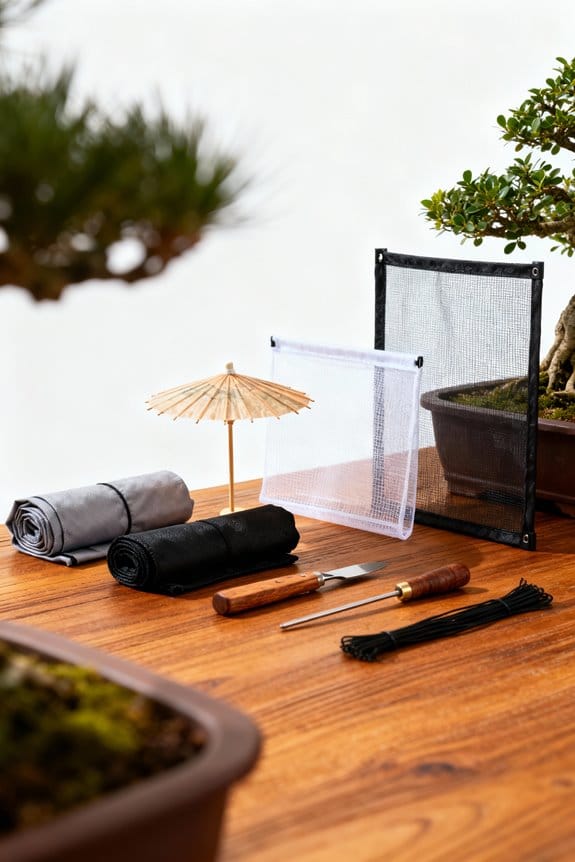
To prevent sunburn on bonsai in hot climates, provide shade during peak sun hours. Use shade cloth or relocate the bonsai to shaded areas. Frequent misting of leaves helps lower temperatures and reduces the risk of sunburn. Water the soil thoroughly at least three times daily, keeping it moist but not soggy. Consider lighter-colored pots to reflect sunlight. Choose heat-resistant species like Junipers and Pines for better resilience, and stay alert for signs of heat stress as conditions change.
Key Takeaways
- Relocate bonsai to shaded areas or use shade cloth to block direct sunlight during peak hours.
- Frequently mist foliage with cold water to lower leaf temperatures and reduce sunburn risk.
- Wrap pots in wet towels or aluminum foil to reflect sunlight and keep soil cool.
- Increase watering frequency; thoroughly water at least three times a day to prevent dehydration.
- Choose native or climate-adapted species and lighter-colored pots for better resilience against heat stress.
Understanding Heat Stress in Bonsai
Heat stress is a condition that bonsai trees can suffer from, particularly during the hot summer months. This problem typically manifests as dull green and yellow foliage, brown spots, and even branch dieback. During high temperatures and low humidity, bonsai trees with shallow root systems in containers are particularly vulnerable. To combat heat stress, it’s essential to water carefully, ensuring the soil remains consistently moist but not waterlogged. Additionally, implementing cooling techniques such as misting the leaves or providing temporary shade can considerably reduce stress. By closely monitoring bonsai during heat waves, owners can help facilitate recovery, ensuring these beautiful trees thrive despite challenging conditions. Protecting bonsai from heat stress requires consistent attention and proactive measures. Muslin cloths can be used as lightweight fabric to provide shade and promote air circulation, further aiding in the protection of bonsai from extreme heat.
Signs of Sunburn and Heat Damage
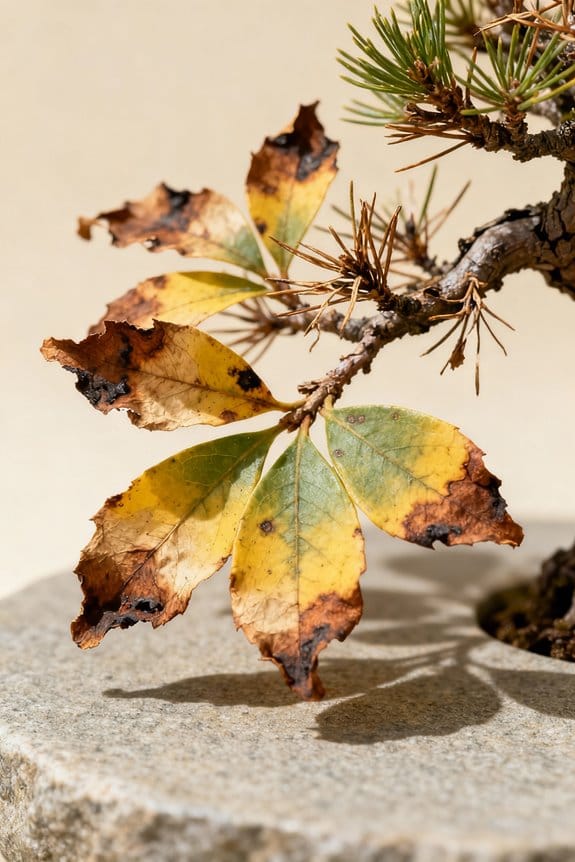
Sunburn and heat damage can severely impact the health of bonsai trees, making it essential for owners to recognize the signs early. Common indicators of sunburn include brown, burnt areas on leaves and stems, which signal significant damage from direct sunlight. Initially, younger leaves display discoloration, as they are more vulnerable to sunburn. Additionally, brown spots and patches on foliage suggest heat stress and can lead to leaf drop if ignored. Conifers may show pale or yellow leaves when exposed to intense sunlight. Finally, prolonged excessive heat can result in branch dieback, indicating severe stress on the tree, making it vital to identify these signs promptly to safeguard the bonsai’s health. Adequate drainage in bonsai soil helps prevent waterlogging, which is crucial for maintaining healthy root systems in hot climates.
Immediate Actions to Protect Your Bonsai
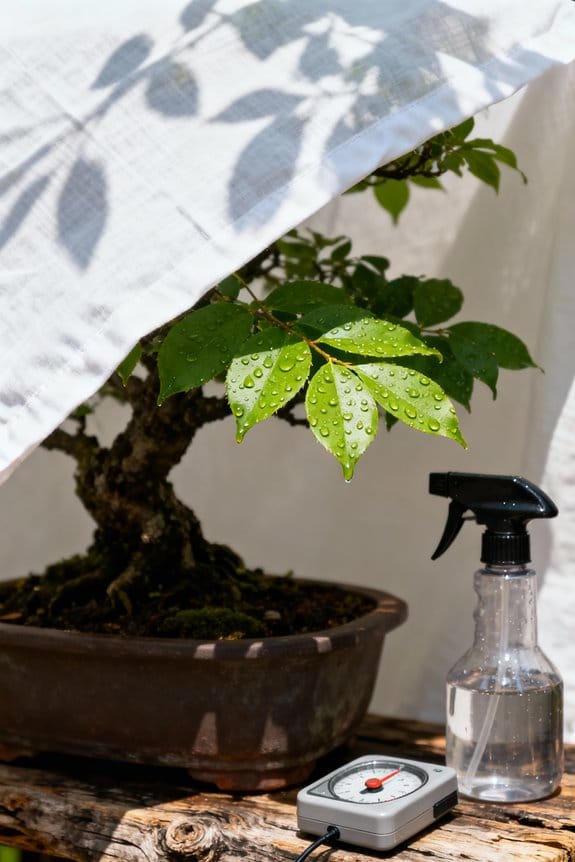
Taking prompt action is essential when it comes to protecting bonsai trees from further damage after signs of sunburn are noticed. First, relocating the bonsai to shaded areas is critical. Consider using shade cloth to block direct sunlight, especially during peak heat hours. Mist the foliage multiple times daily to lower leaf temperatures, reducing sunburn risk. Additionally, wrapping the pots of sensitive trees in wet towels or aluminum foil can help reflect sunlight and maintain cooler soil conditions. Finally, verify that the bonsai receives adequate hydration by increasing watering frequency. Well-hydrated trees are more resilient to heat stress, greatly diminishing the risk of sunburn. These immediate actions can help secure the health of bonsai during hot climates. Incorporating slow-release bonsai fertilizer can provide essential nutrients and strengthen the bonsai, making it more resilient in hot climates.
Watering Techniques During Heat Waves
When temperatures soar, proper watering techniques become vital for the health of bonsai trees. During heat waves, especially when it exceeds 90°F (32°C), bonsai should be watered thoroughly at least three times daily. This frequency helps guarantee adequate hydration and prevents sunburn. Cold hose water can be used for misting both the leaves and surrounding areas, providing cooling through evaporation. Additionally, the hamizu technique, which involves spraying a fine mist on leaves during high temperatures, supports moisture retention. It’s essential to monitor soil moisture frequently, especially in small pots, as rapid evaporation can lead to dehydration. However, avoid over-watering; guarantee proper drainage to protect against root rot while meeting the increased hydration needs of the bonsai. Incorporating moisture control crystals into the soil can significantly reduce watering frequency by retaining water, thus supporting root growth and helping the bonsai thrive in hot climates.
Misting Strategies for Foliage Hydration
Regular misting is an effective strategy for keeping bonsai foliage hydrated, especially during hot days. Fine-spray misting cools leaves efficiently without causing water pooling, which may lead to burn from sunlight magnification. To maintain moisture in the pot and protect the foliage, it is advisable to mist multiple times a day, particularly during peak heat hours. A spray bottle that delivers a very fine mist will guarantee even moisture distribution across the leaves, assisting in temperature regulation. It’s vital to avoid cold water during extreme heat, as it can shock the plant; lukewarm water is the best option. Finally, combine misting strategies with a proper watering routine to keep both the roots and leaves healthy and hydrated. Incorporating energy-efficient models can also help reduce electricity consumption while maintaining optimal conditions for indoor bonsai care.
Utilizing Shade and Shelter
Understanding how to protect bonsai trees from sunburn is vital, especially after discussing the benefits of misting for foliage hydration. Moving bonsai to shaded areas during peak sunlight hours can greatly reduce the risk of sunburn. Utilizing shade cloth with a density of 40-50% effectively diffuses intense sunlight while increasing humidity around the plants. For delicate species like maples or recently repotted trees, placing them in dappled sunlight is essential. Constructing shade structures with light-colored cloths or boards over the pots helps to moderate soil and root temperatures. These methods are key for safeguarding bonsai trees against excessive heat and maintaining their overall health. Adjustable ventilation vents are essential for managing humidity and temperature, ensuring your bonsai thrives even in hot climates. Practicing these techniques will guarantee your bonsai thrives in hot climates.
The Role of Moss in Heat Protection
Moss plays an essential role in protecting bonsai trees from heat stress and sunburn. By placing a layer of sphagnum moss around the base, it retains soil moisture, cooling the root zone during high temperatures. This natural insulator provides a buffer against extreme heat, reducing the risk of sunburn on foliage. Additionally, the presence of moss improves soil conditions by maintaining humidity, creating an ideal environment for bonsai roots. Regular applications of moss not only aid in controlling temperatures but also enhance the aesthetic value of the bonsai arrangement. By shielding the soil surface from direct sunlight, moss diminishes evaporation and stabilizes moisture levels, which are vital for preventing sunburn during hot weather. Choosing living moss mats can enhance the visual appeal and moisture retention capabilities of your bonsai, providing added protection in hot climates.
Temperature Management for Pots and Soil
How can bonsai enthusiasts manage temperatures effectively for their pots and soil? Effective temperature management is vital, especially on hot days. Using light-colored pots or wrapping them in reflective materials, like aluminum foil, can greatly reduce heat absorption. Additionally, placing pots on trays filled with pumice or gravel assists in keeping the root system cooler. Regularly monitoring soil temperature with an oven thermometer allows enthusiasts to catch excessive heat that could harm roots. Relocating pots to shaded areas during peak sunlight hours is another essential strategy. Finally, a layer of sphagnum moss on the soil surface not only retains moisture but also provides insulation against high soil temperatures, further protecting the bonsai’s health. It is crucial to assess drainage and aeration requirements to ensure that the bonsai soil mix maintains optimal conditions and prevents heat stress on the roots.
Long-term Measures for Heat Resilience
To enhance heat resilience in bonsai, enthusiasts can implement several long-term strategies. One effective method is to use shade cloth systems, ideally offering 40-50% shading, especially during peak summer heat. Additionally, planting moss around the base of bonsai pots helps retain soil moisture and insulates the roots, proving beneficial in dry conditions. It’s also wise to crowd smaller bonsai varieties like Shohin together, so they can shield each other from excessive sun exposure. Choosing lighter-colored pots is essential as they reflect sunlight and maintain cooler root temperatures. For optimal bonsai growth, enthusiasts should consider using mini humidity greenhouses with humidity control features that can help create a warm, humid environment, extending the growth periods of their bonsai. These strategies can collectively aid in protecting bonsai from the damaging effects of hot weather, ensuring their health and beauty thrive over time.
Selecting Heat-Resistant Tree Species
Selecting the right tree species is essential for bonsai enthusiasts who want to minimize sunburn and heat stress. During heat waves, bonsai need trees that can thrive in high temperatures. Opt for species that are native or well-adapted to local climates, as they usually endure sun exposure better. Heat-resistant options include Junipers, Pines, and Cedars, which resist stress and flourish in sunny conditions. Additionally, consider deciduous trees like Oak and Maple for their adaptability and beauty. Species with thicker leaves, such as Ficus and Schefflera, offer added sun protection and reduce water loss in extreme heat. Research specific cultivars, as some variations may possess enhanced heat resistance, making them better suited for hot environments. Certain Japanese Maple varieties, like the Kamagata Dwarf Maple, are particularly renowned for their adaptability and can thrive even in smaller and hotter garden settings.
Special Considerations for Exhibition Bonsai
Exhibition bonsai are often the centerpiece of any display, but they also face unique challenges, especially during hot weather. To protect these delicate trees, it is important to move the tree to provide temporary shade from the harsh sun, particularly during peak afternoon hours. Observers should regularly mist the leaves to cool them down, being careful to avoid large droplets that could cause burning. Additionally, verify the bonsai are well-hydrated before the event, as this minimizes stress and improves their resilience to heat. If displayed near reflective surfaces, the risk of sunburn increases considerably. Careful monitoring will help owners see signs of stress and allow for timely interventions to keep their exhibition bonsai vibrant and healthy.
Monitoring and Adjusting Care Practices
Monitoring the health of bonsai is important, especially during extreme weather conditions. Regularly check the leaf color and condition, as yellowing or browning may indicate heat stress and potential sunburn. Daily temperature fluctuations and humidity levels should also be monitored to determine if additional misting or shade is necessary. Adjust watering frequency to at least three times daily during intense heat to keep the soil adequately moist. Additionally, relocating bonsai to shadier areas or using shade cloth can greatly reduce direct sunlight exposure during peak hours. Finally, observe for signs of leaf hydration needs and apply fine-spray misting to cool the foliage, ensuring no water pools form that could lead to burn marks.
Frequently Asked Questions
How Hot Is Too Hot for a Bonsai Tree?
Bonsai trees, delicate as fragile glass, suffer when temperatures surpass 90°F (32°C). Their sunlight exposure exceeds temperature tolerance, risking sunburn and severe damage, particularly to newly emerged foliage susceptible to harsh heat and direct sunlight.
What Is the Rule of 3 on a Bonsai Tree?
The Rule of 3 in bonsai care emphasizes three focal points for aesthetic balance. It guides pruning techniques, encouraging variation in branch height, size, and spacing to enhance visual appeal and overall composition in bonsai design.
How Do I Protect My Japanese Maple From Extreme Heat?
Amidst the sweltering sun, the Japanese Maple flourished under dappled shade. Frequent misting and vigilant watering techniques preserved its delicate leaves, ensuring they remained lush and vibrant, shielded from the harsh embrace of extreme heat.
Why Is My Bonsai Tree Turning Brown in the Summer?
Bonsai trees may turn brown in summer due to heat stress, indicated by leaf discoloration. Proper bonsai care, including monitoring hydration and providing shade, is essential to prevent further damage and maintain plant health.


