As an Amazon Associate, we earn from qualifying purchases. Some links on this site are affiliate links at no extra cost to you. Our recommendations are based on thorough research and editorial judgment.

How to Protect Outdoor Bonsai From Frost and Cold Winds

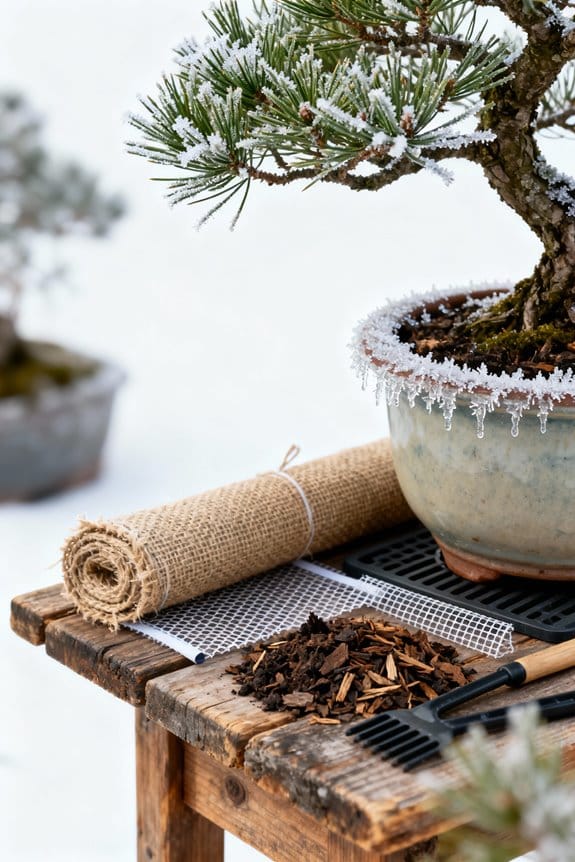
To protect outdoor bonsai from frost and cold winds, first identify the tree’s hardiness zone. Use insulation techniques like pot burying or applying mulch for better warmth. Group trees together for mutual protection and place them in sheltered spots. If temperatures drop considerably, consider moving tropical bonsai indoors, ensuring they receive adequate light. Monitor humidity levels to maintain tree health. There are additional methods to boost your bonsai’s winter resilience that can enhance their quality and longevity.
Key Takeaways
- Insulate pots by wrapping them in burlap or adding mulch to protect roots from freezing temperatures.
- Group bonsai pots together to create a microclimate and enhance warmth during cold spells.
- Bury the pots partially in the ground to prevent them from experiencing extreme cold.
- Place bonsai in sheltered locations, away from cold winds, to minimize frost exposure.
- Monitor local weather and cover trees with frost cloths during predicted cold snaps for added protection.
Understanding Plant Hardiness for Outdoor Bonsai
Understanding the hardiness of outdoor bonsai is essential for their successful winter care. Temperate bonsai species, such as pines and maples, thrive in cold temperatures and can withstand freezing temperatures if properly acclimated. The USDA Plant Hardiness Zone helps identify which trees can survive different climates, guiding their winter care needs. Container-grown bonsai roots often experience colder conditions than ground-planted trees, making insulation critical. Insulating pots or burying them can protect roots from frost damage. Grouping trees together provides added insulation while placing them in sheltered spots shields them from harsh winds. By understanding these aspects of plant hardiness, bonsai enthusiasts can guarantee their trees remain healthy and vibrant throughout the winter months. Aeration stones can also be used to improve soil drainage and prevent waterlogging, which is crucial for maintaining root health during the winter.
Essential Winter Care for Tropical Bonsai
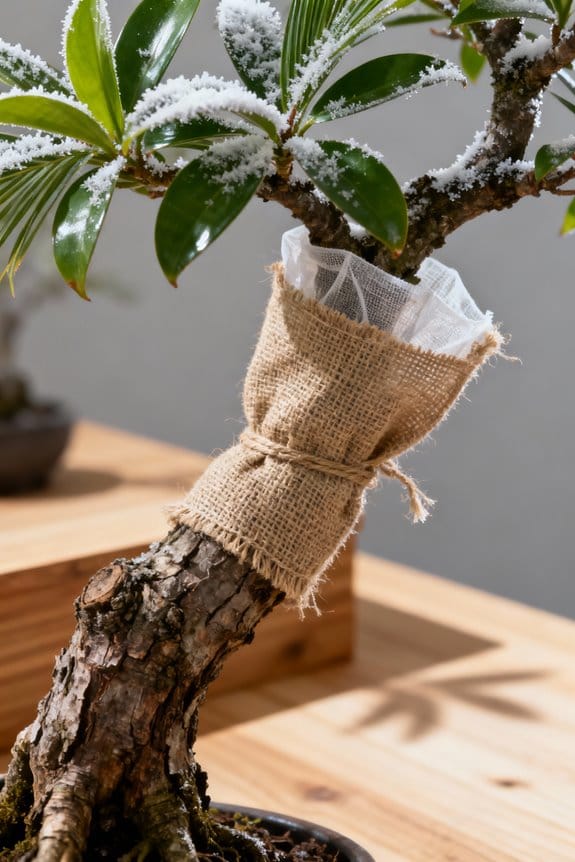
Tropical bonsai, such as ficus and jade, require special attention during the winter months to thrive indoors. When temperatures drop into the 50s°F (10°C), it’s essential to move them indoors to protect against cold stress and potential leaf loss. These trees prefer bright locations, so make sure they receive ample light while avoiding direct heat sources, which can cause rapid drying. Regular watering is important; check the soil frequently and water as it begins to dry. Additionally, maintaining higher humidity levels supports their health during this dormant period. If outdoor temperatures dip below 40°F (4°C), tropical bonsai may stop growing, reinforcing the need for timely indoor relocation for their continued health through the winter. To further enhance their wellbeing, consistent moisture is crucial, as it helps prevent root rot and promotes vitality during colder months.
Preparing Bonsai for Winter Storage
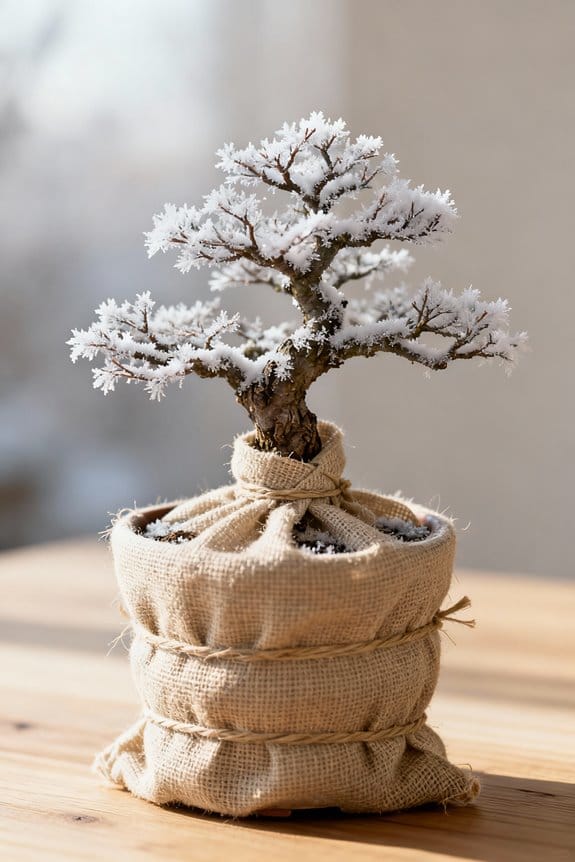
After ensuring tropical bonsai are safely indoors and thriving, attention turns to preparing outdoor bonsai for winter storage. Start by removing all leaves from deciduous species to reduce pest risks and clean any brown needles from conifers. Treat any signs of insects or fungus before storage to prevent issues during dormancy. It’s best to begin this process after the first frost, which promotes full dormancy. Additionally, eliminate fertilizer build-up to aid winter watering, ensuring less stress on the plants. Monitor soil moisture levels, as dormant trees still need water, but less often. Consider using an unheated garage for winter storage, protecting bonsai from freezing winds while allowing for necessary air temperatures for ideal dormancy. Use breathable plant covers like MAQIHAN to provide insulation while allowing air circulation, which prevents moisture buildup and protects the bonsai from frost.
Effective Winter Storage Strategies
When it comes to effective winter storage strategies for outdoor bonsai, careful planning is essential to guarantee their health during colder months. Grouping bonsai pots together can provide mutual insulation, helping trees share warmth. Burying pots in the ground or applying mulch offers effective insulation against freezing temperatures. Using unheated garages, sheds, or cold frames maintains more stable ground temperatures, ideally between 33 and 40 degrees Fahrenheit. Additionally, covering trees with protective materials like burlap, and utilizing snow for insulation can help avoid frost damage, as long as air circulation is maintained. It’s important to consider humidity levels provided by bonsai trays, which aid in maintaining optimal moisture levels for plants. Finally, regularly monitoring soil moisture is vital: even dormant trees require some water to prevent dehydration during winter storage.
Spring Care After Winter Storage
Once outdoor bonsai trees have been safely stored through the winter months, the focus shifts to their care in spring. To begin, gradually acclimate the trees outside by placing them in a shaded area, helping them adjust to sunlight. Inspect for cold damage, pests, or diseases that may have arisen during dormancy. When watering, keep the soil moist but not soggy to prevent root rot. As night temperatures rise above freezing, closely monitor for late frost risks and cover tender shoots if necessary. Once new growth appears, it’s time to fertilize. This guarantees the trees receive essential nutrients, supporting healthy development as they adapt into their active growth phase. Regular monitoring with digital moisture meters aids in achieving ideal moisture balance, which is critical for the overall health and success of the bonsai trees. Keeping trees healthy during this period is critical for their overall success.
Frequently Asked Questions
How to Protect Outdoor Bonsai in Winter?
For winter care, the bonsai should receive frost protection through proper shelter, temperature regulation, and cold exposure management. Mulch application aids in pot insulation, while moisture retention and windbreak installation facilitate seasonal adjustments for health.
What Is the Rule of 3 on a Bonsai Tree?
The Rule of 3 in bonsai tree care emphasizes visual harmony through grouping elements, enhancing aesthetics. It guides seasonal adjustments, location considerations, and necessary frost protection methods while supporting overall plant health and resilience.
What Temperature Is Too Cold for a Bonsai Tree?
Like a fragile whisper in winter, bonsai tree temperatures below 25°F (-4°C) risk frost damage. Understanding cold resistance varieties and bonsai hardiness zones enhances winter care, ensuring proper dormancy and smart temperature monitoring for seasonal adjustments.
How to Protect Bonsai From Wind?
To protect bonsai from wind, utilize wind barriers, adjust positions, and implement shelter options. Mulching techniques enhance moisture retention, while careful container choices and frost covers aid in creating stable microclimates with adequate air circulation for seasonal maintenance.


