As an Amazon Associate, we earn from qualifying purchases. Some links on this site are affiliate links at no extra cost to you. Our recommendations are based on thorough research and editorial judgment.


How to Style Nursery Stock Into Your First Bonsai

To style nursery stock into your first bonsai, begin by selecting healthy trees with strong root systems. Understand the specific needs of your chosen species, such as timing for repotting and pruning. Remove the original soil carefully, preserving healthy roots. Use clean tools to prune branches and shape the tree gradually. Monitor moisture and provide proper care throughout the seasons. With patience and attention, you can create a beautiful bonsai that thrives and flourishes. More techniques await your discovery.
Key Takeaways
- Select healthy nursery stock with strong root systems and appropriate species for bonsai, such as junipers, pines, or maples.
- Carefully remove original soil while preserving the root system, then add a well-draining bonsai soil mix for optimal growth.
- Schedule styling during early spring after new growth appears, avoiding heavy adjustments immediately post-repotting to minimize stress on the tree.
- Use clean, sharp tools for pruning and shaping, prioritizing gradual changes to develop the bonsai’s natural growth pattern effectively.
- Regularly monitor the tree’s health, ensuring balanced moisture, sunlight, and nutrition while documenting growth and engaging with the bonsai community for support.
Choosing the Right Nursery Stock
Choosing the right nursery stock is an essential step in the bonsai creation process. Select trees that are healthy and vigorous, featuring well-structured trunks and a strong root system. Species like junipers, pines, and maples are excellent choices, as their growth habits are ideal for bonsai techniques. Before purchasing, carefully evaluate the root system; look for dense and fibrous roots, as poor health can lead to issues later on. Avoid stressed or damaged nursery stock, as these trees often struggle after pruning or repotting. Additionally, consider the size of the stock in relation to your planned bonsai’s dimensions. A suitable starting size can greatly influence the styling process and timeline as the tree matures. Diverse seeds provide varied planting experiences, which can be crucial in selecting the right species for your bonsai journey.
Understanding Species-Specific Needs
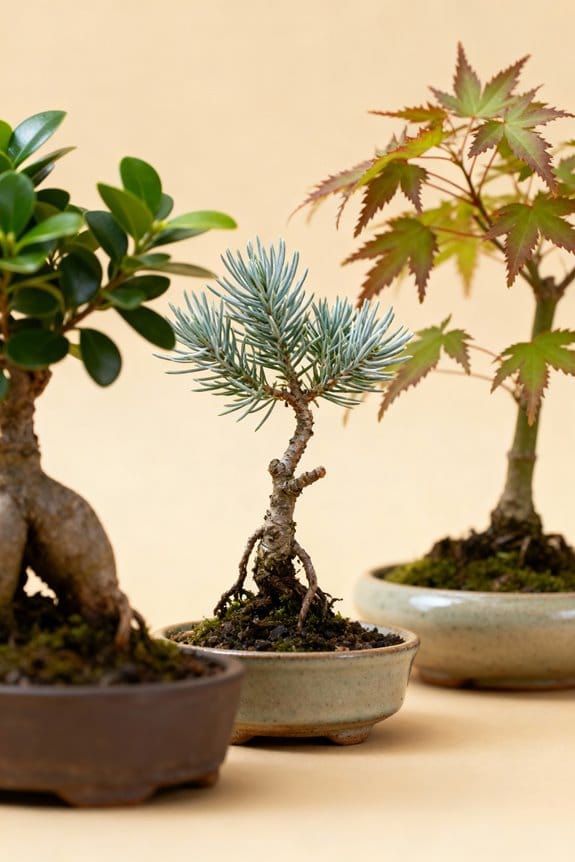
Understanding the unique needs of each tree species is essential for successful bonsai styling. Different species have specific requirements regarding time for repotting and styling. For instance, junipers can tolerate root work every 5 to 15 years, allowing ample time for recovery. Spruces, on the other hand, prefer maximum foliage to be established before root work, which can take 1 to 3 years. Pines, particularly white pines, should undergo foliage pruning in late summer, while root work aligns with their growth cycle. Deciduous species like elms thrive when repotted in spring, whereas the American larch should only be repotted while leafless, in late winter or early spring. Selecting the right bonsai soil is critical to support these species-specific needs. It’s important to consider the pH range of 5.5 to 7.0 for optimal nutrient availability in bonsai soil.
Preparing for Styling
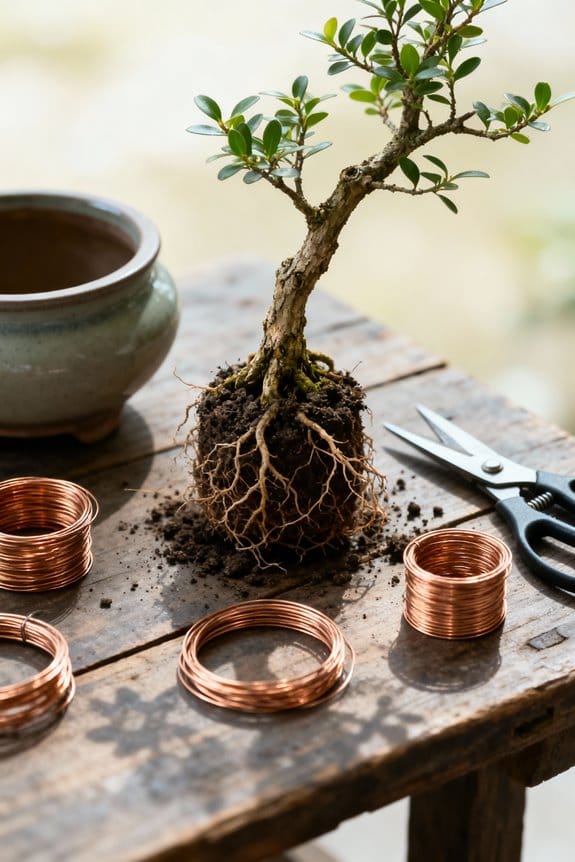
Preparing for bonsai styling starts with selecting healthy nursery stock. Look for trees exhibiting strong root systems and lush foliage. The health of the tree is essential for successful styling. Next, familiarize yourself with the specific needs of your species, as different plants have varying growth cycles. This knowledge will influence your timing and techniques when preparing for styling. Equip yourself with the right tools, including sharp pruning shears, shaping wire, and a suitable container. Verify these tools are clean and appropriate for the tree’s size. Remember to approach styling systematically, beginning with smaller branches. Exercising patience during this process will allow the tree to recover and thrive, leading to lasting beauty after dealing with the original soil. It is crucial to prioritize comprehensive sets that include essential tools like concave cutters and bonsai scissors to ensure a complete and effective gardening experience.
Removing Original Soil
When it comes to removing original soil from nursery stock, careful execution is essential to the health of the tree. Some species, especially conifers, can experience stress if bare-rooted too quickly. Understanding each species’ specific needs is vital before proceeding. Gradually removing original soil is preferred, as it minimizes shock and helps the tree adapt. Start by gently loosening the soil around the root ball. After evaluating the root system, verify there are enough healthy roots remaining to support recovery. Incorporating pumice and lava rock into your soil mix can ensure effective drainage and aeration, protecting the roots from rot. Once sufficient original soil is removed, replace it with high-quality, well-draining bonsai soil. This can encourage better root health and future growth while keeping the tree’s overall vigor in mind, promoting a smoother shift into its new environment.
Pruning Techniques for Shape
Pruning techniques play an essential role in shaping nursery stock into beautiful bonsai. An important thing to remember is to prioritize foliage reduction without over-pruning, as this can delay recovery. Begin by focusing on larger branches while using the “less is more” philosophy. This approach helps maintain enough foliage to support the tree’s health. It’s best to conduct significant pruning during the active growth phase in spring. Different species have unique needs; for instance, junipers require moderate leaf pruning to maintain structure. After completing the pruning process, allow the tree some recovery time. Continuously monitor its health, adjusting care routines like watering and sunlight based on the specific species’ requirements for ideal growth. Essential tools like containers, draining soil, pruning tools, and watering systems are crucial for healthy bonsai growth.
Timing Your First Styling
Early spring serves as the perfect time for the first styling of nursery stock into bonsai. During this period, trees display signs of new growth and vigor, making it easier to shape them effectively. It’s important to avoid heavy styling immediately after repotting, as this can stress the tree. Instead, allowing a growing season to pass guarantees the tree’s health before significant changes are made. Spring and early summer are the best times because the tree is in an active growth phase. Assess the health of your tree; if it appears weak or stressed, wait for more vigorous growth before styling. Understanding the growth patterns of your specific species will also help you determine the best timing for excellent results. To ensure prolonged use, it’s crucial to choose ergonomic designs that help minimize hand fatigue during lengthy styling sessions.
Observing Tree Health and Growth
Healthy growth is fundamental to the success of any bonsai journey. Monitoring a tree’s health is essential before styling begins, as weak trees may experience excessive stress from pruning and wiring. During the growing season, it is important to observe the tree’s growth pattern and vigor, focusing on its healthy foliage and root development. This evaluation helps gauge its readiness for bonsai styling. Different species respond uniquely to pruning, so studying each type is critical. A well-maintained tree typically recovers faster after styling compared to a stressed one. Additionally, regularly evaluating soil quality and drainage guarantees proper nutrient delivery, supporting the tree’s health and promoting successful bonsai development. Using color-changing indicators simplifies the process of ensuring adequate soil moisture, which is crucial for maintaining the tree’s health. Each step aids in fostering a robust bonsai companion.
Wiring and Repotting Considerations
When considering wiring and repotting nursery stock for bonsai, it is essential to assure that the tree is in a vigorous state. Healthy trees tolerate wiring better, while weak trees risk damage. Repotting should ideally occur in early spring or autumn, avoiding the four weeks before the autumnal equinox. To assure success, carefully remove the original soil, especially for sensitive species like conifers that struggle when bare-rooted. An effective alternative is slip-potting into a larger container, promoting growth with less stress. Additionally, monitoring the root system’s health is critical both before and after repotting. This careful attention helps assure a successful recovery, allowing the bonsai to thrive in its new environment. For optimal growth, consider using sustainably sourced ingredients like akadama and pumice in your soil mix.
Long-Term Care for Your Bonsai
Caring for a bonsai tree over the long term requires diligence and attention to various needs. Successful long-term care involves regularly monitoring soil moisture and ensuring a good balance of water, sunlight, and fertilizer. After a summer repot, it’s essential to observe recovery, which may take from 1 to 3 years. Patience is key, especially with sensitive species like junipers, as proper pruning should be spaced out over several years. Additionally, creating a suitable environment is crucial; consider seasonal temperature changes and protect your bonsai from harsh weather. Always prioritize the tree’s health; working on weak trees can lead to added stress. Incorporate seasonal maintenance techniques to prepare your bonsai for changes in environmental conditions and ensure its ongoing viability. By following these guidelines, enthusiasts can cultivate resilient and thriving bonsai.
Frequently Asked Questions
What Is the Rule of 3 in Bonsai?
The rule of 3 in bonsai emphasizes the significance of grouping elements in threes, enhancing compositional balance and visual interest. Its application promotes asymmetry, encouraging creativity while adhering to natural aesthetic principles, thereby enriching the overall design.
Can You Turn Any Sapling Into a Bonsai?
Not every sapling can be turned into a bonsai. The best saplings for this purpose include suitable species like junipers and pines, which adapt well to pruning and thrive in confined conditions essential for bonsai cultivation.
How to Give Shape to a Bonsai Tree?
Shaping a bonsai tree resembles sculpting a masterpiece; it requires patience. Employ precise pruning techniques and gentle bonsai wire to guide branches, fostering a natural appearance while ensuring the tree thrives through mindful care and gradual adjustments.
How to Style Your Bonsai?
To style a bonsai, one must focus on branch selection and apply appropriate pruning techniques. This includes gradual foliage reductions, clean cuts, and wiring branches carefully, all while respecting the tree’s natural growth pattern.