As an Amazon Associate, we earn from qualifying purchases. Some links on this site are affiliate links at no extra cost to you. Our recommendations are based on thorough research and editorial judgment.


Indoor Vs Outdoor Bonsai Trees: How to Choose the Right One

When choosing between indoor and outdoor bonsai trees, consider their specific needs. Indoor varieties, like Ficus or Serissa, thrive in lower light and warmer conditions. They require consistent watering and humidity. Outdoor species, such as Japanese Maple or Juniper, need full sunlight and a cold dormancy during winter. Assess your climate zone and the tree’s sunlight requirements to make the best choice. Understanding these factors can enhance your bonsai experience and lead to healthier growth outcomes.
Key Takeaways
- Assess your environment: indoor bonsai thrive in lower light and warmth, while outdoor species need full sun and seasonal conditions.
- Consider beginner-friendly options: Ficus and Chinese Elm are easier for indoor growers, while Japanese Maple is ideal for outdoor settings.
- Select species based on humidity: indoor bonsai require consistent humidity through misting, whereas outdoor varieties benefit from natural weather conditions.
- Evaluate the growth cycle: timing pruning and maintenance with the tree’s active growth periods ensures optimal health and appearance.
- Use specialized soil mixes: well-aerated bonsai soil is crucial for both indoor and outdoor trees to provide proper drainage and nutrients.
Understanding Bonsai Types
When exploring the world of bonsai trees, it is essential to understand the different types available. Bonsai can be generally categorized into indoor bonsai and outdoor bonsai trees. Indoor bonsai like Ficus and Hawaiian Umbrella Trees thrive in warmer, lower-light conditions, making them perfect for homes. They require less maintenance, allowing beginners to enjoy the art of bonsai more easily. On the other hand, outdoor bonsai species, such as Japanese Maple and Juniper, need full sunlight and specific seasonal care. These trees experience dormancy during winter, requiring protection from frost. Understanding the care requirements and environmental needs of each type is key to successful bonsai cultivation, ensuring they flourish in their respective habitats. Juniper bonsai trees, for instance, require direct sunlight to maintain their health and vigor, making them ideal for outdoor environments.
The Importance of Species Selection

Selecting the right bonsai species is fundamental for both beginners and experienced enthusiasts alike. The choice between species of tree is essential, as some thrive indoors while others flourish outdoors. For those cultivating indoors, tropical species like Ficus and Hawaiian Umbrella Tree are excellent options; they can handle lower light and warmer temperatures. Conversely, outdoor varieties such as Juniper and Japanese Maple need a cold dormancy period, making them unsuitable for indoor conditions. Beginners should consider species like Serissa foetida or Chinese Elm, as they are hardier and easier to manage. It’s important to use bonsai soil mixes designed specifically for these trees to ensure proper drainage and nutrient access. Understanding the specific care needs, including humidity and watering for each species, will greatly enhance the health and longevity of these beautiful trees.
Ideal Conditions for Indoor Bonsai

To guarantee the success of indoor bonsai, it is essential to provide ideal conditions that foster healthy growth. Most indoor species, like Ficus and Serissa, prefer bright, indirect light, so placing them near a south-facing window is effective. If natural light is insufficient, consider using grow lights. Maintaining humidity levels is also vital; regular misting or a humidity tray can help achieve this. Consistent watering is necessary, ensuring the soil remains well-drained but not overly saturated. Indoor bonsai should be kept in temperatures between 60°F and 75°F, avoiding drafts or extreme fluctuations. By creating this comfortable environment, indoor bonsai can truly thrive indoors, leading to beautiful and healthy plants that flourish over time. Live Dwarf Juniper Bonsai Trees are ideal for indoor settings as they symbolize tranquility and require bright spots with direct sunlight for optimal growth.
Outdoor Bonsai Requirements
Outdoor bonsai requirements are markedly different from those of their indoor counterparts. These outdoor trees thrive in full sunlight, needing ample exposure for healthy growth. A sunlit garden or balcony is ideal for placement. During winter, outdoor bonsai require a dormancy period, with nighttime temperatures ideally above 40°F to prevent stress. Selecting hardy species, such as Juniper or Japanese Maple, is vital, as these trees can withstand colder weather and varying precipitation. Additionally, consistent watering is necessary, as outdoor bonsai often dry out quickly due to wind and sun exposure. Providing shelter from extreme weather events, like heavy rain or strong winds, is essential to safeguard the physical integrity of these lovely outdoor bonsai trees. Regular maintenance and care are crucial to ensure the longevity and health of outdoor bonsai, including routine checks and proper storage of tools.
Assessing Your Climate Zone
Evaluating your climate zone is essential for selecting either indoor or outdoor bonsai trees. Different species have varying cold tolerances. For example, tropical bonsai thrive in warm conditions, while temperate varieties need a cold dormancy period. Knowing your USDA Plant Hardiness Zone helps identify which trees will flourish in your area. In colder regions, outdoor bonsai must be protected from frost, while tropical climates allow species to stay outdoors year-round. Additionally, monitoring seasonal temperature and humidity fluctuations provides insight into when to move outdoor bonsai indoors, ensuring their health during harsh winter months. Tailoring your choice to your climate zone can greatly enhance your bonsai journey. Optimal pH levels for bonsai soil range from 5.5 to 6.5, which is crucial for maintaining bonsai health and growth.
Light Needs for Different Species
Understanding the light needs of different bonsai species is essential for their healthy growth. Indoor species, such as Ficus and Hawaiian Umbrella Trees, typically thrive in bright, indirect light, though some can endure lower light conditions. It’s important to place them near windows or use supplemental lighting, as inadequate exposure can lead to poor growth and pest issues. Conversely, outdoor bonsai like Junipers and Pines require at least six hours of direct sunlight daily for ideal health. Tropical bonsai may need extra humidity and consistent lighting, making them suitable for indoor environments with sufficient light. Azaleas, for example, flourish in bright, filtered light during their blooming season, highlighting the diverse light needs across bonsai species. Bonsai enthusiasts might consider using coconut coir to enhance soil aeration and water retention, supporting the overall health and growth of their bonsai trees.
Watering Techniques and Soil Considerations
Watering bonsai trees requires careful attention to detail, as the right techniques greatly impact their health and growth. Each bonsai species has specific watering needs influenced by factors like pot size and indoor conditions. Typically, these trees should be soaked thoroughly when the topsoil feels dry. A well-aerated bonsai-specific soil mix, including akadama, pumice, and lava rock, promotes drainage and moisture retention. Verify pots have drainage holes to avoid root rot, which can occur from excess water. During warmer months, bonsai may need more frequent watering, while winter typically requires less. Always adjust practices according to the specific species, since tropical varieties often demand different moisture levels than hardier outdoor trees. Regularly observing signs of over-fertilization such as leaf yellowing and wilting can help ensure that your watering and fertilization practices are balanced effectively.
Seasonal Care for Bonsai Trees
Seasonal care for bonsai trees is an essential part of their maintenance, as each season brings unique challenges and requirements. For tropical species such as Calliandra, it is vital to keep them outdoors from mid-spring to mid-fall, where they can receive adequate sunlight and warmth. As fall approaches and temperatures drop below 40°F, bonsai should be brought indoors to prevent stress or damage. During the winter’s dormancy period, watering frequencies decrease; less water is needed than in the growing season. The indoor environment requires attention too, as heating systems can dry the air. Regular misting helps maintain humidity levels, ensuring healthy growth for indoor bonsai during the colder months. Understanding the growth cycles of trees is crucial for timing pruning and other care activities to support both novice and experienced growers.
Pruning Practices for Healthier Growth
Pruning practices play an essential role in guaranteeing that bonsai trees flourish and maintain their aesthetic charm. Structural pruning is fundamental for shaping the bonsai and is best done during repotting or training sessions when growth is active. Regular pruning during spring promotes healthy growth and maintains the shape of bonsai beech trees. Maintenance pruning, performed in late spring or early summer, involves trimming new growth to refine the tree’s look and promote denser foliage. Regular pruning improves healthier growth by allowing sunlight to reach all parts of the tree while enhancing air circulation. To guarantee effective pruning, use sharp, clean tools to minimize damage and disease risk. Remember to remove no more than 30% of foliage in a single session to avoid stressing the tree and to maintain its health.
Environmental Factors Impacting Growth
Understanding how environmental factors influence bonsai trees can greatly enhance their health and growth. Indoor bonsai often struggle with low light levels and dry air from heating systems, which can impede their development. In contrast, outdoor bonsai thrive in natural sunlight and benefit from higher humidity, fundamental for strong leaf growth. It’s important to take into account species-specific needs; for example, tropical bonsai require warmth during winter, while temperate varieties need a cold dormancy period. Additionally, air circulation and humidity levels are essential as they help prevent pests and diseases. Aeration stones can also play a significant role in ensuring proper airflow and drainage for bonsai trees, promoting overall plant well-being. As a result, when selecting indoor or outdoor bonsai, one must align their characteristics with these environmental factors to promote lasting vitality and flourishing growth.
Recommendations for Beginners
For those new to the rewarding hobby of bonsai, selecting the right tree can make all the difference. Beginners should consider indoor tropical species like Ficus or the Hawaiian Umbrella Tree, as they are more forgiving and simpler to care for. Understanding the light requirements is essential; these trees typically thrive in bright, indirect light or full sun. It’s important to choose the right pot with adequate drainage holes to prevent overwatering. Researching specific care needs, such as watering schedules and humidity levels, will help maintain ideal conditions. Additionally, beginners must regularly check for pests and diseases, as ongoing attention is critical to keeping their bonsai healthy and vibrant.
Frequently Asked Questions
Is It Better to Keep a Bonsai Tree Inside or Outside?
It is generally better to keep a bonsai tree outside, as outdoor climate provides natural sunlight and fresh air. Indoor lighting often lacks the necessary intensity, leading to potential health issues for the bonsai tree.
What Is the Rule of 3 in Bonsai Trees?
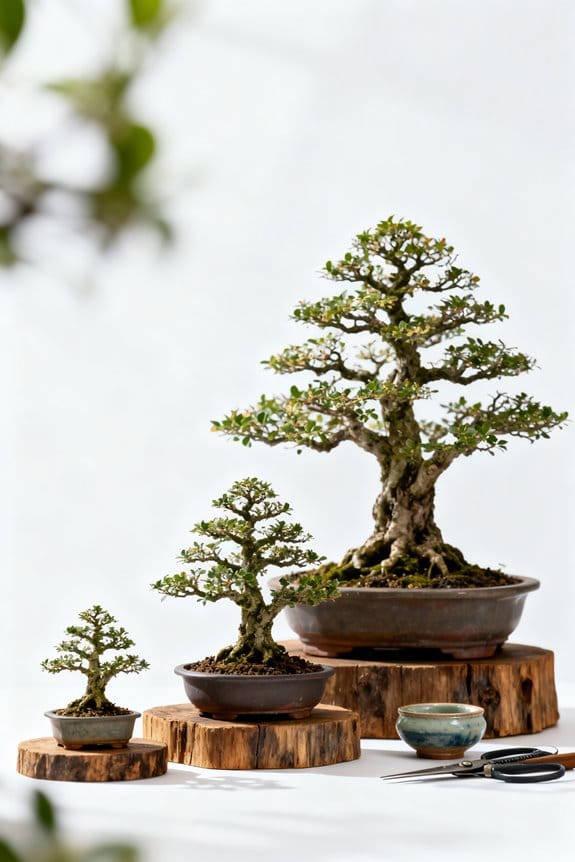
The Rule of 3 in bonsai design promotes visually appealing arrangements using three trees of varying heights. Effective pruning techniques and proper watering frequency enhance aesthetics, fostering a dynamic, harmonious composition that engages viewers.
How Do I Know if My Bonsai Tree Is Indoor or Outdoor?
To determine whether a bonsai species is indoor or outdoor, one must consider environmental factors like origin and care requirements. Tropical species thrive indoors, while temperate varieties flourish in seasonal outdoor conditions.
What Is the Golden Rule of Bonsai?
The golden rule of bonsai emphasizes replicating the tree’s natural environment, ensuring bonsai aesthetics flourish through proper light, adequate drainage, and effective pruning techniques tailored to each species, promoting health and ideal growth throughout the seasons.