As an Amazon Associate, we earn from qualifying purchases. Some links on this site are affiliate links at no extra cost to you. Our recommendations are based on thorough research and editorial judgment.

Using Moisture Meters and Ph Meters in Bonsai Care

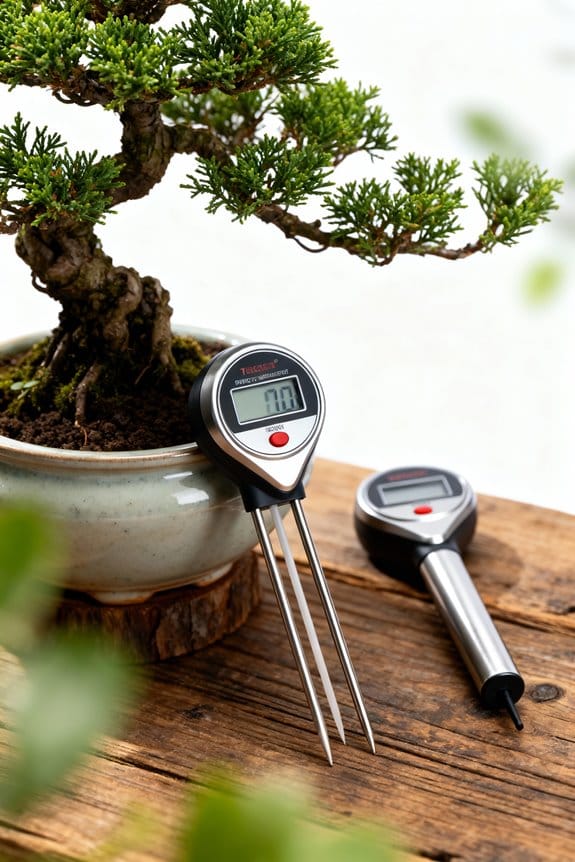
Using moisture and pH meters is vital for bonsai care. Moisture meters help prevent over-watering or under-watering by measuring soil moisture levels. pH meters determine the soil’s acidity, important for nutrient uptake. To use them, insert the probe three-quarters deep into the soil and wait a minute for accurate readings. Regularly check and clean the probes for the best results. By mastering these tools, you’ll guarantee your bonsai thrives, and more tips await to enhance your techniques.
Key Takeaways
- Soil moisture meters measure moisture levels on a scale of 1 to 10, essential for scheduled watering of bonsai plants.
- pH meters help maintain optimal soil conditions, ensuring acidity levels between 5.5 to 6.5 for healthy bonsai growth.
- Choose moisture meters with appropriate probe length and strength to suit your bonsai’s pot size and soil type.
- Regularly calibrate pH meters and clean probes after use to ensure accurate readings and prevent contamination.
- Combine meter readings with manual checks, like finger assessments, for a comprehensive approach to bonsai care.
Understanding Soil Moisture Meters
Soil moisture meters are essential tools for bonsai care, helping gardeners maintain the right watering schedule. These devices measure soil moisture levels on a scale of 1 to 10, indicating when to water bonsais. Available in both analog and digital designs, the digital moisture meter often offers more precise readings and can sometimes measure pH and light levels. To use a soil moisture meter, insert the probe about ¾ of the way into the soil and wait for approximately one minute to get an accurate reading. Cleaning the probe after each use is crucial, as is avoiding prolonged contact with the soil to protect both the meter and the plant’s roots. Additionally, it’s important to clean probes regularly to ensure accurate readings and prolong the device’s lifespan. Gardeners can combine readings with manual checks for better accuracy.
Benefits of Using Soil Moisture Meters in Bonsai Care

Using soil moisture meters offers numerous benefits for bonsai care, making it an invaluable tool for both beginners and experienced gardeners. These devices measure moisture levels on a scale from 1 to 10, helping caretakers determine the best watering schedules for their plants. By using moisture meters, the risk of over-watering or under-watering is greatly reduced, which are common causes of bonsai failure. The quick readings, usually within 60 seconds, allow busy gardeners to monitor multiple plants efficiently. Ensuring that soil remains at the ideal moisture level, around level 3, keeps bonsai healthy. Additionally, combining moisture meter use with techniques like finger testing enhances accuracy in evaluating plant moisture needs, resulting in thriving bonsai trees. Many advanced detection technology models provide precise readings quickly, enhancing reliability in plant maintenance.
Key Features to Consider When Choosing a Moisture Meter
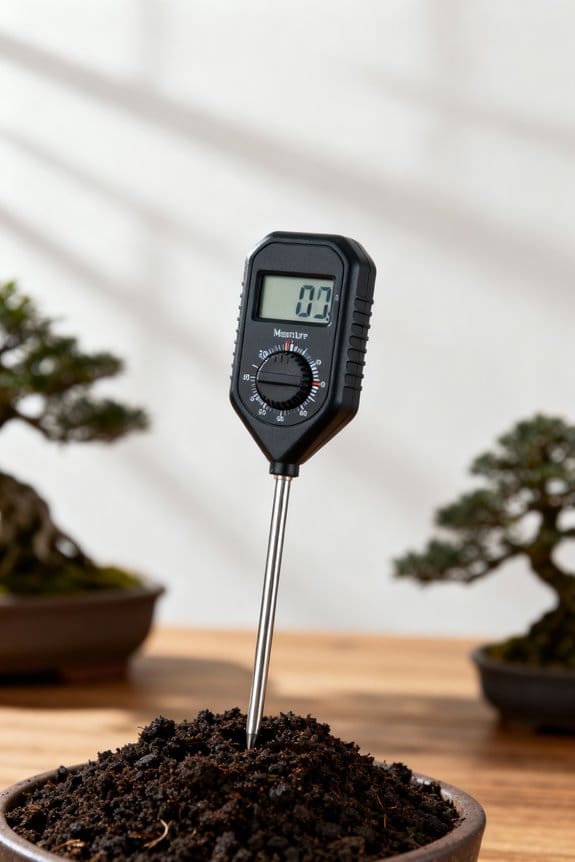
When selecting a moisture meter for bonsai care, it is crucial to take into account several key features to assure effective plant monitoring. First, consider the probe length; shorter probes work better in smaller bonsai pots to avoid damaging roots. Next, think about the type of meter. Analog models are often more affordable and don’t require batteries, while digital meters provide precise readings. Make certain the probe’s strength can handle hard or clay-like soils for accurate evaluations. Additionally, a quality three-in-one moisture meter can measure moisture, pH levels, and light exposure. Finally, prioritize accuracy; advanced models yield reliable results, reducing the risk of over or under-watering your bonsai. Soil moisture meters can also provide valuable data such as soil pH and temperature, enhancing the overall understanding of the bonsai’s growing environment. With these features in mind, gardeners can find the best moisture meters available.
Types of Soil Moisture Meters
Various types of soil moisture meters are available to help bonsai enthusiasts monitor their plants effectively. Analog models feature color-coded displays, offering instant results for quick assessments of bonsai soil. In contrast, digital meters provide precise numerical readings, often indicating moisture levels on a scale from 1 to 10. Capacitive moisture meters detect moisture by measuring dielectric permittivity, ensuring accurate readings without damaging roots. Additionally, three-in-one moisture meters combine moisture, pH, and sunlight readings, which are ideal for beginners seeking extensive monitoring tools. Shorter probe lengths are recommended for bonsai pots, ensuring easy insertion. Many affordable options, including some analog meters, are battery-free, making them accessible and convenient for effective bonsai maintenance. Regular misting and monitoring of soil moisture are crucial for maintaining vibrant moss in bonsai care.
Step-by-Step Guide on How to Use a Soil Moisture Meter
A simple step-by-step guide makes it easy for bonsai enthusiasts to use a soil moisture meter effectively. First, gently insert the probe about ¾ into the soil or touch the root ball. Next, wait approximately one minute for the meter to display a reading. The scale will indicate levels from 1 (bone-dry) to 10 (wet). For best results, clean the probe after use and avoid leaving it in the soil to prevent damage. Consistently take readings from the same spot in the pot to create a reliable moisture pattern for your bonsai trees. If your moisture meter includes a three-in-one function, remember to set it to moisture measurement before use for accurate readings. Additionally, using durable models can reduce long-term expenses by preventing frequent replacements and justify a slightly higher initial investment.
Best Soil Moisture Meters of 2023
Choosing the right soil moisture meter is crucial for maintaining the health of bonsai trees. The XLUX Soil Moisture Meter offers an affordable analog option, delivering instant results with a color-coded display. For those seeking digital precision, the ECOWITT Soil Moisture Tester features a customizable LCD screen, ideal for medium-sized bonsais. Beginners might appreciate the IPPINKA Aquameters, which utilize color-changing indicators, although they sacrifice some accuracy. Experienced gardeners often prefer the General Tools Precision Digital Soil Moisture Meter, known for its instant and accurate readings. Each moisture meter helps busy gardeners effectively manage watering, reducing the risk of bonsai failure due to improper soil moisture levels. Proper selection guarantees vibrant, healthy bonsais thrive in every environment. Additionally, incorporating a digital soil thermometer ensures that bonsai plants stay within their optimal temperature range of 65F to 75F, enhancing overall plant care.
The Role of Ph Meters in Bonsai Care
Maintaining the perfect environment for bonsai trees involves more than just monitoring soil moisture; understanding soil pH is equally important. pH meters play an essential role by measuring the acidity or alkalinity of the soil. Most bonsai species prefer a slightly acidic pH range of 5.5 to 6.5. When the pH is too alkaline, it can hinder nutrient uptake, which may lead to poor growth and deficiencies. As a result, regular testing with a pH meter allows gardeners to adjust soil composition and fertilization as needed. Many pH meters are user-friendly and provide quick numeric readouts, making them suitable for both novice and experienced bonsai enthusiasts. Monitoring pH alongside moisture levels guarantees a healthier environment for bonsai trees. Investing in a reliable bonsai multi-function meter not only enhances gardening success but also simplifies the care process by providing crucial data for plant health.
Importance of Maintaining Optimal Soil Ph Levels
Ideal soil pH levels are important for the health of bonsai trees, as they directly affect nutrient availability. Most bonsai species thrive in slightly acidic soil, typically between 5.5 and 6.5. If the pH is too high, it can hinder nutrient absorption, leading to deficiencies that affect growth. Regularly using a pH meter allows bonsai caretakers to monitor soil acidity effectively. If readings indicate alkaline conditions, amendments like sulfur can be used to lower pH levels. Maintaining ideal pH is significant not only for nutrient intake but also for preventing issues like root rot. A balanced environment that includes proper pH and moisture levels supports strong and healthy bonsai development, promoting longevity and health in these beautiful trees. Conifer species need well-draining mixes to prevent overwatering and ensure optimal growth.
Tips for Accurate Moisture and Ph Readings
Monitoring soil moisture and pH levels is fundamental to the health of bonsai trees. To achieve accurate moisture readings, insert the moisture meter probe about ¾ deep into the soil. Allow it to stabilize for about one minute before checking the reading. For pH levels, clean the probe after each use to prevent contamination. Regularly calibrate the pH meter following the manufacturer’s guidelines to guarantee reliable results. Since moisture can differ by depth, take readings at multiple levels to better understand moisture availability for your plants. Combining these readings with the finger test and observing your bonsai’s leaves can greatly enhance care, making certain your tree thrives in its environment. It is also important to monitor humidity levels, as most bonsai prefer conditions between 40% and 60% RH, to ensure optimal growth and health.
Common Mistakes When Using Moisture and Ph Meters
Using moisture and pH meters correctly is crucial for bonsai care, yet many gardeners make common mistakes that hinder their effectiveness. A frequent error is failing to insert a moisture meter deep enough into the soil, resulting in inaccurate readings. Additionally, users often neglect to clean the probes before each use, leading to contaminated results. Another common mistake is assuming all soil types have the same moisture and pH requirements. Many gardeners also repetitively measure on saturated soil, which can provide misleading data. Finally, relying solely on the meters without considering the plant’s appearance and environmental factors can hinder care. To achieve a great deal of success, it’s essential to avoid these pitfalls and embrace thorough monitoring techniques. Regular monitoring for pests is also crucial in maintaining the health of bonsai trees, as it helps in early identification and effective management of any issues.
Alternatives to Moisture and Ph Meters
How can bonsai enthusiasts guarantee their plants receive the right amount of water without relying solely on moisture and pH meters? One effective method is the finger technique, which involves digging into the soil to check moisture levels without using any tools. Weighing the pot is another easy-to-use alternative, as a lighter pot indicates dry soil, while a heavier one suggests moisture. Additionally, inserting bamboo skewers into the soil can help; if they change color, it shows moisture presence. Similarly, using chopsticks for a tactile assessment lets you feel if they are damp or dry. Regularly observing plant appearance also enhances water management, creating a more holistic approach to bonsai care.
Enhancing Your Bonsai Care Routine With Monitoring Tools
While many bonsai enthusiasts enjoy the art of caring for their plants, incorporating monitoring tools can greatly enhance their care routine. Moisture meters, for instance, offer quick and accurate readings of soil moisture levels on a scale from 1 to 10. This helps gardeners avoid the pitfalls of over-watering and under-watering. Meanwhile, pH meters assess soil acidity, ensuring it remains ideal for nutrient absorption. A three-in-one meter could simplify monitoring, combining moisture, pH, and light levels in one device. Regularly checking moisture levels promotes healthy root conditions and overall plant vigor. By using moisture and pH meters, bonsai caregivers can make informed adjustments to their watering schedules and soil amendments, ensuring their trees thrive.
Frequently Asked Questions
What Level Should a Moisture Meter Be on a Bonsai Tree?
A moisture meter reading around 3 is ideal for a bonsai tree, indicating perfect moisture levels for healthy root activity. Maintaining this level enhances bonsai health, while avoiding extremes prevents stress or root rot complications.
What Is the Rule of 3 on a Bonsai Tree?
The Rule of 3 in bonsai care emphasizes watering frequency of three times weekly, promoting root health. It also advocates for three hours of light exposure daily and fertilization every three weeks during the growing season.
What Is the Common Error When Using a Moisture Meter?
Common moisture meter errors arise from insufficient probe depth and neglecting stabilization time, leading to incorrect soil readings. Additionally, using the meter right after watering can result in an underestimation of soil moisture levels.
What Ph Level Is Good for Bonsai Trees?
An ideal acidity level for bonsai soil ranges between 5.5 and 6.5 pH. This range enhances nutrient availability, fostering robust growth and strength in bonsai trees while preventing deficiencies associated with incorrect pH levels.


