As an Amazon Associate, we earn from qualifying purchases. Some links on this site are affiliate links at no extra cost to you. Our recommendations are based on thorough research and editorial judgment.

How Long Does It Take to Shape a Bonsai Tree

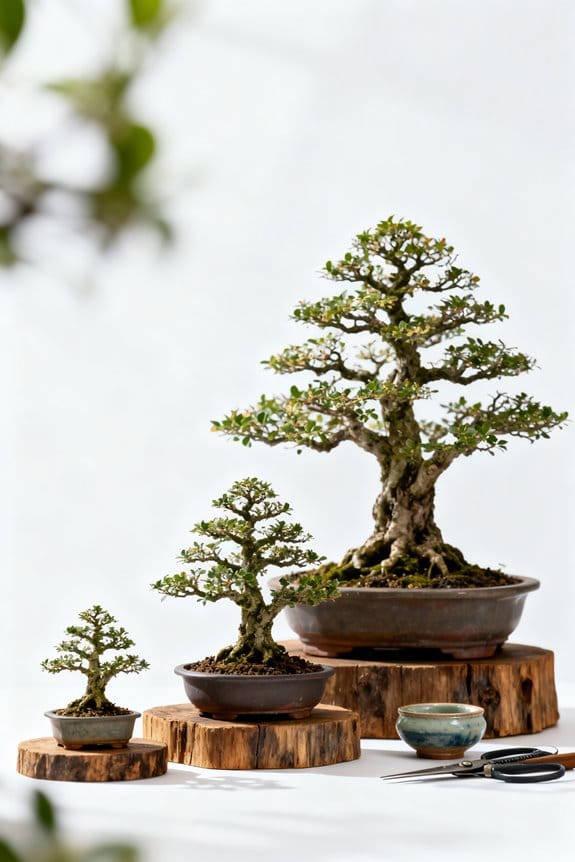
Shaping a bonsai tree usually takes between three to five years for noticeable results. This timeframe can vary due to the tree’s species and health. Fast-growing varieties, like junipers, may shape quicker than slower species. Regular maintenance pruning, two to four times a year, and proper techniques such as wiring can enhance growth. Environmental factors like light and humidity also play a significant role. With care and attention, you will discover the fascinating world of bonsai shaping.
Key Takeaways
- Shaping a bonsai tree usually takes three to five years for significant results, varying by species and growth rates.
- Fast-growing species like junipers can shape more quickly compared to slower-growing varieties.
- Regular maintenance pruning two to four times a year accelerates the shaping process.
- Healthier and older trees adapt more readily to shaping techniques, influencing overall growth and development.
- Environmental conditions such as light and humidity significantly affect the shaping timeline and growth rates.
Factors Influencing Bonsai Shaping Time
The shaping of a bonsai tree involves several key factors that can greatly influence the duration of the process. Different species of bonsai trees respond at varying rates; for instance, fast-growing junipers shape quickly, while slower species may take years. The initial shaping usually requires three to five years before significant results are visible. Maintenance-pruning and wiring techniques can hasten the shaping process but necessitate consistent care throughout the growing season. Additionally, the health of the tree plays an essential role—healthier, older trees adapt more readily. Environmental factors, including light, humidity, and soil conditions, also affect growth rates, ultimately impacting how quickly a bonsai can reach its desired form. Using a soil moisture meter ensures optimal watering, which promotes healthy growth and can accelerate the shaping process.
The Role of Pruning in Bonsai Development
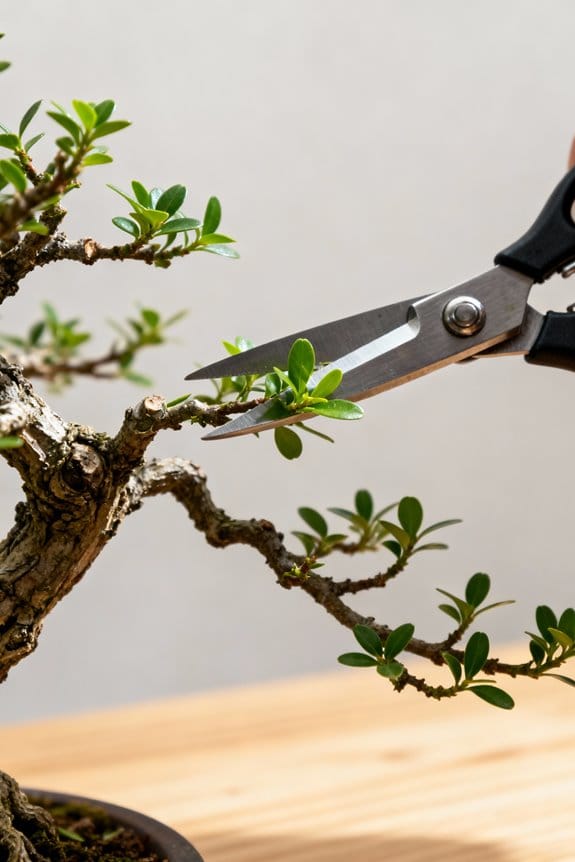
Pruning plays a pivotal role in the development of a bonsai tree by shaping its structure and enhancing its health. To maintain the desired shape, bonsai enthusiasts should prune regularly, with maintenance pruning recommended two to four times a year. This process encourages dense foliage and promotes inward growth. Structural pruning, focused on larger branches, is best conducted in early spring or late autumn, laying the foundation for the tree’s shape. Observing how the tree species reacts to pruning is essential; signs of recovery may include new buds emerging. Mastering pruning techniques with appropriate tools and specific guidelines guarantees peak results, allowing the bonsai to flourish and develop its beautiful form efficiently. Additionally, incorporating unique craftsmanship in the choice of bonsai animal figurines can enhance the overall aesthetic and cultural ambiance of the bonsai display.
Recommended Products
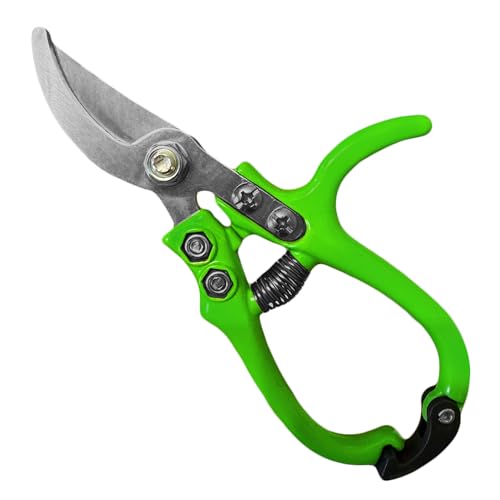
HIGH CARBON STEEL BLADE: Modern ergonomic design, with a high carbon steel blade for extra sharp cuts and extended durability. Perfect for trimming, deadheading, pruning, and snipping plants and bonsai!

These traditional bonsai scissors are designed for accurate trimming and deadheading that won't harm your plants - ideal for bonsai pruning, cutting branches and roots, and anything where quick snips and clean cuts are a must!

CONTENTS Comes with 30 Trunk Splitter Tools
Techniques for Effective Bonsai Shaping
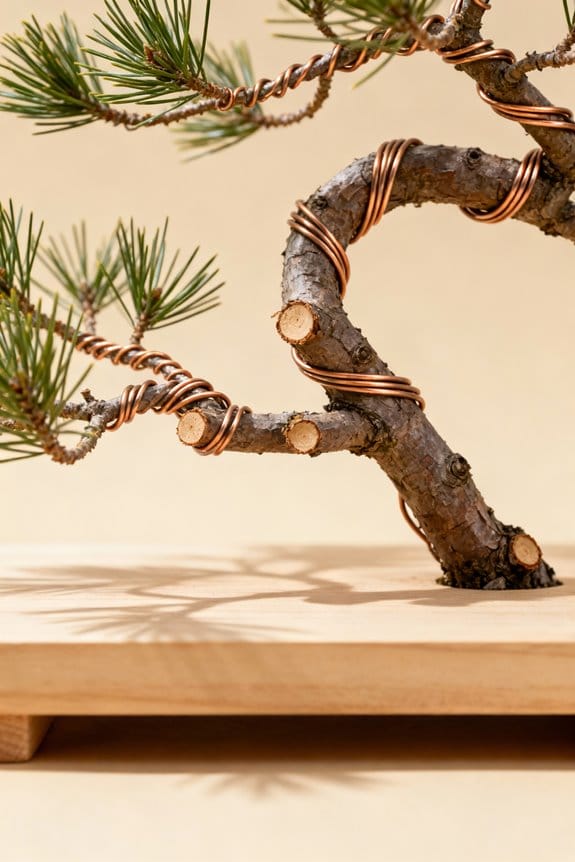
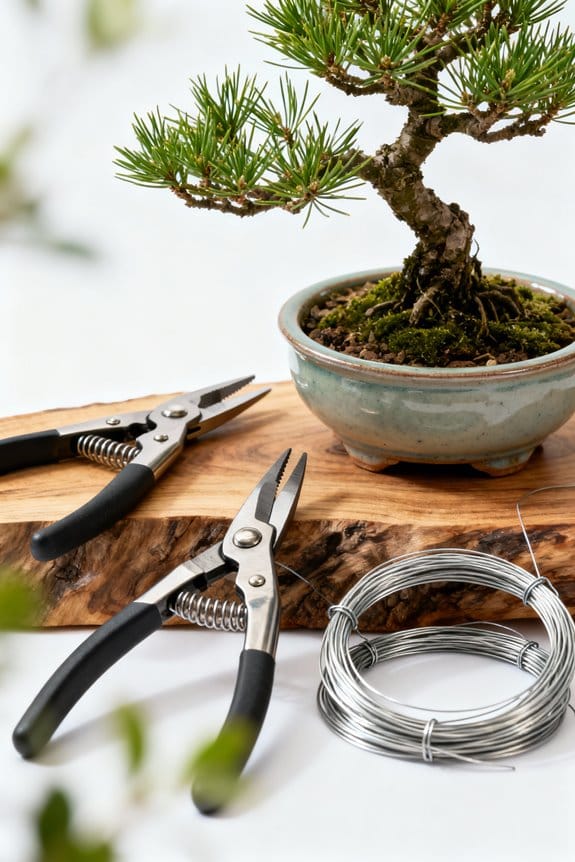
Shaping a bonsai tree requires a combination of techniques that contribute to its health and aesthetic appeal. To guarantee a well-formed tree, it’s essential to prune it regularly, typically two to four times a year. Leading bonsai experts recommend structural pruning in early spring or late autumn to define the shape of a bonsai by removing larger branches. Wiring techniques are also vital; they allow for bending and repositioning branches, although it may take several months for branches to set in their new positions. Maintenance-pruning can include defoliation in summer, helping to enhance the tree’s ramification and refine the existing shape. Additionally, visual learning in bonsai care can significantly aid beginners, as illustrated guides provide diagrams that simplify complex shaping techniques. Understand species-specific guidelines for the best results with various shaping techniques.
Recommended Products

EASY EFFICIENT CUTTING: Ideal for pruning and trimming flowers, stems, and light branches up to 5/8 in. thick. High Carbon Steel Blade with nonstick protective coating maximizes cutting effectiveness to cut cleanly every time without crushing plant material. Great gardening shears that you’ll be proud to own or gift!

HARDENED STAINLESS STEEL BLADES: Designed with straight sharp blades for precision snips and cuts, these gardening scissors are great for pruning fruit trees, bonsai, and thorny bushes. Pruning shears are durable, sharp, and come with an easy safety lock for storage.

Integrated LED indicator indicates the battery status
Patience and Persistence in Bonsai Care
Creating a beautiful bonsai tree is not just about following techniques; it also demands patience and persistence. To give the tree its basic shape, one must understand that shaping takes time, often years. Regular, rigorous pruning helps to give the tree structure and encourages growth. This process not only shapes the young tree but also requires ongoing efforts to maintain and refine its form. Surface roots must be exposed with care, and new growth should be closely monitored after each pruning. These changes can take weeks to months to manifest, emphasizing the need for patience and persistence. Mindfulness practices encouraged through bonsai cultivation facilitate personal growth and deeper nature connection. Hence, bonsai care is a rewarding journey, where dedication leads to spectacular results over time.
Learning From Experience in Bonsai Journey
As one begins the bonsai journey, understanding that learning is an ongoing process can be essential for success. Engaging in Bonsai Courses or exploring online Bonsai resources allows beginners to learn from leading experts. Practicing various pruning techniques helps develop skills and fosters confidence. For instance, maintenance-pruning can shape a tree effectively or allow it to grow new leaves. Observing changes in one’s first bonsai is invaluable, as it informs future styling and care strategies. Each milestone, like successfully shaping a tree, builds proficiency. Additionally, experimenting with different approaches can lead to important lessons. By adopting a mindset of continuous improvement, aspiring bonsai artists can enhance their skills and deepen their appreciation for this intricate art form. To further support the growth of a bonsai, it’s crucial to monitor humidity levels and adjust care practices as needed.
Frequently Asked Questions
When Should I Start Shaping My Bonsai Tree?
Shaping techniques should commence after a bonsai tree establishes itself, typically by two to three years. Ideal timing involves seasonal considerations for pruning methods and shaping tools, tailored to the specific growth stages and species characteristics.
What Is the Rule of 3 on a Bonsai Tree?
The Rule of 3 in bonsai emphasizes balanced branch positioning, proportional leaf size, and effective trunk thickness. It guides seasonal shaping, root pruning, and container selection, enhancing overall bonsai aesthetics through natural harmony and stability.
What Is the Golden Rule of Bonsai?
The golden rule of bonsai emphasizes balance between root systems and foliage. Successful bonsai techniques involve appropriate pruning methods, consistent watering schedules, suitable soil types, fertilizer basics, effective wiring tips, and diligent pest management for ideal health.
How to Shape a Bonsai Tree for Beginners?
To shape a bonsai tree, beginners should explore style selection guidance, employ bonsai pruning techniques, utilize wire training methods, guarantee proper soil composition, gather necessary tools, and avoid common mistakes, embracing seasonal care tips for ideal growth.