As an Amazon Associate, we earn from qualifying purchases. Some links on this site are affiliate links at no extra cost to you. Our recommendations are based on thorough research and editorial judgment.

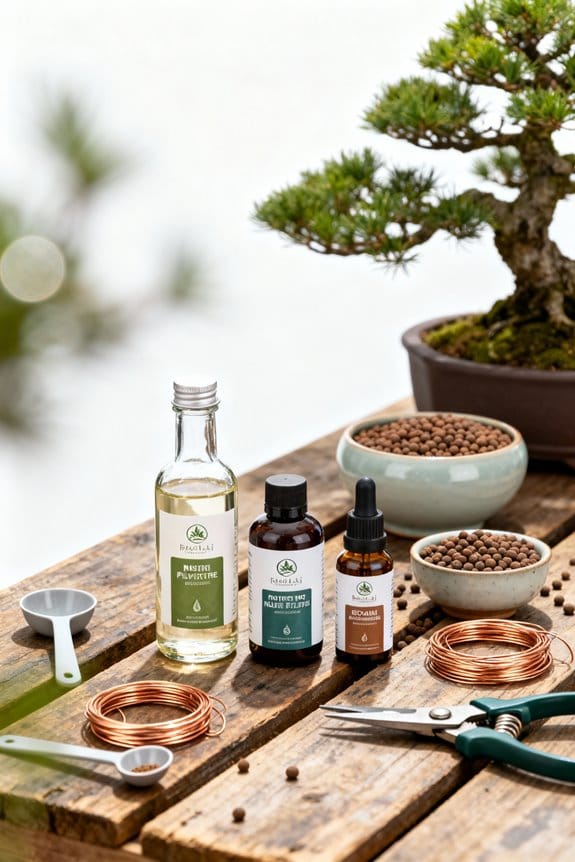
Guide to Bonsai Fertilizers and Different Application Methods

Bonsai trees require regular fertilization to thrive in their small pots, gaining essential nutrients for growth and vigor. Fertilizers come in two main types: liquid for quick nutrient delivery and solid for gradual release. Apply balanced fertilizers in spring when new growth appears and adjust to higher nitrogen in summer. Avoid feeding in winter dormancy. Observing your bonsai’s response to different fertilizers will sharpen your fertilization skills. Continuing to explore will enhance your understanding of these techniques.
Key Takeaways
- Select between organic and inorganic fertilizers based on your bonsai’s needs, considering nutrient release speed and potential for over-fertilization.
- Use balanced fertilizers like 20-20-20 in spring, high nitrogen in summer, and lower nitrogen in fall to optimize growth.
- Apply liquid fertilizers every 2-4 weeks or solid fertilizers every 4-6 weeks, ensuring proper dilution to prevent root burn.
- Begin fertilizing in early spring when new growth appears and stop fertilizing outdoor bonsai after the leaves fall.
- Monitor bonsai health and adjust fertilizer types and application frequency based on seasonal changes and growth responses.
Why Bonsai Trees Need Fertilizer
Bonsai trees, like any plants, require specific nutrients to thrive, especially given their unique growing conditions. These trees are often confined to small pots, which can deplete nutrients quickly. Regular fertilization helps sustain energy for essential activities such as pruning and wiring. Most bonsai trees benefit from a consistent feeding schedule during their growing season, important for promoting vibrant foliage and robust health. Key nutrients include Nitrogen (N), which supports leaf and stem growth; Phosphorus (P), critical for root development and flowering; and Potassium (K), necessary for overall vigor. Established bonsai typically need fertilizer every two years, while younger trees may require it every few weeks, particularly as they start budding in early spring or throughout the year for tropical varieties. To ensure optimal results, biweekly applications are recommended during the growing season, especially when using liquid fertilizers.
Understanding Bonsai Fertilizer Components
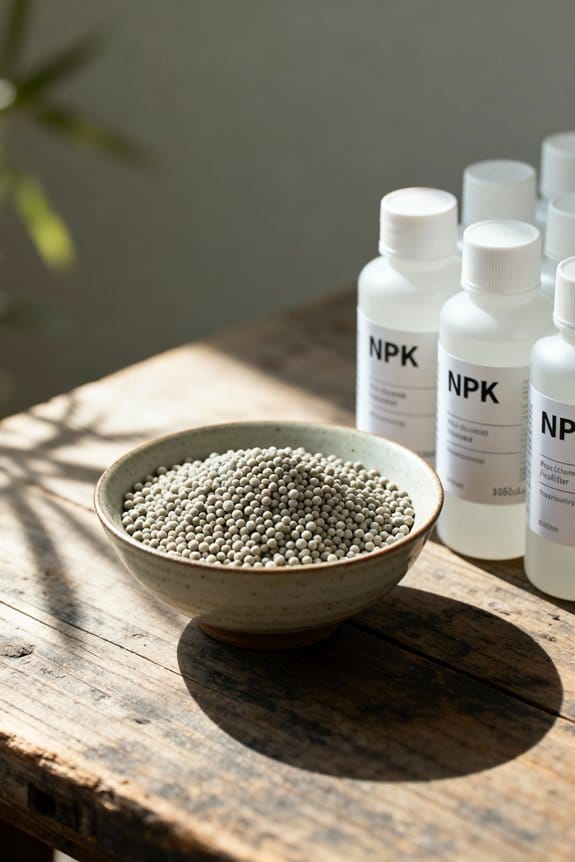
Understanding the components of bonsai fertilizer is essential for maintaining healthy trees. Bonsai fertilizers contain key nutrients: Nitrogen (N), Phosphorus (P), and Potassium (K). Each of these macronutrients supports specific growth aspects in bonsai species, evidenced by the N-P-K ratio found on fertilizer packaging. Organic fertilizers, like fish emulsions and compost, provide slow-release nutrients, encouraging strong root development over time. In contrast, liquid fertilizers deliver nutrients quickly for immediate growth needs. For mature trees, a balanced fertilizer such as 20-20-20 is often recommended. Younger trees, focusing on foliar development, may require higher nitrogen levels. By understanding these components, bonsai enthusiasts can guarantee their trees thrive and flourish. Slow-release fertilizers effectively maintain stable nutrient levels in the soil, enhancing absorption and minimizing the risk of nutrient burn, leading to thriving bonsai plants across diverse environments and growth stages.
Types of Bonsai Tree Fertilizer

Which types of fertilizers are best suited for bonsai trees? Bonsai fertilizers fall into two main categories: organic and inorganic. Organic fertilizers, such as fish emulsion and kelp-based products, offer a slow release of nutrients, benefiting long-term Bonsai care. They typically take 2 to 12 weeks to fully convert into soluble forms, making them ideal for consistent nourishment. In contrast, inorganic fertilizers, like Miracle-Gro, provide immediate nutrient availability for rapid plant uptake. However, their quick results can lead to over-fertilization if not monitored. Common nutrient ratios, such as 20-20-20 or 30-10-10, direct the balance of nitrogen, phosphorus, and potassium. A balanced nutrient ratio like 3-1-2 is recommended for various bonsai species’ needs, providing essential macro and micronutrients for vibrant growth. Understanding application rates is essential for optimizing growth based on the specific needs of the bonsai tree.
Liquid Fertilizers
Liquid fertilizers offer an efficient solution for providing bonsai trees with essential nutrients quickly. These fertilizers are usually diluted in water, ensuring even distribution and reducing the risk of root burn. For ideal results, the application frequency for liquid fertilizers varies from every two to four weeks, particularly for indoor tropical bonsai, helping maintain consistent nutrient availability. Many liquid fertilizers feature balanced N-P-K ratios, tailored to meet the specific growth stages and needs of various bonsai species. Additionally, foliar feeding is a popular method, as it delivers nutrients directly to the leaves. This technique is especially beneficial during the active growing season when trees need quick absorption of nutrients for healthy growth. Understanding the importance of visual appeal in bonsai books can enhance appreciation for this art form, motivating enthusiasts to invest in proper care and techniques for their trees.
Solid/Pellet Fertilizers
Solid or pellet fertilizers present an effective way to nourish bonsai trees through a slow-release mechanism. These solid fertilizers gradually break down on the soil surface as the bonsai is watered, providing essential nutrients over time. Many formulations include a balanced N-P-K ratio, ensuring the tree receives necessary macronutrients suitable for various species. During the growing season, these fertilizers require application every 4-6 weeks, depending on the bonsai’s specific needs. However, caution is essential; applying these fertilizers at half strength initially helps prevent root burn, particularly for sensitive species. To achieve the best results, gardeners should explore different application methods while closely monitoring their bonsai’s health and growth throughout the process. Slow-release granular fertilizers provide balanced nutrient delivery, which is crucial for maintaining the health and vitality of bonsai trees.
Organic vs. Synthetic Fertilizers
Understanding the differences between organic and synthetic fertilizers can considerably influence the health of bonsai trees. Organic fertilizers, such as compost and fish emulsion, provide a slow nutrient release, fostering sustained nourishment essential for healthy growth. They also enhance soil health by improving nutrient absorption with beneficial microorganisms. Conversely, synthetic fertilizers like Miracle-Gro offer quick nutrient availability, which can spur rapid growth or recovery. However, using them requires careful management to prevent over-fertilization. When establishing a fertilization routine, consider the specific needs of the bonsai species. Some may thrive on the gradual nutrient release of organics, while others may benefit from the immediate support of synthetics. A balanced approach can optimize bonsai health, merging both fertilizer types effectively. Slow-release fertilizers prevent root burn and are particularly suitable for nourishing bonsai.
When to Fertilize Your Bonsai
When deciding the best time to fertilize a bonsai, timing plays an essential role in promoting healthy growth. Fertilization should begin in early spring, as new growth appears, and continue until mid-fall. For outdoor temperate bonsai, feed them when buds swell in spring, stopping after the leaves fall. Indoor tropical bonsai, however, benefit from fertilizing every 2-4 weeks throughout the year. Use balanced fertilizers in spring, higher nitrogen in summer, and lower nitrogen in fall to aid root growth before the dormant season. Slow-release fertilizers typically necessitate application every six months, which can be ideal for reducing maintenance. Avoid fertilizing during winter dormancy, as metabolic activity slows, limiting nutrient absorption. Watch for signs of stress, like yellowing leaves, to adjust the fertilization schedule as needed for peak plant health.
Common Bonsai Fertilizing Mistakes to Avoid
What critical mistakes should bonsai enthusiasts avoid when fertilizing their trees? First, over-fertilizing can damage roots, so it’s wise to start with half the recommended amount and gradually increase. Additionally, applying fertilizer during a tree’s dormancy period is unproductive since they don’t need nutrients then. Every bonsai species has specific nutrient needs; understanding these is crucial. Using the wrong type of fertilizer can harm your tree’s health, so always select fertilizer specifically designed for bonsai. Also, failing to guarantee proper soil moisture before applying fertilizer can limit nutrient absorption. Guaranteeing the soil is moist allows for better uptake, making fertilization more effective overall. By avoiding these common mistakes, bonsai enthusiasts will foster healthier trees. Selecting slow-release formulas can also help in providing consistent nutrients over time and reduce the frequency of fertilization, which is beneficial for busy enthusiasts.
Fertilizer Application Techniques
Bonsai enthusiasts will find that applying fertilizer correctly is crucial for promoting healthy growth. There are different types of fertilizers, including liquid and solid options. Liquid fertilizers need to be diluted and are typically applied every 2-4 weeks during the growing season. This allows for quick nutrient absorption. On the other hand, solid fertilizers can be placed on the soil surface, releasing nutrients gradually with watering. An effective application technique is foliar feeding, which involves misting the leaves with a nutrient solution, avoiding direct sunlight to prevent leaf burn. Additionally, placing root fertilizers near the pot’s edge promotes outward root growth. Thorough watering after application guarantees nutrients are absorbed effectively, supporting overall bonsai health. Some slow-release fertilizers may have delayed results compared to liquid fertilizers, but they provide consistent nutrient delivery over time.
Creating a Fertilization Schedule for Success
How can a well-structured fertilization schedule enhance the importance of bonsai trees? Establishing a fertilization schedule helps guarantee that trees receive nutrients at the right time. Beginning in early spring, bonsai require balanced fertilizers as they enter new growth. For outdoor temperate trees, feeding should continue until leaves fall, while indoor tropical bonsai thrive with fertilizer every 2-4 weeks year-round. In summer, high-nitrogen formulations every 2-3 weeks support vibrant growth. As fall approaches, switch to low-nitrogen options to aid root development before dormancy. Observing how different fertilizers work will help adjust application frequency. Remember, trees also require less fertilizer in winter. Documenting results will refine future strategies, guaranteeing strong, healthy bonsai throughout the seasons. A new sentence with an N-P-K ratio of 18-6-8 and the rest of the sentence.
Frequently Asked Questions
What Is the Rule of 3 in Bonsai?
The Rule of 3 in bonsai emphasizes three focal points for branches, guiding pruning techniques, soil composition, watering frequency, light requirements, and pest control while supporting seasonal care and root pruning for ideal growth and health.
What Fertilizer Should I Use for a Bonsai Tree?
For bonsai trees, organic options like fish emulsion and chemical nutrients such as granular types are effective. Slow-release formulas and liquid fertilizers work best, and essential ingredients should align with seasonal timing to enhance growth.
What Are the Various Methods of Fertilizer Application?
Amidst ancient scrolls, various fertilizer application methods emerge: liquid and solid types promote nutrient balance and soil health. Seasonal timing dictates application frequency, with foliar feeding and organic options enhancing growth and vigor of bonsai trees.
What Is the Golden Ratio for a Bonsai Tree?
The golden ratio for a bonsai tree typically encompasses a balanced N-P-K ratio, reflecting essential bonsai design principles, seasonal care adjustments, and growth cycles, while ensuring effective watering techniques and soil types support overall health and vigor.


