As an Amazon Associate, we earn from qualifying purchases. Some links on this site are affiliate links at no extra cost to you. Our recommendations are based on thorough research and editorial judgment.

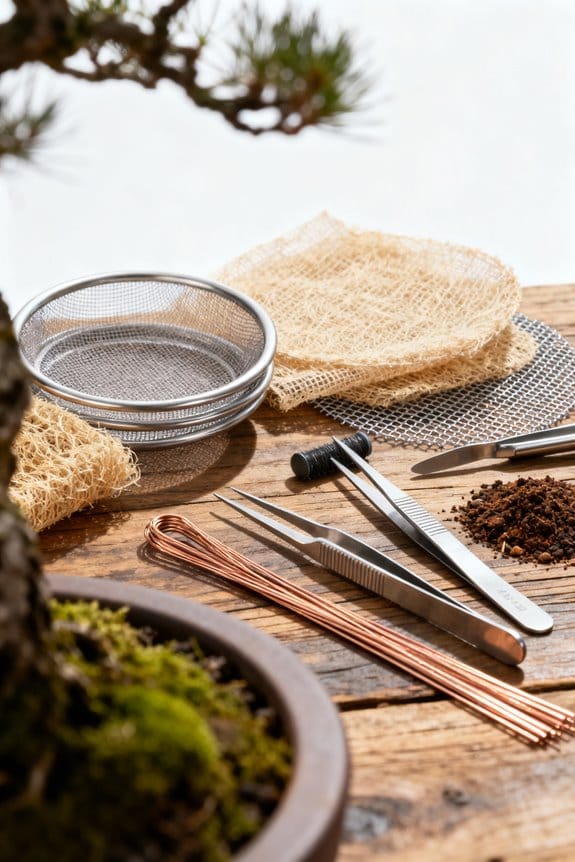
How to Prevent Algae and Moss From Clogging Bonsai Soil Surface

To prevent algae and moss from clogging bonsai soil surfaces, manage moisture levels carefully. Avoid overwatering and check soil moisture every week. Use well-draining soil mixes and make sure pots have drainage holes for better airflow. Increase light availability by placing bonsai in sunnier spots, as light discourages moss growth. Regularly prune away dead branches for better circulation and health. Incorporating these techniques effectively maintains plant health while minimizing unwanted growth. Exploring additional strategies can enhance your bonsai care.
Key Takeaways
- Monitor soil moisture levels regularly to prevent overwatering, which encourages algae and moss growth.
- Use well-draining soil mixes like Akadama to enhance aeration and prevent moisture retention.
- Ensure pots have adequate drainage holes to facilitate moisture escape and improve airflow.
- Establish a tailored watering schedule while reducing frequency during cooler months to prevent excess humidity.
- Apply organic moss and algae inhibitors responsibly, avoiding overapplication to maintain bonsai health.
Understanding Moss and Algae Growth
Moss and algae can be unwelcome guests in bonsai soil, often thriving in conditions that many bonsai enthusiasts inadvertently create. These organisms flourish in moist, shaded areas, particularly when soil lacks proper aeration. When organic matter, warm temperatures, and humidity combine, they form an ideal environment for moss growth. This moss competes with bonsai roots for essential nutrients and moisture, potentially stunting the overall health of the tree. To combat this issue, bonsai owners should regularly monitor soil moisture levels. Avoiding overwatering is fundamental, along with ensuring proper drainage. Additionally, inspecting the bonsai every 1-2 weeks allows for early detection of any moss growth, helping to maintain a healthy bonsai environment. Proper care truly makes a difference. High-quality Akadama soil offers excellent drainage and aeration, which can help prevent the conditions that favor moss and algae growth.
Identifying Causes of Excess Growth

Excessive growth of algae and moss in bonsai soil is often rooted in several common factors that every bonsai owner should understand. High moisture levels, particularly from overwatering, create an ideal environment for these organisms. When the soil mix retains too much water, it fosters their proliferation. Additionally, nutrient-rich organic matter, like compost, can contribute to this issue if moisture isn’t adequately managed. Poor air circulation and insufficient sunlight also play a role. If bonsai soil is compacted and drainage is inadequate, excess moisture accumulates, promoting further growth of algae and moss. Using bonsai training pots with multiple drainage holes can significantly improve air circulation and prevent moisture retention, thus mitigating the risk of algae and moss growth. Addressing these causes will help maintain a healthy bonsai environment and keep the soil surface clear of unwanted growth.
Improving Soil Drainage and Aeration

To promote a thriving bonsai environment, one of the most effective strategies is to improve soil drainage and aeration. Using well-draining soil mixes, like akadama, lava rock, pumice, and charcoal, helps prevent stagnant water. This mixture fosters healthy root growth while deterring unwanted moss and algae. Additionally, maintaining drainage holes and avoiding compacted soil layers is essential, as it allows excess moisture to escape. Regularly repotting every 2-5 years revitalizes the soil, enhances drainage, and enables root inspection. Moreover, placing pots in areas with good airflow improves air circulation. This lowers humidity levels, further reducing conditions for moss and algae. Finally, monitor moisture through careful watering to prevent excessively damp soil, which can lead to growth issues. For optimal bonsai health, it’s important to maintain pH levels between 5.5 and 6.5, ensuring a suitable environment for growth.
Recommended Products

Fast draining and nurturing: Our succulent potting soil helps prevent root rot and overwatering. Bonsai Jack succulent soil mix is used to enhance bonsai and succulent plants, including Echeveria, Haworthia, Crassula, Lithops, Jade, Aloe and Crassula.

🌳 Created By Bonsai Experts: All-Purpose bonsai soil blend providing optimum growth for your bonsai trees.
🌳 Created By Bonsai Experts: All-Purpose bonsai soil blend providing optimum growth for your bonsai trees.
Balancing Water and Humidity Levels
Achieving the right balance of water and humidity is essential for the health of bonsai trees and the prevention of unwanted algae and moss growth. Maintaining balanced watering practices prevents excessive moisture that can foster these unwanted organisms. Regular monitoring of humidity levels helps identify conditions conducive to their development, especially in shaded areas. Adjusting the watering frequency based on seasonal changes, particularly during warm summer months, minimizes stagnant moisture. Using well-draining soil mixes enhances aeration, reducing waterlogged conditions. Additionally, ensuring good air circulation around bonsai pots can greatly lower humidity levels. By carefully balancing water and humidity, bonsai enthusiasts can create an environment that supports healthy growth while deterring algae and moss proliferation. Regular observation aids in identifying nutrient deficiencies through symptoms such as yellowing leaves, which can also contribute to a healthier bonsai environment.
Recommended Products

Convenient 2 qt Bag – Includes ten bags of scientifically designed mix that delivers excellent drainage while retaining just enough moisture to support strong root growth

Colorful & Natural: Mix Horticultural Lava Rocks blend six natural stones for colorful gardening. Sized at 3/8" (6-9mm), they darken when used in water. Reusable, non-staining and non-fading, maintaining enduring beauty at home.

Traditional Japanese potting materials trusted by bonsai masters and plant enthusiasts worldwide. Mimics natural growing conditions, supporting healthy root development for bonsai, succulents, and more
Increasing Light and Air Circulation
While light and air circulation may seem like minor factors, they play a significant role in preventing algae and moss growth in bonsai soil. Increasing light exposure helps reduce humidity around the soil, making conditions less favorable for algae growth. Positioning bonsai trees under adequate sunlight leads to higher evaporation rates, controlling moisture levels. Additionally, enhancing air circulation is crucial. Proper spacing between bonsai pots allows for better airflow, preventing moisture retention. Regularly rotating bonsai ensures even light and promotes airflow, which discourages stagnant air pockets that foster algae and moss. Together, the combination of increased light and circulation not only minimizes algae growth but also supports the overall health of the bonsai by boosting photosynthesis and respiration processes. Investing in high-quality tools like bonsai moss brushes further aids in maintaining the optimal health and aesthetics of bonsai by ensuring thorough and gentle cleaning.
Recommended Products

Durable & Stable Structure-This polycarbonate greenhouse is built with a high-quality reinforced aluminum alloy frame and strengthened corners for excellent stability. Designed to handle tough outdoor conditions like strong winds, heavy rain, and snow. For added strength, you can seal the panel gaps with silicone (not included), making it a reliable green house for year-round use

JAPANESE BONSAI TOOL SET WITH BAG: Made in Japan authentic professional bonsai tool set. These tools can be used for various kinds of bonsai work such as pruning, cutting, daily trimming, wire bending and cutting, jin making, moss and soil cleaning, and repotting work. ALL items are produced and finished by a blacksmith and craftsman in Nigata Tsubame Sanjo, a city of Japanese leading cutlery town.

Upgrade Your Bonsai Skills with Professional Bonsai Tool Sets. All-Inclusive Essentials: Covers every necessary tool for bonsai pruning, shaping, wiring, and maintenance, no extra purchases needed.
Using Moss and Algae Inhibitors Safely
Using moss and algae inhibitors safely requires careful attention to both product selection and application methods. When choosing inhibitors, select those formulated specifically for bonsai cultivation, as these minimize potential toxicity. Always follow the label instructions closely; doing so protects the tree and guarantees effective treatment. Remember, overapplication can lead to soil degradation, which may harm your bonsai in the long run. Selecting organic and eco-friendly inhibitors ensures sustainable gardening practices and supports long-term soil health. Regular monitoring of soil moisture is vital to prevent unwanted growth. As moss comes into view, applying the correct dosage becomes necessary for ideal results. Incorporating inhibitors into a broader care routine, alongside methods like enhancing air circulation, can greatly reduce the risk of excessive moss and algae, making sure your bonsai remains healthy and vibrant.
Recommended Products

23.34% Ferrous Sulfate Monohydrate. Kills lawn moss quickly. Turns lawns a deep green. Contains no fertilizer for no excess growth and less mowing. Applies easily with standard lawn spreaders. Not for sale in AK, CA, HI.

100% all-natural peat moss with no additives or fillers.

SIZE: 2.2 cu. ft. compressed bale - 8 1/2" W x 16" L x 11 1/2" H
Natural Methods for Controlling Growth
Natural methods for controlling growth can be a powerful complement to the use of inhibitors in bonsai care. To begin with, a well-draining soil mix with akadama, lava, pumice, and charcoal improves aeration and limits moisture retention, making conditions less favorable for moss growing. Additionally, adjusting watering practices helps prevent excessive moisture, which can lead to unwanted growth. Incorporating moisture-absorbing companion plants, like succulents, can further regulate humidity levels, reducing moss proliferation. Increasing air circulation around bonsai pots through adequate spacing and the use of fans can also maintain a drier environment. Finally, conducting seasonal inspections every 1-2 weeks allows for early removal of visible algae and moss, stopping them from taking hold in the bonsai’s soil. Maintaining a pH level between 5.5 and 7.0 is critical for nutrient availability and can also deter the growth of algae and moss by creating less favorable conditions for their development.
Recommended Products

FEEDS UP TO 6 MONTHS: Miracle-Gro Potting Mix is a gardening soil for outdoor containers that feeds all types of potted plants, including flowers, vegetables, shrubs, annuals, and perennials for up to 6 months

MULTI-USE POT: Our timeless and modern plant pots are ideal for your indoor space or your outdoor deck, patio, or balcony. They effortlessly complement any design style and elevate the look of potted real or faux greenery.

NATURAL, ORGANIC INGREDIENTS: Made of 100% organic ingredients, this organic potting soil is free from synthetic fertilizers and chemicals. This planting soil gives your plants everything they need. Perfect for soil for indoor plants and outdoor potting soil.
Ongoing Maintenance and Monitoring
Ongoing maintenance and monitoring are essential to keep bonsai healthy and free from unwanted moss and algae. Regularly inspecting the top layer of the soil every 1-2 weeks allows quick identification of early moss or algae growth. Adjusting the watering schedule helps prevent excess moisture, as overwatering encourages these unwanted plants. Additionally, ensuring proper air circulation is important; spacing pots appropriately and avoiding overcrowding reduces humidity levels. Bonsai should be repotted every 2-5 years with a well-draining soil mix. This refreshes the environment and improves drainage. Finally, incorporating natural growth inhibitors or moisture-absorbing plants can help regulate moisture levels in the bonsai’s ecosystem, effectively suppressing unwanted growth over time. Regular pruning techniques, such as removing dead branches, can also aid in maintaining a healthy bonsai environment by reducing places where moss and algae might thrive.
Frequently Asked Questions
What Is the Rule of 3 in Bonsai?
In the bonsai garden, the Rule of 3 whispers harmony, uniting elements into a tranquil symphony. Adhering to this principle enhances bonsai aesthetics, enriching displays through thoughtful arrangements of trees, rocks, and moss in unison.
How to Remove Algae From Bonsai?
Algae removal from bonsai can be achieved through gentle scraping of the affected soil, ensuring proper drainage, adjusting watering schedules, enhancing air circulation, and applying safe natural inhibitors to effectively manage growth without harming the tree.
Should You Remove Moss From Bonsai?
Moss removal from bonsai is often advisable; however, its benefits, such as moisture retention and aesthetic appeal, cannot be overlooked. Balancing these factors requires careful consideration, guiding enthusiasts toward healthy bonsai practices.
How to Get Rid of Moss on Soil Surface Naturally?
To achieve effective moss control naturally, one should maintain appropriate moisture levels, use well-draining soil, enhance air circulation, and gently scrape away visible moss, ensuring the bonsai’s roots remain undisturbed during the process.


