As an Amazon Associate, we earn from qualifying purchases. Some links on this site are affiliate links at no extra cost to you. Our recommendations are based on thorough research and editorial judgment.

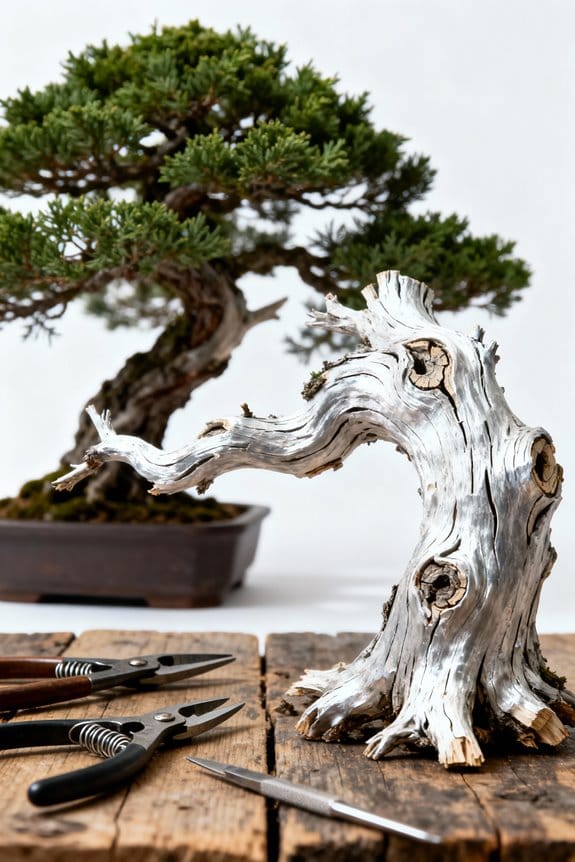
How to Safely Carve Deadwood on Juniper Bonsai

To safely carve deadwood on Juniper bonsai, first identify live veins to protect the tree’s health. Use the appropriate tools like chisels and Jin pliers, and remember to carve during early spring or late summer. Remove bark carefully, creating Jin or Shari features. Work slowly to follow the wood grain for a natural look. Regular observation assists in refining your design. By honing your technique, you’ll enhance the beauty of your bonsai, revealing further creative possibilities.
Key Takeaways
- Carve during early spring or late summer for optimal healing and reduced stress on the Juniper bonsai.
- Use sharp chisels and jin pliers to ensure clean cuts and prevent damage to live veins.
- Employ gradual techniques, marking areas with chalk and refining edges with sandpaper for detailed results.
- Protect live veins throughout the carving process to maintain overall tree health and vitality.
- Regularly clean and sharpen tools, storing them properly to ensure longevity and effective performance.
Understanding Deadwood and Its Types
Deadwood is a fascinating aspect of bonsai cultivation, especially in Junipers. This term refers to sections of the tree that are intentionally left without bark or foliage, adding character and aesthetics. There are three main types of deadwood on Bonsai: Jin, Shari, and Uro. Jin is a bare-stripped branch, emphasizing the tree’s age and resilience. Shari is the area on the trunk that has lost its bark, presenting a rugged charm. Uro creates a hollow wound, which can suggest a natural process of decay. Each type enhances the beauty of evergreen species and connects viewers to the tree’s life story. Understanding these categories is essential before starting any carving projects to maintain your Bonsai’s health. A balanced N-P-K ratio is also crucial when caring for your Bonsai, as it supports both growth and the maintenance of deadwood features.
Best Times to Carve Deadwood
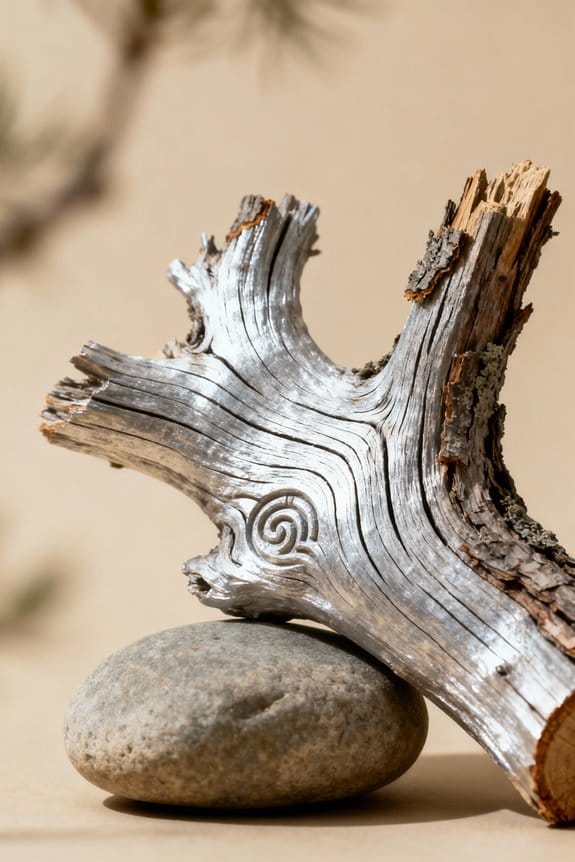
Timing is essential when working with juniper bonsai, especially for carving deadwood. The best times to carve deadwood are early spring and late summer. During these seasons, the tree heals faster, reducing stress. This ideal timing supports the overall health of the bonsai. Additionally, the natural conditions during early spring and late summer encourage the development of more authentic deadwood features. Carving at these times enhances the visual appeal of the tree, creating stunning effects and elegant trunk movement. Avoid winter or late fall for carving, as trees become more vulnerable; the healing processes slow considerably during these seasons. By choosing the right time, bonsai artists can guarantee successful and visually striking deadwood artistry. Consistent moisture is crucial for the overall well-being of bonsai trees, ensuring that their growth and health are maintained during and after the carving process.
Essential Tools for Carving Deadwood
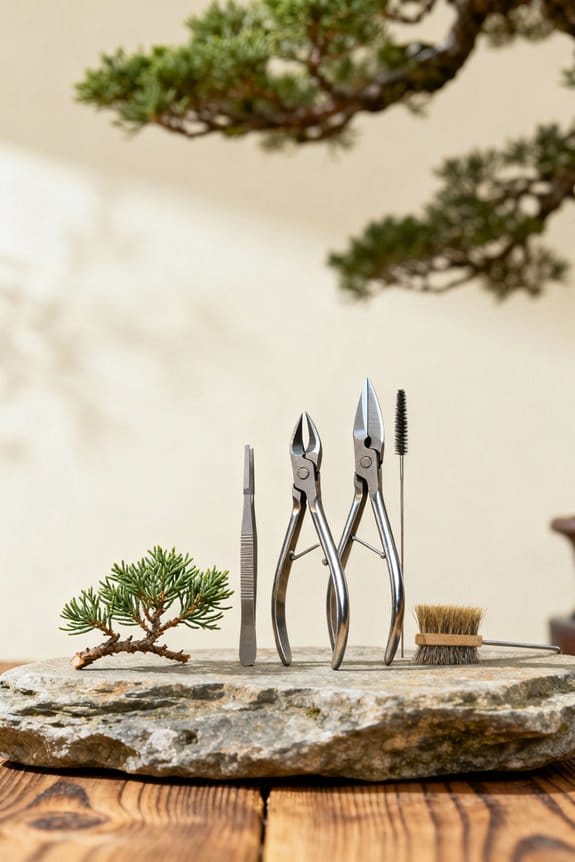
When it comes to carving techniques for juniper bonsai, having the right tools is essential for achieving impressive results. Key tools for carving deadwood include a chisel for precise shaping and Jin pliers for safely removing bark. Scissors help cut separated wood strands after initial carving, while pliers are useful for pulling larger strands during the process. To guarantee safety, using appropriate gloves is important to prevent cuts. For intricate details, a Dremel power tool can be employed; however, caution is needed to avoid over-carving. High-quality tools enhance precision and control, improving the overall aesthetic appeal of your bonsai. Finally, maintaining sharp tools is imperative for achieving clean cuts and realistic features that mimic natural wear on the juniper bonsai, enhancing its aesthetic appeal.
Mapping Living Veins Before Carving
Mapping the living veins of a juniper bonsai is an important step before any carving begins. These live veins act like blood vessels, delivering crucial nutrients that support the tree’s health. To locate them, look for bulges and crevices along the trunk, as these indicate healthy tissue. A helpful technique is to gently scrape away the dead bark, revealing the cambium layer below. This method helps identify the boundaries of live areas and guarantees they remain intact during carving. Understanding where the live veins are situated allows for more confident and precise carving. By preserving these critical tissues, you contribute to the overall vitality of your juniper bonsai while achieving beautiful and artistic deadwood features. A comprehensive resource can provide additional guidance on proper tools and techniques for preserving the tree’s health during the carving process.
Techniques for Creating Jin
Creating Jin on a juniper bonsai transforms the branch into a stunning piece of art that highlights the tree’s character. To create deadwood, begin by using Jin pliers to carefully remove the bark from the selected branch. Once the bark is off, shape the exposed wood with the pliers, following the grain for a natural look. After shaping, smooth any sharp edges with a concave cutter or sandpaper for a refined finish. Next, apply Lime sulfur to preserve the wood and prevent rot, protecting against infections. Regular maintenance, such as proper storage methods, is crucial to prevent rust and damage to your bonsai carving tools. Finally, regularly observe the Jin to make adjustments for enhancing its appearance and ensuring it complements the bonsai’s overall aesthetic, adding uniqueness and charm to the tree.
Techniques for Creating Shari
After mastering the technique of creating Jin, bonsai enthusiasts can further enhance their juniper trees by crafting Shari. To begin, select the right spot on the trunk and mark it with chalk. Using Jin pliers, carefully tear down the bark, following the wood grain to prevent harming the live veins essential for the tree’s health. Next, slightly hollow out the trunk in the marked area to boost the Shari’s effect. To protect exposed wood, apply Lime sulfur, which helps prevent rotting and infection. Finally, smooth any sharp edges using tools like a concave cutter or sandpaper. This will create a refined look that mimics natural wear, adding to the beauty of the bonsai. Miniature sets are typically made from resin, plastic, or wood, providing options for both indoor and outdoor bonsai displays.
Carving Tips for Natural Appearance
Carving juniper bonsai requires a careful touch to achieve a natural appearance that enhances the tree’s beauty. By following the wood’s natural grain during the carving of deadwood, one can create realistic features that mimic nature. It is crucial to use sharp chisels to gently deepen characteristics in the deadwood, allowing for precision and control. Keeping edges on Shari sharp encourages healing and prevents decay while safeguarding essential living veins. Regular observation and adjustments will help refine the aesthetics, mimicking natural wear over time. Additional techniques, such as peeling wood strands and utilizing pliers for larger pieces, can enhance the overall look. Tools like SPEEDWOX Tool Kit allow for clean cuts that promote healthy growth, making them ideal for comprehensive bonsai care. This attention to detail will elevate the beauty of your juniper bonsai.
Key Considerations During the Carving Process
When engaging in the carving process of juniper bonsai, it is crucial to keep several key considerations in mind to promote the tree’s health and visual appeal. First, carefully identify and mark the location of live veins; this prevents damage to essential tissue. Using sharp tools and following the wood’s grain will help create a more natural look while reducing injury to surrounding areas. The best time to carve is during early spring or late summer, as this allows for quicker healing. A gradual approach is important; start with small features and refine them over time. Finally, regularly observe the tree’s response to guarantee that the changes enhance its aesthetics without negatively impacting its health. Investing in quality tools crafted by skilled artisans ensures precision and effectiveness in creating intricate designs.
Observing and Refining Your Work
Observing the progress of a Juniper bonsai after carving is crucial for creating a balanced and attractive design. Regularly check the carved areas to confirm that the deadwood blends harmoniously with the tree’s overall form. Feel free to refine these details as the bonsai matures, using tools like chisels and Jin pliers. Focus on achieving a realistic texture that resembles natural weathering by making gentle adjustments. After carving, tidy any loose wood strands and refine the edges. This promotes better healing and a more authentic appearance. Always be cautious to protect live veins, as they are essential for the health of your Juniper bonsai. Consistently observing and refining will enhance your tree’s beauty and vitality. Utilizing a 4-in-1 soil moisture meter can also help ensure the optimal health of your bonsai by providing insights into soil moisture, pH, nutrients, and light conditions.
Community Insights and Experiences
How can a community enhance the experience of bonsai carving? Engaging with fellow enthusiasts allows for valuable insights and shared experiences. Many community members stress the need for thorough research and practice on less valuable juniper bonsai before attempting intricate deadwood carving. Observing natural juniper trees can help achieve a realistic look. Sharing photos and videos of progress creates opportunities for receiving feedback, which can greatly improve skills. A gradual approach is commonly recommended, allowing carvers to evaluate and refine their designs over time. Additionally, understanding the location of living veins is essential for maintaining tree health. Participating in a supportive live community can foster growth, inspiration, and improve overall bonsai carving techniques. When using bonsai tools, regular cleaning is essential to preserve the quality and longevity of the tools used in the carving process.
Frequently Asked Questions
How to Preserve Deadwood on Bonsai?
To preserve deadwood on bonsai, proper deadwood treatment involves applying lime sulfur, keeping the area clean and dry, inspecting for decay, and using specialized tools for refinement, ensuring longevity and aesthetic appeal.
What Is the Rule of 3 in Bonsai?
The Rule of 3 in bonsai emphasizes groupings of three elements to enhance bonsai aesthetics. This principle promotes visual balance, encourages natural flow, and guides the viewer’s attention, ultimately enriching the design through artistic expression.
How to Bleach Deadwood on Bonsai?
Bleaching techniques begin with applying lime sulfur to clean, dry deadwood, enhancing its color and texture. Regular reapplications maintain the effect, promoting preservation while protecting the wood from rot and moisture-related issues.
How to Cut Back Juniper Bonsai?
To cut back juniper bonsai effectively, one should assess its shape and health, utilize sharp shears for trimming, and prune during late winter or early spring, focusing on bonsai shaping to promote vigorous growth.