As an Amazon Associate, we earn from qualifying purchases. Some links on this site are affiliate links at no extra cost to you. Our recommendations are based on thorough research and editorial judgment.

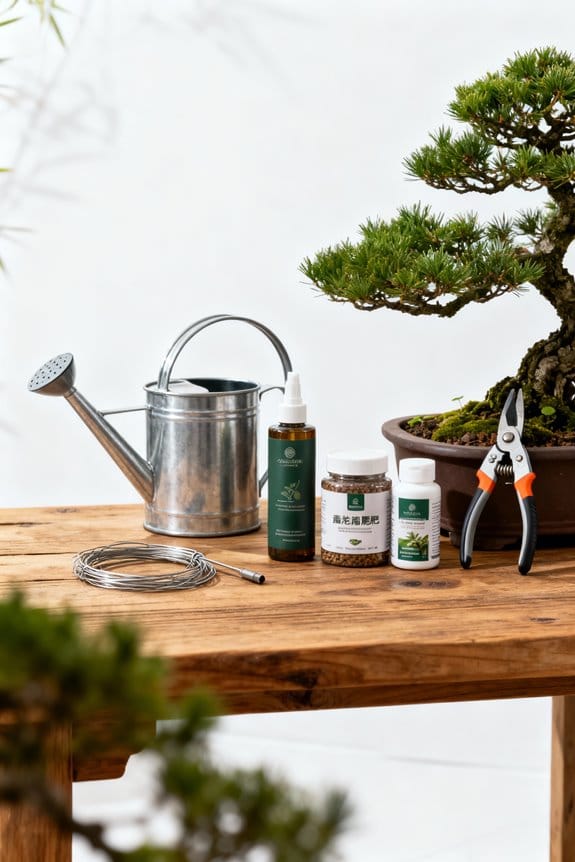
Indoor Bonsai Care Guide for Low Light Homes

Indoor bonsai trees, like Ficus or Dwarf Jade, thrive in low light. Place them near a south-facing window to maximize indirect light. Ascertain humidity stays above 50% by using trays of water and pebbles or misting periodically. Water when the top inch of soil feels dry, and use well-draining bonsai soil to avoid overwatering. Regular pruning and fertilization during the growing season are key. Explore further for more detailed guidance on nurturing these beautiful plants.
Key Takeaways
- Choose low-light tolerant bonsai such as Ficus, Dwarf Jade, or Hawaiian Umbrella for optimal indoor growth.
- Ensure your bonsai receives bright, indirect light for at least 10 hours daily, utilizing south-facing windows or artificial lighting.
- Water the bonsai only when the top inch of soil is dry to prevent overwatering and promote healthy root development.
- Increase humidity levels above 50% by using shallow trays with water and pebbles or regular misting.
- Regularly inspect for pests and employ natural management strategies to maintain plant health and prevent infestations.
Understanding Indoor Bonsai Trees
Indoor bonsai trees can bring a touch of nature into any living space, making them popular among plant enthusiasts and beginners alike. Understanding these plants is crucial for success. The Ficus Bonsai is a favorite due to its resilience and ability to tolerate low light and dry air. While they can thrive in various indoor environments, proper care is essential. Indoor bonsai trees typically require bright sunlight, ideally from south-facing windows, or artificial light for about ten hours daily. Additionally, maintaining appropriate humidity and regular watering is essential, as their small pots limit moisture retention. Regularly monitor their moisture levels to prevent stress. With the right conditions, these miniature trees can flourish beautifully indoors. Using ergonomic tool design in bonsai tool sets can reduce fatigue and enhance the overall gardening experience, making the maintenance of indoor bonsai more enjoyable.
Selecting the Right Bonsai for Low Light
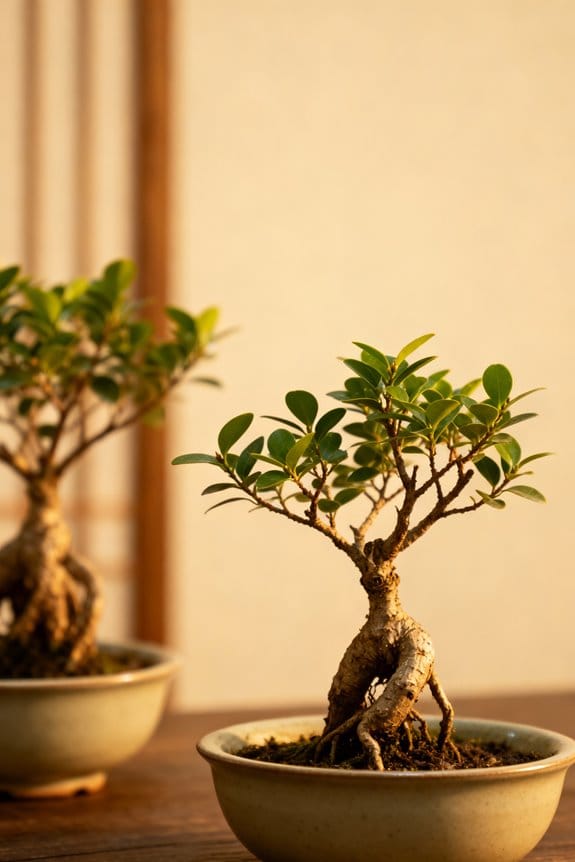
When searching for the perfect bonsai tree suitable for low light environments, several excellent options exist. The Ficus Bonsai (Ficus Retusa) thrives in low light and is perfect for beginners due to its forgiving care requirements. The Dwarf Jade Tree (Crassula Ovata) excels in these conditions, storing water in its thick leaves which minimizes the need for frequent watering. The Hawaiian Umbrella (Schefflera arboricola) can adapt to lower light, though it prefers indirect light. For airy branch structure and size, the Chinese Elm (Ulmus parvifolia) is a great fit. Finally, the Ponytail Palm (Beaucarnea recurvata) is low-maintenance, tolerating low light and infrequent watering, making it suitable for dimly lit indoor environments. Engaging in bonsai gardening promotes therapeutic benefits as it serves as a calming and meditative experience.
Ideal Light Conditions for Indoor Bonsai
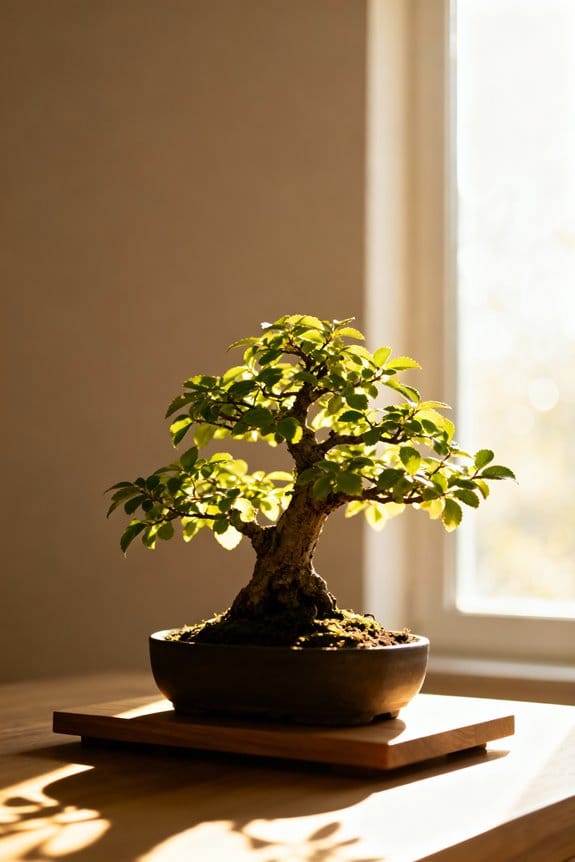
Successfully nurturing a bonsai tree largely depends on its light conditions. Indoor bonsai trees thrive best when they receive bright, indirect light. A south-facing window is an ideal spot that maximizes exposure. However, indoor light intensity is often lower than what trees experience outside. This can stunt their growth and weaken their health. For best growth, aim for about 10 hours of light daily, utilizing supplemental artificial lighting like fluorescent or LED grow lights if necessary. While most species prefer brighter conditions, trees like Ficus and Dwarf jade can tolerate low light, making them work well in dimmer homes. Always watch for signs of light stress, such as yellowing leaves, to confirm your bonsai remains healthy. Adequate indirect sunlight is crucial for the growth of most bonsai trees, and placement near windows with filtered sunlight is ideal.
Importance of Humidity for Indoor Bonsai Care
How can humidity impact the health of indoor bonsai trees? Maintaining high humidity levels is essential, as most indoor bonsai thrive above 50% humidity. Low humidity can lead to leaf drop, stunted growth, and browning leaf edges. To combat dry indoor air, especially during winter heating, the use of a shallow tray filled with water and pebbles can improve humidity. Additionally, regularly misting the leaves creates a more suitable environment. Monitoring humidity levels with a hygrometer allows for timely adjustments, especially during seasonal changes. Proper humidity is a key element in Bonsai Care, helping to promote overall health and reduce vulnerability to pests and diseases. Attention to humidity will notably enhance the longevity of these intricate plants. For effective monitoring, analog hygrometers are often favored for their simplicity and reliability, providing immediate readings and requiring no batteries.
Watering Practices for Bonsai in Low Light
For indoor bonsai trees thriving in low light, careful attention to watering practices becomes especially vital. These trees typically need less frequent watering because they absorb less moisture in lower light conditions. It’s important to allow the soil to dry out slightly between waterings. This usually means waiting until the top inch feels dry to the touch. Using well-draining bonsai soil is important for maintaining moisture levels without waterlogging. Gardeners should monitor their bonsai for signs of water stress, like leaf droop or yellowing, which indicate that adjustments are necessary. Additionally, incorporating misting practices can boost humidity levels around the bonsai, supporting soil moisture and overall plant health in low light homes. Regular use of digital moisture meters helps ensure optimal soil moisture levels and prevents over or under-watering.
Fertilization Guidelines for Indoor Bonsai
Caring for indoor bonsai requires a thoughtful approach to fertilization, ensuring optimal growth even in small containers. The foundation of healthy bonsai care is using a balanced, water-soluble fertilizer at half strength every 4-6 weeks. This replenishes nutrients in limited bonsai soil and supports glossy leaves. During winter, however, it is important to avoid fertilizing, as growth slows and nutrient requirements decrease. Monitoring the bonsai’s health is essential, allowing adjustments based on species-specific needs and growth patterns. Additionally, foliar feeding every other month can enhance nutrition by spraying a diluted fertilizer on the leaves. Always select fertilizers formulated for bonsai or houseplants to maintain a favorable nutrient balance. Choosing a balanced nutrient ratio like 3-1-2 ensures the bonsai receives the essential elements needed for vibrant growth.
Pruning and Shaping Your Bonsai
Pruning and shaping a bonsai is essential for maintaining its health and appearance. Regular pruning helps to keep the desired shape of the bonsai and fosters bushier growth by removing unwanted or overly long branches. Using clean, sharp bonsai shears is important, as precise cuts protect the tree’s bark. Pinching back new growth encourages branching; trim new shoots down to one or two leaves for best results. Shaping can also be achieved through wiring, but be sure to check the branches regularly to prevent bark damage as they grow. Seasonal pruning is ideally performed in spring or early summer, when the tree is actively growing, allowing it to recover swiftly from the stress of trimming and maintain its liveliness. Illustrated guides can be especially helpful for understanding bonsai techniques and processes, enhancing comprehension through diagrams and simplifying maintenance schedules.
Seasonal Care Tips for Indoor Bonsai Trees
Understanding the seasonal needs of indoor bonsai trees is essential for their overall health and vigor. In warmer months, bonsai may need more frequent watering due to increased evaporation and humidity levels. Check the soil often to verify it doesn’t dry out for long periods. During winter, avoid fertilizing, as the trees are dormant and do not require extra nutrients. To combat lower humidity levels, consider using humidity trays or misting the leaves regularly. Regular pruning and maintaining shape should occur in spring and summer, encouraging bushiness and vibrant growth. Some bonsai, like the Ficus, benefit from repotting every couple of years to give them fresh soil and room to grow. Monitoring for seasonal pest changes is crucial to protect the health of your bonsai, especially during transitions between seasons.
Frequently Asked Questions
What Is the Best Bonsai Tree for Low Light Indoors?
The best bonsai trees for low light indoors are Ficus Bonsai and Chinese Elm. Both require specific watering techniques, suitable soil types, and a proper fertilization schedule to thrive in an indoor environment with limited light.
What Is the Rule of 3 in Bonsai?
The Rule of 3 in bonsai emphasizes groupings of three elements for balance. It enhances pruning techniques, watering practices, and soil requirements, inviting creativity in styling methods while considering seasonal care and potential indoor pests’ impact.
Can Bonsai Thrive in Low Light?
Bonsai can thrive in low light, particularly with proper indoor plant care. Low light adaptations, adequate soil requirements, careful watering techniques, and strategic bonsai pruning tips enhance growth factors, ensuring importance in subdued environments.
Is There a Bonsai Tree That Doesn’t Need Sunlight?
No bonsai tree varieties can thrive without sunlight. However, low light plants like Ficus and Dwarf Jade adapt better to reduced light, necessitating bonsai care techniques that address their specific light requirements for ideal plant growth factors.


