As an Amazon Associate, we earn from qualifying purchases. Some links on this site are affiliate links at no extra cost to you. Our recommendations are based on thorough research and editorial judgment.

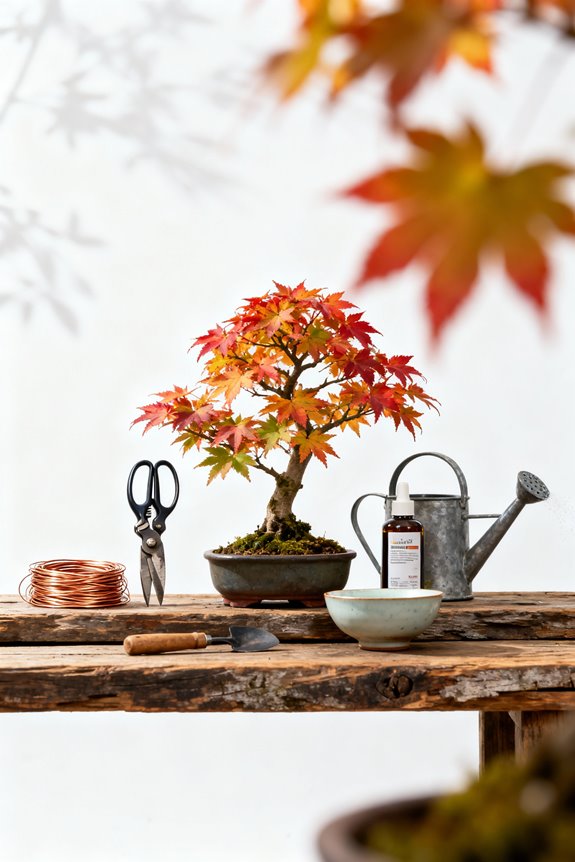
Seasonal Bonsai Care Checklist for Autumn

Autumn is essential for bonsai care. Begin by pruning trees before they enter dormancy, focusing on major cuts in autumn. Avoid heavy pruning in winter to prevent infections. If urgent, re-pot trees when signs of root crowding appear, preferably doing so in late winter to early spring. Use low nitrogen fertilizers and check soil moisture levels frequently, adjusting watering as necessary. Finally, monitor light exposure and drainage. There are more insightful tips to take into account for best bonsai health.
Key Takeaways
- Prune deciduous trees in autumn before dormancy to maintain strong structure and reduce stress during the slower sap flow period.
- Re-pot only if necessary, monitoring for root crowding and health issues; ideal re-potting is late winter to early spring for most trees.
- Use low nitrogen fertilizers in early autumn, focusing on high phosphorus and potassium to enhance root growth and prepare for winter.
- Ensure proper light exposure and adjust tree placement as days shorten to prevent stress and maintain health during autumn.
- Monitor soil moisture carefully and avoid over-watering, as trees typically need less water in autumn as they prepare for dormancy.
Pruning Techniques for Autumn
Pruning techniques in autumn play an essential role in maintaining the health and structure of bonsai trees. During this season, major pruning cuts are suitable due to slower sap flow, which reduces stress on the tree compared to spring or summer. Practitioners should perform minor pruning once new growth has hardened, improving light and air circulation. This practice is vital before the tree enters dormancy, ensuring it maintains a strong structure for the next growth cycle. Heavy pruning should be avoided in winter to minimize infection risk. Regular monitoring after pruning helps assess the tree’s health, encouraging optimal growth patterns as it prepares for the colder months ahead. Careful pruning fosters resilience, setting the foundation for your bonsai’s flourishing future. Using a bonsai propagation dome can aid in maintaining optimal humidity and temperature conditions after pruning, promoting healthy recovery and growth.
Key Re-Potting Considerations
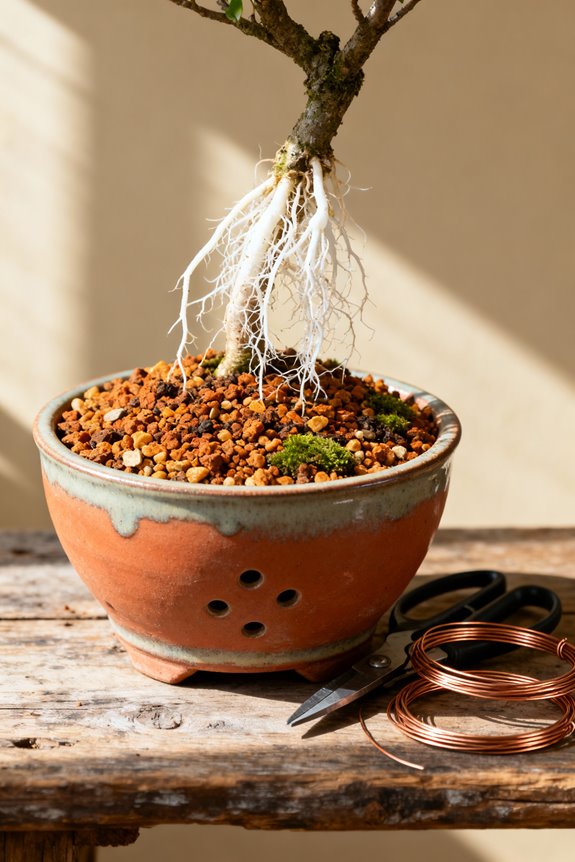
While autumn may seem like a shifting time for bonsai care, it is vital to evaluate re-potting carefully. This season is generally not the best time for re-potting deciduous trees, since such actions can interrupt their winter dormancy preparations. However, some species, like Australian natives and Ficus, may be re-potted early in autumn, but only if absolutely necessary. As winter approaches, it’s important to monitor trees for root crowding or signs of poor health, which can signal an urgent need for re-potting. Considerations for re-potting should also include species compatibility, since not all trees thrive when disturbed at this time. For most bonsai, the ideal re-potting period remains late winter to early spring. It’s essential to inspect leaves and branches regularly for signs of pests, as healthy foliage indicates a tree’s readiness for repotting.
Wiring Techniques and Best Practices

As autumn arrives and leaves begin to change, it presents an excellent opportunity for wiring bonsai trees. During this season, cooler temperatures reduce stress on trees, facilitating effective adjustments. It’s essential to apply wiring techniques based on the specific growth characteristics of various species since not all trees bend the same way. Larger bends can be made more successfully in autumn, due to the reduced delicateness of the tree’s vascular structure. Additionally, wire bite issues are minimized during this time, allowing wires to stay on branches until spring without causing harm. However, it is important to monitor the wire placement to prevent long-term damage while the tree goes through its dormant period. Regular checks for growth constriction are necessary to avoid injury; signs of scarring should prompt immediate wire removal.
Essential Fertilizing Tips for Autumn
Autumn is often an essential time for bonsai enthusiasts to focus on fertilizing their trees effectively. In early autumn, it’s advisable to use fertilizers low in nitrogen, as this supports root growth and prepares the tree for the winter period. Concentrating on fertilizers that are high in phosphorus and potassium is important; these nutrients strengthen roots and enhance overall health. Organic fertilizers should be applied well in advance because they can take weeks to break down, ensuring nutrient storage before dormancy sets in. Timing is significant; complete fertilization before the first significant frost arrives, allowing the bonsai to absorb nutrients fully. Selecting fertilizers with micro-nutrients can further enhance the overall vitality of bonsai trees during this critical time. This preparation fosters resilience in the tree during the colder months and minimizes stress responses, like leaf drop.
Monitoring Soil Moisture Levels
Monitoring soil moisture levels becomes increasingly important as bonsai trees prepare for winter dormancy. Regularly checking moisture guarantees that bonsai are not over-watered, which can lead to root rot. As autumn progresses, these trees typically need less water, so it’s essential to monitor moisture more closely. Using a moisture meter or stick can help gauge the soil’s content, aiming for a level that supports health without becoming soggy. A leaf drop may indicate reduced water needs, prompting you to adjust the watering schedule accordingly. Keep in mind that different species have varying moisture demands. Always consider the specific needs based on the type of bonsai you are caring for to maintain ideal health during this shift. Optimal moisture levels vary based on bonsai species and environment, and regular monitoring aids in achieving this balance.
Preparing for Winter Dormancy
Preparing bonsai trees for winter dormancy is an essential step in ensuring their health and longevity. During autumn, major pruning is important, as slower sap flow minimizes risks to the tree’s structure. It’s imperative to avoid repotting bonsai during this time, especially for deciduous varieties, since it can disrupt their winter preparation. However, early repotting may be possible for Australian natives and Ficus. As autumn progresses, apply low nitrogen fertilizers rich in potassium to promote root growth and help trees store resources for dormancy. Regularly monitor soil moisture, as trees will need less water; insufficient hydration can result in leaf drop. Finally, wiring trees should be done now, as they become more pliable in cooler temperatures, ensuring positions remain stable until spring. Use soft bristles to gently clean fallen leaves and debris from bonsai surfaces without damaging the delicate plant structure.
Final Touches Before Frost
As winter approaches, it becomes crucial for bonsai enthusiasts to take the final steps in caring for their trees. First, pruning should be done to enhance the structure and health of the bonsai, as sap flow slows in autumn, making it safer. Early in autumn, applying low nitrogen fertilizers rich in phosphorus and potassium will help trees store resources for the cold months ahead. It’s important to monitor soil moisture, as trees enter dormancy and often need less water. Perfect Plants Bonsai Fertilizer Pellets offer a 5-year nutrient supply, providing essential nutrients during this transition. Before frost hits, complete any wiring and repotting tasks. Finally, regularly check for pests or diseases to ascertain the trees are healthy and ready for late winter. Taking these steps will help foster robust new growth come springtime.
Signs of Plant Stress to Watch For
Many bonsai enthusiasts may not realize that autumn can bring signs of stress in their trees. One significant indicator is yellowing leaves, which might suggest overwatering or nutrient deficiencies as trees prepare for dormancy. Additionally, early leaf drop can signal environmental stress or improper watering, so it’s important to monitor closely. Wilting or browning leaf edges often indicate dehydration or issues from temperature fluctuations. Stunted growth, including a lack of new buds, shows that the tree struggles to adapt to seasonal changes, possibly hinting at root issues. Finally, be vigilant for pests or fungal growth, as these can exacerbate stress and threaten overall tree health during autumn. Proper observation guarantees your bonsai remains healthy. Consider the light requirements of your bonsai species, as insufficient light can also contribute to stress and poor health during this transitional season.
Encouraging Tree Health and Structure
Encouraging tree health and structure during autumn is fundamental for fostering robust bonsai. This season offers the perfect opportunity for major pruning as sap flow slows, promoting healthy new growth before winter dormancy. Minor pruning should follow, done after new growth hardens, to improve light and air circulation within the tree. Additionally, wiring can be safely applied now, allowing for significant bends without the stress of spring growth. Fertilizing early in autumn is also critical, focusing on potassium to enhance root health. Finally, regular moisture checks are essential; as leaf drop occurs, trees often require less watering. By taking these steps, bonsai enthusiasts can guarantee their trees remain strong and well-structured through the colder months ahead. It’s also important to assess drainage and aeration requirements, ensuring that your bonsai receives the optimal balance of moisture and oxygen for healthy growth.
Frequently Asked Questions
What to Do With Bonsai in Autumn?
In autumn, bonsai care includes applying low nitrogen fertilizers to promote root growth while monitoring for leaf fall. Regular pruning and cautious repotting enhance health, ensuring trees are well-prepared for winter dormancy and upcoming seasons.
What Is the Rule of 3 in Bonsai?
The Rule of 3 in bonsai techniques emphasizes grouping elements in threes to establish balance. Seasonal considerations enhance this approach, encouraging variation in size and spacing for visually dynamic and harmonious bonsai compositions.
How Often Should I Water a Bonsai in Autumn?
“Less is more” applies during autumn bonsai care. As temperatures cool, bonsai watering frequency should decrease; water only when the top inch of soil feels dry, ensuring healthy trees enter dormancy without over-watering.
Should You Prune Bonsai in the Fall?
Yes, fall pruning is beneficial for bonsai, enhancing foliage care and structural integrity. As autumn approaches, light airflow and reduced sap flow allow for effective trimming, preparing the tree for dormancy while minimizing potential harm.


