As an Amazon Associate, we earn from qualifying purchases. Some links on this site are affiliate links at no extra cost to you. Our recommendations are based on thorough research and editorial judgment.


Creating a Small Forest Style Bonsai From Young Saplings

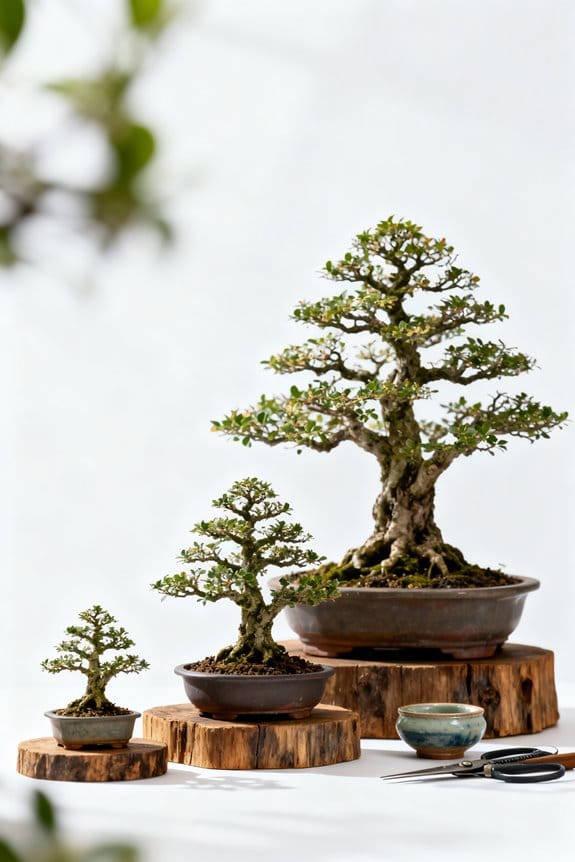
To create a small forest style bonsai from young saplings, start by selecting healthy saplings, like Acer Campestre, aged 1-3 years. Choose three to seven trees with varying heights. Arrange taller saplings at the back, irregularly spacing the others for a natural look. Prepare a well-draining soil mix with akadama, pumice, and lava rock in a shallow container. Regular maintenance, including pruning and fertilizing, will keep your forest looking vibrant. Discover more about each step for better results!
Key Takeaways
- Select 3 to 7 young saplings of Acer Campestre, ensuring they are healthy and have compatible growth rates for harmony in composition.
- Arrange saplings with taller trees at the back and shorter ones in front, using uneven spacing to mimic natural growth patterns.
- Create visual interest by altering terrain with small mounds or valleys and adding moss or undergrowth around the trees.
- Use a well-draining soil mix of akadama, pumice, and lava rock in a wide, shallow container for optimal root health and stability.
- Regularly prune and shape the bonsai during the growing season, ensuring proper light penetration and preventing overcrowding among saplings.
Selecting the Right Saplings for Your Forest
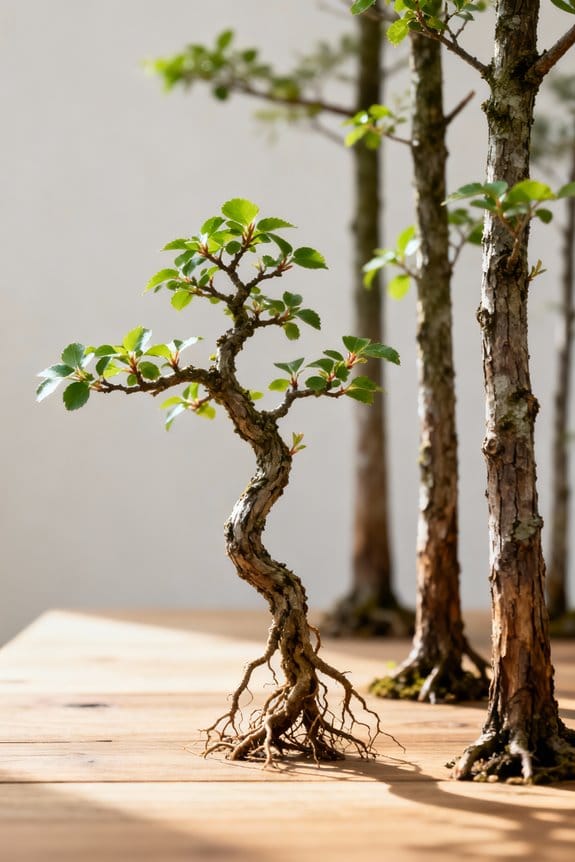
When commencing on the journey of creating a Bonsai forest, how does one choose the right saplings for a thriving setup? First, selecting young seedlings or cuttings, especially of Acer Campestre aged 1-3 years, is vital for effective root fusion. This encourages healthy growth in a limited space. It is important to vary the thicknesses and heights among saplings to enhance visual appeal and mimic a natural forest. Additionally, using odd numbers of trees—like groups of 3, 5, or 7—will create harmony in your design. It’s also wise to choose tree species well-suited to the local climate. Consider adding species with different leaf colors and textures for a dynamic look and to promote biodiversity in your Bonsai forest. Incorporating Japanese Bougainvillea can add vibrant colors and enhance the aesthetic appeal of your Bonsai forest setup.
Designing Your Forest Layout
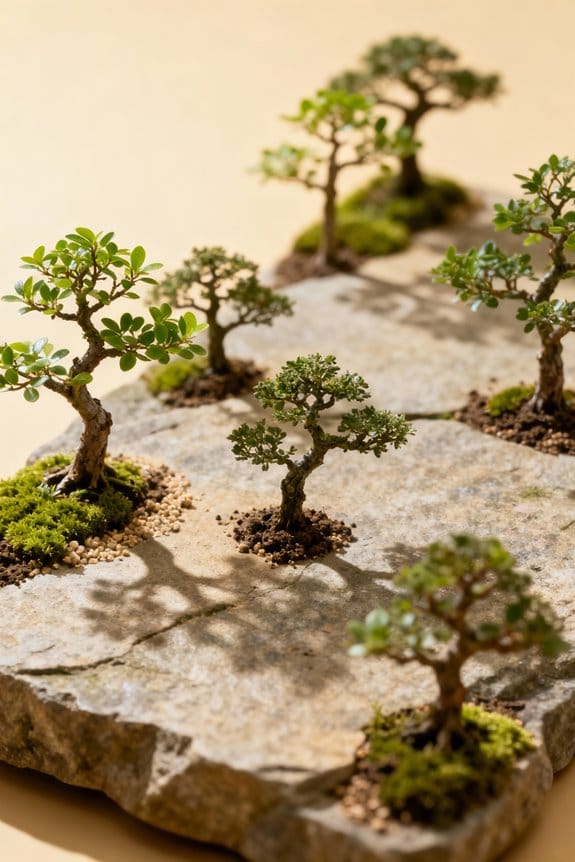
Creating a visually appealing layout for a Bonsai forest involves thoughtful arrangement of the selected saplings. To achieve a natural look, opt for an odd number of trees, such as 3, 5, or 7. Position taller trees at the back or sides, allowing shorter trees to stand out in front. Irregular spacing between trees mimics how trees grow in their natural habitat. To enhance the design, employ terrain alterations like small mounds or valleys, which provide visual interest and simulate diverse ecosystems. Finally, consider incorporating moss or small undergrowth plants around the trees. This addition beautifully replicates the forest floor, completing the aesthetic for your Bonsai composition. Designing your forest layout requires creativity and attention to detail. For optimal growth conditions, ensure that your selected moss variety provides the right moisture retention and nutrient needs specific to your Bonsai species.
Preparing the Soil and Containers
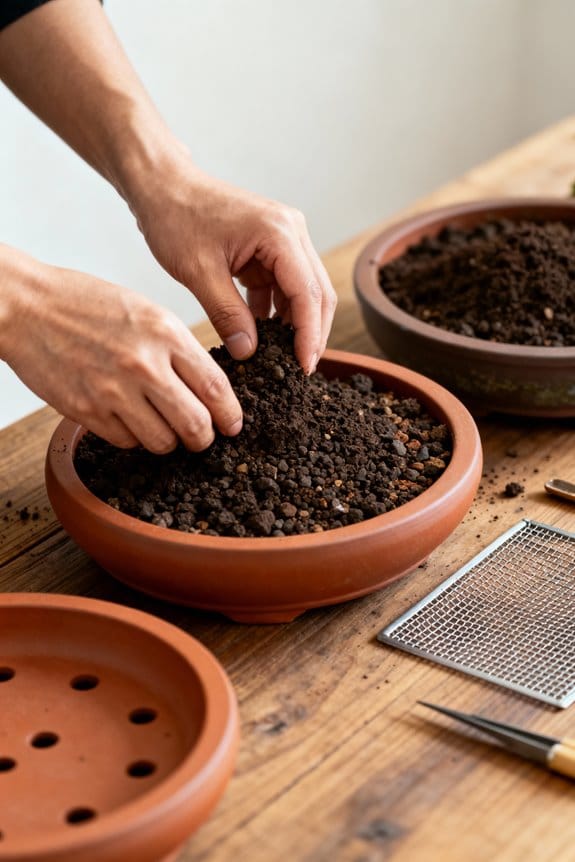
Preparing the soil and containers for a Bonsai forest is essential for promoting healthy growth in young saplings. The ideal bonsai soil should combine akadama, pumice, and lava rock. This mixture guarantees excellent drainage and moisture retention, which are critical for young trees. Use wider, shallower containers to give roots space to spread, while also providing stability for multiple saplings. Additionally, it is important to incorporate ample drainage holes in the containers to prevent excess water, which can lead to root rot. A drainage layer of mesh or small stones can also be added at the bottom. By creating a balanced substrate through proper soil preparation, beginners can greatly enhance their bonsai care success. For optimal results, consider the pH level requirements of your bonsai species to ensure the substrate supports healthy growth.
Planting Your Saplings
With the soil and containers ready, the next step focuses on planting the saplings. Begin by gently pruning the roots of each sapling to guarantee a snug fit in the bonsai pot. This step is vital for promoting harmony among the trees. Use a nutrient-rich soil mix of akadama, pumice, and lava rock to promote good drainage and enhance water retention. Arrange the saplings with staggered heights and varied distances to simulate a natural forest appearance, placing larger saplings slightly off-center for visual interest. Secure each sapling using guiding wires, anchoring them effectively. Finally, add a layer of substrate and decorative moss on top to stabilize the soil and improve the aesthetic appeal of the bonsai trees. Ensure that the soil mix characteristics match your bonsai’s needs to prevent waterlogging and support healthy growth.
Arranging Your Bonsai Trees
Arranging bonsai trees is an essential step that greatly influences the overall beauty and balance of the design. When arranging your bonsai trees, focus on odd numbers, often grouping them in sets of 3, 5, or 7. Taller trees should be positioned at the back or sides to create depth, while smaller trees fill in the front or gaps for visual interest. Aim for varied heights and thicknesses to maintain a more dynamic and natural look. Space trees irregularly to mimic a real forest and allow room for future growth, preventing overcrowding. To keep trees stable, secure them with guiding wire during assembly as you add soil, ensuring their roots are anchored effectively for long-term health. Consider using tools with ergonomic designs for user comfort and to reduce hand strain during the arrangement process.
Incorporating Decorative Elements
Incorporating decorative elements into a bonsai setup can greatly enhance its visual appeal and create an inviting atmosphere. Moss is an excellent choice, as it not only beautifies the landscape but also retains moisture in the soil, supporting healthy growth conditions. Adding decorative stones or small pebbles provides a naturalistic look, mimicking the forest floor and offering contrast against the green foliage. Miniature elements, like tiny figurines or little pathways, can tell a story and heighten the charm of the scene. Layering different textures through ground cover or small decorative plants adds depth, reflecting a natural ecosystem’s complexity. However, it is essential to avoid overcrowding, ensuring enough negative space for a balanced and healthy design. When incorporating moss, consider maintenance requirements to ensure the longevity and vibrancy of the display.
Regular Maintenance and Pruning
Regular maintenance and pruning are crucial for the health and aesthetic appeal of a bonsai forest. Pruning should be performed during the active growing season to foster peak health and vigor. This process helps manage the size and shape of each tree, ensuring a balanced look. Focus on removing excessive growth, dead branches, and crossing branches to enhance light penetration. Additionally, careful wiring during maintenance allows seedlings to establish optimal growth patterns, preventing any single tree from dominating the scene. Regularly assess the spacing between trees to avoid overcrowding, promoting a natural forest environment. Seasonal adjustments in care, including nutrient management and pruning frequency, are essential as the trees mature and develop within your bonsai forest. Brazilian rain tree bonsai, with their delicate, feathery leaves, require consistent care to maintain their unique beauty and longevity indoors.
Encouraging Growth and Establishing Harmony
Creating an inviting and harmonious bonsai forest can be both rewarding and enjoyable for enthusiasts. To establish harmony, select young saplings of varying ages and sizes, ideally in odd numbers like three or five. This arrangement creates a natural visual dynamic. Carefully prune their roots to fit into a shallow pot, ensuring their growth potential remains intact. Position taller species at the back or sides, while smaller ones occupy the front, simulating an authentic forest layout. Incorporating moss around the saplings not only enhances moisture retention but also promotes a cohesive look. Regular pruning and thoughtful spacing are essential to prevent overcrowding, allowing each sapling to flourish and contribute to the overall harmony of the bonsai forest. To support healthy growth, consider using slow-release fertilizers which require application every six months, ensuring consistent nutrient delivery without frequent intervention.
Frequently Asked Questions
Can You Turn Any Sapling Into a Bonsai?
Not every sapling can be successfully turned into a bonsai. Careful sapling selection, appropriate growth techniques, and understanding bonsai aesthetics are essential factors that determine whether a sapling will thrive as a bonsai tree.
What Is the Rule of 3 in Bonsai Trees?
In bonsai, the Rule of 3 orchestrates harmony, like a well-composed symphony. This principle enhances visual appeal through effective bonsai pruning, balanced soil composition, and thoughtful training techniques, creating a compelling and naturalistic display.
How to Turn a Young Tree Into a Bonsai?
To turn a young tree into a bonsai, apply bonsai pruning techniques, select appropriate soil choices, and establish consistent watering schedules. This guarantees healthy growth while maintaining the desired shape and size of the tree.
How to Make a Forest Style Bonsai?
Forest style bonsai often showcases trees at varying heights, creating visual interest, with research indicating ideal forest density improves aesthetics. Effective tree placement and diverse styling techniques enhance harmony, emulating natural forest ecosystems within the bonsai.