As an Amazon Associate, we earn from qualifying purchases. Some links on this site are affiliate links at no extra cost to you. Our recommendations are based on thorough research and editorial judgment.

Basic Bonsai Pruning Techniques for Total Beginners

Bonsai pruning is crucial for healthy growth and looks. Begin with maintenance pruning, focusing on branches that grow out of shape. Regularly prune your bonsai two to four times a year. Ideal times are spring and summer for new growth, and late fall for structural cuts. Use quality tools like branch cutters for larger branches and twig shears for smaller shoots. Remember to trim gently, as over-pruning can harm the tree. Discover more essential techniques as you explore further.
Key Takeaways
- Begin by understanding apical dominance; regular pruning encourages growth in lower branches, maintaining overall shape and health.
- Use sharp, quality tools like branch cutters and twig shears for clean cuts to minimize damage and scarring.
- Prune during dormancy (November to February) for structural changes and regularly in spring and summer for maintenance.
- Remove any dead branches or suckers as soon as noticed to promote healthier growth and better aesthetics.
- Learn about your specific bonsai species; each has unique growth patterns and needs that influence pruning techniques.
Understanding the Basics of Bonsai Growth
Understanding the basics of bonsai growth is essential for anyone starting on this rewarding hobby. Trees naturally follow a growth pattern called apical dominance, favoring the main stem over side branches. Consequently, gardeners must prune their bonsai to achieve a balanced structure. This regular pruning helps maintain an even growth by promoting life in lower and inner branches, counteracting the tendency for them to die off. It’s important to remember that the ideal pruning time varies; outdoor bonsai thrive with pruning from early spring to late fall, while indoor trees can be pruned year-round. Utilizing specific pruning techniques helps refine the tree’s shape and silhouette, making it healthier and visually appealing. Beginners should approach pruning thoughtfully for best results. Illustrated guides are beneficial as they enhance comprehension through diagrams, simplifying the maintenance process for beginners.
The Importance of Pruning in Bonsai Care
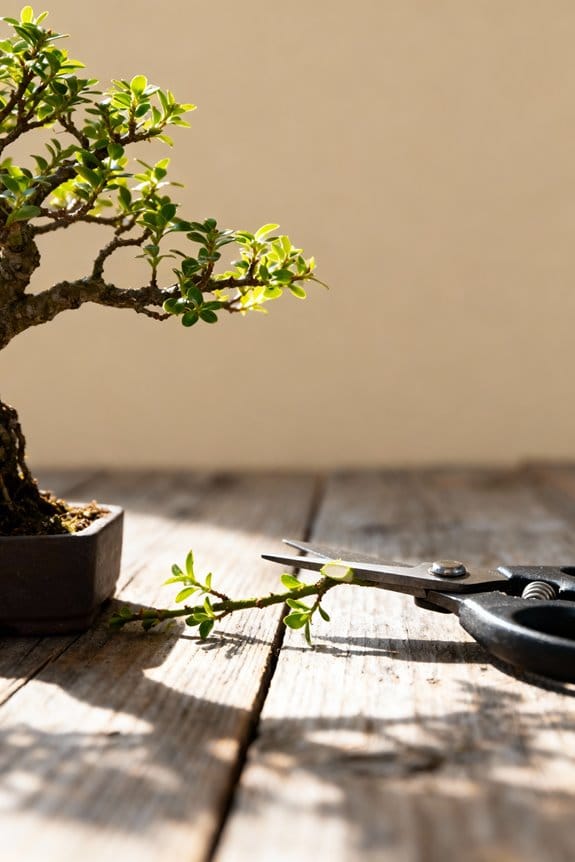
Pruning plays an essential role in bonsai care, shaping and maintaining the tree’s character while guaranteeing robust growth. Regularly pruning a bonsai helps keep its desired shape and size intact. It encourages inner growth by redistributing energy, combating apical dominance, which can cause uneven foliage density. Maintenance pruning should occur two to four times a year, especially during active growth from early spring to late fall. This keeps the tree healthy and vibrant. Additionally, structural pruning, best done in late autumn or early spring, allows for larger branches to be removed without disrupting growth. Using proper tools, like concave cutters and twig shears, guarantees clean cuts, minimizing damage and supporting healing. High-quality materials like manganese or carbon steel provide durability and effective cutting for bonsai tools. Prune your bonsai wisely for lasting beauty!
When to Prune Your Bonsai Tree

To achieve ideal growth and aesthetic appeal, knowing when to prune a bonsai tree is essential for every enthusiast. For maintenance, spring and summer are prime times to prune your bonsai, as this encourages new growth and shapes the tree effectively. Structural and stylistic pruning is best performed during dormancy, from November to February, to reduce stress and enhance the bonsai’s structure. Regular maintenance should be done two to four times a year to promote denser foliage. Dead branches and suckers should be removed whenever noticed, regardless of the season, to keep the tree healthy. For deciduous trees, defoliation should occur after new growth has settled, leading to smaller, more attractive leaves. It’s important to understand the unique growth habits of different bonsai species to ensure the timing and techniques used are appropriate for each type.
Essential Tools for Pruning Bonsai
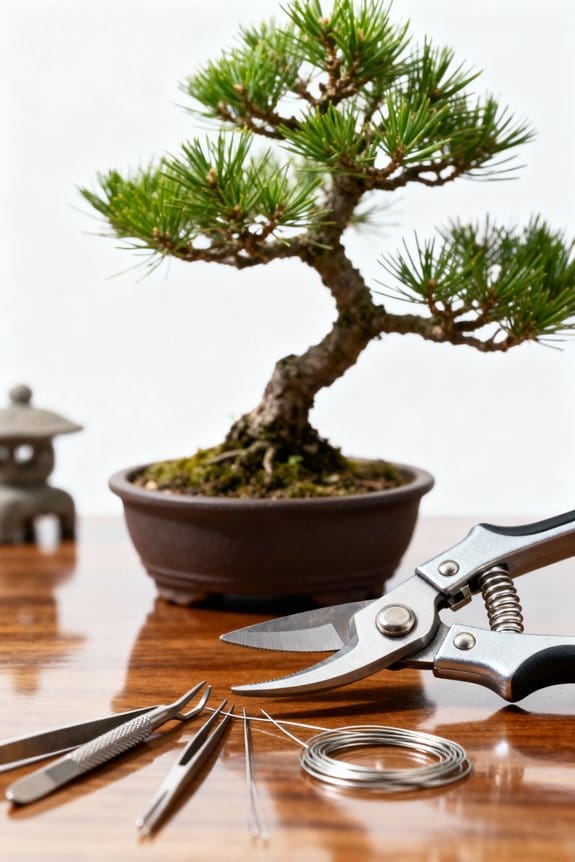
A well-equipped bonsai enthusiast knows that the right tools can make a significant difference in the pruning process. Essential tools for pruning bonsai include branch cutters for clean cuts and concave cutters for thicker branches, which minimize scarring. Twig shears are also crucial for trimming smaller shoots and branches, ensuring the tree remains healthy. Investing in high-quality tools enhances precision and reduces the risk of harming the tree during pruning. Additionally, maintaining tool hygiene by cleaning them with alcohol or disinfectant prevents disease spread. A variety of tools, including knob cutters for shaping and wire cutters for adjustments, provides versatility in handling different tasks. Sturdy gardening gloves can protect hands from thorns, while ensuring better grip during bonsai care. Tools designed with ergonomic non-slip handles reduce fatigue and enhance the overall gardening experience.
Basic Maintenance Pruning Techniques
When maintaining a bonsai tree, regular pruning is essential for promoting healthy growth and creating an aesthetically pleasing shape. Maintenance pruning should be done two to four times a year, trimming the top and outer branches to enhance inner growth and denser foliage. For best results, use twig shears or regular cutters, ensuring clean cuts to minimize damage. This type of pruning helps maintain the desired shape while encouraging balanced growth patterns. Indoor bonsai trees can be pruned year-round, while outdoor varieties should be tended to from early spring to late fall. Regularly monitoring the canopy through maintenance pruning adds visual appeal and vibrancy to the bonsai tree, ensuring it remains a stunning centerpiece in any space. Consider using durable gardening tools to ensure lasting use and effectiveness during pruning activities.
Structural Pruning for Shaping Your Bonsai
Structural pruning plays an essential role in shaping a bonsai tree, helping to create its desired form while ensuring ideal health. This critical task should be carried out during the dormant season, preferably from November to February. Focus on removing large branches that disrupt the tree’s balance and aesthetics. Make cuts just above the nodes for best healing and to avoid damaging the tree. Additionally, thinning out the crown and canopy enhances light penetration and airflow. Don’t forget to remove suckers, which can interfere with the desired shape. Finally, always seal large cuts with a wound paste to prevent sap loss and protect against infections, promoting a healthier recovery for the bonsai tree. Consider using battery-free, durable sensors to monitor soil moisture accurately, ensuring your bonsai receives the optimal amount of water during its recovery period.
Techniques for Seasonal Pruning
Effective seasonal pruning techniques are essential for maintaining the health and aesthetics of bonsai trees. Beginners should focus on maintenance pruning during early spring to late fall for outdoor trees, pruning two to four times a year. This method targets branches and shoots that have outgrown the desired shape, encouraging new growth in the inner areas. For structural pruning, large branches should be removed in early spring or late autumn, starting with dead branches. Another technique, defoliation, can be performed in summer to enhance growth and reduce leaf size in deciduous bonsai. It’s important to make clean cuts and use appropriate tools, such as twig shears and concave cutters, to minimize scarring and guarantee quicker healing. To achieve precise cuts and reduce user fatigue, selecting a lightweight bonsai pruning saw with an ergonomic handle is crucial.
Caring for Your Bonsai After Pruning
After pruning, it becomes essential to care for the bonsai properly to guarantee its recovery and continued health. First, apply bonsai wound paste to the cuts to promote healing and prevent sap loss. Bonsai healing pastes are essential for maintaining the vitality of bonsai trees, as they seal wounds and prevent infections. Next, water the bonsai deeply right after pruning to encourage new growth, ensuring that soil moisture remains balanced without becoming soggy. Placing the tree in a warm, shaded area with adequate ventilation supports recovery and reduces stress. During active growth periods, use a balanced 7-7-7 bonsai fertilizer every two weeks, but remember to dilute it to half strength to avoid harming the plant. Finally, consistently check for signs of over or under-watering and adjust the care regimen based on the environment and seasonal changes.
Common Mistakes in Bonsai Pruning
Proper pruning is a fundamental aspect of bonsai care, but many enthusiasts make common mistakes that can hinder their trees’ health. One frequent error is failing to prune at the right season; structural cuts should be made during winter dormancy to reduce stress. Additionally, beginners often over-prune, removing too much foliage at once. It is best to limit cuts to no more than one-third of the tree’s leaves. Ignoring the specific growth patterns of different bonsai species can also hinder proper shaping. Using inappropriate tools, like regular scissors, creates jagged cuts that slow healing. For effective results, it’s crucial to select bonsai shears with high-carbon or stainless steel blades, as they offer durability and precision. Finally, neglecting to seal larger cuts with wound paste can lead to sap loss and infection. Awareness of these mistakes can greatly improve bonsai pruning success.
Tips for Promoting Healthy Growth
Healthy growth in bonsai trees is essential for achieving a beautiful and well-structured specimen. Regular pruning, done two to four times a year, encourages new growth in the inner areas, resulting in denser foliage and a balanced shape. It’s best to prune during the active growth phases, typically in spring and summer for outdoor trees. Indoor bonsai can be pruned year-round. After pruning, watering deeply is vital to support new growth. Maintaining a moist, but not soggy, environment helps accelerate recovery. Additionally, using the right tools, like concave cutters for thicker branches, minimizes scarring. This technique promotes healthy healing, ensuring the bonsai tree remains vibrant and strong for years to come. Incorporating LED lighting into bonsai displays can enhance the aesthetic appeal and create a cozy atmosphere while being energy efficient.
Resources for Further Learning in Bonsai Pruning
When it comes to mastering bonsai pruning, accessing the right resources can greatly enhance one’s skills and knowledge. A highly recommended book is “Principles of Bonsai Design” by Dave De Groot, which provides clear illustrations and essential concepts. Online bonsai courses offer practical demonstrations and insights about various pruning techniques, allowing learners to progress at their own pace. Local nurseries may carry bonsai supplies, and they often have staff willing to share valuable advice. Additionally, joining local bonsai clubs can create opportunities for hands-on workshops and interaction with experienced artists. Engaging with online communities and attending bonsai events enriches learning by fostering discussions and showcasing diverse practices in bonsai care.
Frequently Asked Questions
How to Trim a Bonsai Tree for Beginners Step by Step?
To trim a bonsai tree, beginners should utilize bonsai tools, assess the tree for overgrowth, follow a pruning schedule during active growth, and make certain clean cuts. Water thoroughly post-pruning to encourage healthy new growth.
What Is the Rule of 3 in Bonsai?
The Rule of 3 in bonsai emphasizes creating triangular groupings of branches, enhancing bonsai aesthetics. This method promotes balanced bonsai growth, ensuring even light penetration and encouraging healthier, denser foliage for visual appeal.
How to Shape Bonsai for Beginners?
To shape bonsai effectively, beginners should employ various shaping techniques that enhance bonsai aesthetics. Strategically prune to establish a strong trunk, refine the canopy through maintenance pruning, and use specialized tools for ideal results.
How to Prune a Bonsai Tree Without Killing It?
Prudent pruning practices promote bonsai health. Using sharp pruning tools during the seasonal pruning period, one carefully cuts dead branches while limiting interventions to one-third of foliage, ensuring the tree thrives without undue stress or damage.


