As an Amazon Associate, we earn from qualifying purchases. Some links on this site are affiliate links at no extra cost to you. Our recommendations are based on thorough research and editorial judgment.

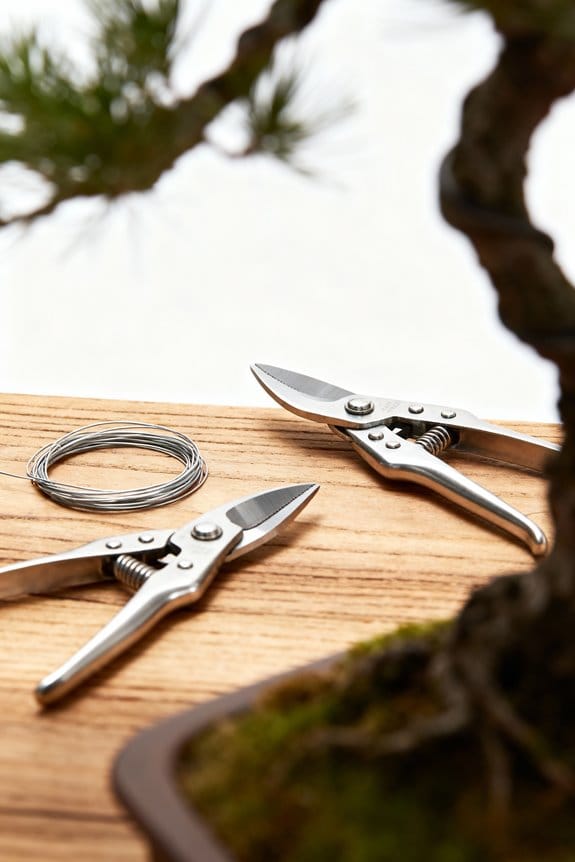
How Often Should You Work on Your Bonsai as a Busy Beginner

A busy beginner should work on their bonsai about 30 minutes to an hour each week. Focus on essential tasks like watering, pruning, and inspecting the tree. During early spring and autumn, dedicate more time to these activities for effective care. Engage with your bonsai regularly in short sessions, observing its health and growth. This routine helps build a connection with your tree. By following these guidelines, you’ll enhance your bonsai experience and mastery.
Key Takeaways
- Dedicate 30 minutes to an hour weekly for essential bonsai tasks like watering, feeding, and inspecting your tree.
- Focus on regular check-ups during early spring and autumn for pruning and fertilization, which are crucial seasons for bonsai care.
- Engage in short, consistent sessions of 10-15 minutes every few days to observe health and manage stress on your bonsai.
- Repot your bonsai every 2-3 years in early spring to ensure it maintains healthy root growth and development.
- Utilize a bonsai care calendar to manage tasks and records, ensuring you stay organized despite a busy schedule.
Understanding Your Bonsai’s Needs
Caring for a bonsai requires an understanding of its unique needs throughout the year. Each season impacts the bonsai’s growth and care. In early spring, as new growth begins, it is vital to inspect the tree and prune as needed. A bonsai should be pruned four to six times annually, focusing on new growth during these peak times. Additionally, maintaining appropriate bonsai pots can guarantee your tree’s roots have room to grow. One important aspect of bonsai gardening is enhancing aesthetic appeal by using decorative pots that complement the miniature trees. During the summer, watch for dehydration due to high temperatures, which can lead to dormancy. In winter, limit your care tasks to monitoring soil moisture and preventing pests. Recognizing these seasonal needs can make a significant difference in maintaining the health and beauty of a bonsai.
Establishing a Maintenance Schedule
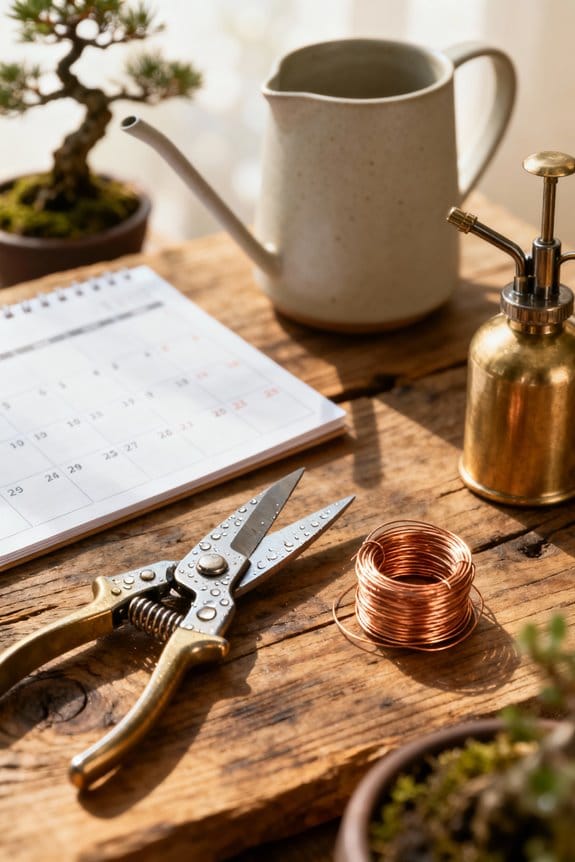
Establishing a maintenance schedule is key to ensuring the bonsai thrives under its caretaker’s watch. Busy beginners should allocate time each week for essential tasks like watering, feeding, and inspecting the bonsai. Regular watering is vital, especially for indoor varieties, while outdoor bonsai may need more frequent attention during the growing season. Pruning is equally important; deciduous trees require trimming four to six times per year to maintain their shape, while evergreens may need less. Additionally, repotting should occur every two to three years, ideally in early spring, to sustain root health. By consistently scheduling these activities, new bonsai enthusiasts can promote a vibrant, healthy plant while fitting care into their busy lives. For those just starting, beginner bonsai guides can provide step-by-step formats and visualization tools to help develop skills effectively.
Seasonal Considerations for Care
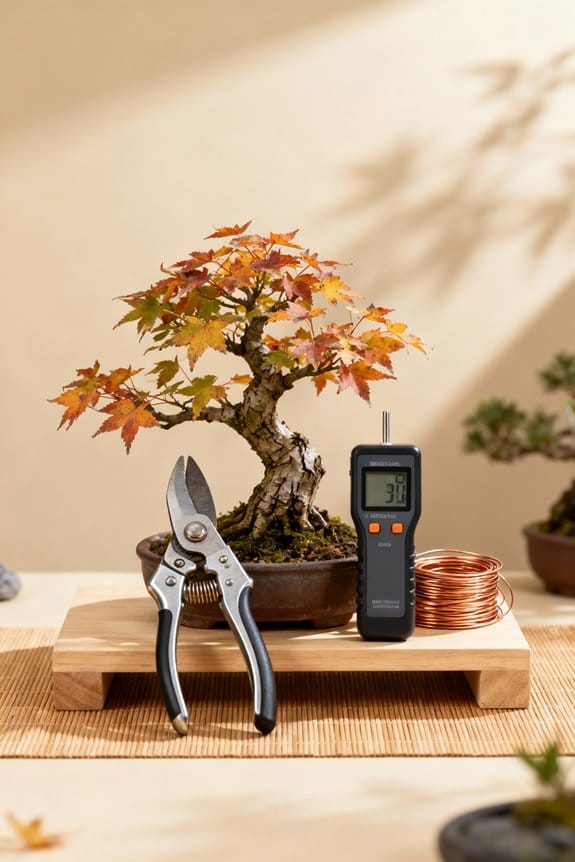
How can beginners guarantee their bonsai remains healthy throughout the year? Seasonal adjustments play a significant role in bonsai care. In early spring, owners should inspect and prune vigorously growing broadleaved species, trimming new shoots for both aesthetics and health. During winter, focus shifts to prevention and necessary root work. As high summer arrives, trees may enter a brief dormancy due to elevated temperatures, requiring less maintenance but an increase in watering. In autumn, it’s essential to fertilize with low nitrogen options to encourage root growth before winter dormancy sets in. By regularly monitoring their bonsai’s health and recognizing stress signs, beginners can adjust care schedules, ensuring ideal growth and liveliness throughout each season. Incorporating high-quality slow-release fertilizers into your care routine can further support sustained plant health and growth across all seasons.
Essential Tasks for Each Season
As each season unfolds, a bonsai owner should recognize the distinct tasks necessary for maintaining the tree’s health and vigor. In winter, minimal maintenance is needed; monitor soil moisture and check for pests. As spring arrives, inspect broadleaves for budding and prune new shoots on species like hornbeam. The active growth in spring requires frequent pinching of shoots and trimming junipers multiple times. During summer, guarantee proper watering and perform pruning to manage branch length. It’s important to ensure that direct sunlight is available to juniper bonsai trees throughout the year, as insufficient light can negatively impact their growth and health. Finally, in autumn, focus on fertilizer with low nitrogen to prepare the bonsai for winter dormancy. Each season brings unique challenges and opportunities, making it essential for owners to adapt their care routine accordingly.
Engaging With Your Bonsai in Short Sessions
Regular, brief sessions with a bonsai can transform a novice into a confident caretaker. Engaging with a bonsai for 15 to 30 minutes multiple times a week is effective for busy beginners. These short sessions help establish a routine without overwhelming commitments. Beginners can focus on specific tasks, such as watering, pruning, or checking for pests, during each interaction. This targeted approach maintains plant health and allows for skill development over time. Additionally, keeping the timing of these sessions aligned with seasonal needs enhances care. For example, light pruning is best in early spring, while summer may require increased hydration. Observing a bonsai’s responses during these brief meetings allows for immediate adjustments, promoting healthy growth. Consider using a balanced nutrition liquid fertilizer to further support your bonsai’s development, ensuring it receives essential macro and micro nutrients.
Utilizing Resources for Guidance
Utilizing various resources can greatly enhance a beginner’s journey in bonsai care. Beginners can leverage online forums and social media groups to connect with experienced practitioners who understand busy schedules. Instructional videos and articles on reputable bonsai websites are also valuable for learning seasonal care practices tailored to their skill levels. Joining local bonsai clubs offers a chance for hands-on experience while meeting fellow enthusiasts. Additionally, bonsai care apps can help users stay on track with vital tasks, such as watering and pruning. For in-depth guidance, beginners might consider purchasing instructional books that cover essential techniques, care routines, and troubleshooting tips. The Bonsai Beginners Bible is an excellent resource for detailed guidance, and it includes an extensive species directory that can benefit novices. By utilizing resources effectively, practicing bonsai becomes manageable even for those with hectic lifestyles.
The Importance of Observation
Connecting with experienced bonsai practitioners can greatly enhance beginners’ skills, but the journey doesn’t stop there. Observation is an important practice that allows gardeners to monitor their bonsai’s health and growth patterns. Regular checks can reveal signs of stress or disease, ensuring quick intervention. Beginners should closely observe their bonsai during early spring and summer, when new shoots emerge and growth is active. This timing indicates when to prune or pinch back foliage, promoting dense and compact growth. Additionally, paying attention to watering needs is crucial, as wilting or leaf drop suggests issues. Root development should also be assessed every few years, especially during repotting, since healthy roots are key for the overall vigor of any bonsai. Incorporating lucky bamboo can enhance the tranquility and aesthetic appeal of the space where the bonsai is kept, adding to the serene atmosphere.
Managing Time Effectively
Time management is a key skill for nurturing bonsai successfully. Beginners should aim to dedicate 30 minutes to an hour per week to essential tasks like watering, pruning, and pest checks. Prioritizing seasonal activities is vital; during early spring and autumn, allocate extra time for budding inspections and fertilization. To prevent feeling overwhelmed, segment care tasks into manageable portions throughout the week. Working during cooler early morning or late evening hours can reduce stress on the bonsai, especially in summer. Additionally, consider the one-in-one-out rule when expanding a collection, ensuring you can manage your time effectively without sacrificing care quality. Regular cleaning advised after using brushes on plants helps avoid cross-contamination and supports bonsai health. These strategies will help you build a consistent routine while enjoying your bonsai journey.
Building a Connection With Your Bonsai
Learning to nurture a bonsai goes beyond just routine care; it involves building a meaningful connection with the tree. Engaging with your bonsai regularly helps establish a bond, allowing you to understand its unique needs and growth patterns better. By observing your bonsai frequently, you can monitor its health and catch early signs of stress or pests. Building a connection through daily watering and care routines can enhance your commitment to this art. Remember to take time to appreciate the changes in your bonsai. This deeper appreciation enriches the bonsai journey, making you a better caretaker and strengthening your connection with nature. A good bonsai thrives when cared for with love and attention, so invest your time wisely. Consider using a bonsai care calendar to maintain organized records and track your bonsai’s progress over time, which can be a helpful tool for both beginners and experienced enthusiasts.
Enjoying the Journey of Bonsai Care
How can one truly enjoy the journey of bonsai care? Viewing engagement with bonsai as a fulfilling routine rather than a chore can enhance personal satisfaction. Spending just 10-15 minutes every few days on ongoing care allows trees to flourish while providing an opportunity for self-expression. Paying attention to seasonal growth cycles is vital; it helps anticipate necessary tasks, making time management easier. Focus on important activities like watering, pruning, and fertilizing during the active growth phases of spring and early autumn. Joining local bonsai clubs can also connect beginners with others, creating a supportive community. This shared knowledge makes learning enjoyable and guarantees that time spent caring for bonsai is both meaningful and rewarding.
Frequently Asked Questions
What Is the Rule of 3 in Bonsai?
The Rule of 3 in bonsai focuses on nurturing a miniature tree through three core tasks: watering, fertilizing, and pruning. This seasonal care fosters growth balance, enhancing vibrant foliage while simplifying maintenance for enthusiastic beginners.
How Often Should I Prune My Bonsai?
Pruning should occur four to six times annually, with seasonal considerations influencing evergreen techniques. Employ pruning techniques that remove no more than one-third of foliage, promoting healthy growth while minimizing the risk of plant shock.
How Do You Take Care of a Bonsai Tree for Beginners?
To care for a bonsai tree, beginners should regularly monitor bonsai soil moisture, ensuring proper hydration through consistent watering. Regular pruning and knowledge acquisition from communities enhance healthy growth and effective maintenance of the bonsai.
How Much Attention Do Bonsai Trees Need?
Bonsai trees demand consistent care, needing watering multiple times a week influenced by environmental factors. Remarkably, a bonsai can thrive for over a century with proper attention, forging a deep emotional bond between the caretaker and tree.


